Visitor Insights
Visiting The Four Sephardic Synagogues
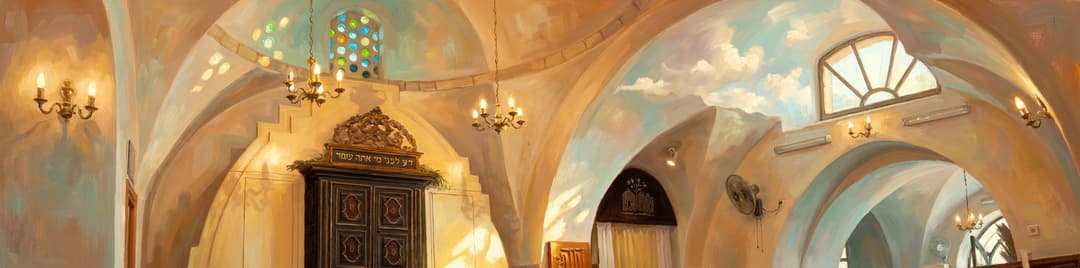
The Four Sephardic Synagogues offer a unique glimpse into the rich history and spiritual life of Jerusalem's Sephardic community. Located in the heart of the Jewish Quarter, visitors can explore the interconnected synagogues, each with its own distinct character and history. The atmosphere is reverent and reflective, providing a tangible connection to centuries of Jewish tradition and resilience.
Location
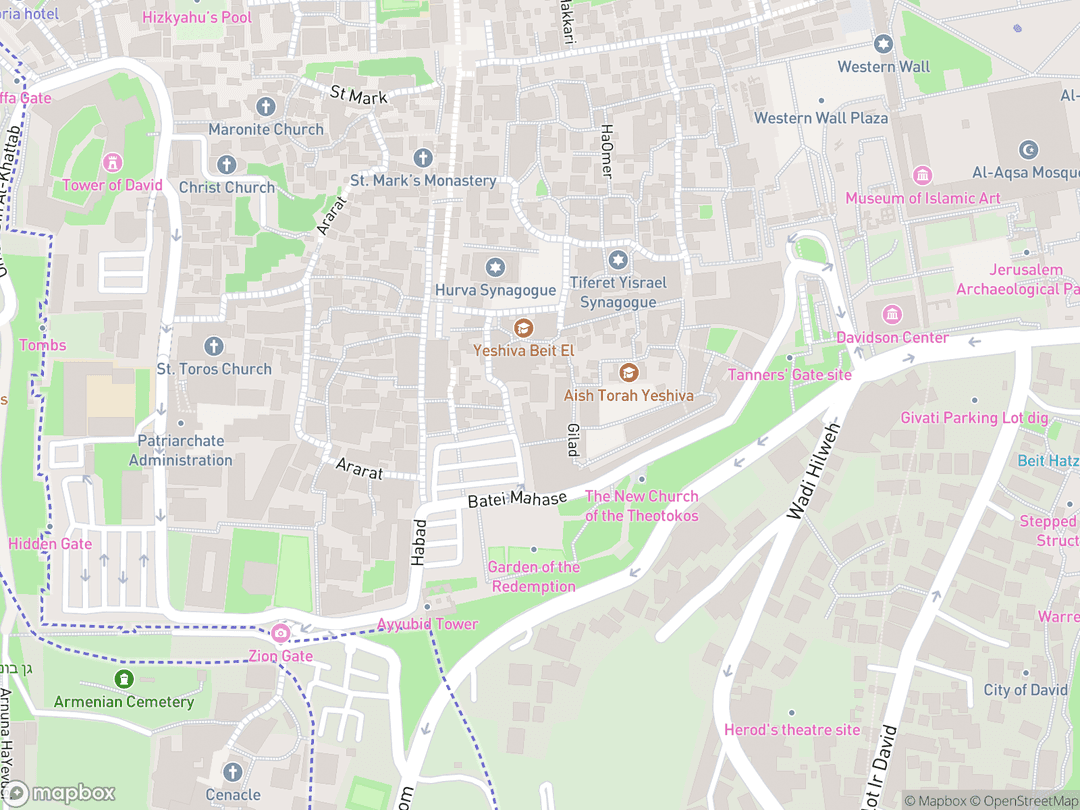
Jewish Quarter, Old City of Jerusalem, Israel
Get DirectionsTips for Your Visit
Modest Dress
Please dress modestly when visiting the synagogues. Shoulders and knees should be covered.
Photography
Photography may be restricted in certain areas. Please check with the caretaker before taking photos.
About
The Four Sephardic Synagogues are a complex of interconnected synagogues located in the Jewish Quarter of the Old City of Jerusalem. These synagogues stand as a testament to the enduring presence and rich traditions of the Sephardic Jewish community in Jerusalem, particularly those who sought refuge after the expulsion from Spain in 1492. Each synagogue within the complex was established at a different time, reflecting the community's growth and evolving needs.
The synagogues—Yochanan ben Zakai Synagogue, Eliahu Ha'navi Synagogue, Istanbuli Synagogue, and Emtsai Synagogue—offer a glimpse into the diverse architectural and cultural influences that have shaped Sephardic Judaism. They serve not only as places of worship but also as historical landmarks, bearing witness to centuries of Jewish life in Jerusalem. Despite facing periods of destruction and desecration, notably during the 1948 Arab-Israeli War, the synagogues have been meticulously restored, preserving their unique character and spiritual significance.
Today, the Four Sephardic Synagogues continue to function as active centers of Jewish worship and study, welcoming visitors from around the world. They stand as a symbol of resilience, continuity, and the deep connection between the Sephardic community and the city of Jerusalem. As part of the broader Judaic theological grouping rooted in Abrahamic traditions, these synagogues highlight the historical and spiritual importance of Jerusalem to the Jewish faith.
Gallery
Symbolic Elements
The temple's exterior features intricate carvings, each rich with spiritual meaning:

Torah Scroll
The Torah scroll is the most sacred object in Judaism, representing God's divine word and guidance for Jewish life. It is housed in the Aron Kodesh and read publicly during services, symbolizing the continuity of Jewish law and tradition. The presence of the Torah scroll underscores the synagogues' role as centers of worship and learning.

Aron Kodesh (Holy Ark)
The Aron Kodesh, or Holy Ark, is a cabinet or recess in the synagogue that houses the Torah scrolls. It is typically oriented towards Jerusalem, symbolizing the direction of prayer and spiritual connection. The Aron Kodesh serves as the focal point of the synagogue, representing the presence of God's word and the sanctity of Jewish tradition.

Bimah (Platform)
The Bimah, or elevated platform, is where the Torah is read during synagogue services. It symbolizes the public proclamation of Jewish law and tradition, emphasizing the importance of communal worship and learning. The Bimah serves as a central gathering place for the congregation, fostering a sense of unity and shared spiritual experience.

Ner Tamid (Eternal Light)
The Ner Tamid, or eternal light, is a continuously burning lamp or light fixture in the synagogue, symbolizing God's constant presence and the enduring nature of Jewish faith. It serves as a reminder of the divine light that guides and illuminates the Jewish people, representing hope, continuity, and spiritual awareness. The Ner Tamid is a powerful symbol of the eternal covenant between God and Israel.

Arches and Domes
The arches and domes featured in the Eliahu Ha'navi Synagogue reference Byzantine architectural influences, reflecting the diverse cultural interactions that have shaped Jerusalem's history. These architectural elements symbolize the blending of different traditions and the enduring presence of Jewish life in the city. The arches and domes add to the synagogue's unique character and historical significance.

Sephardic Script
The Sephardic script used in the synagogues' texts and inscriptions represents the unique linguistic and cultural heritage of the Sephardic Jewish community. This distinct script reflects the community's historical connections to Spain and the broader Mediterranean region, preserving their traditions and identity. The Sephardic script serves as a visual reminder of the community's rich history and cultural contributions.

Stone Construction
The use of local Jerusalem stone in the construction of the synagogues symbolizes the deep connection between the Jewish people and the land of Israel. This durable and timeless material reflects the enduring nature of Jewish faith and the community's commitment to preserving their heritage. The stone construction adds to the synagogues' sense of permanence and historical significance.

Synagogue Layout
The interconnected layout of the four synagogues symbolizes the unity and communal spirit of the Sephardic Jewish community in Jerusalem. This design reflects the community's shared history, traditions, and commitment to supporting one another. The interconnected synagogues create a sense of continuity and collective identity, fostering a welcoming and inclusive environment for worship and study.
Interesting Facts
The Four Sephardic Synagogues were built after the Ottoman government closed the Ramban Synagogue in 1586.
Legend states the Yochanan ben Zakai Synagogue stands on the site of the Beit Midrash of Rabban Yochanan ben Zakai.
The Eliahu Ha'navi Synagogue is named after the prophet Elijah, with a legend of his appearance on Yom Kippur.
The Emtsai Synagogue was originally a courtyard used as the women's section of the Yochanan ben Zakai Synagogue.
During Sukkot, the Emtsai Synagogue could be converted into a Sukkah.
The Istanbuli Synagogue attracted worshipers from various communities, including Kurdistan and North Africa.
The Istanbuli Synagogue is used for the inauguration of the Sephardic Chief Rabbi of Israel.
During the 1948 Arab-Israeli War, the synagogues were looted and used as stables by the Jordanians.
The synagogues were restored using remains of Italian synagogues damaged during World War II.
The synagogues embody Sephardic continuity in Jerusalem.
Common Questions
What are the Four Sephardic Synagogues?
The Four Sephardic Synagogues are a complex of interconnected synagogues located in the Jewish Quarter of the Old City of Jerusalem. They include the Yochanan ben Zakai Synagogue, Eliahu Ha'navi Synagogue, Istanbuli Synagogue, and Emtsai Synagogue, each with its own unique history and architectural style.
Why were the synagogues built below street level?
The synagogues were built below street level possibly to comply with Ottoman regulations that no Jewish place of worship should be higher than any mosque, reflecting the historical context of religious restrictions.
What happened to the synagogues during the 1948 Arab-Israeli War?
During the 1948 Arab-Israeli War, the Jewish Quarter fell to Jordanian forces, and the synagogues were plundered, burned, and used as stables, causing significant damage and desecration.
How were the synagogues restored after the Six-Day War?
After the Six-Day War in 1967, Israel gained control of the Old City, and the synagogues were restored between 1967 and 1972 using remains of Italian synagogues damaged during World War II, symbolizing resilience and international Jewish solidarity.
What is the significance of the Istanbuli Synagogue?
The Istanbuli Synagogue was established to serve the increasing number of Sephardic immigrants from Istanbul, Turkey. It features an Aron Kodesh (Torah ark) dating from the 17th century and a bimah (platform) constructed in the 18th century, both imported from synagogues in Italy, reflecting the community's diverse cultural influences.
Featured Stories
The Legend of Elijah's Appearance
Yom Kippur
The Eliahu Ha'navi Synagogue holds a special place in the hearts of the Sephardic community, largely due to a captivating legend. It is said that on one Yom Kippur, as the congregation gathered for prayer, they were one person short of the required minyan (quorum of ten) for the service to proceed. Just as despair began to set in, a mysterious stranger appeared, completing the minyan and allowing the sacred prayers to commence.
After the service concluded, the congregation turned to thank the stranger, but he had vanished without a trace. It was then that they realized their visitor was none other than the prophet Elijah, who, according to Jewish tradition, is believed to appear in times of need. This miraculous event solidified the synagogue's name and its reputation as a place touched by divine intervention.
To this day, the Eliahu Ha'navi Synagogue stands as a testament to faith and the enduring belief in the possibility of miracles, reminding worshippers of the importance of community and the ever-present support of the divine.
Source: travelingjewish.com
Restoration from the Ashes
Post-1967
The Six-Day War in 1967 marked a turning point for the Four Sephardic Synagogues. Prior to the war, during Jordanian control of the Old City, the synagogues had suffered severe damage and desecration, a painful symbol of the division and conflict that plagued Jerusalem. When Israeli forces liberated the Old City, the synagogues lay in ruins, a testament to the destruction wrought by war.
In the aftermath of the war, a remarkable restoration project was undertaken to rebuild and revitalize these historic places of worship. In a poignant act of solidarity, remains of Italian synagogues damaged during World War II were incorporated into the restoration, symbolizing the resilience of the Jewish people and the interconnectedness of Jewish communities around the world. This act transformed the synagogues into symbols of hope and renewal.
The restored synagogues stand today as a powerful reminder of the importance of preserving cultural heritage and the enduring spirit of the Jewish community in Jerusalem, a testament to their determination to rebuild and thrive after adversity.
Source: jerusalempedia.com
The Istanbuli Synagogue's Italian Heritage
17th-18th Centuries
The Istanbuli Synagogue, one of the gems within the Four Sephardic Synagogues complex, boasts a unique connection to Italian Jewish history. As the Sephardic community in Jerusalem grew, particularly with the influx of immigrants from Istanbul, the need for a dedicated place of worship became evident. The Istanbuli Synagogue was established to meet this need, drawing inspiration from diverse cultural influences.
Remarkably, the synagogue's Aron Kodesh (Torah ark) dates back to the 17th century and was imported from a synagogue in Ancona, Italy, showcasing the interconnectedness of Jewish communities across the Mediterranean. Similarly, the bimah (platform) was constructed in the 18th century and came from a synagogue in Pesaro, Italy, further enriching the synagogue's architectural and spiritual heritage.
These Italian elements within the Istanbuli Synagogue serve as a tangible reminder of the Sephardic community's global connections and the enduring legacy of Jewish culture and tradition, highlighting the diverse influences that have shaped their identity and spiritual practices.
Source: sandpcentral.org
Timeline
Establishment of Eliahu Ha'navi Synagogue
Following the Ottoman closure of the Ramban Synagogue, the Sephardic community began establishing their own places of worship, including the Eliahu Ha'navi Synagogue around 1586.
MilestoneConstruction of Yochanan ben Zakai Synagogue
The Yochanan ben Zakai Synagogue was constructed by 1610, becoming an important center for Sephardic Jewish life in Jerusalem.
MilestoneConversion of Third Hall into Synagogue
A third hall within the complex was converted into a synagogue, expanding the worship space for the growing community.
MilestoneEstablishment of Fourth Synagogue
A fourth hall was converted into a synagogue, later known as 'The Istanbul Synagogue,' further accommodating the community's needs.
MilestoneEstablishment of Istanbuli Synagogue
The Istanbuli Synagogue was officially established to serve the increasing number of Sephardic immigrants from Istanbul, Turkey.
MilestonePermission for Refurbishment Granted
Muhammad Ali, viceroy of Egypt, granted permission for the refurbishment of the synagogues, allowing for necessary repairs and improvements.
RenovationRenovation of Istanbuli Synagogue
The Istanbuli Synagogue underwent significant renovations, enhancing its architectural and functional aspects.
RenovationSynagogues Plundered and Burned
During the 1948 Arab-Israeli War, the Jewish Quarter fell to Jordanian forces, and the synagogues were plundered, burned, and desecrated.
EventRestoration Begins After Six-Day War
Following the Six-Day War, Israel gained control of the Old City, and restoration efforts began on the damaged synagogues between 1967 and 1972.
RenovationSynagogues Reopened
The Four Sephardic Synagogues were officially reopened after extensive restoration, returning them to their former glory and spiritual purpose.
DedicationEstablishment of Congregation Shaare Ratzon
Congregation Shaare Ratzon, following the London rite, was established and began using the Istanbuli Synagogue for its services.
EventConstruction of Eliahu Hanavi Synagogue
The Eliahu Hanavi Synagogue was constructed around 1586, marking an early phase in the development of the Sephardic Synagogue complex.
MilestoneFormation of Emtsai Synagogue
The Emtsai Synagogue was formed from a courtyard that was roofed, providing additional worship space for the growing community.
MilestoneSynagogues Used as Stables
During the 1948 Arab-Israeli War, the synagogues were desecrated and used as stables by Jordanian forces, causing significant damage and loss.
EventRestoration with Italian Synagogue Remains
The synagogues were restored using remains of Italian synagogues damaged during World War II, symbolizing resilience and international Jewish solidarity.
RenovationHistory by Decade
Late 16th Century
In the late 16th century, following the Ottoman closure of the Ramban Synagogue in 1586, the Sephardic community in Jerusalem began establishing their own places of worship. This marked a significant period of growth and self-determination for the community, many of whom were refugees from the 1492 expulsion from Spain. The Eliahu Ha'navi Synagogue was constructed around this time, becoming one of the first synagogues in the complex.
Early 17th Century
The early 17th century saw the construction of the Yochanan ben Zakai Synagogue, which became an important center for Sephardic Jewish life in Jerusalem. Legend states that the synagogue stands on the site of the Beit Midrash of Rabban Yochanan ben Zakai, who established the Sanhedrin in Yavneh after the destruction of the Second Temple. This added to the synagogue's historical and spiritual significance.
1730s
During the 1730s, the Sephardic community continued to expand, leading to the conversion of additional spaces within the complex into synagogues. In 1733, a third hall was converted into a synagogue, and in 1735, a fourth hall became the Istanbuli Synagogue. These expansions reflected the community's growing needs and its commitment to providing places of worship for its members.
Mid-18th Century
The mid-18th century marked the formation of the Emtsai Synagogue, which was created from a courtyard that was roofed to provide additional worship space. This period saw the consolidation of the Four Sephardic Synagogues as a unified complex, serving as a central hub for the community's religious and cultural activities. The synagogues attracted worshipers from various communities, including Kurdistan and North Africa.
1940s
The 1940s brought immense challenges to the Four Sephardic Synagogues. During the 1948 Arab-Israeli War, the Jewish Quarter of Jerusalem fell to Jordanian forces, and the synagogues were plundered, burned, and desecrated. They were even used as stables, causing significant damage and representing a painful chapter in the community's history.
1960s-1970s
Following the Six-Day War in 1967, Israel gained control of the Old City, and a major restoration project was undertaken to rebuild the Four Sephardic Synagogues. The restoration, completed in 1972, incorporated remains of Italian synagogues damaged during World War II, symbolizing resilience and international Jewish solidarity. The restored synagogues were reopened, marking a new era of growth and renewal for the community.
Religious Significance
The Four Sephardic Synagogues hold profound religious significance as centers of Jewish worship, study, and community life in Jerusalem. Rooted in the Abrahamic tradition, these synagogues embody the enduring connection between the Jewish people and the Holy City, serving as a testament to centuries of faith, resilience, and cultural heritage.
The core spiritual purpose of the synagogues is to provide a sacred space for prayer, Torah study, and communal gatherings, fostering a sense of unity, identity, and connection to God. They serve as a beacon of Jewish tradition, preserving the rich heritage of the Sephardic community and transmitting it to future generations.
Sacred Ordinances
Prayer (Tefillah)
Prayer is a central practice in Judaism, serving as a means of communicating with God, expressing gratitude, seeking guidance, and reaffirming faith. The synagogues provide a dedicated space for communal prayer, where worshippers gather to recite traditional prayers, psalms, and blessings, strengthening their spiritual connection and sense of belonging.
Torah Study (Talmud Torah)
Torah study is a fundamental aspect of Jewish life, involving the in-depth examination of the Torah and other sacred texts to gain wisdom, understanding, and moral guidance. The synagogues serve as centers of Torah study, where individuals and groups engage in learning, discussion, and interpretation, deepening their knowledge of Jewish law, ethics, and history.
Community Gatherings (Kahal)
Community gatherings are essential for fostering a sense of unity, support, and shared identity within the Jewish community. The synagogues provide a space for communal meals, celebrations, and social events, where members come together to share experiences, celebrate milestones, and support one another in times of joy and sorrow, strengthening the bonds of fellowship and mutual responsibility.
The Significance of Jerusalem
Jerusalem holds unparalleled significance in Judaism as the Holy City, the site of the ancient Temples, and the spiritual center of the Jewish world. The Four Sephardic Synagogues, located in the heart of the Jewish Quarter, embody this deep connection to Jerusalem, serving as a tangible link to the city's rich history and enduring spiritual legacy. They stand as a testament to the Jewish people's unwavering commitment to Jerusalem and their enduring hope for its future.
The Sephardic Tradition
The Sephardic tradition represents a unique and vibrant branch of Judaism, characterized by its distinct customs, liturgical practices, and cultural heritage. The Four Sephardic Synagogues preserve and promote this rich tradition, ensuring that the Sephardic community's unique identity and spiritual practices are passed down to future generations. They serve as a living testament to the enduring legacy of Sephardic Judaism and its contributions to the broader Jewish world.
Similar Temples
Sources & Research
Every fact on Temples.org is backed by verified Sources & Research. Each piece of information is rated by source tier and confidence level.
View All Sources (10)
| Field | Source | Tier | Retrieved |
|---|---|---|---|
| About & Historical Background | America Israel Tours (opens in a new tab) | A | 2024-01-02 |
| About & Historical Background | Traveling Jewish (opens in a new tab) | A | 2024-01-02 |
| About & Historical Background | Grokipedia (opens in a new tab) | A | 2024-01-02 |
| About & Historical Background | ESEFARAD (opens in a new tab) | A | 2024-01-02 |
| About & Historical Background | Bein Harim Tours (opens in a new tab) | A | 2024-01-02 |
| About & Historical Background | Shalom Israel Tours (opens in a new tab) | A | 2024-01-02 |
| About & Historical Background | Jerusalempedia (opens in a new tab) | A | 2024-01-02 |
| About & Historical Background | Sephardi and Portuguese Synagogues (opens in a new tab) | A | 2024-01-02 |
| About & Historical Background | HaAtika (opens in a new tab) | A | 2024-01-02 |
| About & Historical Background | Danny the Digger (opens in a new tab) | A | 2024-01-02 |