Visitor Insights
Visiting Great Burkhan Khaldun Sacred Mountain
Visiting Burkhan Khaldun requires specialized permits from the Ministry of Environment and Tourism due to its protected wilderness status. Access involves multi-day 4x4 off-road transit through rugged taiga followed by horse riding or foot hiking.
Highlights
- Baga Ovoo lower pilgrimage threshold
- Dund Ovoo middle ridge ritual area
- Panoramic views across the Khentii taiga wilderness
- Confluence of the Onon, Kherlen, and Tuul river basins
Things to Know
- Requires special entry permits for the Khan Khentii Strictly Protected Area
- Strict indigenous taboo restricts women from climbing into the upper summit zone
- Impassable during winter due to extreme sub-zero temperatures
Location
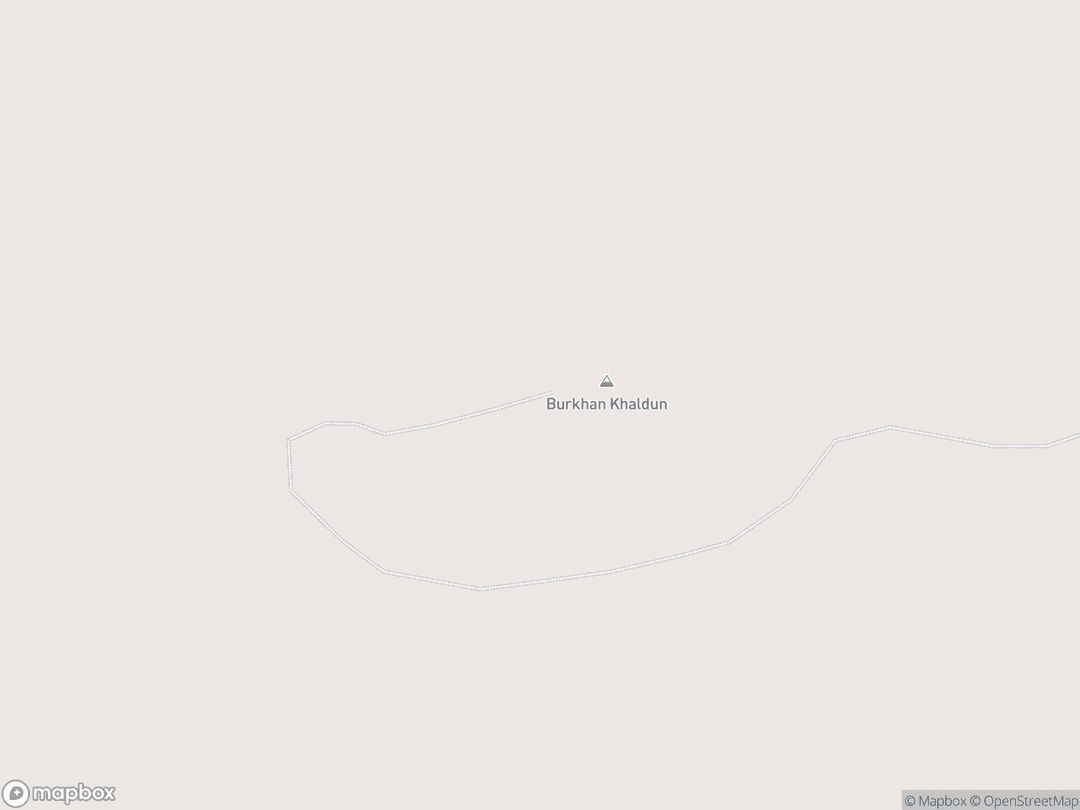
Khan Khentii Strictly Protected Area, Khentii Province, Mongolia
Hours: Restricted seasonal access (June through August recommended)
Getting There: Travel by 4x4 vehicle from Ulaanbaatar (~160 km) to the protected zone perimeter, followed by horse trek or foot hike with licensed local guides.
Get DirectionsTips for Your Visit
Respect Local Taboos
Observe strict environmental rules by leaving no waste, cutting no live trees, and refraining from moving sacred cairn stones.
Prepare for Off-Road Travel
Ensure travel with experienced expedition guides equipped with heavy-duty vehicles and horse support.
About
Burkhan Khaldun is the most sacred mountain in North-Central Asia and the spiritual cradle of the Mongolian nation. Situated in the heavily forested Khentii Mountain range, the peak has served for millennia as a natural sanctuary for indigenous Tengriist worship under Möngke Tengri, the Eternal Blue Sky.
The mountain is inextricably linked to Genghis Khan, who sought refuge in its dense taiga as a youth and later designated it as the supreme holy mountain of the Mongol Empire. For nearly seven centuries, entry was strictly forbidden under the historic Ikh Khorig designation, preserving its pristine wilderness.
Today, Burkhan Khaldun remains an active place of state and indigenous pilgrimage where traditional shamanic rituals and Buddhist traditions converge. Recognized as a UNESCO World Heritage Site, it stands as a testament to the enduring relationship between nomadic pastoralists and the sacred landscape.
Interesting Facts
Burkhan Khaldun is widely considered the most probable secret burial site of Genghis Khan (Tier A).
From 1227 to the 20th century, the Darkhad warrior tribe enforced death penalties for trespassers in the Ikh Khorig forbidden zone (Tier B).
The mountain acts as the hydrologic cradle for three major rivers including the Onon, Kherlen, and Tuul (Tier A).
Every four years, the President of Mongolia leads state worship ceremonies at the sacred cairns (Tier A).
The sacred site contains no man-made buildings, serving as a vast natural temple without walls (Tier A).
Subutai Ba'atur, Genghis Khan's legendary military commander, was born in the vicinity of the mountain (Tier B).
The mountain is mentioned dozens of times in the 13th-century Secret History of the Mongols (Tier B).
Centuries of strict prohibition helped preserve endangered species like the Siberian musk deer and snow leopard (Tier B).
Common Questions
Can regular tourists visit the summit of Burkhan Khaldun?
No, summit access is strictly regulated by environmental permits, and traditional customs restrict climbing into the upper zone.
Why is Burkhan Khaldun historically forbidden?
From 1227 to the 20th century, it was designated as the Ikh Khorig imperial burial territory guarded under penalty of death.
What religion is practiced at Burkhan Khaldun?
The site is sacred to Tengriism and Mongolian Shamanism, integrated with Tibetan Buddhist ritual traditions.
Is Genghis Khan buried at Burkhan Khaldun?
Historical tradition and oral legends hold that Genghis Khan was secretly buried near the mountain, though his grave remains undiscovered.
How is state worship conducted at the mountain today?
The President of Mongolia and religious leaders lead formal quadrennial national worship ceremonies at the sacred cairns.
Featured Stories
Temüjin's Sacred Refuge
1189
Pursued by hostile Merkit warriors, young Temüjin fled into the dense, impassable forests of Burkhan Khaldun. The mountain shielded him for days, enabling his survival and sparking his deep spiritual devotion. Upon descending, he swore a lifetime covenant of daily prayer and gratitude to the mountain deity.
Source: The Secret History of the Mongols
The Covenant of the Ikh Khorig
1227
Following the death of Genghis Khan, his body was returned to the slopes of Burkhan Khaldun for a secret burial. The surrounding wilderness was declared the Ikh Khorig or Great Taboo, closed to all human intrusion. For nearly seven centuries, hereditary Darkhad guards protected the sacred zone under penalty of death.
Source: UNESCO World Heritage Nomination Dossier
Restoration of State Mountain Worship
May 16, 1995
Following decades of communist suppression, Mongolian President Punsalmaagiin Ochirbat issued Decree No. 110 to formally revive state mountain worship. The decree reinstated national ceremonies presided over by the head of state alongside traditional shamanic and Buddhist leaders. This historic act reaffirmed Burkhan Khaldun as the premier spiritual monument of Mongolia.
Source: Decree of the President of Mongolia No. 110
Timeline
Temüjin's Sanctuary
Temüjin escapes the Merkit tribe on Burkhan Khaldun and dedicates his devotion to the sacred peak.
MilestoneImperial Formalization
Genghis Khan unifies the Mongol tribes and decrees Burkhan Khaldun as the supreme state mountain.
DedicationEstablishment of the Ikh Khorig
Genghis Khan passes away and the surrounding region is designated as the sacred forbidden zone.
MilestoneBuddhist-Tengriist Syncretism
Tibetan Buddhist practices begin synthesizing with traditional Tengriist mountain cairn ceremonies.
EventState Anti-Religious Prohibition
The Mongolian People's Republic imposes strict bans on state and public mountain worship rituals.
EventStrict Protected Area Creation
The Mongolian Parliament establishes the Khan Khentii Strictly Protected Area encompassing the mountain.
MilestonePresidential Restoration Decree
President Ochirbat issues Decree No. 110 restoring national state worship of Burkhan Khaldun.
MilestoneQuadrennial Ceremony Codification
Mongolia codifies official presidential state worship ceremonies to occur every four years.
EventUNESCO World Heritage Inscription
UNESCO inscribes Great Burkhan Khaldun Mountain and its surrounding sacred landscape as a World Heritage Site.
DedicationNational Conservation Boundary Confirmation
Mongolia reaffirms strict conservation boundaries protecting the mountain watershed and taiga ecosystem.
EventHistory by Decade
12th–13th Century — Imperial Foundations
During the 12th century, Temüjin survived enemy pursuit in the taiga of Burkhan Khaldun, establishing an enduring spiritual bond with the mountain. After his elevation as Genghis Khan in 1206, he declared it the sacred protector of the Mongol Empire. Upon his death in 1227, the region became the secret imperial burial zone known as the Ikh Khorig.
14th–19th Century — Protection and Syncretism
For nearly seven centuries, the hereditary Darkhad guardians enforced the strict isolation of the sacred mountain zone. As Tibetan Buddhism spread across Mongolia in the 17th century, shamanic Tengriist cairn worship harmonized with Buddhist ritual customs. Silk prayer scarves and incense offerings were integrated into traditional milk libations at the mountain cairns.
1920s–1980s — Communist Prohibition
The establishment of the state-communist Mongolian People's Republic led to official bans on religious practices and mountain worship. Despite severe state restrictions, local nomadic herdsmen quietly maintained traditional respect for the sacred geography. The extreme isolation of the Khentii wilderness prevented industrial logging or urban encroachment during this period.
1990s–Present — Renaissance and World Heritage
Following Mongolia's democratic transition, Presidential Decree No. 110 in 1995 restored state-sponsored worship ceremonies. The creation of the Khan Khentii Strictly Protected Area ensured permanent environmental safeguarding. In 2015, UNESCO inscribed the sacred landscape on the World Heritage List, honoring its exceptional spiritual and natural value.
Architecture & Facilities
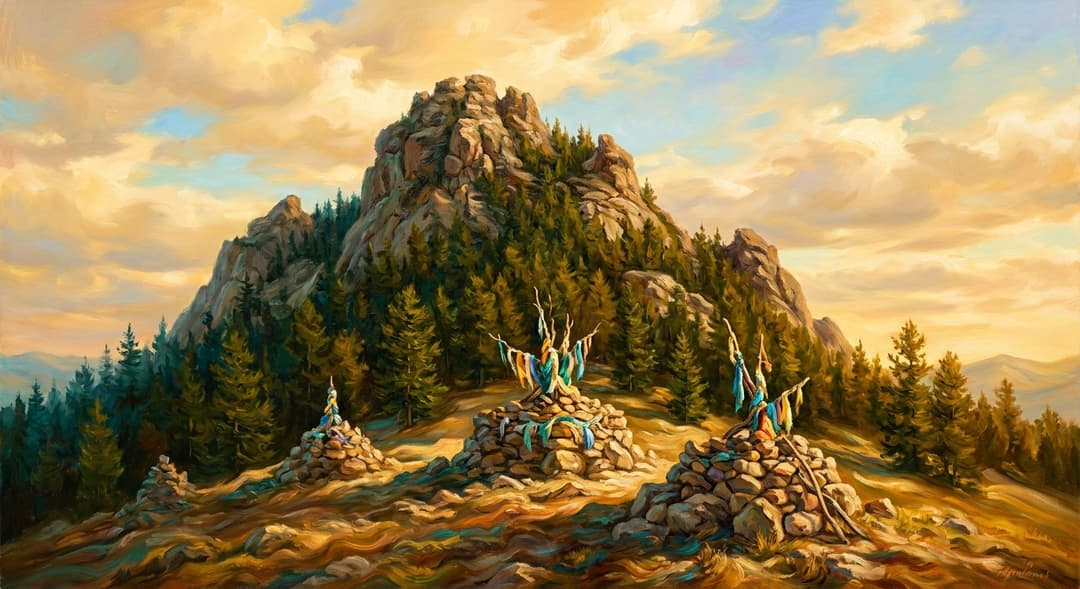
Burkhan Khaldun is an indigenous sacred natural monument where the living ecosystem functions as temple architecture. The open sky represents the cosmic roof, virgin larch and pine forests form natural enclosing walls, and surrounding mountain ridges and cairns establish sacred spatial pillars.
Building Materials
Unmortared Granite and Basalt
Fieldstones gathered from surrounding ridges to construct worship cairns.
Birch Timber Poles
Natural wooden branches set into cairns to anchor ceremonial prayer scarves.
Blue Silk Khadag
Sacred woven silk scarves wrapped around timber branches symbolizing the sky.
Larch and Pine Taiga
Pristine dark taiga forests forming the living natural enclosure around the peak.
Interior Features
Baga Ovoo (Lower Zone)
The entry threshold cairn at the foothill riverbank where pilgrims perform initial purifications.
Dund Ovoo (Middle Zone)
The transitional mid-slope cairn serving as the main site for general community worship and shamanic rites.
Ezen Ovoo (Upper Zone)
The high summit cairn dedicated to supreme state worship and historical imperial rituals.
Sacred River Headwaters
The natural hydrological confluences forming the cradle of three major Central Asian rivers.
Temple Grounds
The surrounding landscape covers 12,270 square kilometers of protected wilderness, encompassing alpine tundra, dense peat wetlands, and pristine montane meadows supporting abundant native wildlife.
Additional Facilities
There are no permanent man-made visitor centers or urban structures within the sacred core; ranger posts and mobile camp staging areas are situated outside the protected perimeter.
Religious Significance
In Tengriism, high mountain peaks serve as the ultimate earthly conduits to Möngke Tengri, the Eternal Blue Sky. Burkhan Khaldun is reverenced as the living axis mundi where human intentions meet divine cosmic order.
To offer national prayers, honor nature spirits (ezen), maintain cosmic harmony, and preserve the ancestral lineage of the Mongolian people.
Sacred Ordinances
Milk Libation (Tsatsal)
Sprinkling fermented mare's milk into the four cardinal directions to nourish environmental spirits.
Ovoo Circumambulation
Walking clockwise three times around stone cairns while offering prayers and placing stones.
Ninefold Prostration
Bowing nine times toward the rising sun and mountain peak as an act of humble reverence.
Khadag Tying
Binding ceremonial blue silk scarves to cairn timber poles to symbolise eternal devotion.
Synthesis of Tengriism and Buddhism
The mountain showcases a rare continuous synthesis of indigenous shamanic sky worship and Tibetan Buddhism. Buddhist mantras and silk scarves coexist seamlessly with ancient nomadic stone cairn libations.
The Imperial Sanctuary
Genghis Khan established Burkhan Khaldun as the sacred heartbeat of the empire, attributing his military successes and personal survival directly to the mountain deity.
Sources & Research
Every fact on Temples.org is backed by verified Sources & Research. Each piece of information is rated by source tier and confidence level.
View All Sources (8)
| Field | Source | Tier | Retrieved |
|---|---|---|---|
| About & Historical Background | UNESCO World Heritage Centre (opens in a new tab) | B | 2026-02-23 |
| About & Historical Background | Office of the President of Mongolia (opens in a new tab) | A | 2026-02-23 |
| Timeline & Featured Stories | Government of Mongolia Official Portal (opens in a new tab) | B | 2026-02-23 |
| Architecture & Landscape | Environmental Information Center of Mongolia (opens in a new tab) | B | 2026-02-23 |
| Religious Significance & Symbols | Ministry of Environment and Tourism of Mongolia (opens in a new tab) | B | 2026-02-23 |
| Visitor Insights & Access Rules | Ministry of Environment and Tourism of Mongolia (opens in a new tab) | B | 2026-02-23 |
| Timeline & State Decrees | Unified Legal Information System of Mongolia (opens in a new tab) | A | 2026-02-23 |
| Symbolic Elements & Rituals | Culture and Arts Authority of Mongolia (opens in a new tab) | B | 2026-02-23 |