Visitor Insights
Visiting Benin City Nigeria Temple
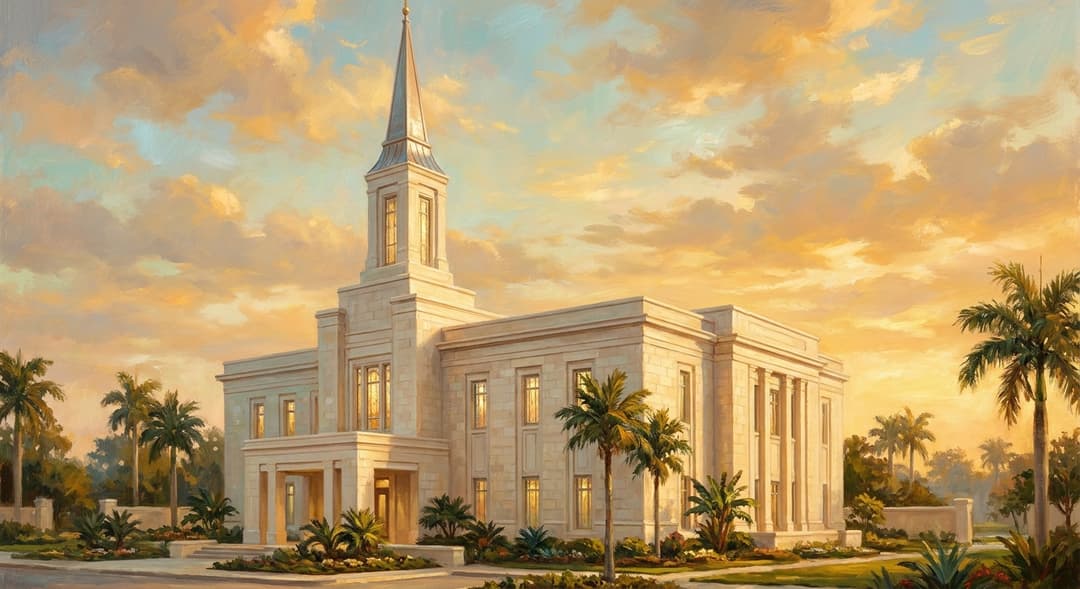
Visiting the Benin City Nigeria Temple site offers a unique glimpse into a historic spiritual milestone unfolding in Edo State. Located in the serene and upscale Government Reservation Area (G.R.A.), the site provides a peaceful escape from the energetic pace of central Benin City. While the temple is currently under construction and the interior is closed to the public, visitors can appreciate the rising structure and beautifully planned perimeter from the surrounding avenues. The atmosphere is one of quiet reverence, reflecting the sacred purpose of the building as it prepares to become a dedicated House of the Lord.
Highlights
- Located in the prestigious and secure Government Reservation Area (G.R.A.) of Benin City.
- Features a grand two-story design with a single attached central spire.
- On-site patron housing and arrival center designed to accommodate traveling patrons.
- Surrounded by lush tropical landscaping and native Nigerian flora.
Things to Know
- The site is currently an active construction zone; entry past the perimeter gates is strictly prohibited for safety.
- Photography of the exterior is permitted from public roads, but drone photography may require local permits.
- Traffic along Sapele Road can be heavy during peak morning and evening commute hours.
Location
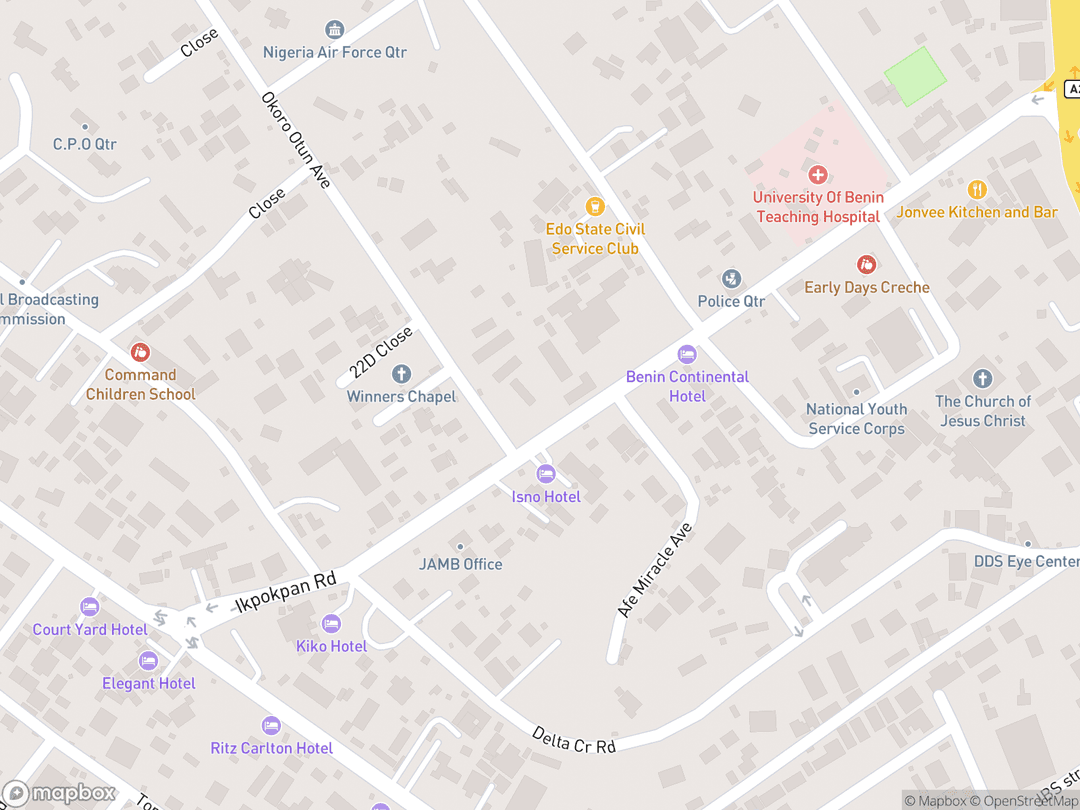
16 Commercial Avenue, Government Reservation Area (G.R.A.), Benin City, Edo State, Nigeria
Hours: Exterior viewing is best during daylight hours, daily from 7:00 AM to 6:00 PM.
Getting There: From Ring Road/King's Square, head south on Akpakpava Road, turn left onto Sapele Road, proceed for 3 kilometers, and turn right onto Commercial Avenue. The temple is located on the left at 16 Commercial Avenue. Ride-hailing services like Bolt are widely available and can navigate directly to the site.
Get DirectionsTips for Your Visit
Optimal Viewing Times
Visit during the early morning or late afternoon (golden hour) to enjoy cooler temperatures and the best lighting for photographing the exterior architecture.
Respect the Neighborhood
The G.R.A. is a quiet, high-profile residential and administrative district. Please keep noise levels low and respect the privacy of neighboring residences.
Use Ride-Hailing
For first-time visitors, using ride-hailing apps like Bolt is highly recommended as they provide direct, GPS-guided routes to 16 Commercial Avenue.
About
The Benin City Nigeria Temple stands as a monumental sacred landmark in southern Nigeria, representing the rapid expansion of The Church of Jesus Christ of Latter-day Saints in West Africa. Rooted in the broader Christian tradition, the temple serves as a physical testament to the members' devotion to Jesus Christ as the Savior and Redeemer of mankind. Unlike standard meetinghouses used for weekly congregational worship, this sacred edifice is revered as the literal House of the Lord, patterned after biblical sanctuaries like the Tabernacle of Moses and the Temple of Solomon. It is a place set apart from the world, dedicated entirely to higher spiritual learning, contemplation, and the performance of eternal ordinances.
The announcement of the temple in April 2020 by President Russell M. Nelson marked a historic milestone for the Saints of Edo and Delta States. For nearly two decades, local members had undertaken long, arduous, and often dangerous journeys of over 180 miles to reach the Aba Nigeria Temple. The construction of this new temple in Benin City—the historic capital of the ancient Benin Empire—not only alleviates these severe travel challenges but also establishes a permanent, anchoring spiritual presence in one of Nigeria's most culturally and historically significant cities.
Designed as a grand two-story structure, the temple's architecture harmonizes modern Latter-day Saint design principles with the dignified, highbrow character of its location in the Government Reservation Area (G.R.A.). The temple complex is uniquely designed to be self-contained, featuring an on-site arrival center and patron housing to accommodate travelers from distant regions. As construction progresses, the temple stands as a beacon of hope, faith, and the promise of eternal family relationships, drawing southern Nigerian Latter-day Saints closer to their sacred heritage and their devotion to Christ.
Interesting Facts
The temple's floor area of 30,700 square feet makes it nearly three times larger than the operating Aba Nigeria Temple.
The groundbreaking occurred just two weeks after the Lagos Nigeria Temple groundbreaking, representing an unprecedented era of West African temple construction.
It is the third temple announced and under construction in Nigeria, following Aba and Lagos.
The temple will eliminate an arduous 180-mile (300 km) journey to Aba, which often took local members an entire day due to poor road conditions.
The site is located in the historic capital of the ancient Benin Empire, famous worldwide for the historic Benin Bronzes.
The temple complex is self-contained, featuring both an on-site arrival center and dedicated patron housing for distant travelers.
Elder Adeyinka A. Ojediran, who presided at the groundbreaking, was sustained as a General Authority Seventy in the exact same conference session the temple was announced.
The temple's announcement reflects explosive growth, with Nigerian membership rising from a handful in 1978 to over 274,000 by 2025.
The temple is situated in the highbrow Government Reservation Area (G.R.A.), which also houses the Edo State Government House.
Early maps incorrectly placed the temple site in Ekiadolor, but official records confirmed the G.R.A. location at 16 Commercial Avenue.
Common Questions
What is the current status of the Benin City Nigeria Temple?
The temple is currently Under Construction. The groundbreaking ceremony took place on May 24, 2025, and crews are actively working on the site's foundation and structural elements.
Who can enter the temple once it is completed and dedicated?
Prior to its formal dedication, the Church will host a public open house where anyone, regardless of faith, can tour the interior. After dedication, entry is reserved for faithful members of the Church who hold a valid temple recommend.
Why is there a patron housing facility being built on the temple site?
The Benin City Temple will serve a large geographic district, including members traveling from Edo, Delta, and other neighboring states. Because travel can be long and difficult, the on-site patron housing and arrival center will provide safe, affordable, and peaceful accommodations for visiting patrons.
How does a temple differ from a standard Latter-day Saint meetinghouse?
Meetinghouses are used for weekly Sunday worship services, youth activities, and community gatherings, and are open to the public. Temples are sacred spaces dedicated as the House of the Lord, reserved for sacred ordinances like eternal marriages and baptisms for the dead.
What architectural style is used for the Benin City Nigeria Temple?
The temple is designed in a Classic Modern style with regional accents. It features a grand two-story structure with a single attached central spire, clad in high-quality natural stone to withstand the tropical climate of southern Nigeria.
Featured Stories
The Long Journey to Aba
2005–2025
For nearly two decades, Latter-day Saints living in Benin City faced a daunting logistical challenge to participate in temple worship. The journey to the nearest temple in Aba spanned over 180 miles of unpredictable roads, often plagued by severe traffic, deep potholes, and security concerns. Families would save money for months, packing food and bedding to make the grueling trip, which could easily take an entire day or more.
The announcement of a temple in Benin City was met with tears of joy, representing not just a new building, but a profound relief from a long-standing travel crisis. Local members look forward to the day they can perform sacred ordinances without the burden of exhausting and expensive travel.
Source: Local Oral Histories & Church News Reports
A Coincidental Calling
April 5, 2020
At the April 2020 General Conference, President Russell M. Nelson thrilled West African Saints by announcing the Benin City Nigeria Temple. In that very same conference session, Adeyinka A. Ojediran was sustained as a General Authority Seventy, marking a major milestone in his own life of Church service.
Five years later, on May 24, 2025, Elder Ojediran stood on the soil of 16 Commercial Avenue in Benin City, presiding over the groundbreaking ceremony. Offering the dedicatory prayer, he brought full circle a spiritual journey that began on the day both his calling and the temple were announced to the world.
Source: Official Groundbreaking Proceedings
The Faith of the Nigerian Pioneers
1978–1990s
The roots of the Benin City Temple trace back to the faith of early Nigerian pioneers who embraced the gospel in the late 1970s. Following the 1978 revelation extending priesthood blessings to all worthy members, the first official baptisms took place in southern Nigeria. These early members faced intense curiosity and occasional opposition as they established the Church in Edo State.
Meeting in small rented halls and homes, their unwavering dedication and rapid missionary work laid the spiritual foundation that made a grand, two-story temple in the ancient city of Benin a reality decades later.
Source: Church History Department Records
Timeline
Priesthood Revelation Announced
President Spencer W. Kimball announces the revelation extending the priesthood and temple blessings to all worthy members regardless of race (Official Declaration 2), opening the door for missionary work in Nigeria.
MilestoneFirst Baptisms in Nigeria
The first official baptisms are performed in Nigeria, marking the formal establishment of the Church in the country.
EventRapid Early Growth
Official Church records show membership in Nigeria has rapidly grown to over 2,200 members across southern congregations.
EventEdo State Expansion
Missionary efforts intensify in Edo State, leading to the creation of early branches in Benin City.
EventBenin City Stake Organized
The Benin City Nigeria Stake is organized, establishing native leadership and a solid administrative foundation.
MilestoneAba Nigeria Temple Dedicated
The Aba Nigeria Temple is dedicated as the first temple in Nigeria, requiring Benin City Saints to travel 180 miles for temple worship.
EventLagos Nigeria Temple Announced
President Russell M. Nelson announces a second Nigerian temple in Lagos, signaling rapid growth in West Africa.
EventBenin City Nigeria Temple Announced
President Russell M. Nelson announces the Benin City Nigeria Temple during the 190th Annual General Conference.
MilestoneElder Ojediran Sustained
Elder Adeyinka A. Ojediran is sustained as a General Authority Seventy during the same conference session.
EventSite Location Released
The Church officially announces the temple site location on a 2.17-acre parcel at 16 Commercial Avenue, G.R.A., Benin City.
MilestoneExterior Rendering Released
The First Presidency releases the official architectural rendering of the two-story temple.
MilestoneGroundbreaking Date Announced
The official groundbreaking date is set for May 24, 2025, sparking excitement among local congregations.
EventGroundbreaking Ceremony
Elder Adeyinka A. Ojediran presides over the groundbreaking ceremony and dedicates the site for construction.
component.timeline.groundbreakingExcavation Begins
Heavy machinery arrives on site to begin clearing, grading, and preparing the foundation for the two-story structure.
EventChurch Membership Milestones
Church membership in Nigeria reaches over 274,000 members, demonstrating the urgent need for additional temples.
MilestoneHistory by Decade
1970s — The Dawn of the Restoration
Prior to 1978, numerous unofficial congregations in Nigeria had written to Church headquarters in Salt Lake City requesting literature and baptism, having discovered Latter-day Saint doctrines through tracts and books. In June 1978, President Spencer W. Kimball received the revelation extending the priesthood and temple blessings to all worthy members regardless of race (Official Declaration 2). In November 1978, the first official baptisms in Nigeria took place, and the Church was formally established in the country, beginning a period of rapid, organic growth.
1980s–1990s — Growth and Consolidation in Edo State
The Church expanded rapidly across southern Nigeria throughout the 1980s. By the end of 1983, official records showed 2,255 members in the country. Local congregations were organized into branches and districts, and the first stakes (dioceses) were established, laying the administrative foundation for future temple districts. During the 1990s, missionary work intensified in Edo State and Benin City. The Benin City Nigeria Stake was organized, bringing together local wards under native leadership, reducing reliance on expatriate oversight, and preparing members for temple covenants.
2000s–2010s — The First Temple and Exponential Growth
On August 7, 2005, the Aba Nigeria Temple was dedicated as the first temple in Nigeria and the second in West Africa. For the next two decades, Latter-day Saints in Benin City made the arduous 180-mile (300 km) journey to Aba to participate in temple worship, navigating poor road conditions and high travel costs. By the 2010s, Church membership in Nigeria surpassed 150,000. In October 2018, President Russell M. Nelson announced the Lagos Nigeria Temple, signaling the Church's intention to bring temples closer to the rapidly growing membership in western and southern Nigeria.
2020s — A Temple for the Ancient City
On April 5, 2020, President Russell M. Nelson announced the Benin City Nigeria Temple during the closing session of the 190th Annual General Conference. On September 11, 2023, the official site location was released as a 2.17-acre parcel at 16 Commercial Avenue, G.R.A., Benin City. On March 24, 2025, the First Presidency released the official exterior rendering of the temple and announced the groundbreaking date. On May 24, 2025, Elder Adeyinka A. Ojediran, First Counselor in the Africa West Area Presidency, presided over the groundbreaking ceremony and dedicated the site for construction, initiating the earthworks and foundation phase.
Architecture & Facilities
The Benin City Nigeria Temple is designed in a Classic Modern style with regional accents. The temple's design blends the clean, symmetrical lines of modern Latter-day Saint temple architecture with subtle classical elements that pay homage to the historic dignity of Benin City. The building is designed as a grand two-story structure, which is a significant departure from the smaller, single-story temples often built in newer temple districts, reflecting the large and growing patron base in Edo State.
Building Materials
Exterior Stone Cladding
High-quality natural stone designed to withstand the intense tropical heat and heavy seasonal rainfall of southern Nigeria.
Art Glass Windows
Intricate art glass featuring geometric patterns that allow soft, filtered natural light to illuminate the sacred interior spaces.
Interior Finishes
Premium materials including imported marble, high-quality wood trim, and custom-woven carpets designed to create a reverent atmosphere.
Structural Foundation
Reinforced concrete engineered to support the two-story structure and ensure long-term durability in the local soil conditions.
Interior Features
Instruction Rooms
Two dedicated rooms where patrons participate in the endowment ceremony, learning about the plan of salvation and making covenants.
Sealing Rooms
Two beautifully appointed rooms featuring sealing altars where marriages are performed for time and all eternity.
The Baptistry
A sacred space containing a baptismal font resting on the backs of twelve sculpted oxen, used for proxy baptisms on behalf of deceased ancestors.
The Celestial Room
A quiet, elegant room decorated in soft tones of gold, cream, and white, representing the peace of dwelling in the presence of God.
Temple Grounds
The 2.17-acre grounds are meticulously landscaped with native Nigerian flora, paved walkways, and quiet reflection areas, creating a physical barrier of peace between the bustling city and the sacred interior.
Additional Facilities
The temple site is designed as a self-contained complex featuring an on-site arrival center and a dedicated patron housing facility to safely accommodate travelers from distant regions.
Religious Significance
Rooted in the Christian tradition, the Benin City Nigeria Temple is revered by Latter-day Saints as the literal House of the Lord. It stands as a sacred sanctuary set apart from the world, where members can draw closer to Jesus Christ and participate in ordinances that bind families together eternally.
The core spiritual purpose of the temple is to provide a sacred space where faithful members can make covenants with God and receive saving ordinances that extend beyond mortality, reflecting a deep belief in the eternal nature of the soul and the universal reach of Christ's Atonement.
Sacred Ordinances
The Endowment
A sacred ceremony where patrons receive instruction regarding the creation of the world, the mission of Jesus Christ, and the covenants necessary for salvation.
Eternal Marriage (Sealings)
An ordinance performed at the sealing altar that unites husbands, wives, and children in family relationships that endure beyond death.
Baptism for the Dead
A proxy ordinance performed in the baptismal font on behalf of deceased ancestors, offering them the opportunity to accept the gospel of Jesus Christ.
The House of the Lord
Unlike standard meetinghouses used for weekly Sunday worship, the temple is a dedicated sanctuary where only sacred, quiet ordinances are performed. It is a place of revelation, peace, and intense spiritual focus, designed to help patrons escape the distractions of the world and align their lives with Christian discipleship.
The Covenant Path
Every ordinance performed within the temple represents a step along the covenant path, a series of promises between the individual and God. These covenants encourage members to live lives of high moral integrity, service, and devotion to the teachings of Jesus Christ.
Similar Temples
Sources & Research
Every fact on Temples.org is backed by verified Sources & Research. Each piece of information is rated by source tier and confidence level.
View All Sources (3)
| Field | Source | Tier | Retrieved |
|---|---|---|---|
| Architecture & Facilities | Temples of The Church of Jesus Christ of Latter-day Saints (opens in a new tab) | C | 2026-02-19 |
| Timeline & Groundbreaking | Vanguard News (opens in a new tab) | C | 2026-02-19 |
| Visitor Insights & Location | Private Property Nigeria (opens in a new tab) | D | 2026-02-19 |