Visitor Insights
Visiting Trujillo Peru Temple
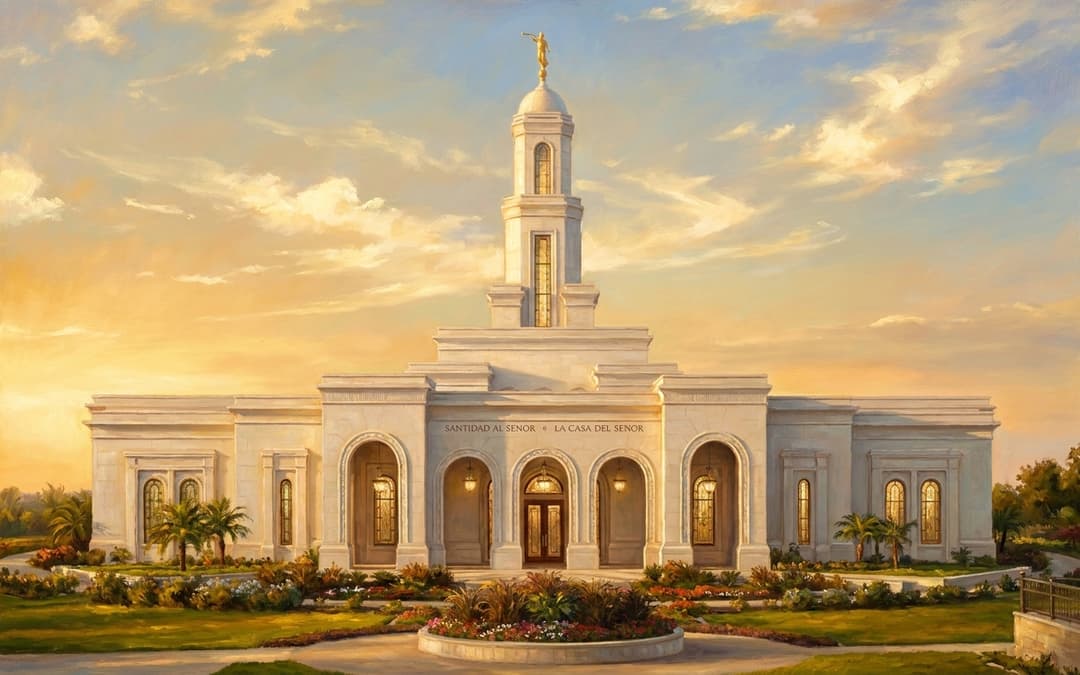
The Trujillo Peru Temple offers peaceful landscaped gardens open to visitors of all faiths. Situated along the road to Huanchaco, the site provides a quiet spiritual oasis featuring reflective fountains and native tropical plants.
Highlights
- Spanish Colonial Revival architecture reflecting local casonas
- Manicured grounds with tropical palms and native flower beds
- Views of the single central tower and golden Angel Moroni statue
Things to Know
- Interior access is reserved for endowed Church members with valid recommends
- On-site patron housing accommodation center is available for long-distance patrons
- Public visitors can freely explore exterior grounds during daylight hours
Location
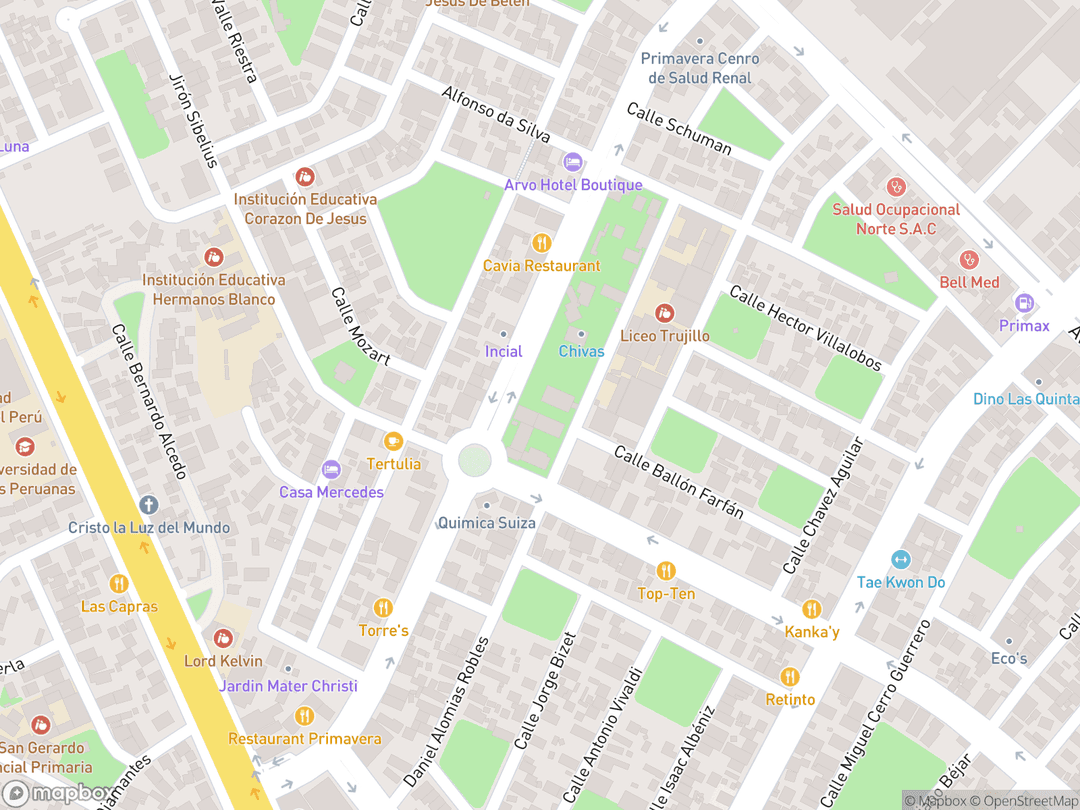
Av. Mansiche Km 3.5, Carretera a Huanchaco, Trujillo, La Libertad, Peru
Hours: Tuesday–Saturday 8:00 AM–8:00 PM
Getting There: Located 10-15 minutes from Trujillo Airport along the highway to Huanchaco, easily accessible by taxi or local bus routes.
Get DirectionsTips for Your Visit
Best Time to Visit
Late afternoon offers pleasant temperatures and soft equatorial lighting for photographing the granite exterior.
Nearby Landmarks
Combine your visit with a trip to the nearby historic pre-Columbian adobe city of Chan Chan.
About
The Trujillo Peru Temple stands as the 147th operating temple of The Church of Jesus Christ of Latter-day Saints worldwide and the second constructed in Peru. Located near the historic coastal city of Trujillo, it serves more than 88,000 members across northern Peru who previously traveled up to 18 hours by bus to reach the Lima Peru Temple.
Rooted in the ancient Judeo-Christian tradition of consecrated sanctuaries set apart from the world, Latter-day Saint temples build upon the biblical heritage of divine communion. Within these sacred walls, sacred priesthood ordinances center on Jesus Christ, uniting families for eternity and extending salvation across generational lines.
Designed in a refined Spanish Colonial Revival style, the edifice honors Trujillo's rich cultural heritage. Clad in brilliant white Brazilian granite, the temple reflects local architectural motifs while providing a serene environment for worship, prayer, and spiritual refuge.
Gallery
Symbolic Elements
The temple's exterior features intricate carvings, each rich with spiritual meaning:

Angel Moroni Statue
The golden statue atop the spire symbolizes the restoration of the gospel message to all nations.

Baptismal Font on Twelve Oxen
The font rests upon twelve cast oxen representing the twelve tribes of Israel following biblical precedent.

Progressive Instruction Layout
Sequential progression between instruction rooms symbolizes humanity's spiritual movement toward celestial glory.

Cantuta Floral Motifs
Carved cantuta designs celebrate Peru's sacred national flower within eternal worship settings.

Spanish Colonial Archways
Elegant entrance arches evoke regional historic casonas, symbolizing a welcoming sanctuary.

Wrought Ironwork Rejas
Custom exterior iron grills reflect local Peruvian crafts while symbolizing physical and spiritual protection.

Branco Ceara White Granite
Reflective white Brazilian granite signifies holiness, purity, and enduring strength against coastal elements.
Interesting Facts
The temple was dedicated on Father's Day in 2015, a theme highlighted during the prayer. (Tier A)
It sits adjacent to Chan Chan, the largest pre-Columbian adobe city in South America. (Tier B)
Church planners adjusted the site location to 8.9 acres to accommodate patron housing. (Tier A)
Exterior walls are clad in Branco Ceara granite imported from Brazil. (Tier B)
Before 2015, members in northern Peru faced up to 18-hour bus trips to reach Lima. (Tier A)
The illuminated tower served as a prominent nighttime landmark during construction. (Tier C)
Over 1,400 local youth performed traditional Marinera dances at the cultural event. (Tier A)
The interior features a two-stage progressive instruction room setup. (Tier B)
Common Questions
Who can enter the Trujillo Peru Temple?
The grounds are open to everyone, while interior access is reserved for baptized Church members with valid temple recommends.
What architectural style is used for the temple?
The building features a Spanish Colonial Revival style modeled after historic Trujillo mansions.
Is housing available for traveling patrons?
Yes, the 8.9-acre complex includes an on-site patron housing facility for long-distance visitors.
How far is the temple from downtown Trujillo?
It is located roughly 10 minutes northwest of central Trujillo along the highway to Huanchaco.
Featured Stories
Dedicated on Father's Day
June 21, 2015
President Dieter F. Uchtdorf dedicated the Trujillo Peru Temple on Father's Day, emphasizing the eternal nature of Heavenly Father's love and divine family organization. The dedication marked a joyous milestone for thousands of local families who had sacrificed for decades to attend the distant temple in Lima.
Source: Church Newsroom
Regional Youth Cultural Celebration
June 20, 2015
The evening before the temple dedication, more than 1,400 Latter-day Saint youth gathered at the Gran Chimú Coliseum in Trujillo. Dressed in vivid traditional costumes, they performed traditional Peruvian dances, including the iconic regional Marinera dance, celebrating their cultural identity and faith.
Source: Church Newsroom
Site Relocation for Long-Distance Patrons
September 14, 2011
Church leaders originally selected a smaller urban chapel site in Trujillo, but later acquired an expansive 8.9-acre parcel along the Huanchaco highway. This strategic shift enabled the construction of an on-site accommodation center to support patrons traveling from remote northern provinces.
Source: Church History Department
Timeline
First Missionaries Arrive
The first Latter-day Saint missionaries arrive in Trujillo to establish a branch.
First Baptisms
The first local converts in Trujillo are baptized into the Church.
First Meetinghouse Consecrated
Elder Spencer W. Kimball dedicates Trujillo's first meetinghouse.
Stake Organized
Elder Thomas S. Monson organizes the Trujillo Peru Stake.
Lima Temple Dedicated
The Lima Peru Temple opens, requiring northern members to take long bus journeys south.
Temple Announced
President Thomas S. Monson officially announces the Trujillo Peru Temple.
Groundbreaking
Elder Rafael E. Pino presides over the ceremonial groundbreaking.
Open House Begins
Public open house opens the temple interior to tens of thousands of visitors.
Cultural Celebration
Over 1,400 youth present a vibrant cultural performance in Trujillo.
Dedication
President Dieter F. Uchtdorf formally dedicates the temple on Father's Day.
History by Decade
1960s — Early Missionary Expansion
Missionaries arrived in Trujillo in 1960, establishing the first local branch of the Church. Within months, local converts were baptized, leading to the construction and consecration of Trujillo's first meetinghouse by Elder Spencer W. Kimball in 1963.
1970s–1980s — Stake Growth and Sacrificial Journeys
Elder Thomas S. Monson organized the Trujillo Peru Stake in 1978. Following the 1986 dedication of the Lima Peru Temple, northern members faithfully endured 10- to 18-hour bus journeys down the Pan-American Highway to participate in sacred temple worship.
2000s — Announcement and Site Acquisition
President Thomas S. Monson announced plans for the Trujillo Peru Temple in December 2008. Church leaders acquired an 8.9-acre site on the Huanchaco corridor to host both the temple and visitor lodging.
2010s — Construction and Consecration
Groundbreaking occurred in September 2011, followed by years of meticulous construction using Brazilian granite. Tens of thousands attended the May 2015 open house prior to President Uchtdorf's formal dedication on Father's Day, June 21, 2015.
Architecture & Facilities
The Trujillo Peru Temple presents a sophisticated Spanish Colonial Revival design tailored to honor Trujillo's historic heritage as the City of Eternal Spring. Emulating local colonial mansions, the building features symmetrical window placements, classical arched entryways, stone moldings, and a central stepped tower capped with a golden Angel Moroni statue.
Building Materials
Exterior Cladding
Polished Branco Ceara white granite imported from Brazil provides a weather-resistant, reflective facade.
Millwork
Custom carved Peruvian hardwoods and dark mahogany trims line interior doors and structural moldings.
Hardware
Heavy bronze and bronze-coated hardware accent entries with regional lattice patterns.
Art Glass
Stained glass windows showcase subtle gold, cream, and soft green geometric lattices inspired by local flora.
Interior Features
Baptistry
A subterranean font crafted with decorative tiles rests upon twelve life-sized cast oxen.
Instruction Rooms
Two progressive instruction rooms feature hand-painted murals depicting northern Peruvian coastal river valleys.
Celestial Room
A tranquil room featuring ornate crystal chandeliers, light carpets, and gilded plaster moldings.
Sealing Rooms
Two intimate sealing rooms contain mirrored walls and custom altars for eternal marriage ceremonies.
Temple Grounds
The 8.9-acre property features manicured lawns, tropical palms, floral gardens, reflective water features, and secure iron perimeter fencing.
Additional Facilities
An on-site patron housing facility offers overnight accommodations, dining spaces, and changing rooms for traveling members, alongside a Church Distribution Center.
Religious Significance
In harmony with Christian doctrine and Abrahamic temple traditions, Latter-day Saints regard temples as sacred spaces consecrated directly to the Lord. Unlike standard chapels used for Sunday worship, the temple is dedicated exclusively to performing saving ordinances that center on the Atonement of Jesus Christ.
To provide a holy sanctuary where sacred covenants are made and eternal families are sealed together.
Sacred Ordinances
Baptism for the Dead
Vicarious baptisms performed on behalf of deceased ancestors, fulfilling Christ's mandate regarding universal salvation.
Endowment
Sacred instruction detailing God's plan of salvation, creation, and covenants of righteousness and obedience.
Eternal Sealing
Priesthood ordinances binding husbands, wives, and children together for eternity.
Houses of the Lord
Temples fulfill biblical prophecy by establishing consecrated sanctuaries where humanity can make binding covenants with God.
Generational Salvation
Through vicarious proxy work, Latter-day Saints extend gospel blessings to past generations across temporal boundaries.
Similar Temples
Sources & Research
Every fact on Temples.org is backed by verified Sources & Research. Each piece of information is rated by source tier and confidence level.
View All Sources (5)
| Field | Source | Tier | Retrieved |
|---|---|---|---|
| About & Historical Background | The Church of Jesus Christ of Latter-day Saints (opens in a new tab) | A | 2026-02-22 |
| Architecture & Design | UNESCO World Heritage Centre (opens in a new tab) | B | 2026-02-22 |
| Visitor Insights | ChurchofJesusChristTemples.org (opens in a new tab) | C | 2026-02-22 |
| Timeline & Featured Stories | LDS Living (opens in a new tab) | B | 2026-02-22 |
| About & Historical Background | Church History Department (opens in a new tab) | A | 2026-02-22 |