Visitor Insights
Visiting Cebu City Philippines Temple
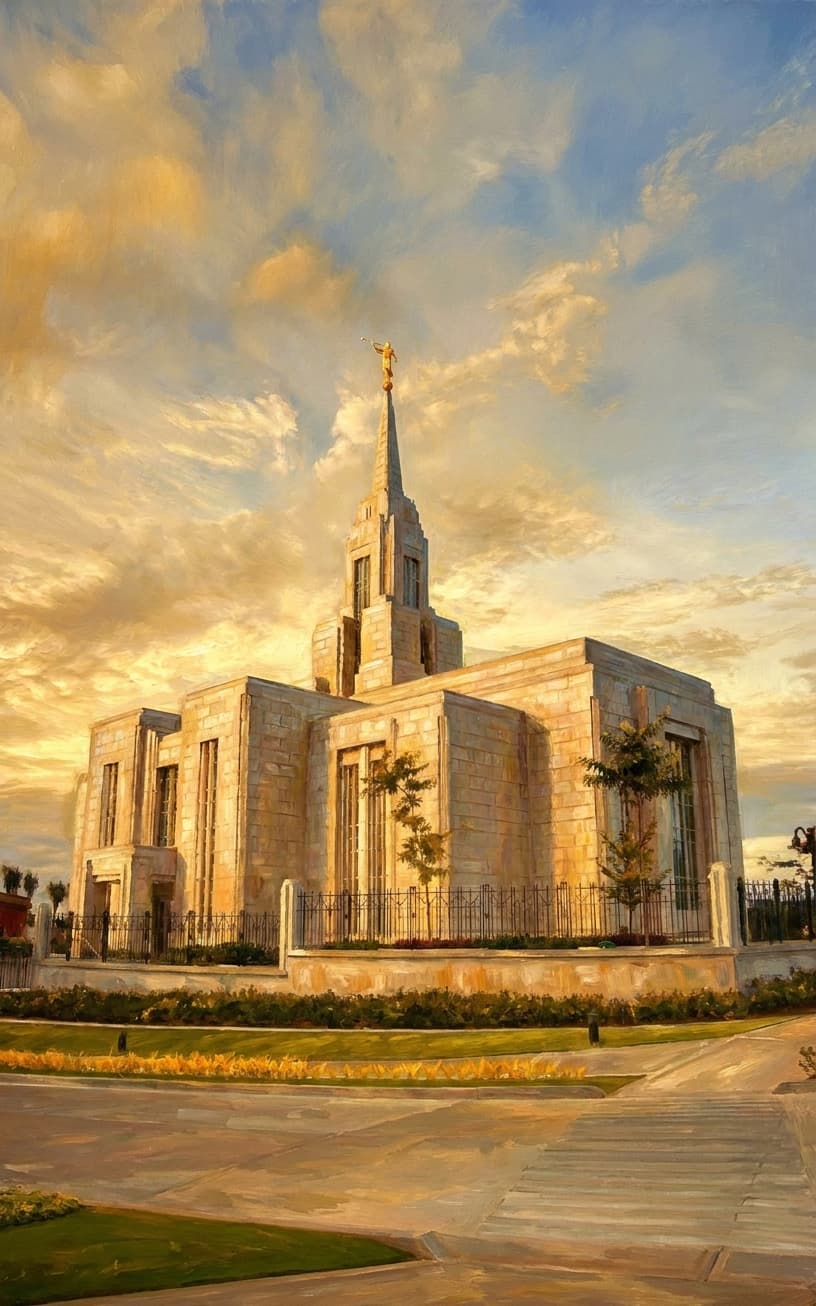
The Cebu City Philippines Temple grounds offer a serene and beautifully manicured oasis amidst the bustling urban environment of Lahug. Visitors of all faiths are welcome to walk the peaceful paved pathways, admire the vibrant tropical landscaping, and enjoy the tranquil water features during daylight hours. The temple's exterior, clad in brilliant Mountain Grey granite, reflects the tropical sunlight beautifully, making it a popular spot for quiet contemplation and photography. While the interior is reserved for Latter-day Saint patrons holding a valid recommend, the exterior grounds provide a deeply spiritual and restful atmosphere for everyone.
Highlights
- Stunning Mountain Grey granite exterior that glows during the golden hour
- Lush, tropical gardens featuring native Philippine flora and peaceful water fountains
- A complete spiritual campus including a chapel, patron housing, and family history center
Things to Know
- The interior of the temple is closed to the general public; only the grounds are accessible
- Visitors are asked to maintain a quiet, respectful demeanor to preserve the sacred atmosphere
- There is no public visitors' center on this specific temple site
Location
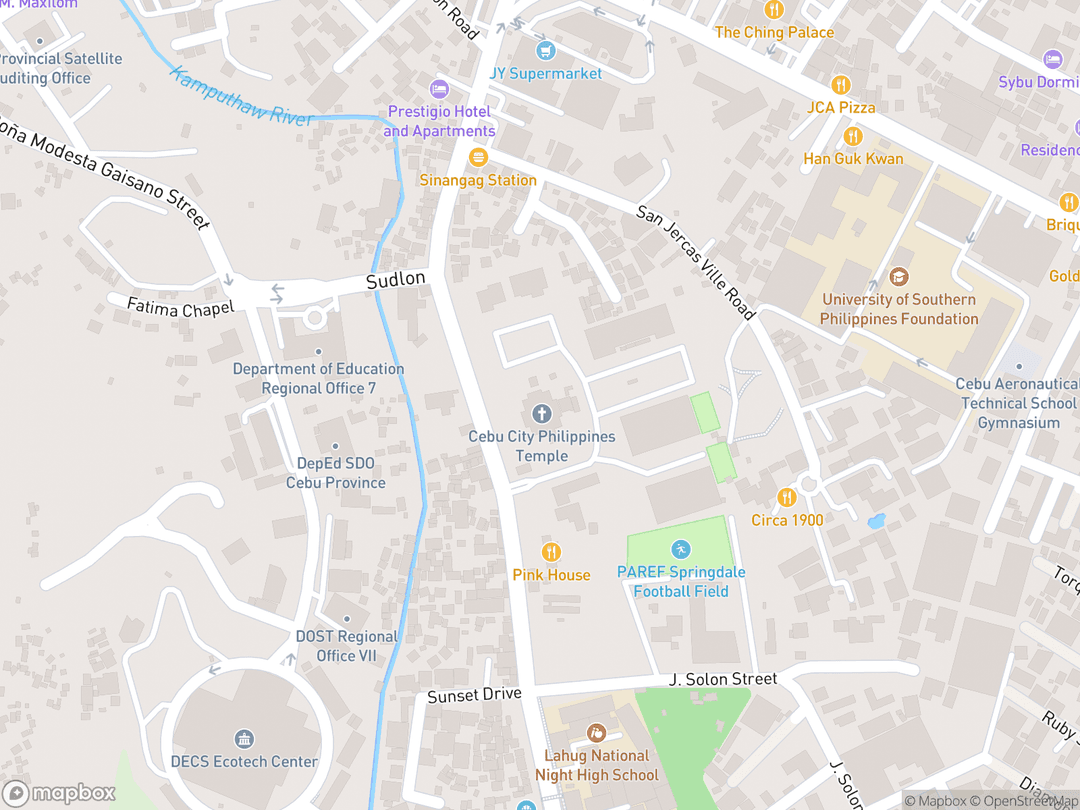
Gorordo Avenue, Barangay Lahug, Cebu City, 6000 Cebu, Philippines
Hours: The temple grounds are open daily to the public from sunrise to sunset. Patron housing and the arrival center operate on specific schedules for traveling members.
Getting There: Located on Gorordo Avenue in Barangay Lahug, Cebu City. Easily accessible via local taxi, private vehicle, or public jeepneys running the Lahug routes. It is situated near the Cebu IT Park and Lahug Elementary School.
Get DirectionsTips for Your Visit
Visit During the Golden Hour
The late afternoon sun catches the Mountain Grey granite and the gilded angel Moroni statue beautifully, creating a spectacular view for photographers.
Explore the Full Campus
Take time to walk around the entire 11.6-acre site, which includes a chapel, family history center, and beautifully landscaped walkways.
Dress Respectfully
As this is a sacred site, wearing modest clothing is highly recommended when walking the temple grounds.
About
The Cebu City Philippines Temple stands as a magnificent spiritual landmark in the heart of the Visayas region, serving as a sacred sanctuary of peace, covenant-making, and community devotion. Within the broader context of the Christian theological tradition, the temple represents a modern manifestation of the biblical concept of a sacred space dedicated entirely to God. Much like the ancient Temple of Solomon, it is revered by Latter-day Saints as a literal "House of the Lord," where individuals seek closer communion with the Divine and escape the distractions of the world.
For members of The Church of Jesus Christ of Latter-day Saints in the southern islands of the Philippines, the construction of this temple marked a monumental shift in their religious practice. Prior to its dedication, patrons from the Visayas and Mindanao regions faced grueling, expensive journeys to attend the temple in Manila, often requiring a 30-hour ferry ride. The Cebu City temple brought these essential saving ordinances—such as eternal marriages and baptisms for ancestors—directly to the local community, fostering a deep sense of spiritual connection and resilience.
The temple complex is designed as a comprehensive spiritual campus, integrating the sacred temple edifice with patron housing, a meetinghouse, and beautifully landscaped gardens. This holistic layout accommodates traveling patrons who journey from distant islands, providing them with physical rest alongside spiritual renewal. The temple's presence in Cebu City continues to be a beacon of hope and faith, standing strong against natural disasters and serving as a testament to the enduring devotion of the Filipino Saints.
Gallery
Symbolic Elements
The temple's exterior features intricate carvings, each rich with spiritual meaning:

The Pearl Motif
Harvested extensively throughout the warm waters of the Philippine archipelago, the pearl is a major local symbol. In the temple, it represents Jesus Christ's parable of the 'pearl of great price,' symbolizing the supreme worth of the gospel and the purity required of those who enter the House of the Lord.

Mountain Grey Granite
The exterior is faced with durable Mountain Grey granite imported from China. This stone gives the temple a brilliant, light-grey appearance that stands out against the tropical sky, symbolizing the enduring strength and timeless nature of eternal covenants.
The Angel Moroni
Crowning the single spire is the gilded statue of the angel Moroni blowing a trumpet. This represents the spreading of the restored gospel of Jesus Christ to all nations, fulfilling the biblical prophecy of an angel flying in the midst of heaven with the everlasting gospel.

Archipelagic Color Palette
The interior features soft shades of turquoise, aqua blue, deep island greens, gold, and soft rose. This palette mirrors the natural beauty of the Philippine islands, reminding patrons of the divine organization of the earth and the peace found in aligning with spiritual laws.

Single Central Spire
The single attached central spire rises 140 feet above the ground, drawing the eye heavenward. This architectural feature symbolizes humanity's spiritual ascension and the connection between the earthly temple and the heavenly realms.

Philippine Mahogany Woodwork
The temple's furniture was manufactured locally using native Philippine mahogany, incorporating subtle cultural motifs. This symbolizes the integration of local identity and craftsmanship into the global house of worship, honoring the heritage of the Filipino Saints.

Swarovski Crystal Chandeliers
The celestial and sealing rooms are illuminated by magnificent Schonbek chandeliers featuring Austrian Swarovski crystals. The brilliant refraction of light symbolizes the purity, clarity, and eternal glory of the celestial kingdom.
Interesting Facts
Prior to 2010, members in the Visayas and Mindanao regions faced a grueling 30-hour ferry journey to reach the nearest temple in Manila. (Tier A)
During the 7.2 magnitude earthquake in 2013, the angel Moroni statue rotated exactly 90 degrees to face south instead of east. (Tier A)
The temple's advanced seismic engineering allowed it to survive the devastating 2013 earthquake completely unscathed structurally. (Tier A)
The interior features hand-painted murals of local tropical landscapes by renowned Philippine artist Adler Llagas. (Tier B)
The temple's furniture was manufactured locally in the Philippines using native Philippine mahogany. (Tier B)
A Catholic nun who toured the temple during the open house remarked that the experience bridged the gap and helped her understand its sacredness. (Tier B)
A local Buddhist leader praised the temple during the open house, calling it a special and holy place where one can feel the presence of God. (Tier B)
Elder Dallin H. Oaks, who broke ground for the temple, lived in the Philippines from 2002 to 2004 while serving as the Area President. (Tier A)
The temple site is one of the most complete spiritual campuses in the world, housing patron lodging, a chapel, and mission offices. (Tier C)
The cultural celebration held the night before the dedication featured over 2,000 youth performing traditional Filipino dances. (Tier A)
The exterior stone is Mountain Grey granite imported from China, chosen for its durability and brilliant light-grey appearance. (Tier B)
Common Questions
Why is the Cebu City Philippines Temple significant to local members?
Prior to its dedication in 2010, members living in the Visayas and Mindanao regions had to travel to Manila to attend the temple. This often required a grueling and expensive 30-hour ferry journey, meaning many families could only afford to go once in their lifetime. The Cebu City temple brought these sacred ordinances directly to the southern islands, dramatically reducing travel time and financial burdens.
Can the general public tour the inside of the temple?
The interior of the temple is reserved for members of the Church who hold a valid temple recommend, as it is a deeply sacred space. However, the beautifully landscaped grounds, gardens, and walkways are open to the general public of all faiths during daylight hours.
What happened to the angel Moroni statue during the 2013 earthquake?
On October 15, 2013, a powerful 7.2 magnitude earthquake struck Bohol and Cebu. While the temple's advanced seismic engineering prevented any structural damage, the intense shaking caused the angel Moroni statue to rotate exactly 90 degrees, shifting its gaze from east to south. It was safely returned to its original eastward-facing position by engineers on January 22, 2014.
What materials were used in the construction of the temple?
The temple features a global palette of high-quality materials. The exterior is clad in Mountain Grey granite imported from China. The interior features Fairfax granite from China, Verde Yellow stone from Italy, Condor White marble from Greece, African sapele mahogany woodwork, and Austrian Swarovski crystals in the chandeliers. The furniture was manufactured locally using native Philippine mahogany.
What facilities are available on the temple site?
The Cebu City temple site is a comprehensive 11.6-acre spiritual campus. It includes the temple itself, an adjacent 16,900-square-foot meetinghouse (chapel), a patron housing facility for overnight lodging, residences for the temple and mission presidents, the Cebu Philippines Mission office, a family history center, and a Latter-day Saint distribution center.
Featured Stories
The 30-Hour Ferry Sacrifice
Pre-2010 Era
Before the dedication of the Cebu City Philippines Temple in 2010, Latter-day Saints living in the southern islands of the Visayas and Mindanao faced immense obstacles to attend the temple. The only operating temple in the country was located in Manila, requiring a costly and grueling 30-hour journey by ferry. Many impoverished families saved for years, sacrificing basic necessities just to make the trip once in their lifetime to be sealed as an eternal family. The construction of the Cebu City temple brought these sacred ordinances within reach, transforming their spiritual lives and reducing a multi-day journey to a matter of hours.
Source: Church History Department
The Earthquake and the South-Facing Angel
October 15, 2013
On October 15, 2013, a devastating 7.2 magnitude earthquake struck Bohol and Cebu, causing widespread destruction to historic buildings and churches across the region. While the Cebu City temple's robust seismic engineering prevented any structural damage, the intense shaking caused the gilded angel Moroni statue atop the spire to rotate exactly 90 degrees. Instead of its traditional eastward gaze symbolizing the Second Coming, the angel pointed due south toward the islands of Mindanao. For three months, the south-facing angel stood as a unique symbol of resilience until engineering crews safely realigned the statue to face east on January 22, 2014.
Source: Temple Facts & Engineering Records
Interfaith Unity at the Open House
May 2010
During the public open house in May 2010, the Cebu City temple became a beautiful focal point for interfaith harmony. Tens of thousands of visitors toured the sacred building, including prominent civic leaders and representatives from various religious traditions. Sister Elnora, a Catholic nun from the Religious of the Assumption, remarked that the tour bridged the gap of understanding and left her deeply impressed by the profound feeling of sacredness inside. Similarly, Venerable Miao Chen of the local Fu Guang Chu Un Buddhist Temple declared the edifice to be a holy place where one can truly feel the presence of God, highlighting a shared reverence for sacred spaces.
Source: Church Newsroom
Timeline
First Unofficial Meetings
Latter-day Saint servicemen organize the first unofficial church meetings in Tacloban at a U.S. naval installation following the landing at Leyte.
EventDedication of the Land
Elder Gordon B. Hinckley officially opens the Philippines for missionary work during a dedicatory prayer at the American War Memorial Cemetery.
MilestoneManila Temple Dedicated
The Manila Philippines Temple is dedicated, establishing the first sacred temple sanctuary on Philippine soil.
EventTemple Announcement
The First Presidency announces plans to construct a second temple in the Philippines, to be located in Cebu City.
MilestoneGroundbreaking Ceremony
Elder Dallin H. Oaks of the Quorum of the Twelve Apostles presides over the groundbreaking ceremony, assisted by Elder Quentin L. Cook.
component.timeline.groundbreakingAngel Moroni Placement
The gold-leafed statue of the angel Moroni is hoisted and secured atop the temple's single spire.
MilestonePublic Open House Begins
The temple opens its doors to the public for a multi-week open house, welcoming tens of thousands of visitors of all faiths.
EventOpen House Concludes
The public open house concludes after hosting prominent civic, interfaith, and religious leaders from across the region.
EventYouth Cultural Celebration
Over 2,000 Latter-day Saint youth perform traditional Filipino dances and music at the Cebu Coliseum.
EventTemple Dedication
President Thomas S. Monson formally dedicates the Cebu City Philippines Temple as the 133rd operating temple of the Church.
DedicationBohol-Cebu Earthquake
A devastating 7.2 magnitude earthquake strikes the region. The temple suffers no structural damage, but the angel Moroni statue rotates 90 degrees.
EventAngel Moroni Realignment
Engineering crews safely return the angel Moroni statue to its original eastward-facing position.
RenovationBacolod Temple Groundbreaking
Ground is broken for the Bacolod Philippines Temple, expanding the temple network in the Visayas region.
EventTacloban Temple Groundbreaking
Ground is broken for the Tacloban Philippines Temple, bringing temple blessings even closer to members in the eastern Visayas.
EventUrdaneta Temple Dedicated
The dedication of the Urdaneta Philippines Temple further strengthens the network of temples serving the Filipino Saints.
EventHistory by Decade
1940s–1960s — Seeds of Faith
The history of the Church in the Philippines began during the crucible of World War II. Following the American landing at Leyte in October 1944, Latter-day Saint servicemen organize the first unofficial church meetings in Tacloban. On April 28, 1961, Elder Gordon B. Hinckley, then an Assistant to the Quorum of the Twelve Apostles, gathered with a small group of Saints at the American War Memorial Cemetery in Fort Bonifacio to dedicate the land for missionary work, paving the way for rapid growth across the archipelago.
1980s — The First Temple in Manila
In September 1984, the Manila Philippines Temple was dedicated, providing the first sacred sanctuary on Philippine soil. While this was a monumental milestone, it highlighted the geographic challenges faced by members living in the southern islands. For Saints in the Visayas and Mindanao regions, traveling to Manila was an immense financial and physical burden, often requiring long, expensive flights or grueling 30-hour ferry journeys. The need for a second temple in the southern islands became increasingly clear as membership continued to surge.
2000s — Announcement and Groundbreaking
On April 18, 2006, the First Presidency officially announced plans to construct a temple in Cebu City to serve the southern regions. The groundbreaking ceremony took place on November 14, 2007, presided over by Elder Dallin H. Oaks, who had a deep personal connection to the Filipino people having served as the Area President from 2002 to 2004. Construction progressed steadily over the next few years, culminating in the hoisting of the gold-leafed angel Moroni statue atop the single spire on November 5, 2009.
2010s–Present — Dedication and Resilience
The temple was formally dedicated on June 13, 2010, by President Thomas S. Monson, following a vibrant cultural celebration featuring over 2,000 youth. In October 2013, the temple's structural integrity was tested when a massive 7.2 magnitude earthquake struck Bohol and Cebu. While historic structures throughout the region collapsed, the temple emerged completely undamaged, save for the rotation of the angel Moroni statue. Today, the temple remains a spiritual anchor as the temple network in the Philippines continues to expand.
Architecture & Facilities
The Cebu City Philippines Temple features a classic modern architectural style characterized by clean, vertical lines, a symmetrical facade, and a single attached central spire that draws the eye heavenward. The design emphasizes light, height, and geometric order, creating a physical representation of spiritual ascension. It beautifully blends international materials with local craftsmanship to create an edifice that feels both globally significant and deeply rooted in its local tropical environment.
Building Materials
Mountain Grey Granite Cladding
Imported from China, this durable, high-quality stone gives the temple a brilliant, light-grey appearance that stands out beautifully against the tropical sky and resists weathering in the humid Philippine climate.
African Sapele Mahogany Woodwork
The majority of the interior woodwork, including the beautifully detailed doors and moldings, is crafted from African sapele mahogany, prized for its rich, interlocking grain pattern.
Philippine Mahogany Furnishings
The temple's furniture was manufactured locally in the Philippines using native Philippine mahogany, incorporating subtle cultural motifs that pay homage to the country's Spanish and Asian heritage.
Imported Interior Stone
The interior utilizes a rich palette of imported stones, including Fairfax Granite from China for high-traffic floors, Verde Yellow Stone from Italy for warm accents, and Condor White Marble from Greece for ordinance rooms.
Interior Features
Celestial Room
A quiet, sacred space symbolizing the peace and harmony of the celestial kingdom, illuminated by magnificent Schonbek chandeliers featuring Austrian Swarovski crystals.
Sealing Rooms
Sacred rooms where marriages are performed for eternity, featuring elegant mirrors facing each other to symbolize the infinite nature of family relationships.
Instruction Rooms
Rooms featuring original, hand-painted murals by renowned Philippine artist Adler Llagas, depicting lush, local tropical landscapes that bring a sense of local identity to the sacred space.
Baptistry
A sacred font resting on the backs of twelve sculpted oxen, symbolizing the twelve tribes of Israel, used for baptisms performed on behalf of deceased ancestors.
Temple Grounds
The temple sits on an expansive 11.6-acre site featuring beautifully manicured gardens, paved walkways, and peaceful water features. The landscaping utilizes native Philippine flora, creating a lush, tropical oasis that offers a serene retreat from the surrounding urban environment of Cebu City.
Additional Facilities
The temple complex includes an adjacent 16,900-square-foot meetinghouse, a patron housing facility to provide overnight lodging for visiting members, residences for the temple and mission presidents, the Cebu Philippines Mission office, a family history center, and a Latter-day Saint distribution center.
Religious Significance
To understand the religious significance of the Cebu City Philippines Temple, it is helpful to look at the broader theological context of the Christian tradition. Christians worldwide share a deep reverence for the temple as a biblical concept—a sacred space dedicated to God, reminiscent of the ancient Temple of Solomon, where humanity seeks closer communion with the Divine. Latter-day Saint theology builds upon this shared Christian foundation, viewing modern temples not as ordinary chapels for weekly congregational worship, but as literal "Houses of the Lord."
The core spiritual purpose of the temple is to provide a sacred, dedicated space where members can make eternal covenants with God and participate in saving ordinances that bridge the earthly and the eternal.
Sacred Ordinances
The Endowment
A sacred ceremony where patrons receive instruction regarding the plan of salvation and make personal covenants to follow the teachings of Jesus Christ.
Eternal Marriage (Sealing)
An ordinance that unites husbands, wives, and children in family relationships that endure beyond death, binding families together for eternity.
Baptism for the Dead
A vicarious ordinance where living members are baptized on behalf of their deceased ancestors, offering them the opportunity to accept the gospel in the spirit world.
The Pearl of Great Price
The prominent pearl motif throughout the temple's interior bridges directly to Jesus Christ's parable in Matthew 13:45–46. It symbolizes the supreme worth of the gospel of Jesus Christ, the purity required of those who enter the House of the Lord, and the priceless nature of the eternal covenants made within its walls.
A Sanctuary of Covenant-Making
In the Abrahamic tradition, covenants represent a sacred, binding agreement between God and His children. The Cebu City temple serves as a modern altar where these covenants are renewed and established, providing local Saints with a physical and spiritual anchor for their faith.
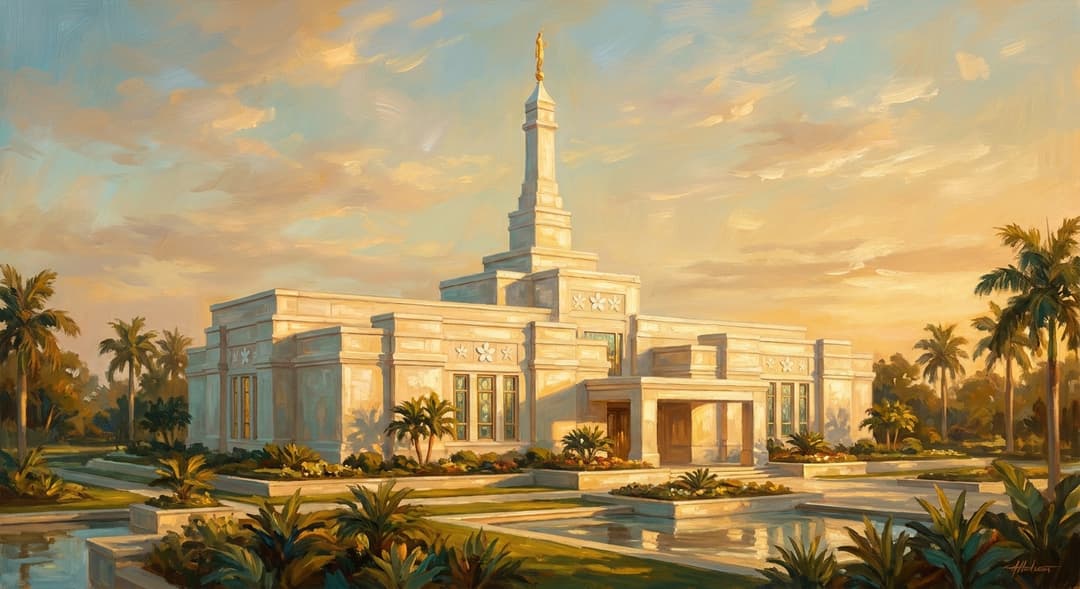
Similar Temples
Sources & Research
Every fact on Temples.org is backed by verified Sources & Research. Each piece of information is rated by source tier and confidence level.
View All Sources (8)
| Field | Source | Tier | Retrieved |
|---|---|---|---|
| About & Historical Background | The Church of Jesus Christ of Latter-day Saints (opens in a new tab) | A | 2026-02-18 |
| Timeline & Groundbreaking | ChurchofJesusChristTemples.org (opens in a new tab) | C | 2026-02-18 |
| Dedication & Cultural Celebration | The Church of Jesus Christ of Latter-day Saints (opens in a new tab) | A | 2026-02-18 |
| Symbolism & Design Motifs | Meridian Magazine (opens in a new tab) | C | 2026-02-18 |
| Architecture & Materials | Church News (opens in a new tab) | B | 2026-02-18 |
| Seismic Resilience & Earthquake History | Temple Facts (opens in a new tab) | C | 2026-02-18 |
| Visitor Experience & Photography | Photogent Temple Photography (opens in a new tab) | D | 2026-02-18 |
| Missionary History & Dedication of the Land | The Church of Jesus Christ of Latter-day Saints (opens in a new tab) | A | 2026-02-18 |