Visitor Insights
Visiting Manila Philippines Temple
The Manila Philippines Temple grounds offer a serene and peaceful environment for visitors. While there is no visitor's center, the beautifully landscaped gardens provide a place for reflection and contemplation. The temple is a sacred space for members of The Church of Jesus Christ of Latter-day Saints and a welcoming landmark for all who visit.
Highlights
- Beautifully landscaped gardens
- Peaceful and serene atmosphere
- Opportunity for reflection and contemplation
Things to Know
- No visitor's center on site
- Temple is a sacred space for members
Location

13 Temple Drive corner Whiteplains Avenue Greenmeadows Subdivision Ugong Norte Quezon City, 1110 Metro Manila Philippines
Hours: Grounds are open to the public during daylight hours.
Getting There: The temple is located at 13 Temple Drive, Greenmeadows Subdivision, Quezon City, Metro Manila. Public transportation is available.
Get DirectionsAbout
The Manila Philippines Temple stands as a beacon of faith in Quezon City, Metro Manila. As the first temple of The Church of Jesus Christ of Latter-day Saints in the Philippines, it holds a special place in the hearts of Filipino Latter-day Saints. Its construction and dedication marked a significant milestone in the growth of the Church in the region.
Announced in 1981 and dedicated in 1984, the temple provides a sacred space for members to participate in ordinances that unite families for eternity and strengthen their connection with God. The temple's presence in the Philippines reflects the Church's commitment to serving its members worldwide, offering opportunities for spiritual growth and service.
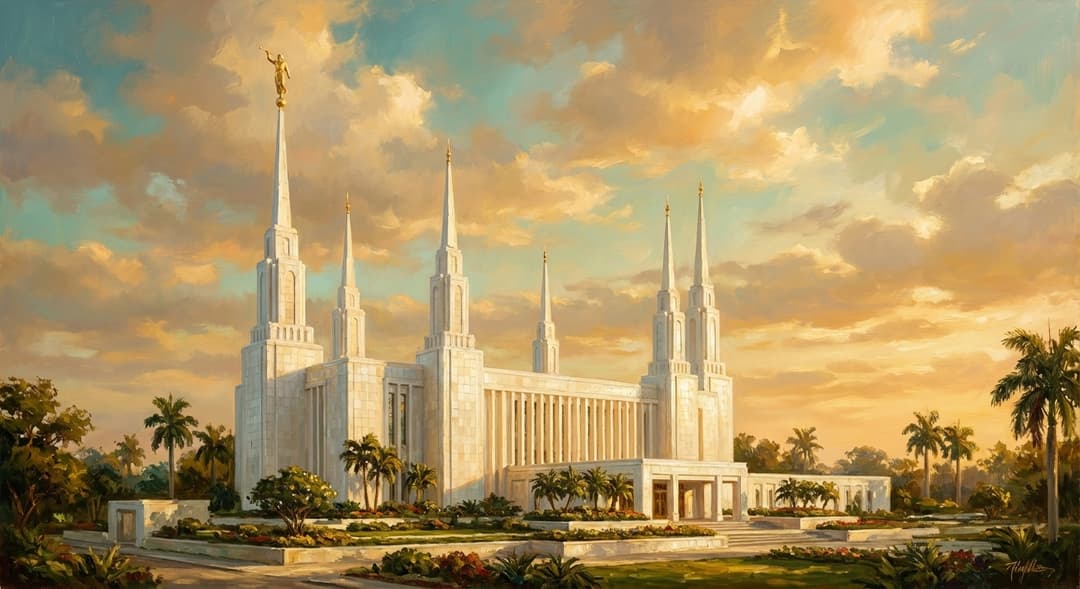
The Manila Philippines Temple, with its distinctive six-spire design and serene grounds, serves as a reminder of the enduring principles of faith, family, and service that are central to the teachings of Jesus Christ. It is a place where members can find peace, inspiration, and a deeper understanding of God's plan for them. As part of the Christian theological grouping (Abrahamic traditions), the temple emphasizes the importance of covenants and eternal families, aligning with core Christian beliefs.
Gallery
Symbolic Elements
The temple's exterior features intricate carvings, each rich with spiritual meaning:

Six Spires
The six spires of the Manila Philippines Temple represent the reaching towards heaven and symbolize the connection between the earthly and divine realms. Their upward orientation signifies the aspiration of Latter-day Saints to draw closer to God and receive His blessings. The spires serve as a visual reminder of the temple's sacred purpose and the eternal covenants made within its walls.

Angel Moroni Statue
The angel Moroni statue, which adorns the tallest spire, is a symbol of the restoration of the gospel of Jesus Christ. Moroni was an ancient prophet who revealed the Book of Mormon to Joseph Smith. The statue represents the angel mentioned in the Book of Revelation who was to bring the everlasting gospel to the world, signifying the divine mission of The Church of Jesus Christ of Latter-day Saints.

White Ceramic Tile Exterior
The exterior of the Manila Philippines Temple is finished with white ceramic tile, which symbolizes purity, cleanliness, and holiness. The pristine white color reflects the sacred nature of the temple and the spiritual cleansing that occurs within its walls. It represents the commitment of Latter-day Saints to live a life of righteousness and devotion to God.

Landscaped Grounds
The beautifully landscaped grounds surrounding the Manila Philippines Temple provide a peaceful and serene environment for visitors. The lush greenery, palm trees, and colorful vegetation create a tranquil setting that invites reflection and contemplation. The gardens symbolize the beauty of God's creation and the importance of finding peace and solace in nature.

Ordinance Rooms
The Manila Philippines Temple includes four ordinance rooms, which are sacred spaces where members participate in temple ordinances such as baptisms for the dead, endowments, and sealings. These rooms are designed to create a reverent atmosphere where individuals can focus on their covenants with God and receive spiritual blessings. The ordinance rooms symbolize the importance of temple worship in the lives of Latter-day Saints.

Sealing Rooms
The temple features three sealing rooms, where couples are married for eternity and families are united for eternity. These rooms are adorned with beautiful artwork and furnishings, creating a sacred and intimate setting for these important ordinances. The sealing rooms symbolize the eternal nature of family relationships and the importance of love and commitment in building strong families.

Baptistry
The baptistry in the Manila Philippines Temple is a special area where baptisms for the dead are performed. This ordinance allows individuals to be baptized on behalf of deceased ancestors who did not have the opportunity to be baptized in this life. The baptistry symbolizes the importance of extending the blessings of the gospel to all of God's children, both living and deceased.

Temple Annex
The temple annex provides additional space for temple patrons to prepare for and participate in temple ordinances. It includes dressing rooms, waiting areas, and other facilities that enhance the temple experience. The annex symbolizes the importance of providing a comfortable and welcoming environment for all who come to the temple to worship and serve.
Interesting Facts
The Manila Philippines Temple was the first temple built in the Philippines and the second in Asia.
The street where the temple is located was renamed to Temple Drive during its construction.
A typhoon approached Manila the day before the groundbreaking, but it changed direction after a missionary prayed for the weather to cooperate.
Nearly 27,000 people toured the temple during its 13-day open house.
The Manila Philippines Temple anchors a complex of Church buildings, including a temple annex, patron housing, a missionary training center, and area offices.
The temple grounds are known for their annual Christmas lights display.
In 1989, during a coup attempt, the temple grounds were overtaken by rebel forces, but the temple remained largely unharmed.
Filipinas Batchelor, the first native Filipino to be baptized in the Philippines, attended the temple dedication.
During the open house, more than 4,000 visitors bought a copy of the Book of Mormon.
The Manila Philippines Temple was dedicated five days after the Sydney Australia Temple.
Common Questions
What is the purpose of the Manila Philippines Temple?
The Manila Philippines Temple is a sacred building dedicated to performing holy ordinances and making covenants with God. These ordinances include baptisms for the dead, endowments, and sealings, which unite families for eternity. It provides a place where members can strengthen their connection with God and find peace and inspiration.
When was the Manila Philippines Temple dedicated?
The Manila Philippines Temple was dedicated from September 25–27, 1984, by President Gordon B. Hinckley.
How can I visit the Manila Philippines Temple?
The grounds of the Manila Philippines Temple are open to the public and offer a peaceful environment for reflection and contemplation. The temple itself is open to members of The Church of Jesus Christ of Latter-day Saints who are worthy and have a temple recommend.
What is the significance of the angel Moroni statue on the temple?
The angel Moroni statue, which tops the tallest spire of the temple, is symbolic of the restoration of the gospel of Jesus Christ. It represents the angel mentioned in the Book of Revelation who was to bring the everlasting gospel to the world.
What are the ordinances performed in the temple?
The ordinances performed in the temple include baptisms for the dead, endowments, and sealings. Baptisms for the dead allow individuals to be baptized on behalf of deceased ancestors who did not have the opportunity to be baptized in this life. Endowments provide individuals with a greater understanding of God's plan and make covenants with Him. Sealings unite families for eternity, ensuring that those relationships can continue beyond this life.
Featured Stories
Announcement of the Manila Philippines Temple
April 1, 1981
On April 1, 1981, Latter-day Saints in the Philippines rejoiced as Church President Spencer W. Kimball announced the construction of a temple in Manila. This announcement marked a significant milestone for The Church of Jesus Christ of Latter-day Saints in the Philippines, as it would be the first temple in the country and the second in Asia. The news spread quickly throughout the Filipino Latter-day Saint community, filling hearts with gratitude and anticipation for the blessings that a temple would bring.
The announcement was particularly meaningful because it came after years of dedicated service and growth within the Church in the Philippines. Filipino members had demonstrated unwavering faith and commitment to the gospel, and the temple would provide them with a sacred space to perform ordinances and strengthen their connection with God. The temple was seen as a symbol of God's love and recognition of the sacrifices and devotion of the Filipino Saints.
Source: The Church of Jesus Christ of Latter-day Saints Newsroom
Dedication of the Manila Philippines Temple
September 25–27, 1984
The dedication of the Manila Philippines Temple from September 25–27, 1984, was a historic event for Latter-day Saints in the Philippines. President Gordon B. Hinckley presided over the nine dedicatory sessions, each filled with spiritual power and reverence. Members traveled from all over the Philippines to attend the dedication, eager to participate in this sacred occasion and witness the fulfillment of a long-awaited dream.
During the dedicatory services, President Hinckley offered a prayer of dedication, consecrating the temple for its sacred purposes. He expressed gratitude for the faith and devotion of the Filipino Saints and prayed for God's blessings to rest upon the temple and all who would enter its doors. The dedication of the Manila Philippines Temple marked a new chapter in the history of the Church in the Philippines, providing a beacon of hope and a place of refuge for generations to come.
Source: The Church News
The Temple During a Coup Attempt
1989
In 1989, the Manila Philippines Temple faced an unexpected challenge when rebel forces occupied areas near the temple during a coup attempt. The temple grounds were overtaken by soldiers, and the surrounding area became a scene of conflict and uncertainty. Despite the turmoil, the temple itself remained largely unharmed, and the spirit of peace and reverence within its walls was preserved.
The events of the coup attempt served as a reminder of the importance of faith and resilience in the face of adversity. The temple stood as a symbol of hope and stability amidst the chaos, offering a place of refuge for those seeking solace and strength. The experience strengthened the resolve of Filipino Latter-day Saints to uphold their faith and continue to serve God and their fellowmen, even in the midst of challenging circumstances.
Source: The Church of Jesus Christ of Latter-day Saints History Department
Timeline
First Church Service in the Philippines
Two Church members, Willard Call and George Seaman, held the first Church service in the Philippines during the Spanish-American War.
MilestoneFirst Filipino Baptized
Aniceta Pabilona Fajardo became the first Filipino to be baptized into The Church of Jesus Christ of Latter-day Saints.
MilestonePhilippines Dedicated for Preaching
President Joseph Fielding Smith dedicated the Philippines for the preaching of the gospel.
MilestoneLegal Recognition Granted
The government of the Philippines granted legal recognition to The Church of Jesus Christ of Latter-day Saints, and the first four missionaries arrived in Manila.
MilestoneFirst Stake Organized
The first stake (diocese) of The Church of Jesus Christ of Latter-day Saints in the Philippines was organized.
MilestoneTemple Announced
Church President Spencer W. Kimball announced a temple for Manila, Philippines.
component.timeline.announcementGroundbreaking and Site Dedication
Ground was broken for the temple with President Gordon B. Hinckley presiding.
component.timeline.groundbreakingPublic Open House
The Manila Philippines Temple held a public open house, allowing visitors to tour the newly constructed temple.
EventTemple Dedication
The Manila Philippines Temple was dedicated in nine sessions by President Gordon B. Hinckley.
DedicationMissionary Training Center Established
A missionary training center was established in Manila to prepare missionaries for service in the Philippines and other parts of Asia.
EventBook of Mormon Published in Tagalog
Selections from the Book of Mormon were published in the Filipino language Tagalog.
MilestoneCoup Attempt
During a coup attempt, rebel forces occupied areas near the temple, resulting in minor damage to the temple.
EventTemporary Closure Due to Pandemic
The Manila Philippines Temple was temporarily closed due to the COVID-19 pandemic.
RenovationTemple Reopened
The Manila Philippines Temple reopened after a temporary closure due to the COVID-19 pandemic.
RenovationTemple Continues to Serve
The Manila Philippines Temple continues to serve the Latter-day Saints of the Philippines, providing a sacred space for worship and service.
EventHistory by Decade
1890s — Early Church Contact
The first contact The Church of Jesus Christ of Latter-day Saints had with the Philippines occurred during the Spanish-American War in 1898. Two Church members, Willard Call and George Seaman, held the first Church service in the Philippines. This marked the beginning of the Church's presence in the country, laying the foundation for future growth and development.
1940s — First Filipino Baptism
In 1945, Aniceta Pabilona Fajardo became the first Filipino to be baptized into The Church of Jesus Christ of Latter-day Saints. This event was a significant milestone in the history of the Church in the Philippines, as it marked the beginning of the conversion of native Filipinos to the faith. Aniceta's baptism paved the way for the growth of the Church among the Filipino people.
1950s — Dedication for Preaching
In 1955, President Joseph Fielding Smith dedicated the Philippines for the preaching of the gospel. This dedication was a pivotal moment in the Church's history in the Philippines, as it opened the door for increased missionary work and the spread of the gospel message throughout the country. The dedication symbolized the Church's commitment to sharing the blessings of the gospel with the Filipino people.
1960s — Legal Recognition and Missionary Arrival
The 1960s brought significant progress for the Church in the Philippines. In 1961, the government of the Philippines granted legal recognition to The Church of Jesus Christ of Latter-day Saints. This recognition allowed the Church to operate freely and openly in the country. The first four missionaries arrived in Manila, marking the beginning of formal missionary work in the Philippines.
1970s — First Stake Organized
In 1973, the first stake (diocese) of The Church of Jesus Christ of Latter-day Saints in the Philippines was organized. This event was a major step forward in the growth and maturity of the Church in the Philippines. The organization of the first stake demonstrated the increasing strength and self-sufficiency of the Filipino Latter-day Saint community.
1980s — Temple Announcement and Dedication
The 1980s were a decade of great significance for the Church in the Philippines. In 1981, Church President Spencer W. Kimball announced the construction of a temple in Manila. This announcement was met with great joy and anticipation by Filipino Latter-day Saints. In 1984, the Manila Philippines Temple was dedicated by President Gordon B. Hinckley, providing a sacred space for members to perform ordinances and strengthen their connection with God.
1990s — Growth and Consolidation
The 1990s saw continued growth and consolidation for the Church in the Philippines. Membership increased, new meetinghouses were built, and the Church expanded its outreach and service efforts throughout the country. The Manila Philippines Temple served as a beacon of faith and a center of spiritual strength for Latter-day Saints in the Philippines.
2000s — Continued Expansion
The Church continued to expand its presence in the Philippines during the 2000s. New stakes were organized, and the Church focused on strengthening families and communities. The Manila Philippines Temple played a vital role in providing opportunities for members to participate in temple ordinances and receive spiritual blessings.
2010s — Strengthening the Church
The 2010s were a time of strengthening the Church in the Philippines. Emphasis was placed on leadership development, youth programs, and missionary work. The Manila Philippines Temple continued to be a source of inspiration and a symbol of the Church's commitment to serving the Filipino people.
2020s — Navigating Challenges
The 2020s brought new challenges to the Church in the Philippines, including the COVID-19 pandemic. The Manila Philippines Temple was temporarily closed due to the pandemic, but it reopened in 2021. The Church adapted to the challenges by providing online resources and support to members, ensuring that they could continue to worship and serve despite the difficult circumstances.
Architecture & Facilities
The Manila Philippines Temple features a modern adaptation of a six-spire design, reflecting contemporary architectural aesthetics while maintaining the traditional symbolism of Latter-day Saint temples. The temple's design incorporates elements that harmonize with the tropical environment of the Philippines, creating a welcoming and inspiring space for worship and reflection. The temple's architectural style is both functional and beautiful, providing a sacred setting for members to perform ordinances and strengthen their connection with God.
Building Materials
Exterior Finish
The exterior of the Manila Philippines Temple is finished with white ceramic tile, which symbolizes purity, cleanliness, and holiness. The white tile reflects the sunlight and creates a bright and inviting appearance.
Structural Steel
The temple's structure is primarily constructed of steel, providing strength and durability. Steel is a versatile material that allows for the creation of complex architectural designs and ensures the temple's long-term stability.
Concrete
Concrete is used in the foundation and other structural elements of the temple, providing a solid and stable base. Concrete is a durable and cost-effective material that is well-suited for the construction of large buildings.
Glass
Glass is used in the windows and other openings of the temple, allowing natural light to enter the building and creating a connection with the surrounding environment. The glass is often tinted or treated to reduce glare and heat.
Interior Features
Celestial Room
The Celestial Room is the most sacred space in the temple, representing the presence of God. It is a place of peace and reverence where members can reflect on their covenants and receive spiritual guidance. The Celestial Room is adorned with beautiful artwork and furnishings, creating a heavenly atmosphere.
Sealing Rooms
Sealing rooms are where couples are married for eternity and families are united for eternity. These rooms are designed to create a sacred and intimate setting for these important ordinances. The sealing rooms symbolize the eternal nature of family relationships and the importance of love and commitment.
Baptistry
The baptistry is where baptisms for the dead are performed. This ordinance allows individuals to be baptized on behalf of deceased ancestors who did not have the opportunity to be baptized in this life. The baptistry symbolizes the importance of extending the blessings of the gospel to all of God's children.
Instruction Rooms
Instruction rooms are where members receive instruction on the gospel and prepare for temple ordinances. These rooms are designed to create a learning environment where individuals can deepen their understanding of God's plan and strengthen their faith.
Temple Grounds
The grounds of the Manila Philippines Temple are beautifully landscaped with palm trees, colorful vegetation, and well-maintained gardens. The grounds provide a peaceful and serene environment for visitors to reflect and contemplate. The gardens symbolize the beauty of God's creation and the importance of finding peace and solace in nature.
Additional Facilities
The Manila Philippines Temple complex includes a temple annex, patron housing, a missionary training center, and area offices. These facilities provide additional support and resources for temple patrons, missionaries, and Church leaders. The temple complex serves as a center of spiritual strength and a hub of activity for Latter-day Saints in the Philippines.
Religious Significance
The Manila Philippines Temple holds profound religious significance for members of The Church of Jesus Christ of Latter-day Saints. Temples are considered the most sacred structures in the Church, distinct from meetinghouses used for regular Sunday services. They are dedicated to performing holy ordinances and making covenants with God, which are essential for eternal salvation.
The primary purpose of the Manila Philippines Temple is to provide a sacred space where members can participate in ordinances that unite families for eternity and strengthen their connection with God. These ordinances include baptisms for the dead, endowments, and sealings, which are all performed in the temple.
Sacred Ordinances
Baptism for the Dead
Baptism for the dead is an ordinance performed in the temple that allows individuals to be baptized on behalf of deceased ancestors who did not have the opportunity to be baptized in this life. This ordinance demonstrates God's love for all of His children and His desire that everyone have the opportunity to receive the blessings of the gospel.
Endowment
The endowment is an ordinance performed in the temple that provides individuals with a greater understanding of God's plan and allows them to make sacred covenants with Him. This ordinance helps members prepare for eternal life and receive spiritual blessings.
Sealing
Sealing is an ordinance performed in the temple that unites families for eternity. Couples are married for eternity, and children are sealed to their parents, ensuring that those relationships can continue beyond this life. This ordinance symbolizes the eternal nature of family relationships and the importance of love and commitment.
The Temple as a House of the Lord
The Manila Philippines Temple is considered a House of the Lord, a sacred place where God can dwell and where members can feel His presence. The temple is a place of peace, reverence, and spiritual renewal. It is a place where members can escape the cares of the world and focus on their relationship with God.
Covenants and Blessings
The covenants made in the Manila Philippines Temple are sacred promises between individuals and God. These covenants are essential for eternal salvation and provide members with blessings and guidance in their lives. The temple is a place where members can renew their covenants and receive strength to live according to God's will.
Eternal Families
The Manila Philippines Temple emphasizes the importance of eternal families. The sealing ordinance unites families for eternity, ensuring that those relationships can continue beyond this life. The temple is a place where families can strengthen their bonds of love and commitment and prepare for eternal life together.
Sources & Research
Every fact on Temples.org is backed by verified Sources & Research. Each piece of information is rated by source tier and confidence level.
View All Sources (5)
| Field | Source | Tier | Retrieved |
|---|---|---|---|
| About & Historical Background | The Church of Jesus Christ of Latter-day Saints (opens in a new tab) | A | 2024-01-02 |
| About & Historical Background | churchofjesuschristtemples.org (opens in a new tab) | C | 2024-01-02 |
| Historical Timeline | The Church of Jesus Christ of Latter-day Saints Newsroom (opens in a new tab) | A | 2024-01-02 |
| Architectural Description | Church History Department (opens in a new tab) | A | 2024-01-02 |
| Groundbreaking and Dedication | The Church News (opens in a new tab) | B | 2024-01-02 |