Visitor Insights
Visiting Stockholm Sweden Temple
The Stockholm Sweden Temple is currently closed for extensive renovations, expected to be completed in late 2026. Upon completion, the public will be invited to tour the newly renovated temple during an open house. After the rededication, the temple will serve members of the Church in Sweden, Norway, and Latvia, providing a sacred space for worship and temple ordinances. The temple is located in Västerhaninge, easily accessible by commuter train from Stockholm.
Highlights
- Experience the peace and beauty of the temple grounds.
- Learn about the sacred ordinances performed in the temple.
- Discover the history and significance of the first temple in Scandinavia.
Things to Know
- The temple is currently closed for renovations; check the official website for updates on the reopening.
- Dress modestly when visiting the temple grounds.
- Respect the sacred nature of the temple and its surroundings.
Location

Tempelvägen 5, SE-13742 Västerhaninge, Sweden
Hours: Closed for Renovation. Check official website for updates.
Getting There: Located in Västerhaninge, accessible by commuter train from Stockholm. Get off at the Västerhaninge station.
Get DirectionsTips for Your Visit
Check the Renovation Status
Before planning a visit, check the official Church website for updates on the temple's renovation progress and reopening date.
Plan for Transportation
The temple is easily accessible by commuter train from Stockholm. Plan your transportation in advance to ensure a smooth journey.
About
The Stockholm Sweden Temple is a sacred edifice of The Church of Jesus Christ of Latter-day Saints, located in Västerhaninge, approximately 13 miles south of Stockholm, Sweden. As the first temple constructed in Scandinavia, it holds a special place in the hearts of Latter-day Saints in the region. The temple provides a place where members of the Church can participate in sacred ordinances that bind families together and strengthen their connection with God.
Announced in 1981 and dedicated in 1985, the Stockholm Sweden Temple has served as a beacon of faith and a center for spiritual growth for members in Sweden, Norway, and Latvia. The temple's architecture, originally designed to harmonize with the local Swedish aesthetic, is undergoing a significant renovation to enhance its functionality and beauty. The renovation includes expanding the temple's footprint and modernizing its facilities to better accommodate the needs of those who come to worship and serve.
The Stockholm Sweden Temple stands as a testament to the enduring faith of Latter-day Saints in Scandinavia and their commitment to the teachings of Jesus Christ. As part of the Christian theological grouping of Abrahamic traditions, the temple's ordinances and teachings emphasize the importance of family, service, and personal devotion to God. The temple's ongoing renovation reflects the Church's dedication to providing a sacred space where individuals and families can draw closer to God and experience the blessings of the gospel.
Gallery
Symbolic Elements
The temple's exterior features intricate carvings, each rich with spiritual meaning:

Angel Moroni Statue
The angel Moroni statue, typically placed atop temples of The Church of Jesus Christ of Latter-day Saints, symbolizes the restoration of the gospel of Jesus Christ. It represents the angel mentioned in the Book of Revelation who was to bring the everlasting gospel to the earth. The statue faces eastward, signifying the anticipation of the Second Coming of Christ.

Six-Spire Design
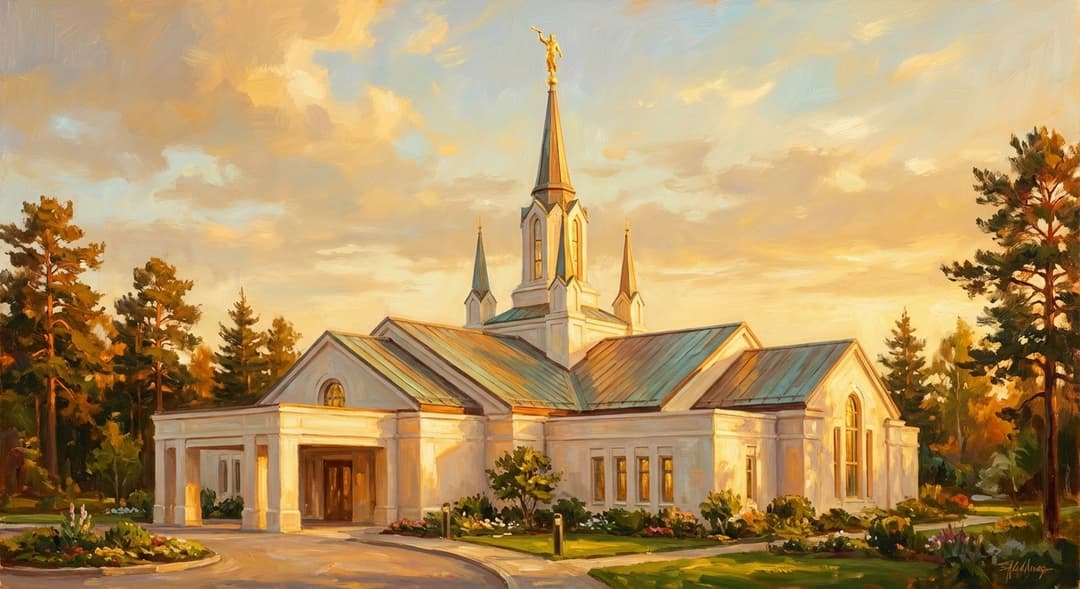
The original Stockholm Sweden Temple featured a modern adaptation of the six-spire design, a common architectural element in many Latter-day Saint temples. The spires symbolize the reaching towards heaven and the connection between the earthly and divine realms. The tallest spire is topped with the angel Moroni statue.

Copper Roof
The original temple featured a copper roof, a material known for its durability and aesthetic appeal. Copper is often used in temple construction to symbolize strength and longevity. Over time, the copper roof would have developed a distinctive green patina, adding to the temple's visual character.

Cobblestone Path
A cobblestone path led to the temple's front entrance, creating a sense of reverence and anticipation as visitors approached the sacred building. The cobblestones symbolize the journey of life and the path to spiritual enlightenment. The path invites individuals to slow down and reflect as they prepare to enter the temple.

Masonry Walls
The exterior walls of the original Stockholm Sweden Temple were finished in masonry, a construction technique that provides strength and stability. The masonry symbolizes the enduring nature of the gospel and the solid foundation upon which the Church is built. The walls protect the sacred space within and provide a sense of security and peace.

Baptistry
The baptistry is a sacred space within the temple where baptisms for the dead are performed. This ordinance allows individuals to act as proxies for deceased ancestors who did not have the opportunity to be baptized while living. The baptistry typically features a font of water, symbolizing cleansing and renewal.

Sealing Rooms
Sealing rooms are special spaces within the temple where marriages are performed, uniting families for eternity. These ordinances are considered sacred and binding, creating eternal relationships that extend beyond mortality. The sealing rooms are designed to be peaceful and reverent, fostering a sense of love and commitment.

Ordinance Rooms
Ordinance rooms are spaces within the temple where members participate in sacred ceremonies and make covenants with God. These ordinances are designed to help individuals progress spiritually and draw closer to God. The ordinance rooms are decorated with symbols and artwork that enhance the spiritual experience.
Interesting Facts
The Stockholm Sweden Temple was the first temple built in Scandinavia.
The announcement of the temple in 1981 received virtually no opposition.
During the groundbreaking ceremony, a torch was used to cut through the ice so that the earth could be turned.
Construction was delayed for over a year when the government asked the Church to suspend construction while archaeologists excavated some Viking burial sites.
The open house attracted approximately 47,000 visitors.
The Swedish postal service issued a special commemorative stamp cancellation featuring the angel Moroni to celebrate the dedication.
In 1988, a bomb exploded outside a side door at the temple, causing minor damage.
In 1995, King Carl XVI Gustaf and Queen Silvia of Sweden visited the temple grounds.
The street on which the temple is located was renamed Tempelvägen ('The Temple Road').
The temple serves members of the Church in Sweden, Norway, and Latvia.
The temple is being expanded to nearly double its original size.
As of 2026, the closest temple for members in South Sweden is the Copenhagen Denmark Temple.
Common Questions
What is the purpose of the Stockholm Sweden Temple?
The Stockholm Sweden Temple serves as a sacred place where members of The Church of Jesus Christ of Latter-day Saints can participate in religious ordinances, such as marriages, baptisms for the dead, and other covenants that bind families together and strengthen their relationship with God. These ordinances are central to the faith and provide opportunities for spiritual growth and eternal blessings.
When was the Stockholm Sweden Temple dedicated?
The Stockholm Sweden Temple was dedicated on July 2-4, 1985, by President Gordon B. Hinckley. The dedication marked the official opening of the temple for sacred ordinances and worship.
Why is the Stockholm Sweden Temple currently closed?
The Stockholm Sweden Temple is currently closed for extensive renovations to modernize and expand the facilities. The renovation project is expected to last approximately three years and will enhance the temple's functionality and beauty.
How can I visit the Stockholm Sweden Temple when it reopens?
Once the temple renovation is complete, the public will be invited to tour the temple during an open house. After the open house, the temple will be rededicated, and only members of the Church in good standing will be able to enter. Check the official Church website for updates on the reopening and open house dates.
What is the significance of the Stockholm Sweden Temple being the first in Scandinavia?
As the first temple built in Scandinavia, the Stockholm Sweden Temple holds a special place in the hearts of Latter-day Saints in the region. It symbolizes the growth and establishment of the Church in Scandinavia and provides a sacred space for members to worship and participate in temple ordinances without having to travel long distances.
Featured Stories
Dedication of the Stockholm Sweden Temple
July 2-4, 1985
The dedication of the Stockholm Sweden Temple was a momentous occasion for Latter-day Saints in Scandinavia. President Gordon B. Hinckley presided over 11 dedicatory sessions, filling the temple with prayers of gratitude and consecration. Members traveled from Sweden, Norway, and Latvia to participate in this historic event, marking the official opening of the first temple in the region.
The dedicatory services were filled with spiritual power and a sense of unity among the Saints. President Hinckley's words resonated deeply as he spoke of the temple's purpose and the blessings it would bring to the lives of those who entered its doors. The dedication marked a new era for the Church in Scandinavia, providing a sacred space for worship and eternal ordinances.
Source: https://www.thechurchnews.com/temples/2023-03-24/stockholm-sweden-temple-closes-for-renovation-294984
Groundbreaking Ceremony in the Icy Ground
March 17, 1984
The groundbreaking ceremony for the Stockholm Sweden Temple was a unique event, as the ground was still frozen from the winter. Thomas S. Monson presided over the ceremony, and a torch was used to cut through the ice so that the earth could be turned, symbolizing the beginning of construction on the sacred edifice. Despite the cold conditions, the Saints gathered with enthusiasm and faith, eager to witness the start of this significant project.
The groundbreaking marked a tangible step forward in the realization of the temple. The act of breaking through the icy ground symbolized the determination and commitment of the Church members to build a house of the Lord in their land. The event was a testament to their unwavering faith and their willingness to overcome challenges to bring the blessings of the temple to Scandinavia.
Source: https://photogent.com/2017/03/17/stockholm-sweden-temple-groundbreaking/
Royal Visit to the Temple Grounds
August 23, 1995
In 1995, King Carl XVI Gustaf and Queen Silvia of Sweden visited the grounds of the Stockholm Sweden Temple, acknowledging its significance in the community. The royal visit was a testament to the temple's positive impact and its role as a place of peace and reverence. The King and Queen expressed their appreciation for the Church's contributions to Swedish society and its commitment to promoting family values.
The visit provided an opportunity to showcase the temple's beautiful architecture and serene surroundings. The royal couple learned about the temple's purpose and the sacred ordinances performed within its walls. The event fostered goodwill and understanding between the Church and the broader Swedish community, highlighting the temple's role as a symbol of faith and hope.
Source: https://ldsliving.com/a/9343-5-lesser-known-facts-about-the-stockholm-sweden-temple
Timeline
First Latter-day Saint Missionary Arrives
The first Latter-day Saint missionary arrived in Sweden, marking the beginning of the Church's presence in the country.
MilestoneFirst Stake Organized in Sweden
The first stake (diocese) in Sweden was organized in Stockholm, signifying the growth and establishment of the Church.
MilestoneTemple Announced
President Spencer W. Kimball announced plans to construct a temple in Stockholm, Sweden, as part of a group of nine temples.
MilestoneGroundbreaking Ceremony
Thomas S. Monson presided over the groundbreaking ceremony and offered the dedicatory prayer for the Stockholm Sweden Temple.
component.timeline.groundbreakingPublic Open House
A public open house was held, allowing visitors to tour the newly constructed Stockholm Sweden Temple.
EventTemple Dedication
President Gordon B. Hinckley dedicated the Stockholm Sweden Temple in 11 sessions, marking its official opening for sacred ordinances.
DedicationBombing Incident
A bomb exploded outside a side door of the temple, causing minor damage but highlighting the challenges faced by the Church.
EventRoyal Visit
King Carl XVI Gustaf and Queen Silvia of Sweden visited the temple grounds, acknowledging the temple's significance in the community.
EventRenovation Announced
The Church announced that the Stockholm Sweden Temple would be closed in 2023 for extensive renovations to modernize and expand the facilities.
RenovationTemple Closes for Renovation
The Stockholm Sweden Temple closed for a reconstruction project anticipated to last approximately three years, signaling a new chapter for the temple.
RenovationDemolition Begins
Demolition of the original temple structure began as part of the renovation project, paving the way for the expanded and modernized temple.
RenovationProjected Completion
The renovated temple is projected to be completed in late 2026, marking the culmination of the extensive renovation efforts.
MilestoneBomb Explodes
A bomb exploded outside a side door at the temple, causing minor damage.
EventKing and Queen Visit
King Carl XVI Gustaf and Queen Silvia of Sweden visited the temple grounds.
EventHistory by Decade
1850s — Early Missionary Work
The 1850s marked the beginning of Latter-day Saint missionary work in Sweden, with the arrival of the first missionaries. These early missionaries faced numerous challenges, including language barriers, cultural differences, and religious opposition. Despite these obstacles, they diligently shared their message of the restored gospel, laying the foundation for the growth of the Church in Sweden.
1970s — Growth and Establishment
The 1970s witnessed significant growth and establishment of The Church of Jesus Christ of Latter-day Saints in Sweden. The organization of the first stake (diocese) in Stockholm in 1975 was a pivotal moment, signifying the increasing strength and maturity of the Church in the country. This milestone paved the way for future developments, including the announcement of a temple.
1980s — Temple Announcement and Dedication
The 1980s were a defining decade for Latter-day Saints in Sweden, marked by the announcement and dedication of the Stockholm Sweden Temple. The announcement in 1981 brought great joy and anticipation, while the dedication in 1985 solidified the temple's role as a sacred center for worship and eternal ordinances. The temple became a beacon of faith for members in Sweden, Norway, and Latvia.
1990s — Strengthening the Community
The 1990s saw the Stockholm Sweden Temple become an integral part of the local community. The visit of King Carl XVI Gustaf and Queen Silvia of Sweden in 1995 highlighted the temple's significance and its positive impact on Swedish society. The temple continued to serve as a place of peace, reverence, and spiritual growth for Latter-day Saints in the region.
2000s — Continued Service and Blessings
Throughout the 2000s, the Stockholm Sweden Temple continued to provide blessings and opportunities for Latter-day Saints to participate in sacred ordinances. The temple served as a focal point for spiritual growth, family connections, and service to others. Members from Sweden, Norway, and Latvia traveled to the temple to strengthen their faith and draw closer to God.
2020s — Renovation and Renewal
The 2020s brought a new chapter for the Stockholm Sweden Temple with the announcement of extensive renovations. The closure of the temple in 2023 marked the beginning of a significant project to modernize and expand the facilities. The renovation is expected to enhance the temple's functionality and beauty, ensuring that it continues to serve as a sacred space for generations to come.
Architecture & Facilities
The original Stockholm Sweden Temple was designed by Swedish architect John Sjöström in collaboration with the Church's architectural department, harmonizing with the local architecture. The design featured a modern adaptation of the six-spire design, a common element in many Latter-day Saint temples. The temple's architecture reflected a blend of modern and traditional Swedish styles, creating a unique and inviting sacred space.
Building Materials
Exterior Walls
The exterior walls of the original Stockholm Sweden Temple were finished in masonry, providing strength and stability to the structure. The masonry symbolized the enduring nature of the gospel and the solid foundation upon which the Church is built.
Copper Roof
The original temple featured a copper roof, a material known for its durability and aesthetic appeal. Over time, the copper would have developed a distinctive green patina, adding to the temple's visual character.
Angel Moroni Statue
The angel Moroni statue, placed atop the tallest spire, was made of fiberglass and covered in gold leaf. The statue symbolized the restoration of the gospel of Jesus Christ and served as a beacon of faith for Latter-day Saints in the region.
Interior Finishes
The interior of the temple was finished with high-quality materials, including wood, marble, and carpet. The finishes were chosen to create a sense of reverence and peace, enhancing the spiritual experience for those who entered the temple.
Interior Features
Baptistry
The baptistry was a sacred space where baptisms for the dead were performed. It featured a font of water, symbolizing cleansing and renewal. The baptistry was designed to be a peaceful and reverent space, conducive to spiritual reflection.
Sealing Rooms
Sealing rooms were special spaces where marriages are performed, uniting families for eternity. These rooms were designed to be intimate and beautiful, fostering a sense of love and commitment.
Ordinance Rooms
Ordinance rooms were spaces where members participated in sacred ceremonies and made covenants with God. These rooms were decorated with symbols and artwork that enhanced the spiritual experience.
Celestial Room
The celestial room was a quiet and beautiful space designed to represent heaven. It was a place for contemplation and prayer, allowing members to feel closer to God.
Temple Grounds
The temple grounds were beautifully landscaped with trees, flowers, and shrubs, creating a serene and inviting atmosphere. The grounds provided a space for visitors to walk, reflect, and enjoy the beauty of nature.
Additional Facilities
The temple included a visitors' center where guests could learn more about the Church and the temple's purpose. The visitors' center provided information about the temple's history, architecture, and significance.
Religious Significance
The Stockholm Sweden Temple is a sacred edifice of The Church of Jesus Christ of Latter-day Saints, serving as a house of the Lord where members can participate in sacred ordinances and make covenants with God. As part of the Christian theological grouping of Abrahamic traditions, the temple's teachings emphasize the importance of family, service, and personal devotion to God.
The primary purpose of the Stockholm Sweden Temple is to provide a sacred space where faithful members of the Church can participate in religious ordinances, such as marriages, baptisms for the dead, and other covenants that bind families together and strengthen their relationship with God. These ordinances are central to the faith and provide opportunities for spiritual growth and eternal blessings.
Sacred Ordinances
Baptism for the Dead
Baptism for the dead is a vicarious ordinance performed in temples, allowing individuals to act as proxies for deceased ancestors who did not have the opportunity to be baptized while living. This ordinance symbolizes cleansing and renewal and provides an opportunity for deceased individuals to receive the blessings of the gospel.
Endowment
The endowment is a sacred ordinance in which members make covenants with God and receive instruction and blessings related to their eternal progression. This ordinance helps individuals understand their divine potential and prepare for eternal life.
Sealing
Sealing is a sacred ordinance in which marriages are performed, uniting families for eternity. This ordinance creates eternal relationships that extend beyond mortality, providing comfort and hope for families.
The Importance of Covenants
Covenants are sacred agreements between God and individuals, in which God promises blessings in exchange for obedience to His commandments. The ordinances performed in the Stockholm Sweden Temple involve making covenants with God, which strengthen individuals' relationship with Him and provide opportunities for spiritual growth.
Eternal Families
The teachings of The Church of Jesus Christ of Latter-day Saints emphasize the importance of eternal families. The ordinances performed in the Stockholm Sweden Temple, such as sealing, help to create and strengthen eternal family relationships, providing comfort and hope for families.
Sources & Research
Every fact on Temples.org is backed by verified Sources & Research. Each piece of information is rated by source tier and confidence level.
View All Sources (4)
| Field | Source | Tier | Retrieved |
|---|---|---|---|
| About & Historical Background | The Church of Jesus Christ of Latter-day Saints (opens in a new tab) | A | 2024-02-29 |
| About & Historical Background | churchofjesuschristtemples.org (opens in a new tab) | C | 2024-02-29 |
| Symbolic Elements | The Church of Jesus Christ of Latter-day Saints (opens in a new tab) | A | 2024-02-29 |
| Visitor Information | The Church of Jesus Christ of Latter-day Saints (opens in a new tab) | A | 2024-02-29 |