Visitor Insights
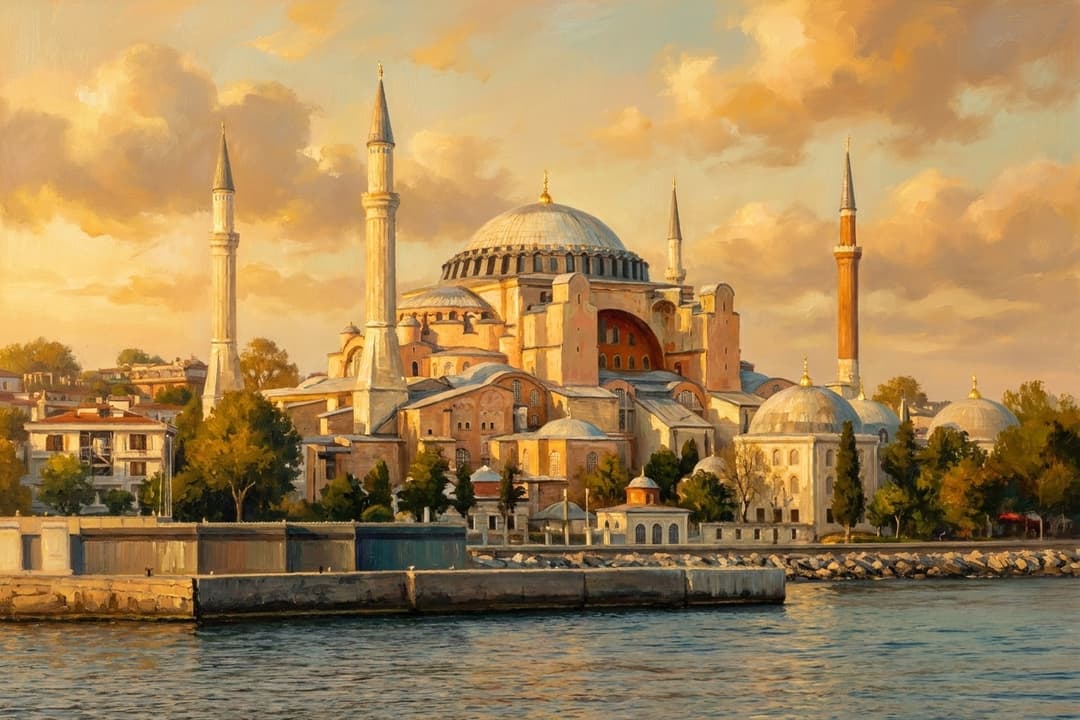
Visiting Hagia Sophia Grand Mosque
Hagia Sophia operates under an integrated management protocol balancing active Islamic worship with cultural visits. Muslim worshipers access the main ground-floor nave freely for daily prayers, while international tourists explore the monumental upper galleries via a dedicated portal. Modest attire covering shoulders, head, and knees is strictly maintained for all guests.
Highlights
- Marvel at the monumental floating dome suspended over four gargantuan stone piers.
- Examine the colossal calligraphic medallions inscribed with the holy names of Allah and the Prophet.
- View preserved Byzantine gold-leaf mosaics along the elevated upper galleries.
- Experience the radiant southeastern prayer axis aligning the historical apse with Mecca.
Things to Know
- Tourist flow is paused during congregational Friday prayers between midday and afternoon.
- Women must wear headscarves, and shoes must be removed before entering carpeted prayer areas.
- Foreign visitors access the upper gallery via an exterior ticketed ramp.
Location
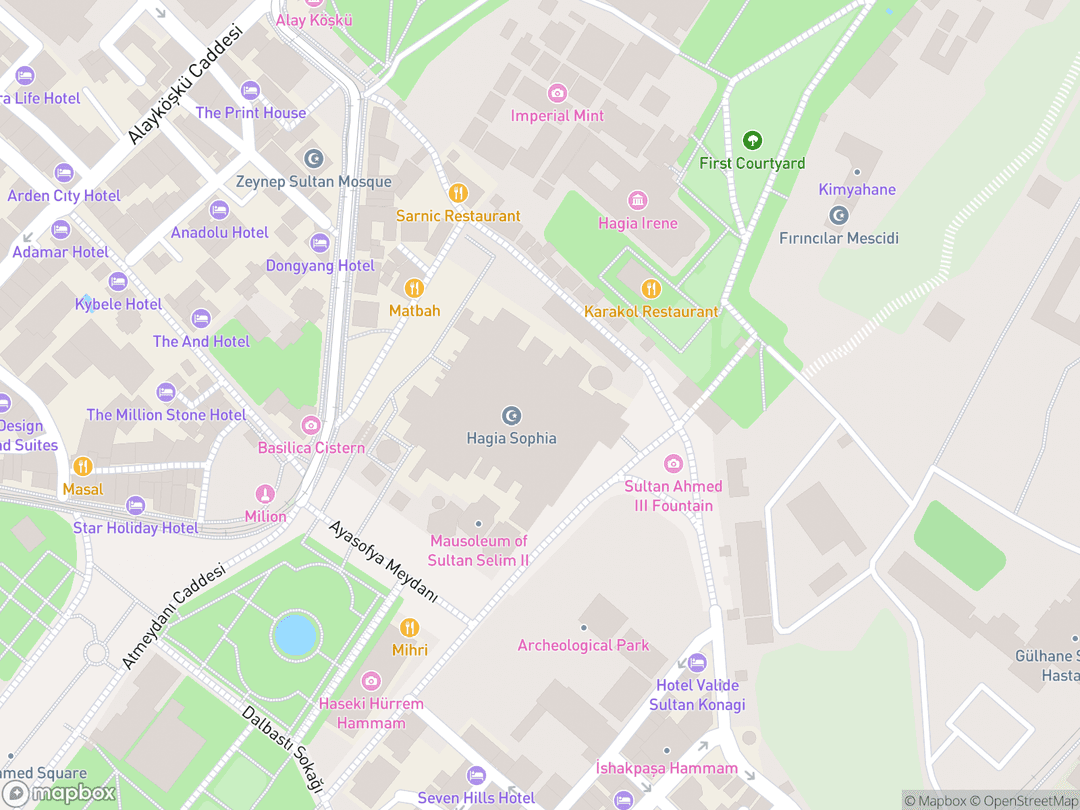
Sultan Ahmet, Ayasofya Meydanı No:1, 34122 Fatih/İstanbul, Turkey
Hours: Prayer Hall open daily from dawn to night prayers; tourist gallery open 09:00 to 19:30
Getting There: Take the T1 tram to the Sultanahmet stop directly outside the square, or walk 10 minutes uphill from the Sirkeci Marmaray station.
Get DirectionsTips for Your Visit
Dress Code Requirements
Bring a headscarf and ensure legs and shoulders are covered; loaner garments and shoe covers are available at entrance kiosks.
Friday Prayer Protocol
Expect significant congestion and temporary tourist pauses during the weekly congregational Friday service.
Upper Gallery Ticketing
Purchase tickets online or at the southern kiosks to access the historic mosaic panels along the elevated second floor.
About
Hagia Sophia, consecrated in 537 CE as the cathedral of Holy Wisdom and rededicated as an imperial mosque in 1453 CE, embodies a profound continuity across the monotheistic Abrahamic traditions. Consecrated under Sultan Mehmed II following the Ottoman conquest, the sanctuary embraced its predecessor's spiritual heritage while orienting communal devotion toward Mecca.
Within Islamic theology, Hagia Sophia honors the shared prophetic lineage extending from Abraham and Solomon to Jesus and Muhammad. The monumental transformation elevated the building through the lens of Tawhid (the divine unity of God), infusing the vast interior with radiant epigraphy, aniconic light, and protective preservation of historical mosaics.
Today, Ayasofya-i Kebir Cami-i Şerifi stands as an active house of prayer and a cornerstone of world heritage. Serving both daily congregational worshipers and global pilgrims, it remains a transcendent monument of architectural triumph, spiritual convergence, and cross-cultural resilience.
Gallery
Symbolic Elements
The temple's exterior features intricate carvings, each rich with spiritual meaning:
The Dome of Heaven
The floating central dome evokes the divine Throne of God (*Al-Arsh*) suspended weightlessly upon celestial light.

The Mihrab and Southeastern Axis
Positioned within the apse, the gilded prayer niche points worshipers toward the holy Kaaba in Mecca.
Monumental Calligraphic Roundels
Eight giant wooden medallions display sacred names in classical Arabic script, celebrating God, the Prophet, and the Caliphs.
The Marble Omphalion
Concentric porphyry discs in the floor represent the historic ceremonial axis of imperial power and coronation.
The Six-Winged Seraphim
Colossal angelic figures on the pendentives stand guardian at the boundary where the dome joins terrestrial piers.

Surah An-Nur Epigraphy
Gilded Quranic verses of the Light Verse in the dome cap celebrate the supreme radiance of the divine.
Pergamon Lustration Urns
Ancient Hellenistic marble jars brought from Pergamon symbolize physical and spiritual purification through holy water.
Interesting Facts
Viking mercenary Halfdan carved his name in runic graffiti into the marble balustrades of the south gallery during the ninth century (Tier B).
The building's mortar utilizes crushed brick and pozzolana, creating flexible joints that withstand major earthquakes (Tier B).
Two monumental alabaster lustration jars in the nave were carved in ancient Pergamon during the Hellenistic era (Tier A).
Armenian royal architect Trdat of Ani engineered the repairs to the western arch and dome ribbing after the 989 earthquake (Tier B).
Pilgrims visit the bronze-clad 'Sweating Column' in the north aisle to seek physical healing through its seeped moisture (Tier A).
Mimar Sinan saved the structure from collapsing by building colossal exterior buttresses and two minarets in the 1570s (Tier A).
The giant 7.5-meter calligraphic roundels could not be removed in 1934 because they were too large to fit through the doors (Tier A).
Subterranean channels and cisterns connect the foundation directly with the Basilica Cistern and the Great Palace (Tier B).
Acoustic research demonstrates that the colossal interior produces a reverberation time of nearly eleven seconds (Tier B).
Common Questions
Can non-Muslim visitors enter Hagia Sophia?
Yes, non-Muslim visitors can enter the upper gallery daily with a paid admission ticket outside prayer restrictions.
Are the Byzantine Christian mosaics still visible?
Yes, the historic figurative mosaics remain visible along the upper galleries and behind retractable curtains in the apse.
Why is the prayer direction angled slightly within the building?
The building was originally built facing due east, requiring the Islamic mihrab to angle 10 to 12 degrees southeast toward Mecca.
Is there a dress code for entering the mosque?
All visitors must wear modest clothing covering shoulders and knees, and women must wear a headscarf.
Who maintains Hagia Sophia today?
The monument is co-managed by Turkey's Directorate of Religious Affairs (Diyanet) and the Ministry of Culture and Tourism.
Featured Stories
The Imperial Foundation and Justinian's Claim
December 27, 537
Following the catastrophic destruction of the Nika Riots, Emperor Justinian I marshaled the empire's greatest geometers to build an unprecedented architectural wonder. On dedication day, standing beneath the colossal pendentive vault, Justinian marveled at the golden interior and exclaimed his legendary tribute to King Solomon's legendary temple in Jerusalem.
Source: Historical chronicles of Procopius and Byzantine annals
Mehmed the Conqueror and the First Friday Prayer
June 1, 1453
Upon entering Constantinople in 1453, Sultan Mehmed II halted the pillaging of the grand cathedral, recognizing its supreme monotheistic holiness. He established a perpetual endowment trust (waqf) for its maintenance, joining his spiritual teacher Akshamsaddin in leading thousands of worshipers during the sanctuary's historic first Islamic prayer.
Source: Ottoman Imperial Foundation Records and Waqf Deed
Mimar Sinan Rescues the Grand Edifice
1573
By the late sixteenth century, centuries of outward lateral thrust and earthquakes had left the historic masonry bowing dangerously outward. Chief Imperial Architect Mimar Sinan anchored the collapsing envelope by adding gargantuan exterior buttresses and two minarets, pioneering seismic stabilization that preserved the building for future generations.
Source: Imperial Ottoman Architectural Archives
Timeline
The Megale Ekklesia
Emperor Constantius II dedicates the first wooden-roofed Great Church alongside the imperial palace.
MilestoneTheodosian Basilica
Emperor Theodosius II rebuilds the grand five-aisled basilica after its predecessor burns in civic riots.
MilestoneJustinianic Dedication
Justinian I dedicates the monumental domed cathedral designed by Isidore of Miletus and Anthemius of Tralles.
DedicationIsidore the Younger Restoration
The central dome is reconstructed at a higher pitch with 40 arched windows following severe seismic collapse.
RenovationPost-Iconoclast Mosaics
Patriarch Photios I unveils the apse semi-dome mosaic of the Virgin and Child, marking the restoration of images.
EventRepairs by Trdat the Architect
Armenian master builder Trdat reconstructs the western arch and dome ribbing following a major earthquake.
RenovationFourth Crusade Repurposing
Western Crusaders sack the city and convert the sanctuary into a Roman Catholic cathedral under the Latin Empire.
EventInauguration as Imperial Mosque
Sultan Mehmed II designates the sanctuary as Istanbul's premier mosque, hosting the first Friday prayer.
DedicationStructural Salvation by Mimar Sinan
Chief Architect Mimar Sinan erects massive exterior buttresses and two minarets to prevent catastrophic collapse.
RenovationFossati Brothers Consolidation
Swiss architects stabilize the dome with iron chains and install monumental wooden calligraphic roundels.
RenovationConversion to Public Museum
The secular Turkish cabinet opens the building as an international secular museum, uncovering marble floors.
MilestoneResumption of Active Worship
Turkish authorities annul the 1934 decree, transferring administrative oversight to Diyanet for regular Islamic prayers.
DedicationHistory by Decade
360s–410s — The Early Basilicas
The Great Church stands as the beating heart of imperial devotion and assembly.
The site's first imperial monument, the Megale Ekklesia, was consecrated under Constantius II before succumbing to flames during urban riots. Reconstructed as a monumental five-aisled basilica by Theodosius II in 415, the sanctuary solidified its role as the civic and liturgical core of the Roman east.
530s–560s — Justinianic Marvel and Dome Reconstruction
Solomon, I have surpassed thee!
Following the destruction of 532, Justinian commissioned Anthemius of Tralles and Isidore of Miletus to pioneer an unprecedented domed basilica. When earthquakes brought down the initial shallow crown, Isidore the Younger heightened the dome's pitch, adding forty windows that diffuse radiant natural light across the nave.
860s–980s — Restoration of Images and Armenian Engineering
Following the Iconoclastic controversies, figurative mosaics were restored to the apse under Patriarch Photios I in 867. A century later, catastrophic tremors fractured the western arch, prompting the court to enlist master architect Trdat of Ani to rebuild the damaged dome ribs.
1200s–1350s — Crusader Desecration and Late Byzantine Decay
Western crusaders sacked the cathedral during the Fourth Crusade, stripping precious golden vessels and establishing Latin Patriarchate control for nearly six decades. After the Byzantine restoration, structural neglect and new earthquakes necessitated emergency buttressing by architects Astras and Peralta.
1450s–1570s — Ottoman Conversion and Mimar Sinan's Fortifications
This consecrated sanctuary shall stand preserved in perpetuity as an endowment for the faithful.
In 1453, Sultan Mehmed II designated the sanctuary as the principal imperial mosque of the realm, establishing the mihrab and permanent maintenance endowments. Decades later, Chief Architect Mimar Sinan erected enormous masonry buttresses and external minarets, saving the ancient dome from catastrophic collapse.
1840s–1930s — The Fossati Restoration and Museum Period
Sultan Abdülmecid I commissioned Gaspare and Giuseppe Fossati to stabilize the dome with iron chains and hang Kazasker Mustafa İzzet Efendi's monumental calligraphic roundels. In 1934, secular reforms converted the structure into a public museum, unearthing hidden Byzantine plaster and marble floors for global audiences.
2020s — Re-inauguration and Master Conservation Plan
Turkey's Council of State annulled the 1934 museum decree in 2020, restoring the building's operating status as an active imperial mosque under the Directorate of Religious Affairs. Modern conservation initiatives now balance regular Islamic worship on the ground floor with regulated heritage visitation along the galleries.
Architecture & Facilities
Hagia Sophia represents the pinnacle of late antique Roman-Byzantine domed engineering, creatively adapted and augmented by Ottoman imperial architecture. Its monumental pendentive dome spans a central spatial void without internal obstructing walls, anchored by two towering semi-domes and braced by Mimar Sinan's colossal external masonry buttresses.
Building Materials
Pozzolanic Mortar
Thick beds of lime mixed with crushed brick provided flexible tensile strength against severe earthquakes.
Proconnesian Marble
Quarried from the Island of Marmara to create vast striated floor flags and undulating book-matched wall revetments.
Verde Antico
Deep green serpentinite breccia imported from Thessaly forms eight monolithic load-bearing nave columns.
Mons Porphyrites Red Stone
Imperial red-purple porphyry shipped from Egypt was carved into majestic monolithic exedrae columns.
Gold Glass Tesserae
Millions of angled gold-backed glass cubes shimmer under oscillating light throughout the vaults.
Interior Features
The Central Nave
An expansive carpeted hall oriented toward Mecca beneath the soaring curve of the main dome.
The Mihrab and Minbar
An ornate gilded prayer niche set into the apse alongside a tall white-marble Friday preaching pulpit.
Upper Imperial Galleries
Spacious elevated colonnaded balconies flanking the nave that showcase historic mosaics and marble carvings.
Library of Sultan Mahmud I
An ornate Rococo-Ottoman sanctuary tucked within the south aisle, decorated with Iznik ceramic tiles.
Temple Grounds
The perimeter encompasses expansive stone plazas, historical Ottoman imperial mausoleums, ablution fountains, and lush landscaped gardens separating the mosque from the historic Sultanahmet square.
Additional Facilities
Visitor facilities include historical ablution pavilions, secondary educational libraries, an exterior ticket concourse, and modern climate-controlled conservation laboratories.
Religious Significance
Within Islamic theology and the broader Abrahamic tradition, Hagia Sophia occupies a revered position as a sanctuary consecrated to the One God of Abraham, Moses, David, Jesus, and Muhammad. The transformation from an imperial cathedral to an imperial mosque represents an enduring continuity of monotheistic prayer across world empires.
To serve as a consecrated house of congregational worship (Cami-i Şerifi), divine contemplation, and communal remembrance of God (Dhikr).
Sacred Ordinances
Salah (Ritual Prayer)
The performance of the five daily prescribed prayers facing southeast toward the Kaaba in Mecca.
Jumu'ah (Friday Assembly)
Congregational Friday worship accompanied by the delivery of the formal khutbah sermon from the marble minbar.
Tilawah (Quranic Recitation)
The rhythmic chanting of holy scripture echoing beneath the massive eleven-second acoustic dome.
The Theology of Light and Tawhid
Rather than relying on figurative icons, Islamic worship focuses entirely upon the unrepresentable transcendence of God. Inscribed at the dome's zenith is Surah An-Nur (24:35), framing the architecture as a cosmic lamp illuminating humanity through the pure, radiant light of divine truth.
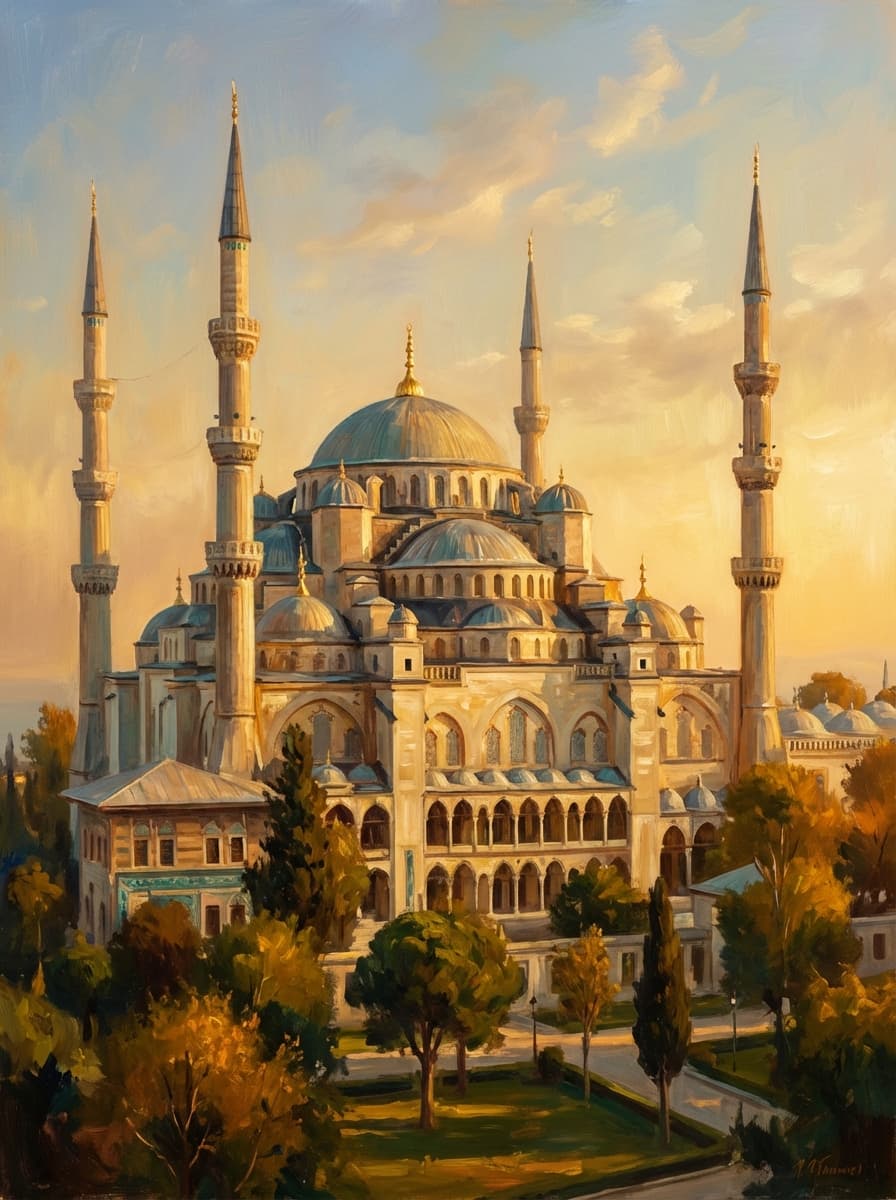
Similar Temples
Sources & Research
Every fact on Temples.org is backed by verified Sources & Research. Each piece of information is rated by source tier and confidence level.
View All Sources (8)
| Field | Source | Tier | Retrieved |
|---|---|---|---|
| About & Historical Background | Directorate of Religious Affairs (Diyanet) (opens in a new tab) | A | 2026-02-18 |
| Historical Timeline & Dedication Records | Turkish Ministry of Culture and Tourism (opens in a new tab) | A | 2026-02-18 |
| Architecture & Structural Preservation | UNESCO World Heritage Centre (opens in a new tab) | B | 2026-02-18 |
| Visitor Insights & Access Regulations | Istanbul Provincial Directorate of Culture and Tourism (opens in a new tab) | A | 2026-02-18 |
| Theological Framing & Religious Significance | TDV Islamic Studies Centre (İSAM) (opens in a new tab) | A | 2026-02-18 |
| Seismic Engineering & Mortar Analysis | Encyclopaedia Britannica (opens in a new tab) | B | 2026-02-18 |
| Fossati Restorations & Epigraphy | Dumbarton Oaks Research Library and Collection (opens in a new tab) | B | 2026-02-18 |
| Acoustics & Sacred Soundscapes | Stanford University Center for Computer Research in Music and Acoustics (opens in a new tab) | B | 2026-02-18 |