Visitor Insights
Visiting Brompton Oratory (Church of the Immaculate Heart of Mary)
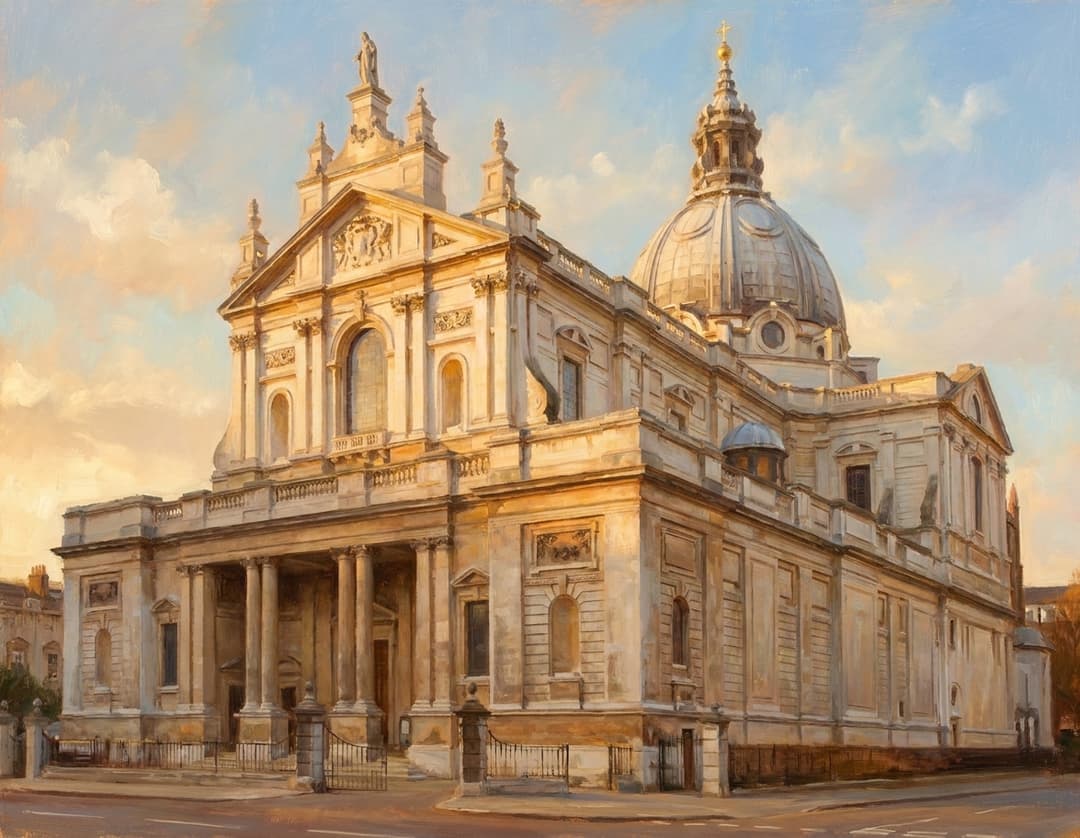
Brompton Oratory is an active parish and house of prayer welcoming visitors and worshippers daily in South Kensington. Its dramatic Italian interior offers a quiet sanctuary amid London's museum district, with daily services and world-renowned choral music on Sundays.
Highlights
- Soaring 200-foot concrete and stone dome crowned by a classical cupola
- 17th-century white marble statues of the Twelve Apostles imported from Siena Cathedral
- Solemn Latin High Mass celebrated every Sunday with professional choral music
- Ornate side chapels featuring Italian Baroque altars and detailed gilding
Things to Know
- Modest dress and quiet reverence are requested during all visits
- Photography is restricted during active liturgical services and Mass
Location
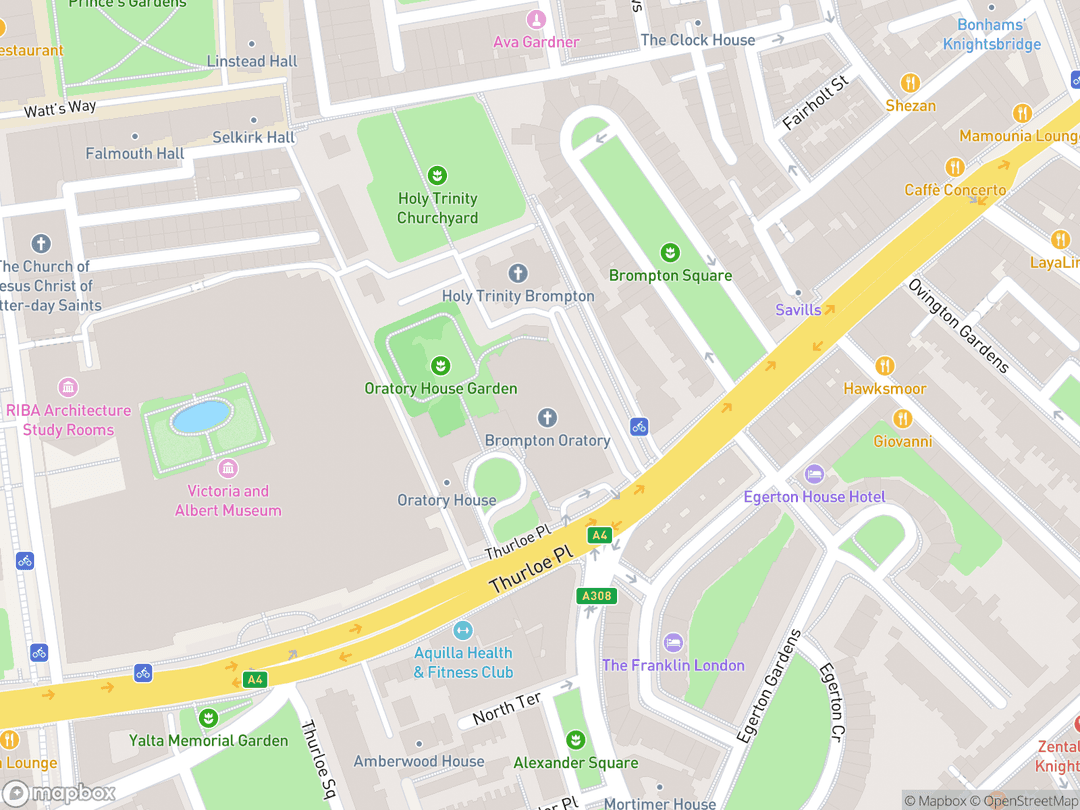
Brompton Road, South Kensington, London, SW7 2RP, United Kingdom
Hours: Open daily from 6:30 AM to 8:00 PM.
Getting There: A 3-minute walk from South Kensington Underground Station (District, Circle, and Piccadilly lines) or an 8-minute walk from Knightsbridge Station.
Get DirectionsAbout
The Church of the Immaculate Heart of Mary, widely known as Brompton Oratory, is a landmark of Roman Catholic worship in South Kensington, London. Dedicated to the Immaculate Heart of Mary, it serves as a house of prayer, sacred liturgy, and Eucharistic devotion.
Established in the mid-19th century by English converts following the Oxford Movement, the Oratory was designed in the grand Italian Neo-Baroque style to express deep communion with Rome. Today, it stands as the second-largest Catholic church in London and a renowned center for traditional Latin liturgy and sacred choral music.
Gallery
Symbolic Elements
The temple's exterior features intricate carvings, each rich with spiritual meaning:

The Twelve Apostles Statues
Larger-than-life 17th-century marble figures from Siena Cathedral symbolizing the apostolic foundation of the Christian Church.

The High Altar and Tabernacle
The focal point of the chancel where the consecrated Host is reserved, representing the abiding Eucharistic presence of Christ.

The Baptistery Font
An African Breccia marble basin resting on Derbyshire alabaster with carved lions, symbolizing spiritual rebirth and resurrection.

The Soaring Central Dome
Rising 200 feet above the floor, the broad dome floods the central crossing with natural light to illustrate divine illumination.

Immaculate Heart Emblems
Decorative motifs including pierced hearts and lilies reflecting devotion to the Virgin Mary.
Saint Philip Neri Altar
Dedicated to the founder of the Oratory, emphasizing joy, personal conversion, and pastoral care.

Lady Chapel Reredos
A 17th-century Italian altar imported from Brescia, serving as a focal point for Marian intercession.

The Sanctuary Lamp
A continuously burning flame signifying the perpetual presence of Christ in the tabernacle.
Interesting Facts
During the Cold War, KGB spies used a space behind a porch pillar as a secret dead letter drop. (Tier A)
The nave spans over 50 feet across, making it wider than the nave of St Paul's Cathedral. (Tier A)
Architect Herbert Gribble was only 29 years old when he won the national design competition in 1878. (Tier A)
The twelve marble Apostle statues were sculpted in the 1680s for Siena Cathedral in Italy. (Tier A)
Legendary film director Alfred Hitchcock married Alma Reville at the Oratory in 1926. (Tier A)
The Oratorians strictly rejected Victorian Gothic Revival styles to emulate Roman Baroque churches. (Tier A)
Father Faber humorously dubbed the semi-rural Brompton plot the 'Madeira of London' in 1852. (Tier B)
It was the largest Catholic church in London from 1884 until Westminster Cathedral opened in 1903. (Tier A)
The altar in the Lady Chapel was imported from a 17th-century church in Brescia, Italy. (Tier A)
Common Questions
What is the difference between Brompton Oratory and a standard parish church?
Brompton Oratory is served by priests of the Congregation of the Oratory of St. Philip Neri who live in community.
Is Brompton Oratory open to the public daily?
Yes, the church is open daily from approximately 6:30 AM to 8:00 PM for prayer and visits.
Can visitors attend the Latin High Mass on Sundays?
Visitors are welcome to attend the Solemn Latin Mass celebrated every Sunday at 11:00 AM.
Are guided tours available inside the church?
While formal guided tours are limited, visitors may explore quietly outside of scheduled services.
What tube station is closest to Brompton Oratory?
South Kensington Underground Station is a 3-minute walk away from the church.
Featured Stories
Herbert Gribble's Triumph
1878
In 1878, the Oratorians held an architectural competition specifying an Italian Renaissance style to reflect their Roman ties. Herbert Gribble, a 29-year-old recent convert with no major prior commissions, unexpectedly won the grand competition against top Victorian architects. His triumphant design introduced a breathtaking piece of Roman Neo-Baroque architecture to central London.
Source: Catholic Church Records & Architectural Archives
The Rescue of the Siena Apostles
1895
In 1895, the Oratory acquired twelve magnificent marble statues of the Apostles carved by Baroque master Giuseppe Mazzuoli in the 1680s. Originally created for Siena Cathedral in Italy, the statues were removed during interior alterations in the 19th century. Their installation along the nave pillars restored their sacred role as guardians of apostolic tradition.
Source: Brompton Oratory Historical Records
Cold War Dead Letter Drop
1950s
During the height of the Cold War, Soviet KGB operatives utilized the shadowy space behind a marble pillar in the church porch as a secret dead letter drop. The location was strategically chosen due to its proximity to Harrods, allowing spies to quickly blend into shopping crowds if pursued by security services. Today, this quiet entrance remains a historic curious note in London's espionage history.
Source: London Historical Intelligence Archives
Timeline
Foundation of the London Oratory
Father Frederick William Faber and converts established the London Oratory near the Strand.
Purchase of Brompton Property
The Oratorians purchased a semi-rural 3.5-acre site in Brompton for sixteen thousand pounds.
Silver Jubilee Appeal Launched
A building appeal was initiated with a major donation from the Duke of Norfolk.
Gribble Wins Design Competition
Twenty-nine-year-old Herbert Gribble won the national contest for the church's neo-Baroque design.
Foundation Stone Laid
Construction officially commenced on the grand neo-Baroque church structure.
Consecration of the Church
The church was consecrated and opened by Cardinal Manning in a solemn ceremony.
Dome and Statues Completed
Architect George Sherrin completed the dome and the Siena Cathedral Apostle statues were installed.
Hitchcock Wedding
Renowned film director Alfred Hitchcock married Alma Reville inside the Oratory.
Interior Decoration Finalized
Artist C. T. G. Formilli completed extensive gold leafing, plasterwork, and dome mosaics.
Centenary Restoration
The parish celebrated its centenary with a major restoration of its marble and gilded interior.
Grade II* Listing Affirmed
The architectural and historical importance of the building remained recognized nationally.
History by Decade
1840s–1850s — Founding and Brompton Acquisition
Following the Oxford Movement and St. John Henry Newman's conversion, Father Frederick William Faber established the London Oratory in 1849. Seeking a permanent sanctuary, the congregation purchased semi-rural land in Brompton in 1852 and erected a temporary church. Despite early criticism that the location was too remote, the site rapidly developed into a vibrant religious hub.
1870s–1880s — Design Competition and Grand Construction
To mark their silver jubilee, the Oratorians announced an architectural competition in 1878 calling for an Italian Renaissance style. Young architect Herbert Gribble won the commission, laying the foundation stone in 1880. The vast church was consecrated in April 1884 by Cardinal Manning, instantly becoming London's largest Catholic place of worship.
1890s–1910s — The Dome and Tuscan Masterpieces
In 1895, architect George Campbell Sherrin completed the exterior 200-foot dome and lantern. That same year, the Oratory purchased twelve 17th-century marble statues of the Apostles by Giuseppe Mazzuoli from Siena Cathedral. These monumental figures were installed along the nave, cementing the church's artistic renown.
1920s–1930s — Interior Gilding and Cultural Milestones
The Oratory became a fashionable site for cultural events, hosting high-profile weddings such as Alfred Hitchcock's in 1926. Between 1927 and 1932, artist C. T. G. Formilli executed a lavish interior program involving gold leafing, plasterwork, and ceiling mosaics. This comprehensive project gave the interior its sparkling Baroque splendor.
1950s–1980s — Cold War Intrigue and Centenary Revival
During the Cold War, Soviet KGB intelligence officers famously used the church porch as a discreet dead letter drop. In 1984, the parish celebrated the centenary of its consecration with extensive interior marble and gilding restoration. The church continued to maintain its strong tradition of Latin liturgy and classical music.
1990s–Present — Active Heritage and Liturgical Center
Today, Brompton Oratory remains London's second-largest Catholic church and a thriving spiritual center. It continues to attract congregation members and international visitors for its solemn Latin Masses, exquisite choral performances, and tranquil atmosphere. The site stands as a lasting monument to 19th-century Catholic revival in Britain.
Architecture & Facilities
Brompton Oratory is designed in the Italian Neo-Baroque and High Renaissance Revival style, consciously breaking with Victorian Britain's Gothic Revival tradition. The layout directly mimics counter-reformation churches in Rome such as the Church of the Gesù and the Chiesa Nuova to visually express Catholic unity with Rome.
Building Materials
Exterior Stone
Constructed with high-grade cream Portland stone facing and classical Corinthian pilasters.
Structural Vaulting
Features concrete vaulting and a reinforced concrete dome engineered for wide spans.
Internal Marbles
Incorporate Devon red marble, Plymouth limestone, and variegated Italian marbles integrated into load-bearing masonry.
Decorative Plaster
Ceilings display carton-pierre and fibrous plasterwork highlighted with extensive gold leaf.
Interior Features
The Wide Nave
A barrel-vaulted three-bay nave spanning over 50 feet in width, eliminating traditional side aisles for enclosed chapels.
The Chancel
A deep apsidal chancel extending 70 feet framed by a grand High Altar and tabernacle.
Enclosed Side Chapels
Individual chapels dedicated to various saints linked by narrow arches along the nave.
The Central Crossing
A spacious dome-covered crossing designed to flood the altar area with dramatic natural light.
Temple Grounds
Set on a prominent 3.5-acre site along Brompton Road in South Kensington, featuring paved forecourts, mature trees, and direct access adjacent to the Victoria and Albert Museum.
Additional Facilities
Includes an adjoining Oratory House for the resident congregation of priests, a parish hall, a choir school facility, and a church shop for visitors.
Religious Significance
Within the Catholic Church, Brompton Oratory serves as a dedicated sanctuary for the worship of Almighty God and devotion to the Blessed Virgin Mary. In Catholic sacramental theology, the church building is a sacred space housing the real presence of Jesus Christ in the Holy Eucharist reserved within the tabernacle.
To offer daily public prayer, celebrate the Holy Sacrifice of the Mass, provide the sacraments, and foster spiritual growth through beautiful liturgy and sacred music.
Sacred Ordinances
The Holy Mass (Eucharist)
The daily central act of Catholic worship where Christ's sacrifice is made present in the consecrated bread and wine.
Sacrament of Reconciliation
Daily confession offered to help believers receive forgiveness and spiritual renewal.
Sacrament of Baptism
Spiritual initiation into the Christian church celebrated at the historic marble baptistery font.
Choral Solemn Vespers
Traditional evening prayer services featuring chant and polyphonic choral music.
The Oratorian Charism
Founded on the spiritual philosophy of St. Philip Neri, the Oratory emphasizes prayer, preaching, personal friendship, and the uplifting power of sacred music.
Choral Liturgical Heritage
The Oratory maintains a world-renowned choir, preserving traditional Latin polyphony and Gregorian chant in its regular Sunday services.
Similar Temples
Sources & Research
Every fact on Temples.org is backed by verified Sources & Research. Each piece of information is rated by source tier and confidence level.
View All Sources (8)
| Field | Source | Tier | Retrieved |
|---|---|---|---|
| About & Historical Background | The Brompton Oratory (opens in a new tab) | A | 2026-02-01 |
| About & Historical Background | Roman Catholic Diocese of Westminster (opens in a new tab) | A | 2026-02-01 |
| Architecture & Structural Details | Archiseek Architectural Database (opens in a new tab) | B | 2026-02-01 |
| Architecture & Heritage Status | National Churches Trust (opens in a new tab) | B | 2026-02-01 |
| History & Cold War Intrigue | The Evening Standard (opens in a new tab) | B | 2026-02-01 |
| Symbolic Elements & Sacred Art | Liturgical Arts Journal (opens in a new tab) | B | 2026-02-01 |
| History & London Heritage | British History Online (opens in a new tab) | B | 2026-02-01 |
| Architecture & Siena Statues | New Liturgical Movement (opens in a new tab) | B | 2026-02-01 |