Visitor Insights
Visiting Westminster Cathedral
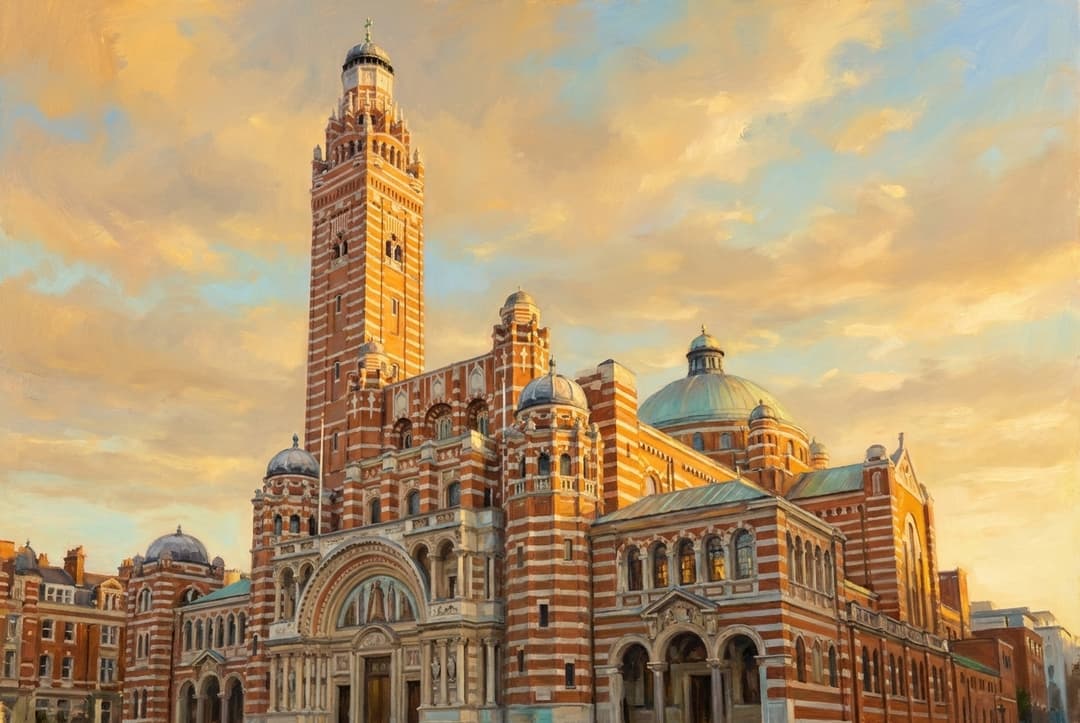
Westminster Cathedral welcomes worshippers and visitors daily into its vast, incense-scented nave. Visitors can admire international marbles, experience daily choral liturgy, or ride the campanile lift for broad views of London.
Highlights
- Marvel at over 100 varieties of polished marble sourced from 25 countries.
- Examine Eric Gill's famous relief carvings of the 14 Stations of the Cross.
- Ascend St. Edward's Tower via lift for panoramic views across Westminster.
- Listen to the world-renowned Westminster Cathedral Choir during daily Vespers.
Things to Know
- Sightseeing is restricted during daily Mass and liturgical services.
- The cathedral upper vaults remain unrendered dark brick awaiting future mosaics.
- Photography should remain discreet and non-disruptive during prayer times.
Location
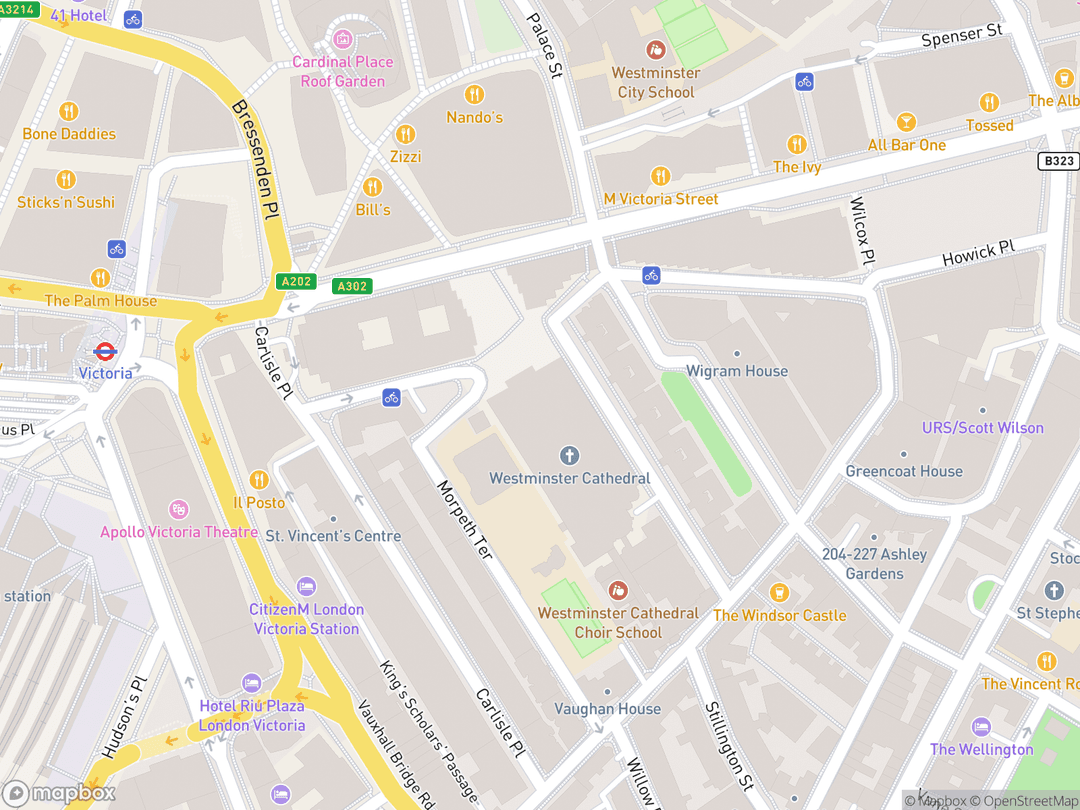
Ashley Place, City of Westminster, London, SW1P 1QW, United Kingdom
Hours: Open daily 7:30 AM – 6:00 PM (Weekdays), 8:00 AM – 6:00 PM (Weekends)
Getting There: Located a 3-minute walk from London Victoria Station (Underground, National Rail, and Bus routes).
Get DirectionsTips for Your Visit
Choral Experience
Attend late afternoon Choral Vespers at 5:00 PM to experience the choir in acoustic perfection.
Tower Viewing
Purchase a viewing gallery ticket inside the campanile for unique London skyline views.
Quiet Reflection
Visit early morning on weekdays for quiet contemplation away from central London traffic.
About
Westminster Cathedral stands as a monumental sanctuary of Christian worship and spiritual reflection in the heart of London. Within the broader Abrahamic and Christian tradition, a cathedral serves as the seat of a bishop, signaling pastoral authority and unified community. Dedicated to the Most Precious Blood of Our Lord Jesus Christ, the cathedral offers a sacred space for the Holy Eucharist, prayer, and sacred music.
Following the 19th-century restoration of the Catholic hierarchy in England and Wales, Church leaders sought to erect a mother church. Architect John Francis Bentley selected a distinct Neo-Byzantine style inspired by early Christian basilicas in Rome, Ravenna, and Constantinople. This deliberate choice bypassed English Gothic traditions, visually anchoring the cathedral in the undivided heritage of first-millennium Christianity.
Constructed from 12.5 million red bricks and Portland stone, the structure features a 284-foot campanile and the widest nave in England. Inside, rich marble cladding on lower walls contrasts with raw brick ceiling vaults left unadorned for future gold mosaics. Today, Westminster Cathedral remains a vibrant center of faith and home to a world-renowned daily choral tradition.
Gallery
Symbolic Elements
The temple's exterior features intricate carvings, each rich with spiritual meaning:

Relic of the True Cross
Embedded within the bronze cross atop the campanile as a symbol of Christian redemption over London.

Stations of the Cross
Fourteen limestone relief panels carved by Eric Gill depicting Christ's passion with dramatic simplicity.

Reliquary of Saint John Southworth
A glass casket preserving the body of a 17th-century priest executed for serving plague victims.

Our Lady of Westminster
A medieval Nottingham alabaster statue of Mary returning to London after centuries in France.
Christ in Majesty Mosaic
An entry portal mosaic by Robert Anning Bell depicting Christ enthroned in glory above the doors.

The Great Rood
A 30-foot wooden painted crucifix suspended beneath the sanctuary arch facing the nave.

Exposed Brick Vaults
Bare brick ceilings representing the earthly Church awaiting future heavenly golden mosaic work.
Interesting Facts
The vaulting and domes were constructed using 12.5 million bricks without internal steel framework. (Tier A)
Catholic Canon Law delayed consecration until 1910 when all construction debts were fully paid. (Tier A)
Architect John Francis Bentley died in 1902 shortly before the cathedral opened for worship. (Tier A)
Queen Elizabeth II was the first reigning monarch to attend a Catholic service here since the 17th century. (Tier A)
The dark brick ceiling is intentionally bare so future generations can add gold mosaics over time. (Tier A)
Cardinal Vaughan chose Neo-Byzantine architecture to avoid competing with Anglican Westminster Abbey. (Tier A)
Westminster Cathedral Choir is the only Catholic choir globally singing daily Mass and Vespers. (Tier A)
The statue of Our Lady of Westminster was carved in 1450 and hidden in France for centuries. (Tier A)
Saint John Southworth's quartered body was reassembled in France after his execution in 1654. (Tier A)
The spacious open piazza on Victoria Street was created in 1975 after clearing older buildings. (Tier A)
Common Questions
Why is the cathedral ceiling black and unfinished?
The brick vaults were left unadorned intentionally so future generations can add gold mosaics as funds permit.
Is Westminster Cathedral the same as Westminster Abbey?
No, Westminster Cathedral is Roman Catholic, while nearby Westminster Abbey belongs to the Church of England.
Can visitors go up the clock tower?
Yes, a lift inside St. Edward's Tower takes visitors up to a panoramic viewing gallery.
Are tourist visits allowed during Mass?
General tourist sightseeing is paused during sacred liturgical services and daily Mass.
Featured Stories
Architect John Francis Bentley's Final Masterpiece
1894–1902
Appointed in 1894, convert architect John Francis Bentley spent seven years designing the Neo-Byzantine cathedral after studying early basilicas in Italy and Istanbul. Tragically, Bentley died of cancer in March 1902 at age 63, just eighteen months before the cathedral opened for worship. His vision established one of Western Europe's finest ecclesiastical monuments.
Source: Westminster Cathedral Archives
The Seven-Year Debt Requirement for Consecration
June 28, 1910
Although public liturgy began in December 1903, Catholic Canon Law required all building debts to be cleared before consecration could occur. Parishioners and benefactors labored tirelessly to clear construction loans over seven years. On June 28, 1910, the debt-free cathedral was solemnly consecrated in a triumphant service.
Source: Archdiocese of Westminster Records
A Historic Royal Reconciliation
November 30, 1995
In a milestone moment for British ecumenical relations, Queen Elizabeth II attended a Choral Vespers service at Westminster Cathedral in 1995. This marked the first time a reigning British monarch entered a Roman Catholic church since the 17th century. The royal visit symbolized deep healing and shared Christian brotherhood across denominations.
Source: Church Times & Cathedral Archives
Timeline
Hierarchy Restored
Pope Pius IX restores the Roman Catholic diocesan hierarchy in England and Wales.
MilestoneSite Purchased
The Archdiocese purchases a four-acre site in Victoria formerly occupied by a prison.
MilestoneFoundation Stone Laid
Cardinal Vaughan lays the cathedral foundation stone on the Feast of Saints Peter and Paul.
component.timeline.groundbreakingArchitect Bentley Passes Away
Lead architect John Francis Bentley dies before the cathedral structure is fully finished.
EventCathedral Opens
Westminster Cathedral officially opens its doors for daily public worship and choral liturgy.
MilestoneSolemn Consecration
Having paid off all construction debts, the cathedral is consecrated under Canon Law.
DedicationStations of the Cross Completed
Sculptor Eric Gill completes 14 relief panels carved from Hopton Wood limestone.
EventMartyr Relic Translated
The body of 17th-century martyr Saint John Southworth is enshrined in St. George Chapel.
EventAlabaster Statue Dedicated
The 15th-century statue Our Lady of Westminster is enshrined after its return from France.
EventPapal Visit
Pope John Paul II celebrates Mass at Westminster Cathedral, the first reigning pope to visit.
EventRoyal Ecumenical Visit
Queen Elizabeth II attends Choral Vespers, breaking a 300-year royal precedent.
EventHistory by Decade
1850s–1880s — Catholic Restoration & Site Acquisition
A cathedral in London must visually connect to the ancient, undivided Christian Church.
Following centuries of suppression after the English Reformation, Pope Pius IX restored the Catholic hierarchy in 1850. Archdiocese leaders established a cathedral fund in memory of Cardinal Wiseman. In 1884, the Church acquired a former prison site in Victoria to construct its metropolitan see.
1890s–1900s — Design, Construction & Public Opening
Cardinal Vaughan appointed John Francis Bentley in 1894, instructing him to build a wide basilican cathedral. Bentley chose Neo-Byzantine architecture after studying early churches in Italy and Istanbul. Construction began in 1895, and despite Bentley's death in 1902, the cathedral opened for worship in December 1903.
1910s–1930s — Consecration & Art Commissioning
In 1910, Church leaders celebrated full debt clearance by solemnly consecrating the cathedral. Sculptor Eric Gill was commissioned during World War I to carve the 14 Stations of the Cross. In 1935, the preserved body of Tyburn martyr Saint John Southworth was solemnly enshrined inside.
1950s–1990s — Acquired Treasures & Royal Visits
This cathedral stands as a sign of faith, reconciliation, and enduring spiritual hope.
The cathedral acquired the medieval statue Our Lady of Westminster in 1955. Demolition in 1975 created the public piazza off Victoria Street. Historic ecumenical events followed, including Pope John Paul II's Mass in 1982 and Queen Elizabeth II's historic visit in 1995.
2000s–Present — Modern Era & Ongoing Mosaics
Pope Benedict XVI celebrated Mass here during his 2010 UK state visit. Today, artisans continue adding polished marble and gold mosaics to side chapels while preserving Bentley's unadorned nave vaults for future generations.
Architecture & Facilities
Westminster Cathedral represents a masterpiece of Neo-Byzantine and Italo-Byzantine architecture designed by John Francis Bentley. Uniquely bypassing Victorian Gothic traditions, its design draws inspiration from early Christian basilicas in Rome, Ravenna, and Constantinople to link English Catholicism with its first-millennium heritage.
Building Materials
Staffordshire Red Brick
An estimated 12.5 million dark red bricks form the load-bearing masonry framework across the cathedral structure without internal steel.
Portland Stone
Bright white limestone quarried from Dorset provides high-contrast horizontal banding and decorative voussoirs along the exterior.
Polished International Marbles
Over 100 distinct varieties of marble sourced from 25 countries line the lower interior piers and chapel walls.
Cornish Granite
Extremely durable dark granite forms the external plinth around the foundation and the monolithic 12-ton High Altar slab.
Interior Features
Central Nave
The widest nave in Britain at 60 feet clear width, vaulted by three square bays of shallow brick saucer domes.
Sanctuary and Ciborium
Features a 31-foot marble baldacchino supported by eight yellow Verona marble columns over the monolithic High Altar.
Chapel of Saint George
Dedicated to the patron saint of England and housing the glass reliquary of 17th-century martyr Saint John Southworth.
Lady Chapel
Richly adorned with shimmering gold-ground mosaics depicting the life of the Virgin Mary and the Incarnation.
Temple Grounds
Set back from Victoria Street on Ashley Place, the cathedral faces a spacious public brick-paved piazza opened in 1975, offering dramatic full-length views of the grand Neo-Byzantine west facade and towering campanile.
Additional Facilities
Includes a Cathedral Treasures Exhibition, a lift-accessible viewing gallery inside St. Edward's Tower, a cathedral shop, cafe, and choir school.
Religious Significance
Within the shared Abrahamic and Christian tradition, Westminster Cathedral serves as a sacred sanctuary of prayer and liturgical worship. As the seat of the Archbishop of Westminster, it functions as a visible sign of pastoral authority and Christian unity.
To offer daily Catholic Mass, administer sacred sacraments, and nurture spiritual devotion as the Mother Church of England and Wales.
Sacred Ordinances
Holy Eucharist (Mass)
The central liturgical celebration wherein bread and wine are consecrated as the Body and Blood of Christ.
Choral Vespers
Daily evening prayer of the Divine Office offered solemnly by the renowned Westminster Cathedral Choir.
Sacrament of Reconciliation
Confession offered daily in side chapels for the forgiveness of sins and spiritual renewal.
Eucharistic Dedication
Dedicated to the Most Precious Blood of Our Lord Jesus Christ, the cathedral emphasizes the redemptive sacrifice of Jesus at the core of Catholic theology.
Martyrdom and Witness
Housing the reliquary of Saint John Southworth, the cathedral honors the memory of English Catholic martyrs who maintained their faith during times of persecution.
Similar Temples
Sources & Research
Every fact on Temples.org is backed by verified Sources & Research. Each piece of information is rated by source tier and confidence level.
View All Sources (5)
| Field | Source | Tier | Retrieved |
|---|---|---|---|
| About & Historical Background | Westminster Cathedral (opens in a new tab) | A | 2026-02-15 |
| Architecture & Design | Historic England (opens in a new tab) | A | 2026-02-15 |
| History & Timeline | Taking Stock: Catholic Churches of England & Wales (opens in a new tab) | B | 2026-02-15 |
| Architectural History | Oxford Dictionary of National Biography (opens in a new tab) | B | 2026-02-15 |
| Interior Details & Art | Historic England Archive (opens in a new tab) | B | 2026-02-15 |