Visitor Insights
Visiting The National Sanctuary of Our Sorrowful Mother
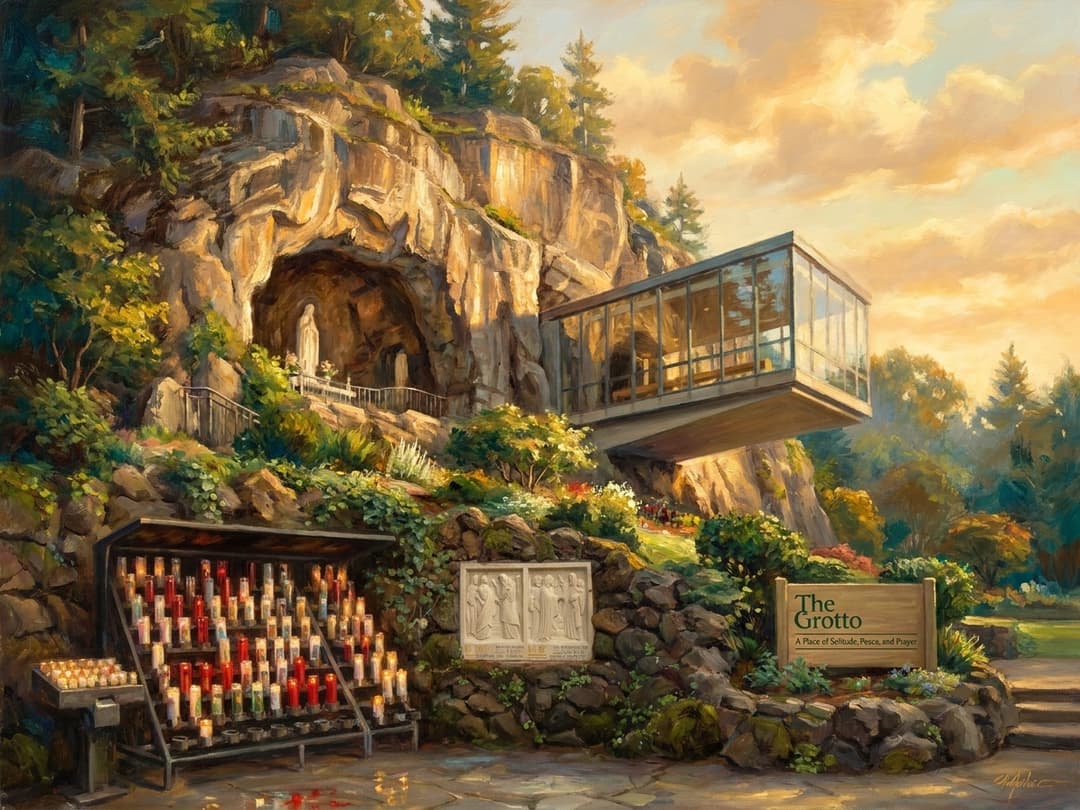
Visitors to The Grotto experience a peaceful sanctuary split across two physical levels connected by a cliffside elevator. The lower level features the outdoor basalt cave sanctuary and the Chapel of Mary free of charge, while the upper gardens offer extensive botanical trails, international shrines, and scenic viewpoints over the Columbia River Valley.
Highlights
- Central basalt cave shrine housing Michelangelo's Pietà replica.
- Upper botanical gardens containing over 2,300 native and exotic plant species.
- Marilyn Moyer Meditation Chapel cantilevered over the 110-foot cliff face.
- Full-scale stone replica of the Chartres Cathedral walking labyrinth.
Things to Know
- Lower plaza grounds and Chapel of Mary are free to visit year-round.
- Elevator admission tickets are required to access the upper gardens.
- Winter visitors can enjoy the annual Christmas Festival of Lights each December.
Location
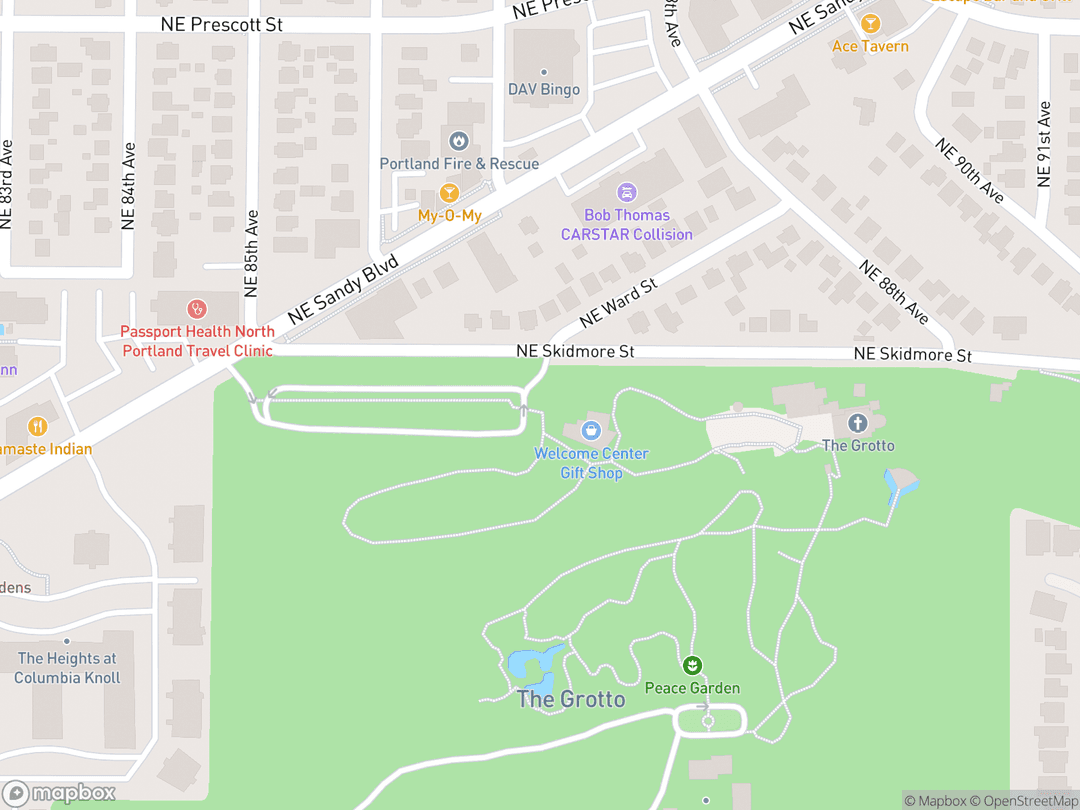
8840 NE Skidmore Street, Portland, Oregon 97220
Hours: Grounds and plaza open daily from 9:00 AM to 8:00 PM; upper garden elevator tickets sold until 7:00 PM.
Getting There: Located at NE 85th Ave and Sandy Blvd in Portland, accessible via I-84 or TriMet Bus Line 12.
Get DirectionsTips for Your Visit
Upper Gardens Admission
Purchase an elevator pass at the visitor center to explore the upper gardens, labyrinth, and cliffside chapel.
Daily Mass Schedule
Catholic Mass is celebrated daily at 12:00 PM in the Chapel of Mary or outdoor plaza during summer.
Seasonal Lighting Festival
Visit in December to experience over 500,000 holiday lights and nightly choral performances.
About
The National Sanctuary of Our Sorrowful Mother, affectionately known as The Grotto, is a 62-acre Catholic shrine and botanical sanctuary located in Portland, Oregon. Administered by the Servite Friars, the sanctuary centers around a cavern carved directly into a 110-foot volcanic basalt cliff.
Rooted in Catholic Marian tradition, The Grotto honors Mary as the mother of Jesus Christ while offering a peaceful retreat for people of all faiths. The site integrates natural forest pathways, international shrines, and reflective architecture across its upper and lower gardens.
Designated as a National Sanctuary in 1983, the complex serves as both an active place of Roman Catholic worship and a peaceful sanctuary for over 300,000 annual pilgrims and visitors seeking solace, prayer, and quiet contemplation.
Gallery
Symbolic Elements
The temple's exterior features intricate carvings, each rich with spiritual meaning:
The Grotto Basalt Cave
Carved into a 110-foot volcanic basalt cliff, the cavern symbolizes spiritual refuge, divine protection, and the tomb of Christ.
Carrara Marble Pietà Replica
A full-scale marble replica of Michelangelo's Pietà representing maternal grief, compassion, and the Seven Sorrows of Mary.

Via Matris Stations
Thirty-four carved stations detailing the Seven Sorrows of Mary, guiding pilgrims through a prayerful pathway of compassion.
Chartres Labyrinth
A precision replica of the 13th-century floor labyrinth at Chartres Cathedral, symbolizing the inner journey toward divine alignment.

110-Foot Bell Tower
The exterior bell tower of the Chapel of Mary is crowned with a gilded dome and cross to call pilgrims to daily worship.

Cliffside Glass Chapel
The cantilevered Marilyn Moyer Meditation Chapel features a 28-foot glass wall framing views of Mount St. Helens and the river valley.
International Marian Shrines
Cultural shrines throughout the grounds honor global Catholic traditions including Vietnamese, Filipino, and Polish devotions.
Interesting Facts
The sanctuary fulfilled a boyhood promise made by 12-year-old Ambrose Mayer after his mother survived a life-threatening illness in 1892. (Tier A)
The cliff face forming the main altar wall is part of Rocky Butte, an extinct 97,000-year-old volcanic cinder cone. (Tier B)
The site was originally an industrial stone quarry owned by the Union Pacific Railroad before its transformation into a sanctuary. (Tier A)
Father Mayer received a handwritten apostolic blessing from Pope Pius XI in 1923 that helped inspire nationwide donations. (Tier A)
In 1934, the shrine hosted the first International Marian Congress ever held on American soil. (Tier A)
An enclosed 110-foot vertical elevator lifts visitors directly up the cliff face to access the upper gardens. (Tier A)
The upper gardens serve as an active botanical reserve protecting over 2,300 species of native plants and trees. (Tier B)
The modern cliffside chapel features a 28-foot glass wall that won national architectural awards from the AIA. (Tier B)
The annual Christmas Festival of Lights features over 500,000 lights and hosts nearly 200 regional performing choirs. (Tier A)
Common Questions
Is entrance to The Grotto free?
Access to the lower plaza level and Chapel of Mary is free, while a admission ticket is required for the upper garden elevator.
Are non-Catholics welcome at The Grotto?
Yes, the sanctuary was dedicated in 1924 as a sanctuary of peace for people of all faiths and backgrounds.
How do visitors access the upper gardens?
An enclosed cliffside elevator transports visitors 110 feet up the basalt rock face in under a minute.
What is the Christmas Festival of Lights?
An annual holiday event featuring over 500,000 lights, outdoor displays, and nightly choral concerts in December.
Featured Stories
A Boy's Sacred Vow
1892
In 1892, twelve-year-old Ambrose Mayer prayed desperately for his critically ill mother following a difficult childbirth. He vowed that if her life was spared, he would dedicate his life to constructing a grand shrine honoring Mary. His mother survived, inspiring Mayer to join the Servite Friars and fulfill his sacred promise decades later in Portland.
Source: The Grotto Historical Archives
America's First International Marian Congress
August 1934
In 1934, The Grotto hosted the first International Marian Congress ever held on American soil. Tens of thousands of clergy, dignitaries, and Catholic faithful gathered around the basalt cave cliff face for solemn outdoor liturgies. The landmark assembly established the Portland shrine as one of the premier Catholic pilgrimage sites in North America.
Source: Archdiocese of Portland Historical Records
Engineering the Cantilevered Glass Sanctuary
1991
Perched dramatically over the northern precipice of Rocky Butte, the Marilyn Moyer Meditation Chapel was designed by Thompson Vaivoda & Associates in 1991. Structural engineers engineered the modern chapel to cantilever directly over the sheer rock cliff face. Its 28-foot curved glass facade offers panoramic views while housing a quiet space for spiritual reflection.
Source: American Institute of Architects Journal
Timeline
Boyhood Vow
Young Ambrose Mayer promises to construct a shrine to Mary if his critically ill mother survives childbirth.
MilestoneServite Order Profession
Ambrose Mayer enters the Order of Friar Servants of Mary and is later stationed in Oregon.
MilestoneQuarry Land Purchase
Father Mayer purchases 62 acres of former railroad quarry land along Rocky Butte for $48,000.
MilestoneSanctuary Dedication
Archbishop Alexander Christie dedicates the natural basalt rock cave before 3,000 attendees.
DedicationInternational Marian Congress
The shrine hosts the first International Marian Congress in the United States.
EventServite Monastery Built
A three-story sandstone monastery is constructed atop Rocky Butte for the Servite Friars.
MilestoneChapel of Mary Dedicated
The permanent mid-century Chapel of Mary and 110-foot bell tower are formally dedicated.
DedicationNational Sanctuary Designation
The United States Conference of Catholic Bishops officially designates the site as a National Sanctuary.
MilestoneInaugural Festival of Lights
The Grotto launches its annual Christmas Festival of Lights holiday celebration.
EventMeditation Chapel Completed
The award-winning Marilyn Moyer Meditation Chapel is completed on the cliff precipice.
RenovationOur Lady of La Vang Shrine
A dedicated shrine honoring Vietnamese Catholic heritage is added to the upper grounds.
DedicationCentennial Celebration
The sanctuary celebrates 100 years of ministry and service in Portland.
EventHistory by Decade
1890s–1910s — The Vow and Calling
Young Ambrose Mayer made a boyhood vow in 1892 to build a sanctuary to Mary after his mother survived a grave illness. Entering the Servite Friars in 1918, Father Mayer was dispatched to Oregon where he sought land for the shrine.
1920s — Discovery and Dedication
In 1923, Father Mayer discovered a former quarry along Rocky Butte and purchased the 62 acres for $48,000. Stonemason J.R. Bouchard carved the natural basalt cavern, and Archbishop Alexander Christie dedicated the cave in May 1924.
1930s–1940s — National Pilgrimage Growth
The Grotto hosted America's first International Marian Congress in 1934, drawing tens of thousands of pilgrims. In 1936, the three-story Servite Monastery was completed atop Rocky Butte using Washington sandstone.
1950s–1970s — Chapel and Upper Gardens
Architect Luther Lee Dougan designed the permanent Chapel of Mary and its 110-foot bell tower, dedicated in 1955. The sanctuary installed a cliffside elevator and created extensive botanical paths in the upper gardens.
1980s–1990s — National Status and Modern Chapel
The USCCB designated the shrine as a National Sanctuary in 1983, and the annual Festival of Lights began in 1988. The award-winning cantilevered Marilyn Moyer Meditation Chapel was completed along the cliff precipice in 1991.
2000s–2020s — Global Shrines and Centennial
The Grotto added international shrines honoring Vietnamese and Filipino Catholic devotions to reflect community diversity. The sanctuary celebrated its centennial in 2024, continuing its century-long ministry of peace.
Architecture & Facilities
The National Sanctuary of Our Sorrowful Mother integrates rock-cut naturalistic landscape design, Mid-Century Modern ecclesiastical architecture, and modern cantilevered glass engineering against a 110-foot volcanic cliff face.
Building Materials
Volcanic Basalt
Native Rocky Butte basalt forms the central cave and cliff face of the lower sanctuary.
Washington Sandstone
Ashlar sandstone masonry forms the exterior walls of the 1936 Servite Monastery.
Carrara Marble
Imported Italian Carrara marble is used for the Pietà replica and indoor sanctuary features.
Architectural Glass and Steel
Structural steel and a 28-foot glass wall form the cantilevered meditation chapel.
Interior Features
The Grotto Cave Cavern
An open-air rock recess housing a central altar and life-size marble Pietà replica.
Chapel of Mary
A 450-seat church with marble wall linings and a 25-foot Resurrection stained glass window.
Marilyn Moyer Meditation Chapel
A cantilevered quiet room featuring acoustic glass walls and a central bronze Pietà.
Servite Monastery Chapel
A private monastic chapel reserved for the resident friars of the Servite Order.
Temple Grounds
A 62-acre sanctuary comprising a lower plaza, cliffside elevator tower, and upper botanical gardens with over 2,300 species of native plants and reflection ponds.
Additional Facilities
Includes a visitor center, gift shop, outdoor plaza seating, plaza bell tower, and walking labyrinth modeled after Chartres Cathedral.
Religious Significance
Within Catholic and broader Christian tradition, Mary of Nazareth is revered as the mother of Jesus Christ. Catholicism honors Mary through specialized devotions as an intercessor, Mother of the Church, and Our Lady of Sorrows (Mater Dolorosa).
To provide a peaceful sanctuary for Catholic pilgrimage, liturgical worship, Marian devotion, and quiet spiritual reflection for people of all faith backgrounds.
Sacred Ordinances
Holy Mass
Daily and Sunday Eucharistic celebrations held in the Chapel of Mary and outdoor plaza.
Via Matris (Way of the Mother)
Devotional path focusing on the Seven Sorrows of Mary parallel to the Stations of the Cross.
Marian Pilgrimage
Prayer pilgrimages honoring global Marian apparitions and cultural shrines across the gardens.
Eucharistic Adoration
Periods of quiet prayer and adoration before the Blessed Sacrament held in the chapel.
The Seven Sorrows of Mary
Servite spirituality focuses on the Mother of Sorrows (Mater Dolorosa), connecting human grief and suffering with the redemptive love of Jesus Christ through prayerful meditation.
Ecumenical Ministry of Peace
Dedicated as a sanctuary of peace for all peoples, The Grotto welcomes visitors from diverse faith backgrounds to experience quiet reflection amidst the surrounding natural forest.
Similar Temples
Sources & Research
Every fact on Temples.org is backed by verified Sources & Research. Each piece of information is rated by source tier and confidence level.
View All Sources (6)
| Field | Source | Tier | Retrieved |
|---|---|---|---|
| About & Historical Background | United States Conference of Catholic Bishops (opens in a new tab) | A | 2026-03-30 |
| Architecture & Sanctuary Design | Oregon Encyclopedia (opens in a new tab) | B | 2026-03-30 |
| Religious Significance & Theological Context | Order of Friar Servants of Mary (opens in a new tab) | A | 2026-03-30 |
| Visitor Insights & Sanctuary Experience | The Grotto - National Sanctuary of Our Sorrowful Mother (opens in a new tab) | A | 2026-03-30 |
| Architecture & Sanctuary Design | American Institute of Architects Oregon (opens in a new tab) | B | 2026-03-30 |
| Visitor Insights & Sanctuary Experience | Travel Portland (opens in a new tab) | C | 2026-03-30 |