Visitor Insights
Visiting Islamic Cultural Center of Northern California
Visitors experience a rare synthesis of early twentieth-century California craftsmanship and contemplative Islamic art. The atmosphere is warm, educational, and universally welcoming to people of all faith backgrounds. Guests can tour dynamic contemporary calligraphy exhibits before observing peaceful congregational devotions.
Highlights
- Exquisite exhibition galleries featuring world-renowned Islamic calligraphy
- Historic 1908 fraternal pipe organ preserved within the main auditorium
- Unpartitioned prayer sanctuary demonstrating structural gender equality
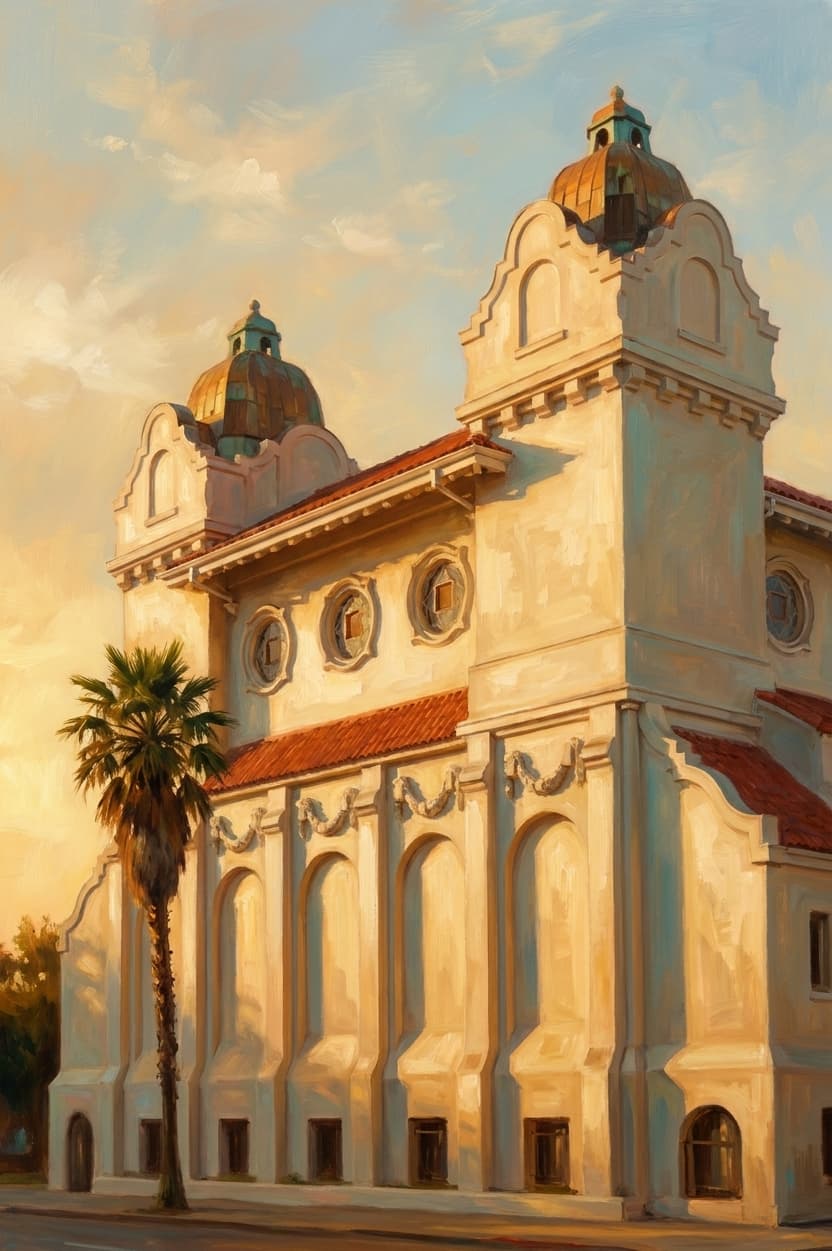
- Striking Mission Revival curvilinear parapets and exterior arcades
Things to Know
- Modest attire covering arms and legs is requested inside the prayer hall
- Shoes must be removed before entering the carpeted prayer area
- Parking in the rear lot fills rapidly during Friday afternoon prayers
Location
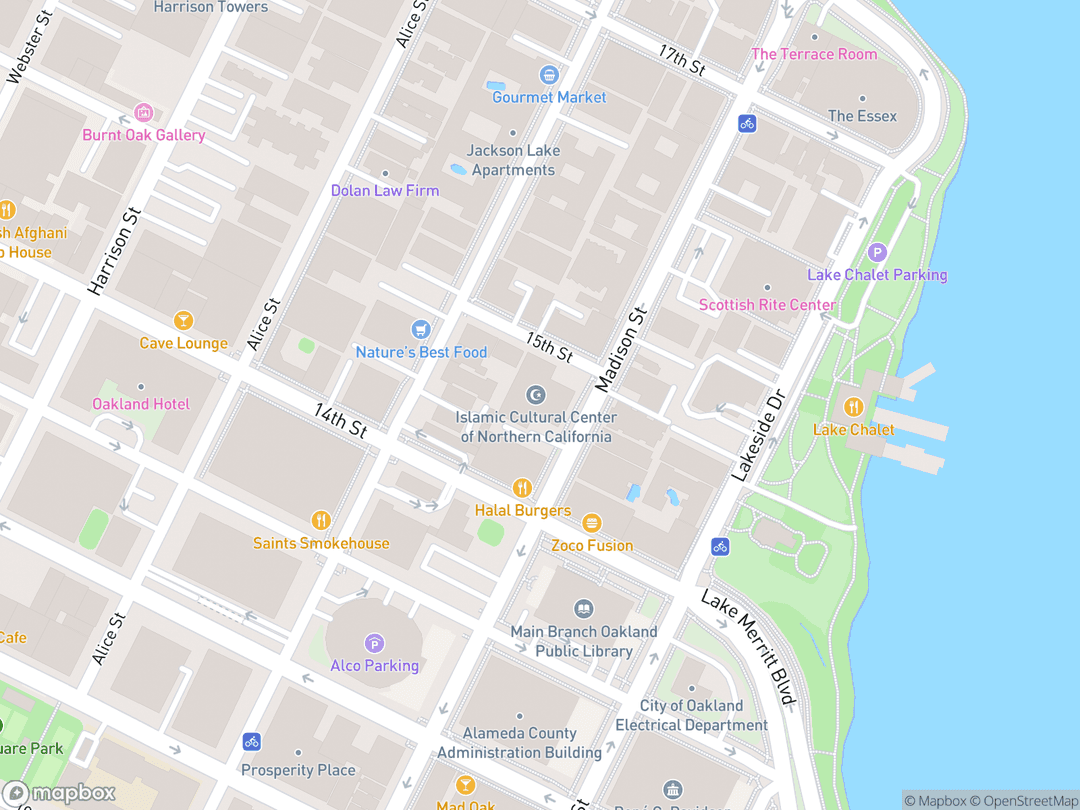
1433 Madison Street, Oakland, CA 94612, United States
Hours: Tuesday through Saturday: 10:00 AM – 5:00 PM; Jummah Prayer: Friday 1:30 PM
Getting There: Four blocks from 12th Street / Oakland City Center and Lake Merritt BART stations; accessible via I-880 and I-580.
Get DirectionsTips for Your Visit
Arrive Early for Friday Jummah
Friday congregational services draw significant crowds, making early arrival advisable for parking and seating.
Explore the Art Galleries
Rotating calligraphy and interfaith art exhibits are free and accessible to the public during open office hours.
Respect Prayer Etiquette
Please speak quietly in the carpeted prayer hall and place footwear on designated wooden shelves upon entering.
About
The Islamic Cultural Center of Northern California (ICCNC) occupies a unique threshold within the American Abrahamic landscape. Founded in 1995, the center acquired and preserved an ornate 1909 Mission Revival fraternal cathedral in downtown Oakland, transforming it into an inclusive sanctuary that honors the universal divine reality (Tawhid) through collective prayer, scholarship, and community service.
Grounded in classical Islamic principles of spiritual refinement (Adab), ICCNC bridges sectarian divides through a deliberately ecumenical model welcoming Sunnis, Shias, Sufis, and seekers of all backgrounds. Its luminous visual art galleries and collaborative cultural initiatives embody ethical monotheism, translating historical tradition into vibrant civic engagement and enduring Abrahamic friendship.
Gallery
Symbolic Elements
The temple's exterior features intricate carvings, each rich with spiritual meaning:

The Mihrab (Prayer Niche)
A geometric wall niche indicating the qiblah direction toward Mecca, symbolizing the doorway to divine transcendence.

Sacred Arabic Calligraphy
Inscribed Qur'anic verses highlighting divine mercy and justice grace the sanctuary walls in lieu of figurative art.

Aniconic Sacred Space
The complete absence of figurative images directs contemplative focus exclusively toward the unsearchable majesty of God.

Geometric Girih Patterns
Interlocking star polygons on rugs and woodwork reflect the harmonious, infinite, and mathematical order of creation.

Unpartitioned Prayer Layout
The open sanctuary design with unobstructed sightlines physically embodies the spiritual equality of every worshipper.

Preserved Mission Parapet
The regional California roofline expresses the seamless integration of American Muslims into the local civic landscape.

Historic Pipe Organ
Maintained behind delicate lattice, the 1908 organ stands as an enduring symbol of historic preservation and mutual respect.
Interesting Facts
The San Francisco Symphony utilized the auditorium in 1928 to record audio discs due to its remarkable acoustic warmth. (Tier A)
It is one of the only active mosques in North America to house an intact 1908 fraternal pipe organ in its auditorium. (Tier A)
Men and women pray in the exact same sacred room without walls or curtains separating them. (Tier A)
The center co-founded the Faith Trio in 2001, forging a nationally celebrated alliance with local Presbyterian and Jewish congregations. (Tier A)
Women have served on both the Board of Directors and the Board of Trustees since the organization's formative years. (Tier A)
The center operates a permanent professional art gallery dedicated to contemporary Islamic calligraphy and visual arts. (Tier A)
Locals affectionately nickname it a 'sushi mosque' because Sunni, Shia, and Sufi worshippers pray together harmoniously. (Tier A)
ICCNC was the very first Muslim congregation formally admitted to the Oakland Coalition of Congregations. (Tier A)
The building preserves original California Mission Revival scalloped parapets and heavy overhanging eaves. (Tier B)
Common Questions
Are non-Muslim visitors welcome to attend services and tour the center?
Yes, visitors of all religious traditions and backgrounds are warmly welcomed to tour exhibits, attend lectures, and observe prayers.
What is the dress code for visitors entering the prayer sanctuary?
Modest attire covering arms and legs is requested, and shoes must be removed before stepping onto the carpeted prayer space.
Why is there a historic pipe organ inside an active mosque?
The pipe organ was preserved from the building's 1909 fraternal cathedral origins as part of a careful adaptive reuse project.
How does the prayer hall arrange seating for men and women?
Worshippers pray in the same open sanctuary without physical dividers, with women praying directly behind men in equal dignity.
What public transit options are available near the center?
The facility is located within a short four-block walking distance of both Lake Merritt and 12th Street BART stations.
Featured Stories
Forging the Faith Trio
2001
In the anxious weeks following September 11, leaders from ICCNC, Montclair Presbyterian Church, and Kehilla Community Synagogue gathered in shared grief and resolve. Together, they established the Faith Trio, a lasting grassroots partnership committed to mutual protection, communal dinners, and charitable service. For more than two decades, their enduring friendship has stood as a beacon of Abrahamic solidarity across the Bay Area.
Source: Faith Trio Inter-Religious Collaborative Records
The Symphony Recording of 1928
1928
Long before becoming a house of Islamic prayer, the Madison Street auditorium was celebrated for its acoustic warmth. In February 1928, Maestro Alfred Hertz led the San Francisco Symphony inside the hall to capture early electrical recordings for the Victor Talking Machine Company. The resonant barrel-vaulted ceiling produced rich shellac discs that were praised internationally for their tonal brilliance.
Source: San Francisco Symphony Historical Archives
Reviving a Community Landmark
1995
When a dedicated group of Iranian-American Muslims purchased the aging fraternal cathedral in 1995, they resolved to protect its architectural integrity. Rather than stripping the interior, the community carefully restored the classical plasterwork, leaded glass, and historic pipe organ while installing an open prayer hall facing Mecca. Their sensitive adaptive reuse breathed new life into an essential downtown landmark.
Source: Islamic Cultural Center of Northern California Founding Documents
Timeline
Site Acquisition
The Oakland Scottish Rite acquires the former Samuel Merritt estate grounds following the 1906 earthquake.
MilestoneCathedral Dedication
Architectural firm O'Brien & Werner completes the Mission Revival cathedral featuring a custom pipe organ.
DedicationCivic Venue Transition
Fraternal bodies relocate to Lakeside Drive, opening the Madison Street auditorium to broad community use.
EventHistoric Symphony Recordings
The San Francisco Symphony under Alfred Hertz records classical electrical discs in the acoustically resonant hall.
EventICCNC Organization
Iranian-American and Bay Area Muslim leaders establish the non-profit Islamic Cultural Center of Northern California.
MilestoneSanctuary Inauguration
Adaptive reuse converts the cathedral into a permanent mosque and cultural center with inaugural Friday prayers.
DedicationFaith Trio Founding
ICCNC joins Montclair Presbyterian Church and Kehilla Community Synagogue to launch the historic Faith Trio alliance.
EventHarvest Dinner Inauguration
The Faith Trio initiates its signature annual interfaith feast and shared charitable service programs.
EventInterfaith Art Biennial
The center launches an acclaimed biennial exhibition showcasing artistic dialogue across major world religions.
MilestoneCalligraphies in Conversation
Supported by national arts grants, ICCNC hosts a major international exhibition comparing diverse script traditions.
EventFaith Trio Anniversary
The congregation celebrates two decades of grassroots Abrahamic solidarity and civic food bank distribution.
MilestoneHistory by Decade
1900s — Fraternal Foundation
The cathedral stands as a testament to craftsmanship and civic dedication in the heart of Oakland.
Following the devastation of the 1906 San Francisco earthquake, Oakland Scottish Rite bodies purchased land on Madison Street to construct a permanent fraternal home. Renowned California architects Matthew O'Brien and Carl Werner designed a monumental cathedral in the popular Mission Revival style, completing the structure in 1909 with an elaborate auditorium and a custom pipe organ.
1910s–1920s — Civic Center & Symphony Sound
Throughout the 1910s, the cathedral served as a major center for fraternal assemblies, public lectures, and chamber concerts. After the Scottish Rite relocated to Lakeside Drive in 1927, the hall welcomed broader artistic groups, including the San Francisco Symphony, which recorded classic shellac discs in the acoustically superior auditorium.
1930s–1950s — Mid-Century Community Venue
During the mid-twentieth century, the Madison Street venue operated as a flexible downtown performing arts space and union hall. Community assemblies, civic lectures, and musical performances filled the auditorium, establishing the building as an enduring fixture of Oakland's social fabric.
1960s–1980s — Decades of Resilience
Amid extensive post-war redevelopment and urban shifts across downtown Oakland, the historic hall narrowly avoided demolition. Independent theater companies and community organizations leased the space for private gatherings, maintaining the structure despite facing deferred preservation needs.
1990s — Islamic Acquisition & Adaptive Reuse
Our intention was never to erase the building's history, but to add our own thread of worship and art to its fabric.
In 1995, Iranian-American and local Muslim leaders organized the Islamic Cultural Center of Northern California and purchased the Madison Street building for $600,000. Through thoughtful adaptive reuse, the congregation repaired historic finishes, added carpeted prayer spaces, and inaugurated Friday prayers in 1996 without altering the historic exterior.
2000s–Present — Interfaith Dialogue & Artistic Renaissance
Following September 11, ICCNC co-founded the historic Faith Trio alongside local Presbyterian and Jewish congregations, establishing lasting interfaith partnerships. Over subsequent decades, the center gained national recognition for its contemporary calligraphy exhibitions, civic food distribution, and welcoming, non-sectarian worship environment.
Architecture & Facilities
The building is a distinguished early twentieth-century example of California Mission Revival architecture adapted for Islamic assembly, designed by prominent architects Matthew O'Brien and Carl Werner. The monumental street façade features smooth lime-cement stucco surfaces, curvilinear scalloped parapets, deep overhanging eaves, and dignified round-arched portals that evoke the historic mission vernacular of the Golden State.
Building Materials
Exterior Envelope
Structural reinforced concrete and brick masonry finished with textured lime-cement stucco.
Interior Millwork
Quarter-sawn native oak, Douglas fir wainscoting, and hand-rubbed timber beams line the vestibules.
Ornamental Plaster
Articulated classical cornices, rosettes, and coffered mouldings adorn the main auditorium.
Art Stained Glass
Warm amber and earth-toned leaded glass windows illuminate the public stairwells without figurative imagery.
Interior Features
Main Proscenium Auditorium
A 500-seat theater featuring a curved balcony, proscenium stage, and resonant barrel-vaulted ceiling.
Upper-Level Musalla
An open, barrier-free prayer sanctuary oriented southwest toward Mecca covered in Anatolian wool carpets.
Visual Arts Gallery
A professional gallery space fitted with track lighting dedicated to displaying Islamic calligraphy.
Subterranean Banquet Hall
A lower-level 400-capacity dining hall and commercial kitchen supporting congregational fellowship meals.
Temple Grounds
Situated directly on the urban street grid of Madison Street, the site features a paved 35-stall parking lot, perimeter security gates, and mature sidewalk street trees framing the historic entrance portico.
Additional Facilities
Five educational classrooms, a public research library, conference boardrooms, and an administrative wing serving weekly youth programs.
Religious Significance
In Islamic theology, consecrated worship sites connect believers directly to the One God (Allah) in the spiritual tradition of Abraham. ICCNC extends this monotheistic heritage by uniting collective prayer with intellectual refinement and compassionate service.
To provide an inclusive sanctuary for sacred remembrance (dhikr), daily prayer, non-sectarian fellowship, and cross-cultural dialogue through the arts.
Sacred Ordinances
Jummah (Friday Congregational Prayer)
The weekly communal prayer preceded by a sermon (khutbah) emphasizing moral responsibility and community cohesion.
Salah (Daily Prayers)
The five prescribed ritual prayers performed facing Mecca, cultivating humility, rhythm, and devotion.
Taraweeh & Ramadan Iftars
Nightly scriptural recitations and communal fast-breaking meals celebrated throughout the holy month of Ramadan.
Adab & Spiritual Education
Educational seminars and calligraphy workshops cultivating internal purification, artistic elegance, and moral excellence.
The Abrahamic Common Ground
Islamic sacred architecture shares deep biblical roots with Christian houses of prayer and Jewish synagogues, affirming that dedicated sanctuaries elevate human hearts toward the Creator. ICCNC embodies this shared reality through ongoing interfaith fellowships, shared harvest meals, and mutual charitable service alongside regional churches and synagogues.
An Inclusive Sanctuary
Rooted in the Twelver Shia tradition yet consciously organized without sectarian boundaries, the center exemplifies true communal hospitality. Sunnis, Shias, Sufis, and spiritual seekers worship together shoulder-to-shoulder, living out the prophetic declaration that the entire earth is a pure place of prayer.
Similar Temples
Sources & Research
Every fact on Temples.org is backed by verified Sources & Research. Each piece of information is rated by source tier and confidence level.