Visitor Insights
Visiting Islamic Center of Washington D.C.
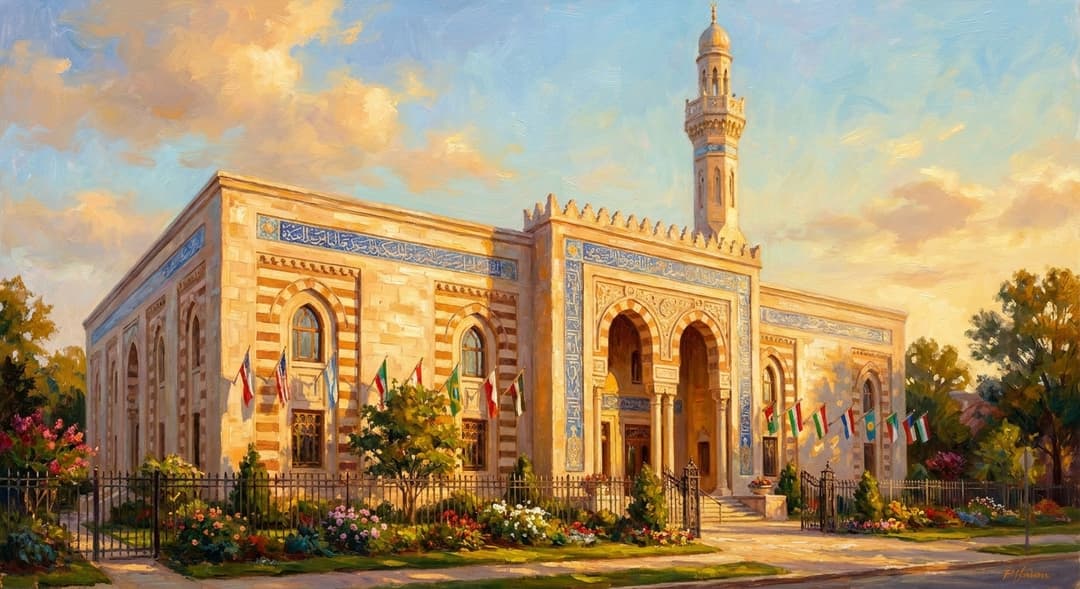
The Islamic Center welcomes visitors of all backgrounds to explore its stunning Neo-Mamluk sanctuary and learn about Islamic heritage. Modest dress and shoe removal are required upon entering the sacred prayer hall.
Highlights
- Intricate Iznik tilework imported directly from Turkey lining the interior walls.
- Two-ton solid bronze chandelier donated by the Egyptian government.
- Hand-woven Persian carpets gifted by the Shah of Iran spanning the prayer floor.
- Precision Qibla offset angled 56 degrees East of North facing Mecca.
Things to Know
- Shoe removal is mandatory before entering the carpeted prayer hall.
- Modest clothing covering arms and legs is required, with headscarves for women.
- Non-Muslim visitors should plan visits outside of congregational prayer times.
Location
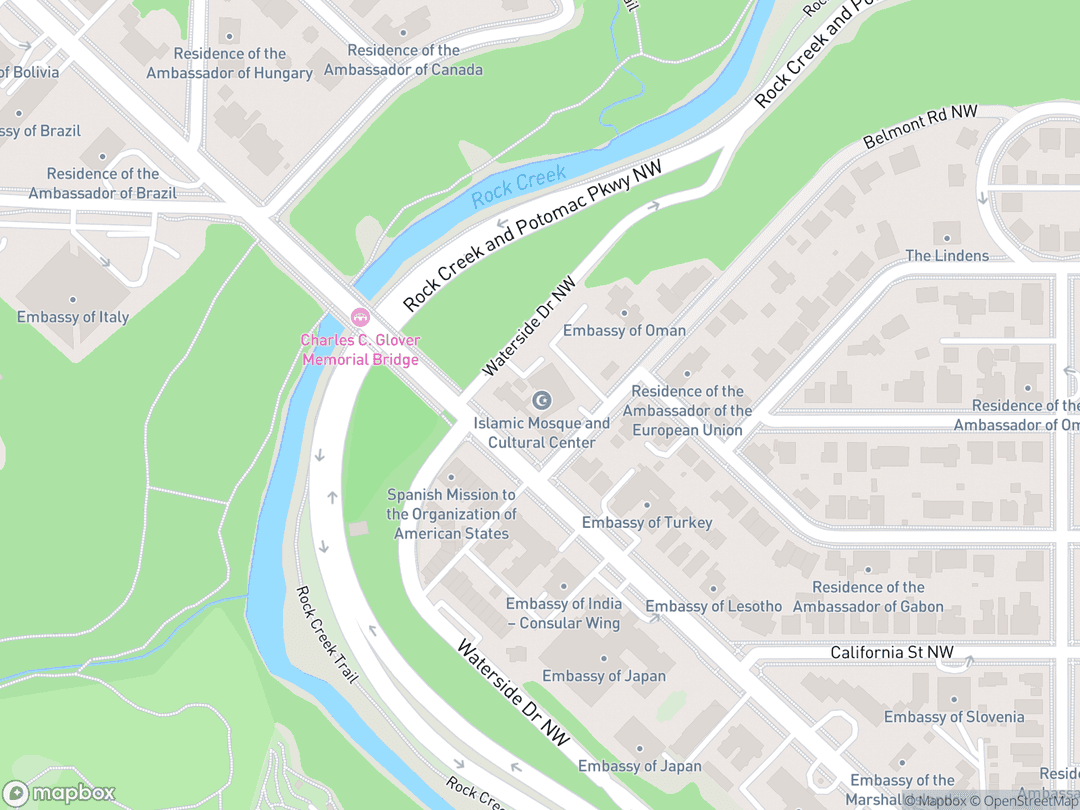
2551 Massachusetts Avenue NW, Washington, D.C. 20008
Hours: Monday through Saturday 10:00 AM - 5:00 PM; Sunday 10:00 AM - 2:00 PM
Getting There: Located on Embassy Row along Massachusetts Avenue NW. Take the Metro Red Line to Dupont Circle or Woodley Park station, or take Metrobus route N2, N4, or N6.
Get DirectionsTips for Your Visit
Optimal Visiting Window
Visit on weekday mornings between 10:00 AM and 11:30 AM for quiet reflection prior to midday prayers.
Dress Code Preparation
Wear loose long pants or ankle-length skirts and long sleeves; female visitors must bring a scarf to cover hair.
Friday Congregational Alert
Avoid scheduling general tours during Friday Jumu'ah prayers when thousands of local worshippers gather.
Transit Guidance
Use public transportation or ride-share services, as street parking along Embassy Row is strictly limited.
About
The Islamic Center of Washington D.C. is one of the most historically significant and architecturally distinguished mosques in the Western Hemisphere. Situated on Embassy Row in the nation's capital, it serves as a house of worship, educational center, and diplomatic testament to Islamic culture in America.
Rooted in the shared monotheistic tradition of Abrahamic faiths, the mosque provides a sacred sanctuary dedicated to the worship of the One God. It reflects the core Islamic doctrine of Tawhid through non-iconic art, intricate Arabic calligraphy, geometric arabesque patterns, and orientation toward Mecca.
Dedicated in 1957 by President Dwight D. Eisenhower, the center stands as an egalitarian space where worshippers from diverse global backgrounds gather in unity, representing the universal community of believers.
Gallery
Symbolic Elements
The temple's exterior features intricate carvings, each rich with spiritual meaning:

The Mihrab (Prayer Niche)
A turquoise tile-lined recessed niche marking the direction of Mecca during communal prayers.

Qur'anic Calligraphy
Sacred Arabic script carved into plaster walls representing the divine Word of God without figurative images.
160-Foot Minaret
A slender stone tower elevating the call to prayer above the city streets.

Clerestory Dome
An elevated glass-fitted dome illuminating the sanctuary, symbolizing the celestial vault.
Geometric Arabesques
Interlocking star lattices symbolizing the infinite and orderly nature of the Creator.

Multinational Furnishings
Handcrafted gifts from Muslim nations representing the global unity of believers.
Portal Arcade (Riwaq)
A series of five horseshoe arches forming a transitional courtyard threshold into sacred space.
Interesting Facts
Conceived after the death of a Turkish ambassador when no local mosque existed for funeral rites. (Tier A)
President Dwight D. Eisenhower removed his shoes to dedicate the mosque in 1957. (Tier A)
The 56.5-degree Mecca alignment was verified by astronomers at the U.S. Naval Observatory. (Tier B)
Architect Mario Rossi was an Italian Catholic who converted to Islam before completing the building. (Tier B)
The interior features gifts from many nations, including Iran, Turkey, Egypt, and Saudi Arabia. (Tier A)
President George W. Bush delivered his famous 'Islam is peace' speech from this center in 2001. (Tier A)
The ceremonial cornerstone was laid on January 11, 1949, matching the Prophet's birthday celebration. (Tier A)
Governed uniquely by a council composed of accredited ambassadors from over 40 countries. (Tier A)
Muslim ambassadors helped negotiate the peaceful release of hostages during the 1977 siege. (Tier B)
Recognized at its opening in 1957 as the largest mosque in the Western Hemisphere. (Tier B)
Common Questions
Can non-Muslims visit the Islamic Center of Washington D.C.?
Yes, visitors of all faiths are welcome during regular visiting hours outside of congregational prayer times.
What is the dress code for visiting the mosque?
Visitors must dress modestly with arms and legs covered, and women are required to cover their hair with a headscarf.
Why is the building turned at an angle to the street?
The inner courtyard and prayer hall are angled 56 degrees East of North to align directly with Mecca.
Who designed the Islamic Center?
The primary architect was Mario Rossi, an Italian specialist in Mamluk architecture who converted to Islam.
Who governs the Islamic Center of Washington D.C.?
The center is governed by a Board of Governors composed of accredited diplomatic ambassadors from Muslim nations.
Featured Stories
Eisenhower's Dedication Precedent
June 28, 1957
On June 28, 1957, Dwight D. Eisenhower became the first sitting U.S. president to address a mosque. Respecting Islamic tradition, he removed his shoes at the entrance, establishing a historical precedent for religious deference and diplomatic friendship.
Source: National Archives & Records Administration
Astronomical Precision for the Qibla
1948
Architect Mario Rossi faced the challenge of aligning the sanctuary toward Mecca within Washington's rigid street grid. Engineers consulted astronomers at the U.S. Naval Observatory to fix the precise vector 56.5 degrees East of North.
Source: Archnet Architectural Records
A Message of Peace in 2001
September 17, 2001
Six days after the September 11 terrorist attacks, President George W. Bush visited the center to address the nation. Speaking from the sanctuary pulpit, he quoted the Qur'an and affirmed that the true face of Islam represents peace.
Source: White House Historical Archives
Timeline
Funeral Mobilizes Embassy Community
The passing of Turkish Ambassador M. Munir Ertegun highlights the urgent need for a capital mosque.
MilestoneWashington Mosque Foundation Established
Egyptian Ambassador Mahmood Hassan Pasha and Joseph Howar charter the mosque foundation.
MilestoneEmbassy Row Property Acquisition
The foundation purchases a prestigious lot on Massachusetts Avenue NW for $95,000.
EventCornerstone Ceremonially Laid
Diplomats from seven Muslim nations lay the cornerstone on Prophet Muhammad's birthday.
component.timeline.groundbreakingPrimary Structure Completed
Italian architect Mario Rossi completes the main structural exterior and minaret construction.
MilestonePresident Eisenhower Dedicates Center
U.S. President Dwight D. Eisenhower formally opens the mosque before international dignitaries.
DedicationHanafi Hostage Siege Mediation
International ambassadors mediate a peaceful resolution to a 39-hour siege without loss of life.
EventPresident Bush Delivers Interfaith Address
President George W. Bush visits six days after 9/11 and affirms that Islam is peace.
EventPresidential Eid al-Fitr Visit
President Bush returns to commemorate Eid al-Fitr and promote interfaith understanding.
EventPlasterwork and Calligraphy Restoration
Artisans complete major historical preservation of the interior plaster reliefs and tiles.
RenovationHistory by Decade
1940s
Following the 1944 death of Turkish Ambassador M. Munir Ertegun, diplomats recognized the capital's need for a formal mosque. In 1945, Ambassador Mahmood Hassan Pasha and Joseph Howar co-founded the Washington Mosque Foundation. Land on Embassy Row was acquired in 1946, and the cornerstone was laid on January 11, 1949.
1950s
Construction proceeded under Italian architect Mario Rossi with international artisan support. Master craftsmen installed Iznik tilework, carved calligraphic plaster, and bronze fixtures. On June 28, 1957, President Dwight D. Eisenhower officially dedicated the completed center.
1970s
In March 1977, the center was seized during the 39-hour Hanafi hostage siege. Diplomatic ambassadors from Egypt, Pakistan, and Iran joined federal negotiators to appeal to the captors, successfully securing the safe release of all hostages without casualties.
2000s
President George W. Bush made historic visits to the center in September 2001 and December 2002. His addresses highlighted religious tolerance and reinforced national interfaith solidarity following global geopolitical tensions.
2010s–Present
The center completed significant preservation work restoring its delicate plaster reliefs and tiles. Today, it continues as a central house of worship hosting over 6,000 congregants for Friday prayers and thousands of global visitors annually.
Architecture & Facilities
Designed in the Neo-Mamluk (Mamluk Revival) style, the Islamic Center draws inspiration from 14th- and 15th-century Cairene mosques. It combines classical Islamic motifs with modern structural engineering to accommodate Washington's climate.
Building Materials
Exterior Masonry
Carved limestone facade featuring alternating band motifs characteristic of classical Mamluk architecture.
Wall Tiles
Glazed ceramic wall tiles imported directly from Iznik and Kütahya, Turkey.
Floor Coverings
Hand-woven Persian carpets gifted by the Shah of Iran spanning the prayer floor.
Central Chandelier
A two-ton solid bronze chandelier crafted and donated by the Egyptian government.
Interior Features
Prayer Hall (Musalla)
Carpeted sanctuary lined with Turkish tiles, calligraphic plaster, and natural overhead dome lighting.
The Mihrab Niche
Recessed niche decorated with turquoise glazed tiles pointing towards the Holy City of Mecca.
The Minbar
Inlaid wooden pulpit where the imam delivers Friday sermons to the congregation.
Clerestory Dome
Stained-glass central dome enclosing the traditional courtyard space against cold winter weather.
Temple Grounds
Situated along Embassy Row, the site features formal limestone arches, paved courtyards, and perimeter diplomatic flag displays.
Additional Facilities
Houses an Islamic research library, administrative offices, language classrooms, and a community hall.
Religious Significance
As a sacred masjid, the center serves as a threshold where believers submit to the One God in communal prayer.
Provides a consecrated space for daily Salah, Friday Jumu'ah congregational prayers, and religious education.
Sacred Ordinances
Salah (Daily Prayers)
Five daily prescribed ritual prayers performed facing Mecca in physical and spiritual alignment.
Jumu'ah (Friday Congregation)
Weekly congregational prayer and sermon uniting thousands of regional Muslims.
Mawlid al-Nabi
Commemoration of the Prophet Muhammad's birth celebrated with educational gatherings.
Tawhid and Aniconism
Sacred space contains no figurative imagery, relying on calligraphy and geometric art to express divine perfection.
Egalitarian Worship
Worshippers stand shoulder-to-shoulder without designated social rank, affirming the equality of all human beings before God.
Similar Temples
Sources & Research
Every fact on Temples.org is backed by verified Sources & Research. Each piece of information is rated by source tier and confidence level.
View All Sources (8)
| Field | Source | Tier | Retrieved |
|---|---|---|---|
| About & Theological Context | The Islamic Center of Washington D.C. (opens in a new tab) | A | 2026-02-15 |
| Historical Timeline | U.S. National Archives and Records Administration (opens in a new tab) | A | 2026-02-15 |
| Architecture & Mamluk Design | Archnet / Aga Khan Documentation Center at MIT (opens in a new tab) | B | 2026-02-15 |
| Architecture & Engineering Alignment | Massachusetts Institute of Technology (opens in a new tab) | B | 2026-02-15 |
| Diplomatic & Presidential History | TIME Magazine (opens in a new tab) | B | 2026-02-15 |
| Cultural Heritage & Outreach | Aramco World (opens in a new tab) | B | 2026-02-15 |
| Educational & Theological Background | University of California, Santa Barbara (opens in a new tab) | B | 2026-02-15 |
| Architectural Crafts & Style | Institute of Classical Architecture & Art (opens in a new tab) | B | 2026-02-15 |