Visitor Insights
Visiting Orlando Florida Temple
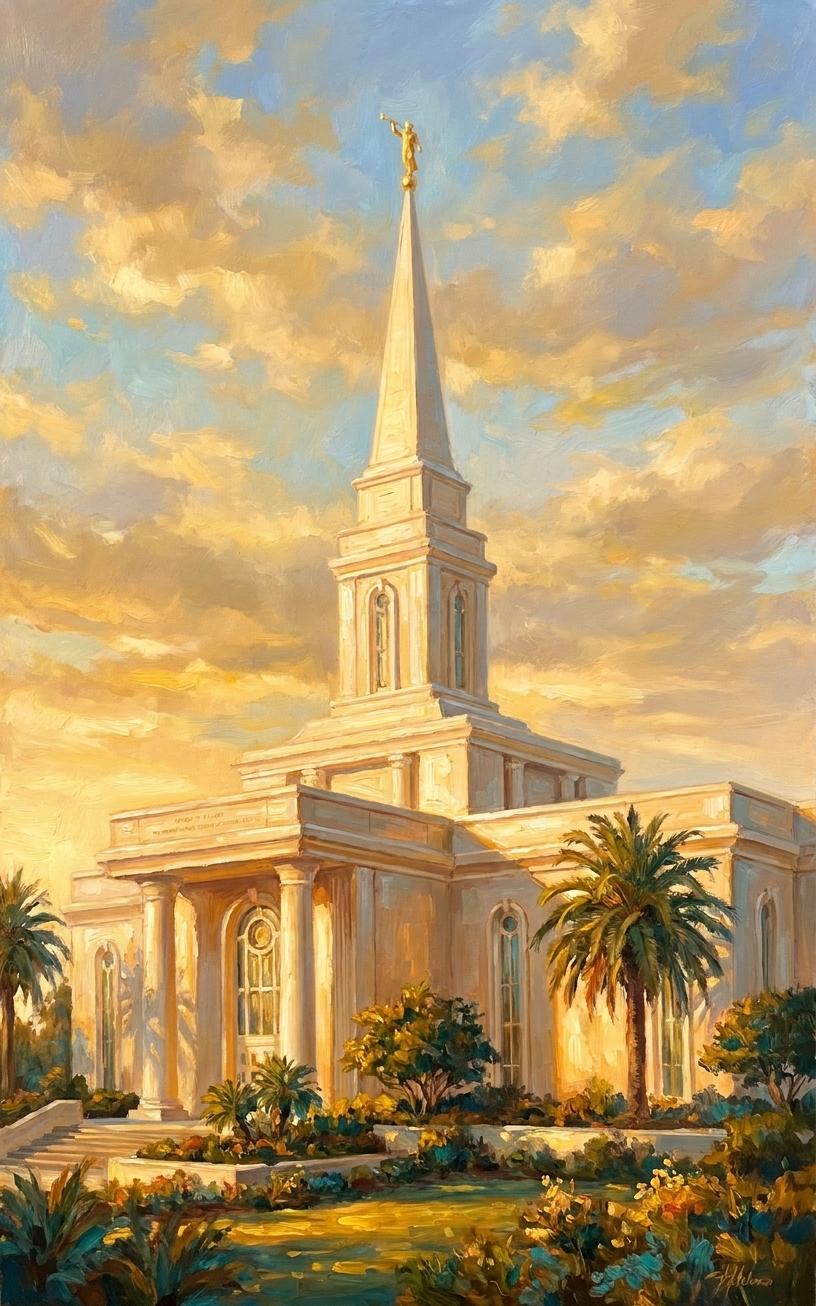
The temple grounds offer a peaceful retreat overlooking the Butler Chain of Lakes, surrounded by mature live oaks and palms. While the temple interior is currently closed for major renovations, the exterior grounds and reflection plazas remain a beloved local landmark.
Highlights
- Gleaming white facade composed of crushed Georgia marble embedded in precast panels
- Cascading water fountains and serene reflection pools framed by date palms
- Sweeping views of the surrounding lake chain from the elevated knoll setting
- Delicate subtropical art glass motifs visible along the deep-set window openings
Things to Know
- The temple interior and baptistry are closed for comprehensive renovation until further notice
- Exterior grounds are open daily to visitors of all faiths from dawn to dusk
- Modest dress and respectful conduct are requested when walking the sacred grounds
- Photography is welcome across the gardens, reflecting pools, and exterior terraces
Location
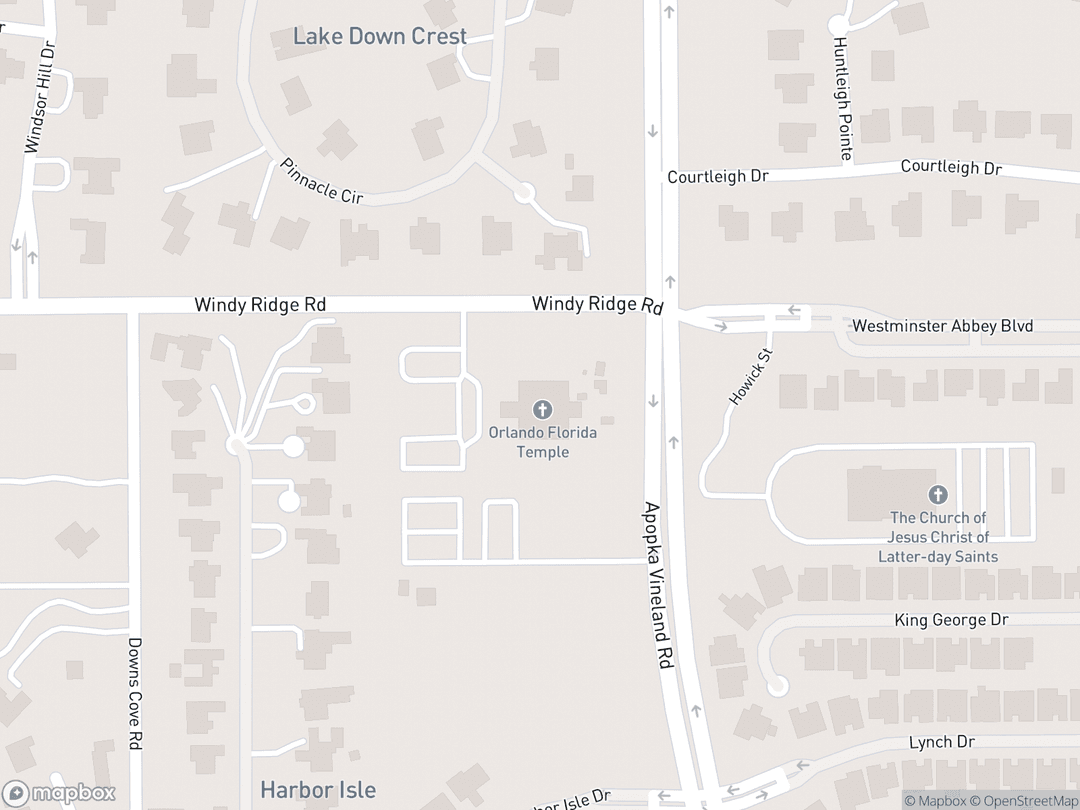
9000 Windy Ridge Road, Windermere, Florida 34786, United States
Hours: Grounds open daily from sunrise to sunset; interior currently closed for renovation
Getting There: Accessible via Florida's Turnpike and Interstate 4; follow Conroy-Windermere Road to Apopka-Vineland Road, then turn onto Windy Ridge Road directly to the gates.
Get DirectionsTips for Your Visit
Golden Hour Photography
Visit just before sunset when the white marble aggregate catches the warm evening light across the cascading fountains.
Grounds Access
Pedestrian pathways and garden benches remain open to visitors seeking a contemplative and serene environment.
Navigating Lake Country
Use navigation apps carefully through Windermere's winding lakeside corridors to ensure entry at the main Windy Ridge Road gate.
About
The Orlando Florida Temple stands as a sacred sanctuary within modern Christian worship, rooted in the broader Abrahamic tradition of holy sanctuaries dating back to the biblical Tabernacle and Solomon's Temple. Dedicated in 1994, it serves as an enduring house of prayer and sacred covenants rather than a conventional weekly meetinghouse.
Located on a tranquil knoll in Windermere, the edifice was the first Latter-day Saint temple constructed in Florida. It unites members across the southeastern United States through eternal ordinances, centering all worship upon Jesus Christ as the chief cornerstone.
Featuring a 165-foot spire and an exterior of brilliant white marble aggregate, the 70,000-square-foot temple harmonizes classical sacred architecture with Florida's lush subtropical landscape. It is currently undergoing comprehensive multi-year renovations to modernize mechanical systems and interior finishes.
Gallery
Symbolic Elements
The temple's exterior features intricate carvings, each rich with spiritual meaning:

Angel Moroni
The gold-leafed herald atop the spire symbolizes the restoration of the everlasting gospel proclaimed to all nations.

Baptismal Font on Twelve Oxen
The font rests upon twelve sculpted oxen facing outward, evoking Solomon's ancient brazen sea and the twelve tribes of Israel.

Celestial Art Glass Dome
A circular leaded stained-glass skylight represents divine light descending from heaven into the earthly realm.

Opposing Eternity Mirrors
Facing mirrors inside the sealing rooms generate endless reflections symbolizing familial ties that endure for eternity.

Subtropical Floral Motifs
Stylized palm fronds and citrus blossom patterns woven into glass tracery celebrate renewal and life springing in the desert.

Stepped Vertical Spire
The tiered tower rising toward a single needle spire directs the viewer's gaze and contemplation upward toward God.

Reflecting Pools and Fountains
Tiered waters symbolize the cleansing power of Christ and the living water promised in biblical scripture.
Interesting Facts
It was the very first Latter-day Saint temple dedicated in the state of Florida. (Tier A)
Encompassing 70,000 square feet, it ranks as the second-largest temple on the Eastern Seaboard after Washington D.C. (Tier B)
It is one of only two temples dedicated by Church President Howard W. Hunter during his presidency. (Tier A)
The gleaming exterior panels contain crushed white Georgia marble aggregate cast into concrete to resist humidity. (Tier B)
During the 1994 public open house, more than 90,000 community members and interfaith leaders toured the interior. (Tier A)
It originally served an enormous district extending across the entire Florida peninsula and throughout the Caribbean basin. (Tier B)
Unlike most flat Florida terrain, the temple rests on an elevated knoll overlooking the Butler Chain of Lakes. (Tier C)
A rare stained-glass dome ceiling crowns the Celestial Room, bathing patrons in diffused natural illumination. (Tier B)
Common Questions
Why is the Orlando Florida Temple currently closed?
It closed on July 1, 2024, for an extensive multi-year renovation to modernize building systems and upgrade interior finishes.
Can the public visit the temple grounds during the renovation?
Yes, visitors of all faiths may stroll through the landscaped grounds, gardens, and fountain plazas during daylight hours.
What architectural style defines the temple?
It exhibits a Classic Modern design with symmetrical wings, arched windows, and a single tiered 165-foot central spire.
How large is the Orlando Florida Temple?
The temple encompasses 70,000 square feet on a 13-acre site overlooking the scenic Butler Chain of Lakes.
Will there be another public open house in the future?
Yes, the Church will host a public open house for all visitors before the temple is formally rededicated.
Featured Stories
A Rare Dedication by President Howard W. Hunter
October 9, 1994
Serving as Church President for just nine months, President Howard W. Hunter dedicated only two temples during his tenure. The Orlando dedication was a profound highlight of his brief administration, where he warmly invited members to establish the temple as the great symbol of their discipleship. His presence left an indelible impression on thousands of Florida families gathered across the multiple dedication sessions.
Source: The Church of Jesus Christ of Latter-day Saints Newsroom
Welcoming 90,000 Central Floridians
September 10, 1994
Before its sacred dedication, the temple opened its doors for a three-week open house that welcomed over 90,000 visitors. Civic leaders, local clergy of varied Christian and interfaith congregations, and curious neighbors walked through the reverent ordinance halls. The event fostered lasting goodwill across the Orlando metropolitan region, dispelling common misconceptions about temple worship.
Source: Historical Department Records
The Caribbean Gathering Sanctuary
1994
During its initial decade of operation, the Orlando Florida Temple served as a vital spiritual beacon for members residing across the Caribbean basin. Families traveled great distances by plane and boat from Puerto Rico, the Bahamas, and Jamaica to complete sacred marriage sealings and ancestral work. The temple functioned as an international gathering place until Caribbean temples were constructed years later.
Source: Church News Historical Archives
Timeline
Temple Announcement
The First Presidency announced plans to construct Florida's first temple in the Orlando metropolitan area.
MilestoneGeneral Conference Reaffirmation
President Ezra Taft Benson formally reiterated the temple project before the worldwide Church membership.
EventGroundbreaking Ceremony
Elder James E. Faust presided over the site dedication and official groundbreaking ceremony in Windermere.
component.timeline.groundbreakingPublic Open House Begins
Over 90,000 visitors toured the interior during a comprehensive three-week community open house.
EventDedication
President Howard W. Hunter dedicated the Orlando Florida Temple across multiple sacred sessions.
DedicationDistrict Realignments
Regional district boundaries shifted as newer temples opened throughout the Caribbean and the South.
MilestoneFort Lauderdale Temple Dedication
Dedication of South Florida's temple allowed Orlando to concentrate service along the Central Florida corridor.
EventPandemic Precautionary Closure
All operational ceremonies ceased temporarily in compliance with global health protocols before phased reopening.
EventRenovation Announcement
The First Presidency announced an extensive full-building modernization to upgrade facilities after 30 years of operation.
MilestoneClosure for Reconstruction
The facility formally closed to patrons to commence multi-year mechanical, electrical, and aesthetic upgrades.
RenovationHistory by Decade
1980s — Southeastern Regional Growth
The establishment of a sacred temple in Florida brought immense joy to thousands who long traveled great distances to worship.
Rapid demographic expansion in Florida left regional members traveling hundreds of miles to the Atlanta or Washington D.C. temples. Local leaders persistently requested a closer house of worship to accommodate the growing congregation. By decade's end, the First Presidency determined the time was right for a Florida sanctuary.
1990s — Construction and Consecration
Let the temple be the great symbol of your membership and the supernal setting for your most sacred covenants.
Announced in 1990, the building was constructed on an elevated knoll in Windermere under the guidance of Orlando-based architects. Following an open house attended by 90,000 people, President Howard W. Hunter dedicated the completed structure in October 1994. It immediately became a beloved spiritual landmark across the southern states.
2000s–2010s — District Evolution
As new temples rose in Santo Domingo, San Juan, and Fort Lauderdale, Orlando's operational boundaries matured into a focused district covering 22 stakes. The facility established itself as a deeply integrated fixture of Central Florida's faith community. Thousands of youth and adult volunteers maintained its pristine grounds and active ordinance schedule.
2020s — Renovation and Renewal
Following temporary disruptions during the 2020 global pandemic, the First Presidency announced a comprehensive 30-year renovation for the building in early 2024. The temple formally closed on July 1, 2024, to replace aging mechanical and electrical systems, refresh sacred interior spaces, and restore exterior stonework. These extensive improvements ensure the building continues to serve future generations.
Architecture & Facilities
The Orlando Florida Temple is executed in a refined Classic Modern architectural style with neo-classical proportions, featuring symmetrical tiered wings, recessed arches, and a monumental central spire designed to endure Florida's subtropical climate.
Building Materials
Exterior Panels
Precast architectural concrete panels embedded with polished white Georgia marble chips.
Art Glass
Beveled and leaded glass tinted in pastel ribbons and stylized subtropical flora.
Structural Spire
Steel-framed tower clad in white precast panels and crowned with a gold-leafed Angel Moroni.
Interior Millwork
Carved domestic hardwoods and decorative plaster cornices finished in warm classical tones.
Interior Features
Celestial Room
The spiritual apex of the temple featuring an expansive leaded art glass dome and crystal chandeliers.
Ordinance Rooms
Four stationary instruction rooms configured with tiered theatre-style seating for progressive worship.
Sealing Rooms
Five intimate marriage chapels appointed with imported marble altars and opposing eternity mirrors.
Baptistry
A lower-level font resting upon twelve life-sized sculpted oxen symbolizing the tribes of Israel.
Temple Grounds
Thirteen acres of landscaped knoll terrain featuring Canary Island date palms, mature Southern live oaks, cascading fountains, and reflection pools overlooking the Butler Chain of Lakes.
Additional Facilities
Features an adjacent distribution center, extensive patron dressing suites, waiting lobbies, and landscaped pedestrian plazas.
Religious Significance
Within the Abrahamic tradition of sacred enclosures, the Orlando Florida Temple represents a modern continuation of the holy sanctuaries of antiquity, dedicated as a literal House of the Lord.
The temple provides a consecrated sanctuary where members make solemn Christ-centered covenants and unite families across generations through eternal marriage sealings and proxy ordinances.
Sacred Ordinances
Baptism for the Dead
Vicarious water immersion performed on behalf of deceased ancestors who passed without the opportunity to receive the gospel.
Endowment
Sacred instruction outlining the plan of salvation, creation, and covenants of personal consecration to Jesus Christ.
Sealing
Holy matrimony and parent-child ordinances uniting families eternally under priesthood authority.
The Biblical Pattern of Sanctuary
Temples follow ancient scriptural patterns seen in Moses' Tabernacle and Solomon's Temple, setting aside consecrated space separate from secular life to commune with God.
Christ as the Chief Cornerstone
All teachings and rituals within the temple point directly toward the atonement and resurrection of Jesus Christ as the foundation of personal salvation.
Similar Temples
Sources & Research
Every fact on Temples.org is backed by verified Sources & Research. Each piece of information is rated by source tier and confidence level.
View All Sources (8)
| Field | Source | Tier | Retrieved |
|---|---|---|---|
| About & Historical Background | The Church of Jesus Christ of Latter-day Saints (opens in a new tab) | A | 2026-03-31 |
| Historical Timeline & Renovation Notice | The Church of Jesus Christ of Latter-day Saints Newsroom (opens in a new tab) | A | 2026-03-31 |
| Temple Specifications & Architecture | ChurchofJesusChristTemples.org (opens in a new tab) | C | 2026-03-31 |
| Groundbreaking & Historical Milestones | Church History Department (opens in a new tab) | A | 2026-03-31 |
| Dedication Proceedings & Speeches | The Church of Jesus Christ of Latter-day Saints (opens in a new tab) | A | 2026-03-31 |
| Regional Temple Service & Demographics | Meridian Magazine (opens in a new tab) | C | 2026-03-31 |
| Architectural & Site Details | Academic Dictionaries and Encyclopedias (opens in a new tab) | B | 2026-03-31 |
| Architectural Overview & Structural Data | Brough Made Architecture Archive (opens in a new tab) | C | 2026-03-31 |