Visitor Insights
Visiting Shah-i-Zinda
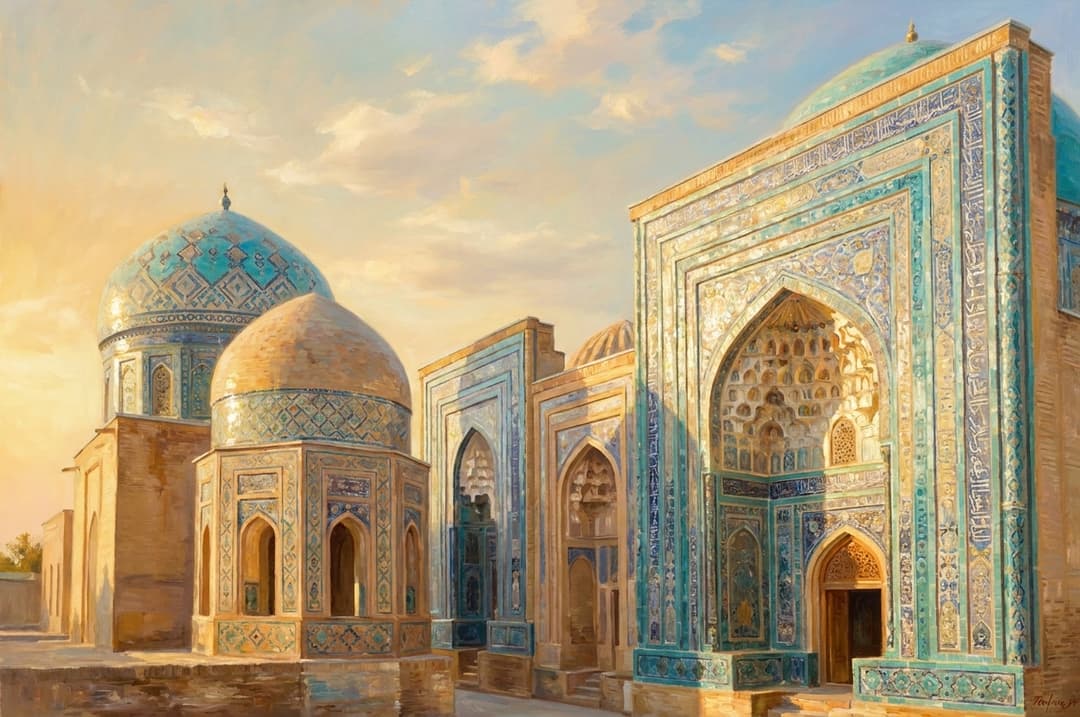
Shah-i-Zinda functions as both an architectural masterpiece and a revered pilgrimage site for Central Asian Muslims. Visitors traverse an open-air corridor framed by turquoise domes and sacred inscriptions. Modest attire and a quiet, respectful demeanor are essential throughout the grounds.
Highlights
- Steep 40-step entrance stairway built by Ulugh Beg
- Intricate four-tiered majolica cenotaph of Kusam ibn Abbas
- Exquisite carved polychrome tiles of Shadi Mulk Aqa Mausoleum
- Deep cobalt and gold muqarnas vaulting along the central corridor
Things to Know
- Active prayer spaces require shoes to be removed on carpets
- Women should carry head coverings when entering tomb chambers
- Stairs along the terraced hillside may challenge mobility-impaired visitors
- Refrain from photographing pilgrims engaged in quiet supplication
Location
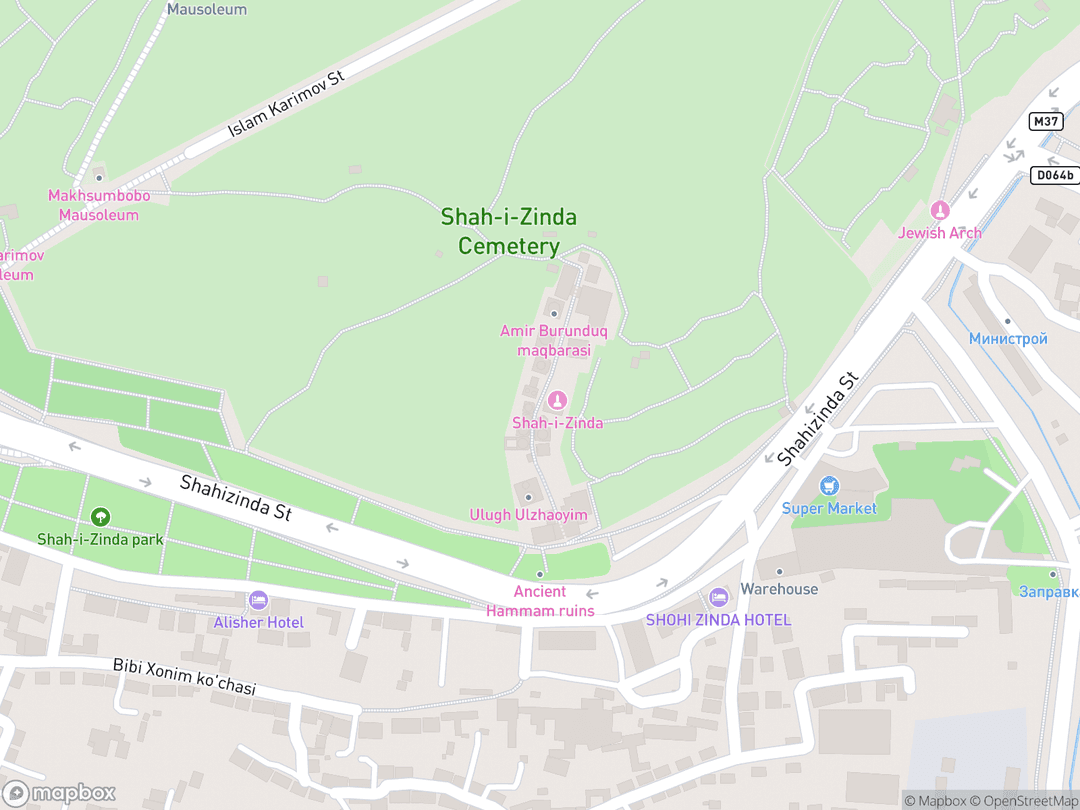
Shohi Zinda ko'chasi, Samarkand 140100, Uzbekistan
Hours: 7:00 AM to 8:00 PM daily
Getting There: Located on Shohi Zinda Street in Samarkand, a 10-minute walk northeast of Bibi-Khanym Mosque, accessible via local electric shuttles and taxis.
Get DirectionsTips for Your Visit
Optimal Lighting
Visit in the late afternoon when the setting sun illuminates the blue glazed facades.
Modest Dress
Keep shoulders, knees, and hair covered when entering the sacred crypt chambers.
Stairway Tradition
Count the forty steps ascending and descending to experience traditional pilgrim folklore.
About
Shah-i-Zinda is a medieval funerary and pilgrimage avenue on the slopes of ancient Afrasiab in Samarkand. Translating as 'The Living King,' the complex honors Kusam ibn Abbas, a first cousin of the Prophet Muhammad who brought Islam to Transoxiana.
Within the shared Abrahamic reverence for prophetic resting places and martyrs, the complex exemplifies the Quranic doctrine that those fallen for divine truth remain alive with their Lord. Pilgrims ascend its stone avenue to seek spiritual reflection and divine blessing.
The current ensemble evolved from an 11th-century Karakhanid shrine into a royal necropolis under Amir Timur and his successors. Its narrow avenue is lined with more than twenty mausoleums and prayer halls celebrated for their vibrant turquoise and lapis glaze work.
Gallery
Symbolic Elements
The temple's exterior features intricate carvings, each rich with spiritual meaning:

Cobalt Lapis Glaze
Represents the infinite celestial sky and God's boundless sovereignty in Islamic spiritual cosmology.

Turquoise Firuze Tiles
Symbolizes spiritual victory, heavenly protection, and the refreshing oasis waters promised in Paradise.

Muqarnas Vaulting
Diffuses harsh sunlight into tiered stalactite facets to symbolize heavenly spheres meeting the earth.

Square Banna'i Kufic
Geometric brickwork spelling sacred names of God across exterior walls as continuous silent remembrance.

Girih Star Patterns
Ten- and twelve-pointed geometric networks expressing the underlying divine unity and harmony of the universe.

Cypress Tree Reliefs
Slender cypress forms carved into tilework representing the upright human soul and eternal life in heaven.

Thuluth Quranic Epigraphy
Flowing monumental calligraphy inscribing verses on divine mercy, resurrection, and the soul's destiny.
Interesting Facts
Local tradition recounts that Kusam ibn Abbas retreated into a subterranean well to await resurrection. (Tier B)
Counting forty steps accurately while climbing and descending is believed to ensure accepted prayers. (Tier B)
The majority of the grandest mausoleums were commissioned by and dedicated to Timurid royal women. (Tier A)
The double-domed tomb long attributed to an astronomer actually contained the remains of female nobles. (Tier B)
The 1380s tiered majolica sarcophagus of Kusam ibn Abbas is Central Asia's finest preserved ceramic work. (Tier A)
Genghis Khan's army leveled all of Samarkand in 1220 but deliberately spared this sacred shrine. (Tier B)
The Shirin Bika Aqa Mausoleum features a portal inscription quoting the ancient Greek philosopher Socrates. (Tier A)
The 1405 sanctuary portal preserves the original carved juniper doors made by woodcarver Yusuf Shirazi. (Tier B)
The narrow street served as an empirical workshop tracking five centuries of ceramic glaze development. (Tier B)
Common Questions
Who is the 'Living King' buried at Shah-i-Zinda?
The title refers to Kusam ibn Abbas, a cousin of Prophet Muhammad believed to live spiritually near his tomb.
Can non-Muslims enter the mausoleums?
Yes, visitors of all backgrounds are welcome throughout the complex provided respectful etiquette is observed.
What is the legend behind the 40-step staircase?
Pilgrim tradition holds that counting forty steps both up and down cleanses minor sins through focused mindfulness.
Why are so many tombs dedicated to women?
Amir Timur honored his sisters, nieces, and wives by entombing them in the sanctified vicinity of the holy martyr.
Featured Stories
The Martyrdom and the Well
676
When Sogdian forces attacked the Arab garrison during prayer, Kusam ibn Abbas was mortally wounded on the hills of Afrasiab. Sacred lore recounts that he miraculously descended into a hidden subterranean well where he continues to live in prayer until the Day of Judgment. This deep spiritual belief gave the necropolis its enduring name, the Living King.
Source: Central Asian Ziyarat Traditions
A Mother's Grief in Glazed Terracotta
1372
Devastated by the untimely death of her young daughter, Timur's elder sister commissioned master ceramicists Badr al-Din and Shams al-Din to build the Shadi Mulk Aqa tomb. They covered every inch of the portal in delicate turquoise relief, creating a monument born of grief that revolutionized Central Asian ceramic tile art.
Source: Timurid Architectural Records
The Sovereign's Ascent
1435
The astronomer-monarch Ulugh Beg erected the grand entrance portal at the base of the hill to honor his young son Abd al-Aziz and unite the disparate shrines. By adding the iconic brick stairway, he transformed a rugged slope into a contemplative pilgrimage ascent, framing the sacred corridor beneath a towering monumental arch.
Source: UNESCO Inscription Dossier
Timeline
Martyrdom of Kusam ibn Abbas
Kusam ibn Abbas is martyred outside the walls of Afrasiab during early Islamic missions to Sogdiana.
MilestoneKarakhanid Shrine Foundation
Tamgach Bogra Khan constructs the first monumental tomb and madrasa over the sacred burial crypt.
component.timeline.groundbreakingPreservation Amidst Mongol Conquest
Mongol forces destroy surrounding Afrasiab but preserve the inner shrine of Kusam out of religious respect.
MilestoneIbn Battuta's Pilgrimage
Moroccan jurist Ibn Battuta documents the rich marble columns and silver lamps adorning the holy shrine.
EventShadi Mulk Aqa Tomb Built
Artisans Badr al-Din and Shams al-Din complete the mausoleum with pioneering carved glazed terracotta.
MilestoneShirin Bika Aqa Mausoleum
Timur dedicates a mausoleum for his sister featuring advanced mosaic faience and Socrates inscriptions.
MilestoneTuman Aqa Complex
Timur's consort completes an upper courtyard complex featuring carved juniper doors by Yusuf Shirazi.
MilestoneUlugh Beg Portal Dedication
Astronomer-king Ulugh Beg erects the grand entrance portal and 40-step staircase for his son Abd al-Aziz.
DedicationBukhara Emirate Additions
The Davlet Kushbegi Madrasa and wooden summer mosque are established in the lower court.
RenovationArchaeological Excavations Begin
Soviet scholars uncover the deep Karakhanid and Samanid foundations beneath the upper complex.
MilestoneUNESCO World Heritage Inscription
The necropolis is formally inscribed as an essential element of Samarkand - Crossroads of Cultures.
MilestoneState Restoration Initiative
Government artisans complete widespread tile restoration, masonry reinforcement, and path cleaning.
RenovationHistory by Decade
670s–1060s — Early Shrine and Martyrdom
Do not think of those who have been killed in the way of Allah as dead. Rather, they are alive with their Lord.
Following the martyrdom of Kusam ibn Abbas in 676, his burial place outside Afrasiab became an early site of local Muslim devotion. For nearly four centuries, modest brick structures marked the subterranean crypt amidst shifting regional dynasties.
1060s–1220s — Karakhanid Monumentality
Tamgach Bogra Khan constructed the Qusamiya Madrasa and a grand vaulted mausoleum in 1066, establishing formal architectural patronage at the site. The complex gained wide renown across Central Asia as an essential pilgrimage stop along regional caravan networks.
1220s–1360s — Mongol Preservation and Rebirth
While Genghis Khan destroyed Afrasiab in 1220, Mongol commanders deliberately protected Kusam's shrine out of reverence for regional holy figures. By the time traveler Ibn Battuta visited in 1334, the shrine had resumed its role as a lavishly adorned center of pilgrimage.
1370s–1400s — Timur's Royal Necropolis
Amir Timur designated the hill as an elite burial ground for his female relatives and military commanders. Outstanding artisans from across Persia and Khwarazm erected masterworks of carved terracotta, majolica, and mosaic tile along the narrow corridor.
1400s–1450s — Timurid Renaissance and Ulugh Beg
Queen Tuman Aqa completed her refined upper courtyard in 1405, and Ulugh Beg constructed the monumental outer entrance gate in 1435. These final imperial additions consolidated the path into a harmonious, unified pilgrimage avenue.
1780s–Present — Conservation and Living Pilgrimage
The Emirate of Bukhara added an entrance madrasa in the late 18th century before Soviet archaeologists began systematic excavations in the 1920s. Today, under independent Uzbekistan and UNESCO recognition, the site functions actively for prayer and global cultural heritage.
Architecture & Facilities
Shah-i-Zinda embodies the pinnacle of Timurid Islamic architecture, combining earlier Karakhanid and Ilkhanid dome-building techniques with masterful Persian and Khwarazmian ceramic craftsmanship. Rather than following imperial axial symmetry, the complex forms an intimate, stepped avenue of domed square cubes (char-taq) culminating in soaring turquoise drums.
Building Materials
Hazarbaf Buff Brick
Local ochre bricks laid in basket-weave patterns interspaced with glazed tiles to spell sacred epigraphy.
Carved Glazed Terracotta
High-relief clay panels carved with floral arabesques and fired with deep turquoise alkaline glazes.
Mosaic Faience (Kashi)
Individually hand-chiseled monochrome tiles assembled into intricate geometric and vegetal strapwork patterns.
Carved Juniper Wood
Dense native mountain juniper carved with multi-layered relief knotwork and historical inscriptions.
Interior Features
Gurkhana of Kusam ibn Abbas
The sanctified tomb chamber holding the tiered polychrome majolica cenotaph adorned with raised gold leaf.
Ziyaratkhana Prayer Hall
An intimate vaulted room where pilgrims gather to recite Quranic verses and offer prayers.
Shadi Mulk Aqa Tomb Interior
A square cubic hall displaying high-relief carved plaster ganch and glazed ceramic squinches.
Tuman Aqa Mosque
A delicate vaulted oratory featuring carved wood capitals, painted ganch reliefs, and a tile-framed mihrab.
Temple Grounds
The necropolis climbs the arid southern slopes of ancient Afrasiab, linked by a forty-step brick stairway, stone-flagged alleys, and landscaped courtyard terraces.
Additional Facilities
A visitors' reception center, interpretive ticket pavilion, historic summer mosque, and ablution amenities operate at the lower street entrance.
Religious Significance
Within the broader Abrahamic tradition of honoring prophets and martyrs, Shah-i-Zinda represents the Islamic practice of ziyarat, where believers visit holy sites to reflect upon divine grace, mortality, and the eternal spiritual life of the righteous.
To serve as a consecrated resting place and spiritual threshold where Muslims honor Kusam ibn Abbas through prayer, Quranic recitation, and meditation upon eternal life.
Sacred Ordinances
Ziyarat (Pious Visitation)
Pilgrimage to sacred graves to offer supplications, remember human mortality, and seek divine barakah.
Dua and Quranic Tilawa
Recitation of Quranic chapters, particularly Surah Yasin, dedicated to the spiritual reward of the departed.
Dhikr (Remembrance of God)
Quiet contemplative repetition of divine names and attributes inspired by calligraphic inscriptions.
Martyrdom in Islamic Theology
Islamic doctrine distinguishes martyrs as receiving sustained spiritual provision with their Lord, a principle directly embodied in the name of the shrine.
Barakah and Sacred Space
Pilgrims travel across Central Asia to stand near the Prophet's kin, drawing inspiration from his early sacrifices for the faith.
Similar Temples
Sources & Research
Every fact on Temples.org is backed by verified Sources & Research. Each piece of information is rated by source tier and confidence level.
View All Sources (8)
| Field | Source | Tier | Retrieved |
|---|---|---|---|
| About & Historical Background | UNESCO World Heritage Centre (opens in a new tab) | B | 2026-02-18 |
| Architecture & Conservation | UNESCO World Heritage Centre (opens in a new tab) | B | 2026-02-18 |
| Religious Significance & Ziyarat | Quran.com (opens in a new tab) | A | 2026-02-18 |
| Visitor Insights & Pilgrimage | Muslim Board of Uzbekistan (opens in a new tab) | A | 2026-02-18 |
| Historical Timeline & Epigraphy | Government of the Republic of Uzbekistan (opens in a new tab) | A | 2026-02-18 |
| Architectural Elements & Excavations | Muqarnas / Brill (opens in a new tab) | B | 2026-02-18 |
| Cultural Heritage Ledger | Ministry of Culture of the Republic of Uzbekistan (opens in a new tab) | A | 2026-02-18 |
| National Heritage & Visitor Access | Tourism Committee of the Republic of Uzbekistan (opens in a new tab) | A | 2026-10-18 |