The Science of Sacred Spaces
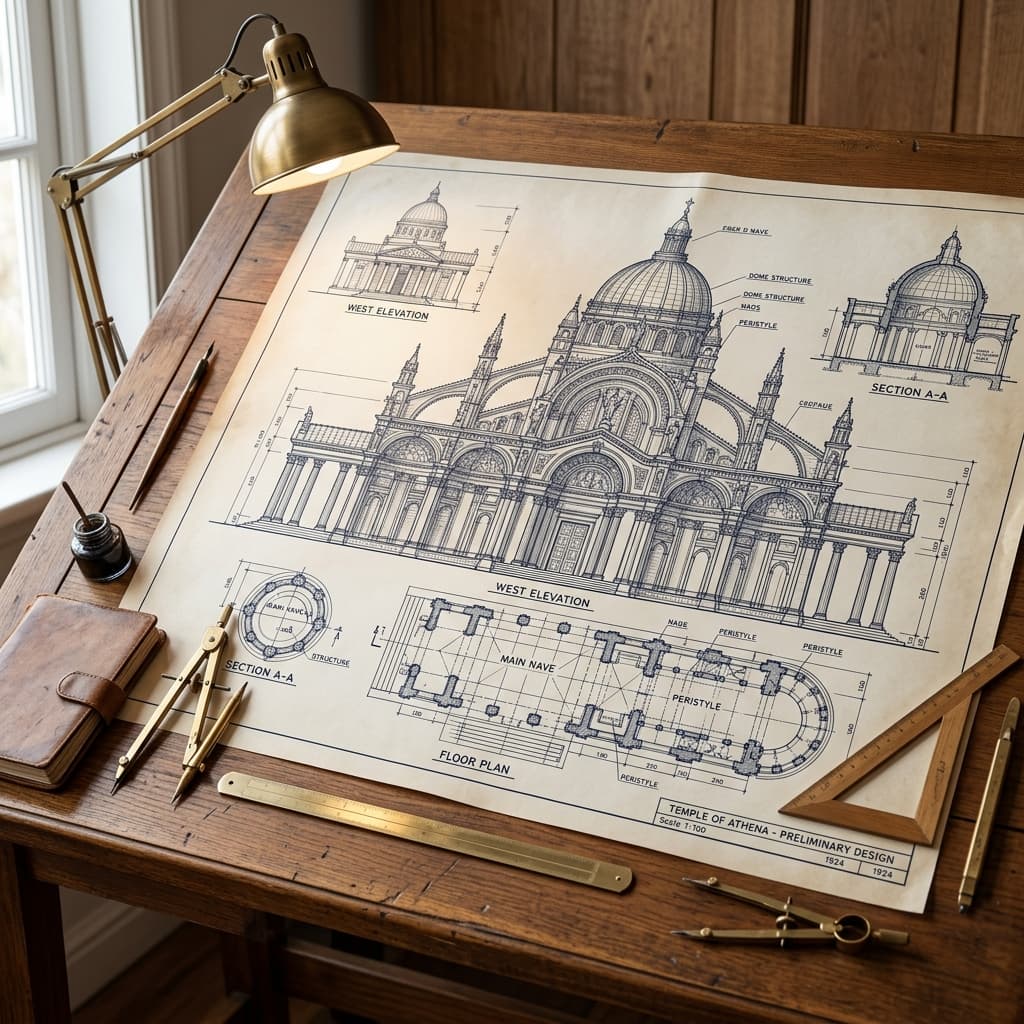
Sacred architecture represents the peak of human engineering and craftsmanship across every era. To construct a building meant to stand for centuries as a house of deity, architects have consistently pushed the boundaries of mathematics, physics, and material science, turning physical matter into structures that seem to defy gravity.
Gothic Engineering: Pointed Arches and Flying Buttresses
In medieval Europe, the desire to build higher cathedrals filled with light led to critical architectural breakthroughs. The pointed arch distributed weight more vertically than standard rounded arches, while the invention of the flying buttress transferred the outward thrust of massive stone vaults away from the walls to external pillars. This enabled builders to open up thick stone walls, replacing them with towering stained glass windows.
Seismic Adaptations in Ancient Pagodas
In East Asia, builders faced the constant threat of earthquakes. Buddhist pagodas, built primarily of wood, incorporated brilliant seismic adaptations. The central pillar (shinbashira) acts as a pendulum, swaying independently of the surrounding wood framing. This absorbs and dissipates ground motion, allowing these towering structures to survive massive earthquakes over more than a thousand years.
Modern Seismic Isolation and Durability
Modern temples continue this heritage of engineering excellence. Today, Latter-day Saint temples are constructed using state-of-the-art materials and techniques, such as base isolation systems. These systems decouple the temple structure from the ground using flexible bearing pads, allowing the building to remain undamaged and operational even during major seismic events. This ensures that the temple remains a sanctuary of peace and durability.
Related Temples


Sources & Research
Every fact on Temples.org is backed by verified Sources & Research. Each piece of information is rated by source tier and confidence level.
View All Sources (2)
| Field | Source | Tier | Retrieved |
|---|---|---|---|
| Gothic Cathedral Architecture | Encyclopædia Britannica (opens in a new tab) | B | 2026-05-28 |
| Earthquake Engineering in Pagodas | The Economist (opens in a new tab) | B | 2026-05-28 |