Visitor Insights
Visiting Papal Basilica of Saint Peter in the Vatican
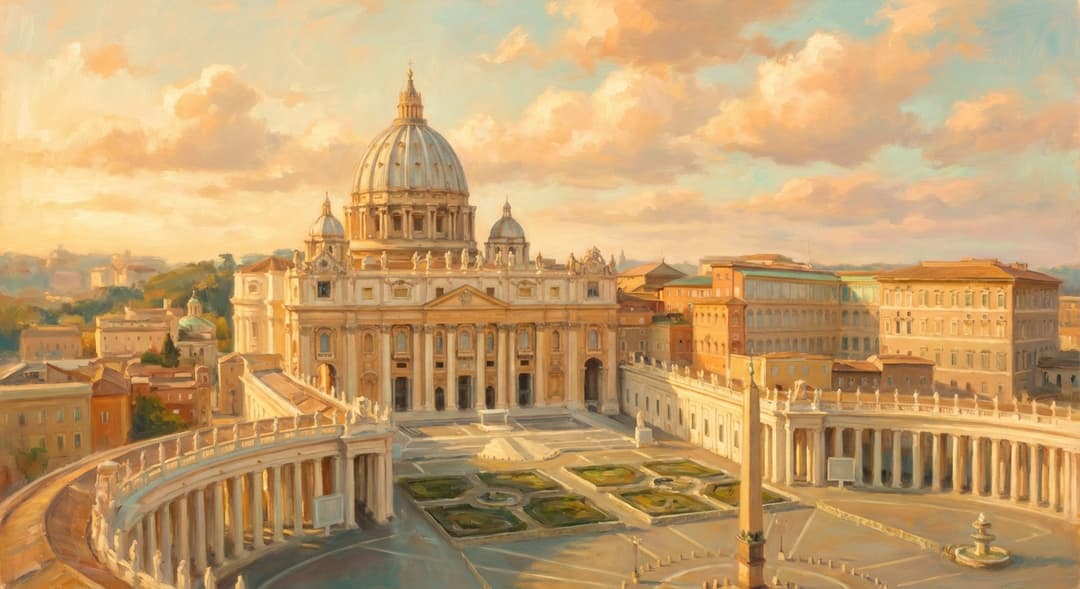
St. Peter's Basilica is one of the world's most visited landmarks, drawing an estimated 10–11 million visitors annually. The experience begins with the approach along Via della Conciliazione, which offers a gradually widening vista of the basilica's facade and dome. Upon entering St. Peter's Square, visitors are enveloped by Bernini's colonnades — designed to symbolize the "motherly arms of the Church." The interior overwhelms with its sheer scale: brass markers in the floor show how other great churches of the world would fit inside. The light streaming through the dome illuminates the bronze Baldachin below, drawing the eye toward the papal altar and the Confessio, where 95 oil lamps burn perpetually over St. Peter's tomb. Michelangelo's Pietà, now behind protective glass in the first chapel on the right, remains one of the most powerful encounters in art. The climb to the dome (551 steps from ground level, or 320 after the elevator) rewards with breathtaking views of the mosaics up close and an unforgettable panorama of Rome from the external gallery.
Highlights
- Marvel at Michelangelo's Pietà, a masterpiece of Renaissance sculpture.
- Ascend to the top of the dome for panoramic views of Vatican City and Rome.
- Witness the grandeur of Bernini's Baldachin and St. Peter's Square.
Things to Know
- Dress modestly (shoulders and knees covered) to enter the basilica.
- Be prepared for long security lines, especially during peak season.
- Consider booking a guided tour to enhance your understanding of the basilica's history and art.
Location
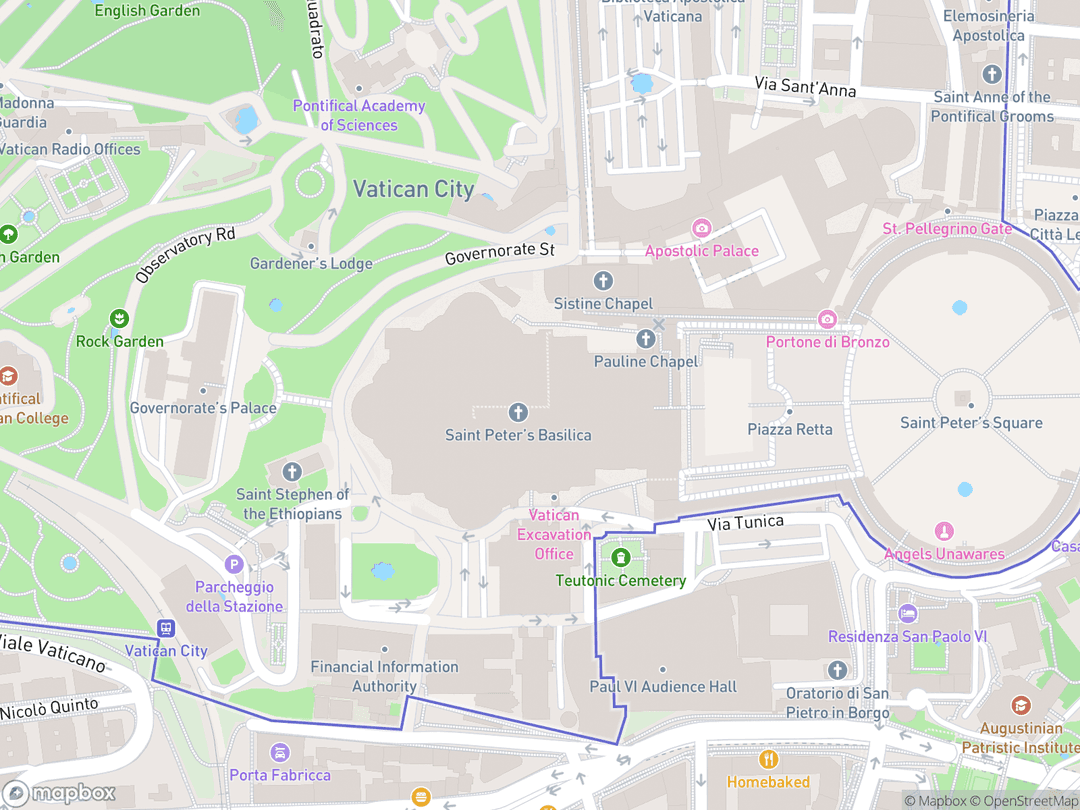
Piazza San Pietro, 00120 Città del Vaticano, Vatican City
Hours: Summer (Apr–Sep): 7:00 AM – 7:00 PM; Winter (Oct–Mar): 7:00 AM – 6:30 PM; Dome: 7:30 AM – 5:00 PM (last entry 1 hour before close)
Getting There: Metro Line A → Ottaviano–S. Pietro station (~10 min walk); Bus 40, 64 from Termini
Get DirectionsTips for Your Visit
Arrive Early
Security lines grow rapidly after 8:00 AM. Arrive before 7:30 AM to explore the basilica with fewer crowds.
Visit the Dome First
The dome ticket office opens early and lines are shortest in the first hour. Visit the dome before exploring the basilica interior.
Dress Appropriately
Shoulders and knees must be covered. Carry a light scarf or shawl to ensure you meet the dress code.
About
According to the Vatican Official Website, St. Peter's Basilica (officially the Papal Basilica of Saint Peter in the Vatican) is the largest church in the world by interior measure and the most renowned work of Renaissance architecture. Situated within Vatican City, it occupies ground believed to be the burial site of Saint Peter — one of the twelve apostles of Jesus Christ and, by Catholic tradition, the first Pope. Construction of the present basilica, the second to stand on this site, spanned a period of 120 years from 1506 to 1626, bearing the creative imprint of the greatest artists and architects of the Italian Renaissance and Baroque periods.
The basilica's construction was initiated by Pope Julius II, who charged Donato Bramante with designing a monument worthy of Christendom's most sacred apostolic site. After Bramante's death in 1514, a succession of architects — including Raphael, Antonio da Sangallo the Younger, and Michelangelo — refined and reimagined the design. Michelangelo's most enduring contribution is the basilica's towering dome, which rises 136.57 meters from the floor to the apex of the external cross. Carlo Maderno extended the nave and designed the monumental facade, while Gian Lorenzo Bernini completed the interior with his dramatic bronze Baldachin, the Cathedra Petri, and the embracing colonnades of St. Peter's Square.
Today, St. Peter's Basilica serves as the principal setting for the Pope's most solemn liturgies and ceremonies. It welcomes millions of pilgrims and visitors each year, who come to venerate the tomb of St. Peter, admire Michelangelo's Pietà, and experience one of humanity's greatest architectural achievements. The basilica was inscribed as part of the Vatican City UNESCO World Heritage Site in 1984.
Gallery
Symbolic Elements
The temple's exterior features intricate carvings, each rich with spiritual meaning:

St. Peter's Keys
Two crossed keys (one gold, one silver) bound by a cord, representing the Keys of Heaven given by Christ to St. Peter. They symbolize papal authority and the power to bind and loose on Earth and in Heaven.
Papal Tiara
A triple-crowned tiara above the keys, symbolizing the Pope's threefold authority: teaching, sanctifying, and governing. The three crowns represent the Pope's roles as pastor, teacher, and priest.

Michelangelo's Dome
The double-shelled hemisphere with a lantern and cross, featuring a ribbed exterior. It is an engineering marvel and a symbol of heaven descending on earth, dominating the Vatican skyline.

Baldachin Columns
Spiraling bronze Solomonic columns with olive branches, evoking Solomon's Temple and creating a connection to the biblical Holy of Holies. The columns support a canopy over the papal altar.

Dove of the Holy Spirit
A radiant dove in stained glass, located in the Cathedra Petri window, symbolizing the Holy Spirit illuminating the Chair of Peter. The dove represents divine guidance and inspiration.

Chi-Rho / Christogram
Overlapping Greek letters X (chi) and P (rho), forming an ancient monogram of Christ, found throughout the basilica. This symbol represents the name and presence of Jesus Christ.
Obelisk
An ancient Egyptian obelisk with a bronze cross on top, linking ancient Rome and Christianity. It is said to have witnessed St. Peter's martyrdom and stands as a silent testament to history.
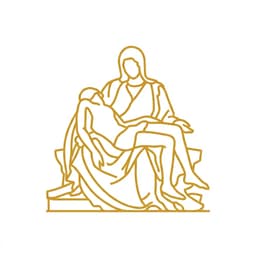
Pietà Composition
The composition of Mother Mary holding the body of Christ, representing compassion, sacrifice, and the sorrow of the Passion. Michelangelo's Pietà is a powerful symbol of faith and maternal love.
Interesting Facts
Brass markers set into the floor of the nave show where other world churches would end if placed inside St. Peter's — all would fit.
The letters around the interior base of the dome are each nearly 2 meters (6.5 feet) tall.
Bernini's Baldachin used approximately 100,000 pounds of bronze, some reputedly stripped from the Pantheon's portico beams by order of Pope Urban VIII.
The 13 statues on the facade (Christ, John the Baptist, and 11 apostles — minus St. Peter, who is depicted in a statue below) are each about 5.7 meters (19 ft) tall.
The ancient Egyptian obelisk in St. Peter's Square dates to the 13th century BCE and was brought to Rome by Emperor Caligula in 37 CE. It is the only obelisk in Rome that has never toppled.
There are 45 altars and 11 chapels inside the basilica.
The basilica's construction inspired Martin Luther's 95 Theses (1517) — the sale of indulgences to fund building was a key trigger of the Protestant Reformation.
Common Questions
Is St. Peter's Basilica a cathedral?
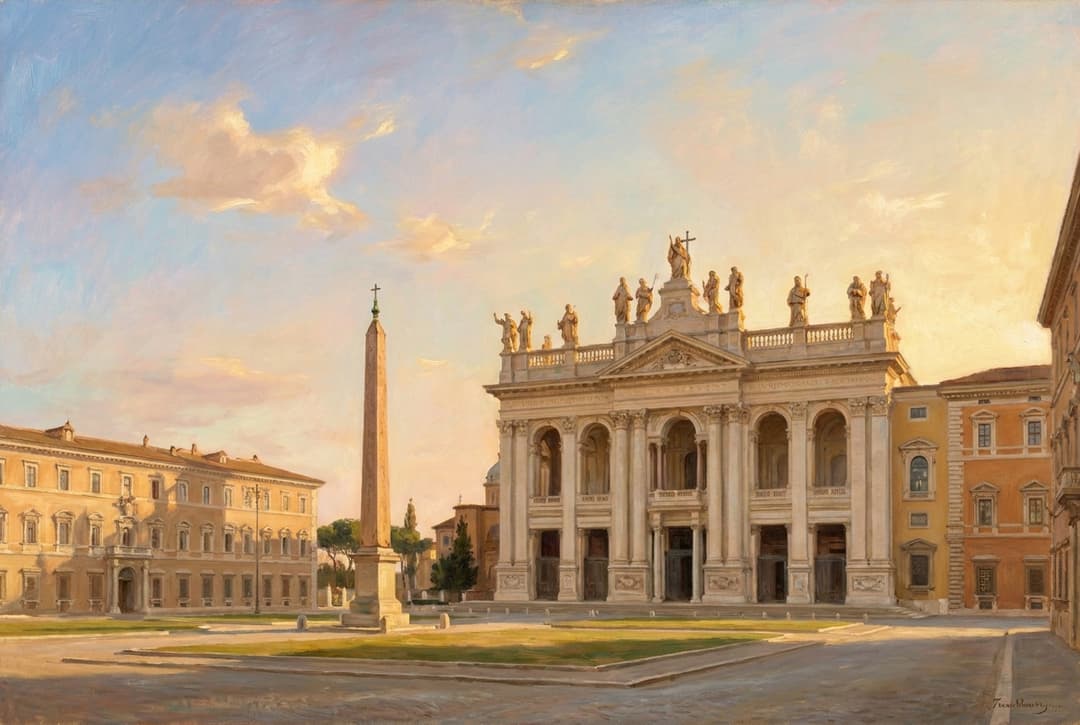
No, St. Peter's Basilica is not a cathedral. It is a basilica, one of the four major basilicas in Rome. The Pope's cathedral is the Archbasilica of St. John Lateran, also located in Rome.
How long does a visit take?
A visit to St. Peter's Basilica typically takes 1.5–2 hours to explore the interior. If you plan to climb the dome, add an additional hour. The Scavi tour, if booked separately, requires another 1.5 hours.
Is the tomb of St. Peter real?
Excavations in the 1940s uncovered a 2nd-century shrine and bones beneath the high altar. In 1968, Pope Paul VI declared that these relics had been identified convincingly. However, the attribution remains a matter of faith and scholarly debate.
How many popes are buried here?
More than 90 popes are buried in the Vatican Grottoes beneath the basilica, including recent popes like John Paul II (whose tomb was later moved to the main basilica) and Benedict XVI.
Is photography allowed inside the basilica?
Yes, photography is allowed inside St. Peter's Basilica, but flash photography is prohibited. Tripods and professional equipment are also not permitted.
When is the Holy Door opened?
The Holy Door is ceremonially opened by the Pope at the beginning of each Jubilee Year, which typically occurs every 25 years. Recent openings include the Extraordinary Jubilee of Mercy in 2015–2016 and the upcoming Jubilee in 2025.
Related Stories
Explore the rich history, traditions, and people connected to this sacred site.
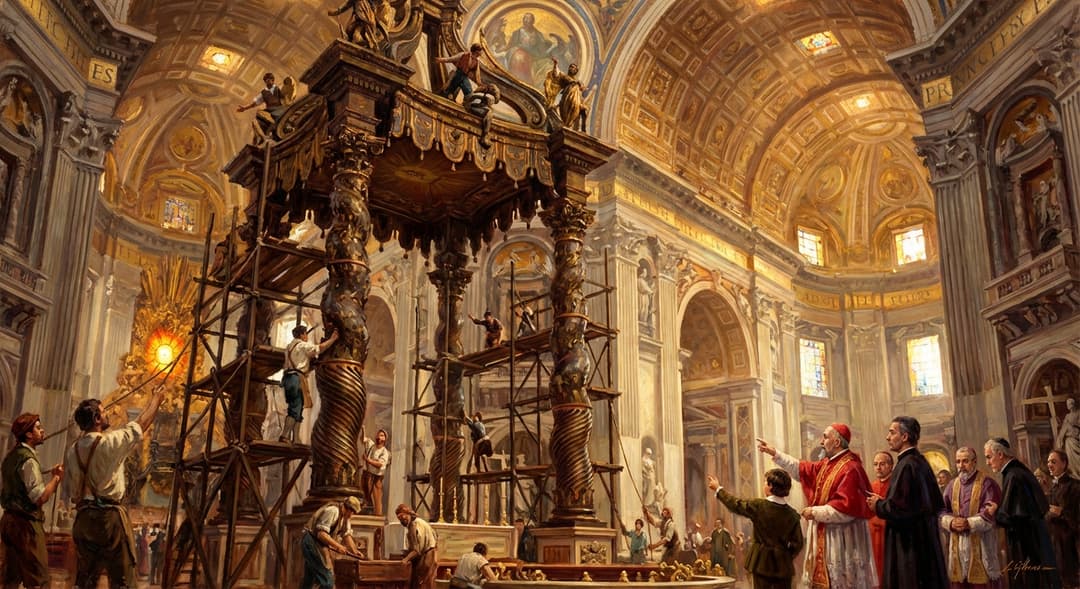
Featured Stories
The Consecration of St. Peter's Basilica
November 18, 1626
On November 18, 1626, exactly 1300 years after the original Constantinian basilica, Pope Urban VIII solemnly consecrated the new St. Peter's Basilica. This momentous occasion marked the culmination of 120 years of construction, involving the genius of numerous architects and artists. The consecration ceremony was a grand spectacle, attended by dignitaries and pilgrims from across Christendom, celebrating the completion of one of the most magnificent churches in the world.
The basilica, built over the tomb of St. Peter, became a symbol of the Catholic Church's enduring faith and artistic achievement. The event was not only a religious milestone but also a cultural triumph, showcasing the best of Renaissance and Baroque art and architecture. The consecration solidified St. Peter's Basilica as the spiritual heart of the Catholic world, a place of pilgrimage and prayer for generations to come.
Source: basilicasanpietro.va
Michelangelo's Vision: The Creation of the Dome
1546–1564
In 1546, at the age of 71, Michelangelo Buonarroti was appointed chief architect of St. Peter's Basilica. Despite his advanced age, Michelangelo brought a renewed vision and energy to the project, simplifying the existing plans and designing the basilica's defining feature: the towering dome. Working without pay as a devotion to God, Michelangelo dedicated himself to creating a structure that would inspire awe and reverence.
Michelangelo's dome, with its double-shelled construction and elegant design, became a symbol of heaven descending on earth. Though he died in 1564 before the dome was completed, his detailed plans ensured that his vision would be realized. The dome stands as a testament to Michelangelo's genius and his unwavering commitment to creating a masterpiece for the glory of God.
Source: britannica.com
Bernini's Colonnades: Embracing the Faithful
1657–1667
Gian Lorenzo Bernini, the master of Baroque art, spent a decade designing and constructing St. Peter's Square and its iconic colonnades. Commissioned by Pope Alexander VII, Bernini envisioned the square as a welcoming space that would embrace pilgrims and visitors from around the world. The colonnades, composed of 284 Doric columns and 88 pilasters, create a sense of enclosure and grandeur.
Bernini's design was intended to symbolize the 'motherly arms of the Church,' reaching out to embrace all who enter. The colonnades not only enhance the aesthetic beauty of the square but also serve a practical purpose, providing shelter and shade for the thousands of people who gather there. St. Peter's Square, with its embracing colonnades, remains a testament to Bernini's artistic genius and his ability to create spaces that inspire awe and reverence.
Source: vatican.va
Timeline
Martyrdom of Saint Peter on Vatican Hill
Saint Peter, considered the first Pope, is martyred during Emperor Nero's persecution of Christians (c. 64 CE).
component.timeline.historicalEmperor Constantine builds Old St. Peter's Basilica
Emperor Constantine I orders the construction of a basilica over the believed tomb of Saint Peter.
component.timeline.constructionCharlemagne crowned Holy Roman Emperor
Charlemagne is crowned Holy Roman Emperor in Old St. Peter's Basilica.
component.timeline.historicalPope Julius II lays foundation stone for new basilica
Pope Julius II initiates the construction of the present St. Peter's Basilica, replacing the dilapidated Old Basilica.
component.timeline.groundbreakingBramante dies; Raphael takes over
Donato Bramante, the original architect, dies, and Raphael assumes responsibility for the project.
component.timeline.historicalMichelangelo appointed chief architect
Michelangelo Buonarroti, at age 71, is appointed chief architect and significantly redesigns the basilica, including the dome.
component.timeline.historicalObelisk erected in St. Peter's Square
Domenico Fontana erects the ancient Egyptian obelisk in the center of St. Peter's Square.
component.timeline.constructionDome completed
Giacomo della Porta and Domenico Fontana complete Michelangelo's dome, modifying his design slightly.
component.timeline.constructionFacade completed
Carlo Maderno completes the facade of the basilica, extending the nave eastward.
component.timeline.constructionBasilica consecrated
Pope Urban VIII consecrates the new St. Peter's Basilica, 1300 years after the original Constantinian basilica.
DedicationBernini creates the bronze Baldachin
Gian Lorenzo Bernini creates the elaborate bronze Baldachin over the papal altar.
component.timeline.constructionBernini designs St. Peter's Square colonnades
Bernini designs the iconic colonnades of St. Peter's Square, creating an embracing space for pilgrims.
component.timeline.constructionSacristy completed
The basilica's sacristy is completed by architect Carlo Marchionni.
component.timeline.constructionFirst Vatican Council held
The First Vatican Council is held in St. Peter's Basilica.
component.timeline.historicalExcavation of Scavi necropolis
Excavations beneath the basilica uncover the ancient necropolis and what is believed to be the tomb of St. Peter.
component.timeline.historicalSecond Vatican Council held
The Second Vatican Council is held in St. Peter's Basilica, a significant event in modern Catholic history.
component.timeline.historicalDiscovery of St. Peter's relics announced
Pope Paul VI announces the discovery of relics believed to be those of St. Peter.
component.timeline.historicalMichelangelo's Pietà damaged
Michelangelo's Pietà is damaged by a vandal and subsequently restored and placed behind protective glass.
component.timeline.historicalVatican City inscribed as UNESCO World Heritage Site
Vatican City, including St. Peter's Basilica, is inscribed as a UNESCO World Heritage Site.
component.timeline.historicalJubilee Year restoration
The basilica undergoes major restoration work for the Jubilee Year 2000.
RenovationJubilee Year
The Holy Door is opened for the Jubilee Year.
component.timeline.historicalHistory by Decade
1st Century — The Martyrdom and Burial
Saint Peter, chief among the Apostles, was martyred during Emperor Nero's persecution of Christians, traditionally dated to about 64 CE. According to tradition, Peter was crucified upside down in the Circus of Nero on Vatican Hill and buried in a nearby necropolis. Excavations beneath the basilica in the 1940s–1950s uncovered a 2nd-century aedicula (small shrine) marking the venerated burial site.
4th Century — Constantine's Old Basilica
Emperor Constantine I, after legalizing Christianity in 313 CE, ordered construction of a basilica over Peter's tomb between approximately 319 and 333 CE. Old St. Peter's Basilica was a large, five-aisled church that served as the most important pilgrimage destination in Western Christendom for over 1,100 years. Charlemagne was crowned Holy Roman Emperor here on Christmas Day, 800 CE.
15th Century — Seeds of Reconstruction
By the 1400s, the ancient basilica had fallen into serious disrepair. Pope Nicholas V (r. 1447–1455) commissioned architect Leon Battista Alberti to assess the structure, and plans for renovation began. Pope Sixtus IV added the Sistine Chapel nearby (1473–1481). The idea of a complete rebuilding grew under successive popes.
1506–1514 — Bramante's Bold Vision
On April 18, 1506, Pope Julius II laid the foundation stone for the new basilica. Donato Bramante designed a Greek cross plan with a massive central dome inspired by the Pantheon. His demolition of much of the old basilica earned him the nickname "Ruinante." Bramante's four great piers and connecting arches, which would eventually support the dome, remain the structural core of the building. He died in 1514.
1514–1546 — The Interregnum of Architects
After Bramante's death, the project passed through the hands of Raphael (who proposed converting to a Latin cross plan), Baldassare Peruzzi (who reverted to a Greek cross), and Antonio da Sangallo the Younger (who created an elaborate wooden model, now in the Vatican). Progress was slow and the design evolved continuously during this period.
1546–1564 — Michelangelo's Mastery
In 1546, Pope Paul III appointed Michelangelo Buonarroti as chief architect at age 71. Working without pay as a devotion to God, Michelangelo simplified the plan, returned to a centralized Greek cross, and designed the basilica's defining feature: the double-shelled dome. He enlarged the supporting piers, designed the exterior drum, and created the apse end of the building. He died in 1564 before the dome was completed, but left detailed plans.
1585–1590 — The Dome Completed
Under Pope Sixtus V, architects Giacomo della Porta and Domenico Fontana built the dome in just 22 months (1588–1590), modifying Michelangelo's design to make it slightly more pointed. At 136.57 meters to the top of the cross, it remains the tallest dome in the world. Fontana also erected the ancient Egyptian obelisk in the center of the piazza in 1586.
1607–1626 — Maderno and Completion
Pope Paul V commissioned Carlo Maderno to extend the nave eastward, converting the Greek cross into a Latin cross to accommodate larger congregations. Maderno also designed the massive travertine facade (completed 1612). The basilica was consecrated on November 18, 1626 — exactly 1,300 years after the original Constantinian basilica's consecration.
1623–1667 — Bernini's Baroque Transformation
Gian Lorenzo Bernini, the master of Baroque art, spent decades adorning St. Peter's interior and creating its iconic approaches. His works include the 29-meter-tall bronze Baldachin (1624–1633), the Cathedra Petri (Chair of St. Peter, 1657–1666), the statue of St. Longinus, the monumental tombs of Popes Urban VIII and Alexander VII, and the Scala Regia staircase. Between 1657 and 1667, he designed St. Peter's Square with its embracing colonnades of 284 Doric columns.
18th–19th Centuries — Sacristy and Preservation
The basilica's sacristy was completed in 1784 by architect Carlo Marchionni. During the Napoleonic era and Italian unification, the basilica's status was preserved through the political upheavals. The First Vatican Council (1869–1870) was held inside the basilica.
20th Century — Archaeological Discovery and Vatican II
Between 1940 and 1949, excavations beneath the basilica discovered the ancient necropolis and what many scholars believe to be the bones of Saint Peter himself (announced by Pope Paul VI in 1968). The Second Vatican Council (1962–1965) was also held in St. Peter's Basilica. Michelangelo's Pietà was damaged by a mentally disturbed man with a hammer in 1972 and subsequently restored and placed behind protective glass.
21st Century — Jubilee and Restoration
The basilica underwent major restoration campaigns for the Jubilee Year 2000 and continues to be maintained by the Fabbrica di San Pietro. Pope Francis has made the basilica central to his papacy's public moments. The Holy Door was opened for the Extraordinary Jubilee of Mercy in 2015–2016, and again for the Jubilee of 2025.
Architecture & Facilities
High Renaissance and Baroque, evolving over 120 years of construction (1506–1626) under a succession of master architects. Bramante's original Greek cross plan and four great piers form the structural core, while Michelangelo's iconic double-shelled dome — 136.57 meters to the cross top with a 41.47-meter interior diameter — defines the skyline. Carlo Maderno extended the nave into a Latin cross and designed the monumental travertine facade (118.6 meters wide), while Gian Lorenzo Bernini transformed the interior with his dramatic bronze Baldachin, the gilded Cathedra Petri, and the embracing colonnades of St. Peter's Square featuring 284 Doric columns arranged in an elliptical piazza.
Building Materials
Exterior
Travertine limestone from Tivoli quarries
Dome
Brick (inner shell), lead sheathing (outer), stone lantern
Interior
Marble (multiple varieties), gilded bronze, stucco, mosaic tesserae
Baldachin
Bronze (reputedly taken from the Pantheon's portico)
Columns (St. Peter's Square)
Travertine stone
Interior Features
Michelangelo's Pietà
Marble sculpture of the Virgin Mary holding the body of Christ
Bernini's Cathedra Petri
Gilded bronze throne encasing a wooden relic believed to be St. Peter's chair
Confessio
Semi-circular opening before the high altar, descending to the level of St. Peter's tomb
Temple Grounds
St. Peter's Square: Elliptical piazza framed by 284 Doric columns and 88 pilasters; 140 saint statues along the colonnade
Religious Significance
St. Peter's Basilica holds immense religious significance as the principal church of Vatican City and one of the holiest sites in Catholicism. It is believed to be built over the tomb of Saint Peter, one of the twelve apostles of Jesus Christ and the first Pope.
The basilica serves as a major pilgrimage destination and the primary setting for papal liturgies and ceremonies. It symbolizes the continuity of the papacy and the Catholic Church's enduring faith.
Sacred Ordinances
Papal Mass
The Pope celebrates Mass in St. Peter's Basilica on major feast days and special occasions, drawing thousands of worshippers.
Canonization
Canonization ceremonies, in which individuals are declared saints, are often held in St. Peter's Basilica.
Jubilee Year Celebrations
The opening and closing of the Holy Door during Jubilee Years are significant religious events held in the basilica.
The Tomb of St. Peter
The tomb of St. Peter, located beneath the high altar, is the focal point of the basilica and a place of veneration for pilgrims. Excavations have revealed an ancient necropolis and what is believed to be the apostle's burial site.
Similar Temples
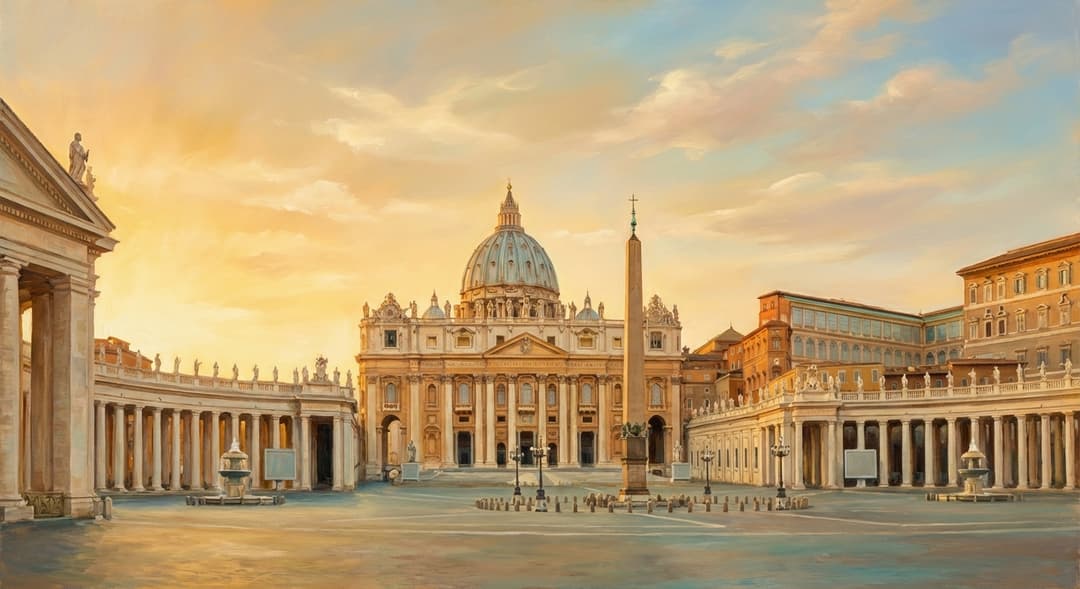
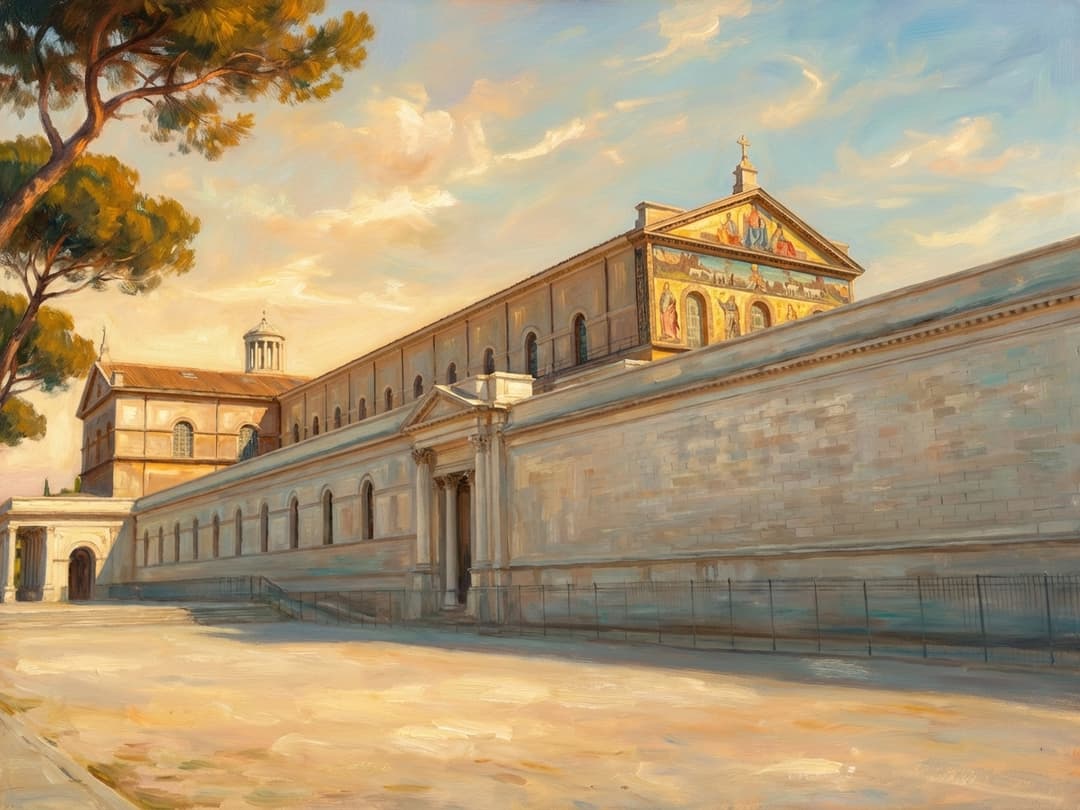

Sources & Research
Every fact on Temples.org is backed by verified Sources & Research. Each piece of information is rated by source tier and confidence level.
View All Sources (10)
| Field | Source | Tier | Retrieved |
|---|---|---|---|
| Official Basilica Website | Fabbrica di San Pietro in Vaticano (opens in a new tab) | A | Tue Feb 10 2026 00:00:00 GMT+0000 (Coordinated Universal Time) |
| Vatican Official Website | Holy See (opens in a new tab) | A | Tue Feb 10 2026 00:00:00 GMT+0000 (Coordinated Universal Time) |
| UNESCO World Heritage — Vatican City | UNESCO (opens in a new tab) | B | Tue Feb 10 2026 00:00:00 GMT+0000 (Coordinated Universal Time) |
| Encyclopaedia Britannica — Saint Peter's Basilica | Encyclopaedia Britannica (opens in a new tab) | B | Tue Feb 10 2026 00:00:00 GMT+0000 (Coordinated Universal Time) |
| World History Encyclopedia — St. Peter's Basilica | World History Encyclopedia (opens in a new tab) | B | Tue Feb 10 2026 00:00:00 GMT+0000 (Coordinated Universal Time) |
| Basilica di San Pietro — History | Fabbrica di San Pietro in Vaticano (opens in a new tab) | A | Tue Feb 10 2026 00:00:00 GMT+0000 (Coordinated Universal Time) |
| Catholic News Agency | EWTN News Inc. (opens in a new tab) | B | Tue Feb 10 2026 00:00:00 GMT+0000 (Coordinated Universal Time) |
| New Advent — Catholic Encyclopedia: St. Peter's Basilica | Kevin Knight (New Advent) (opens in a new tab) | C | Tue Feb 10 2026 00:00:00 GMT+0000 (Coordinated Universal Time) |
| EWTN Travel — St. Peter's Basilica | EWTN Travel (opens in a new tab) | B | Tue Feb 10 2026 00:00:00 GMT+0000 (Coordinated Universal Time) |
| StPetersBasilica.info | StPetersBasilica.info (opens in a new tab) | C | Tue Feb 10 2026 00:00:00 GMT+0000 (Coordinated Universal Time) |