Visitor Insights
Visiting Basilica of Saint Paul Outside the Walls
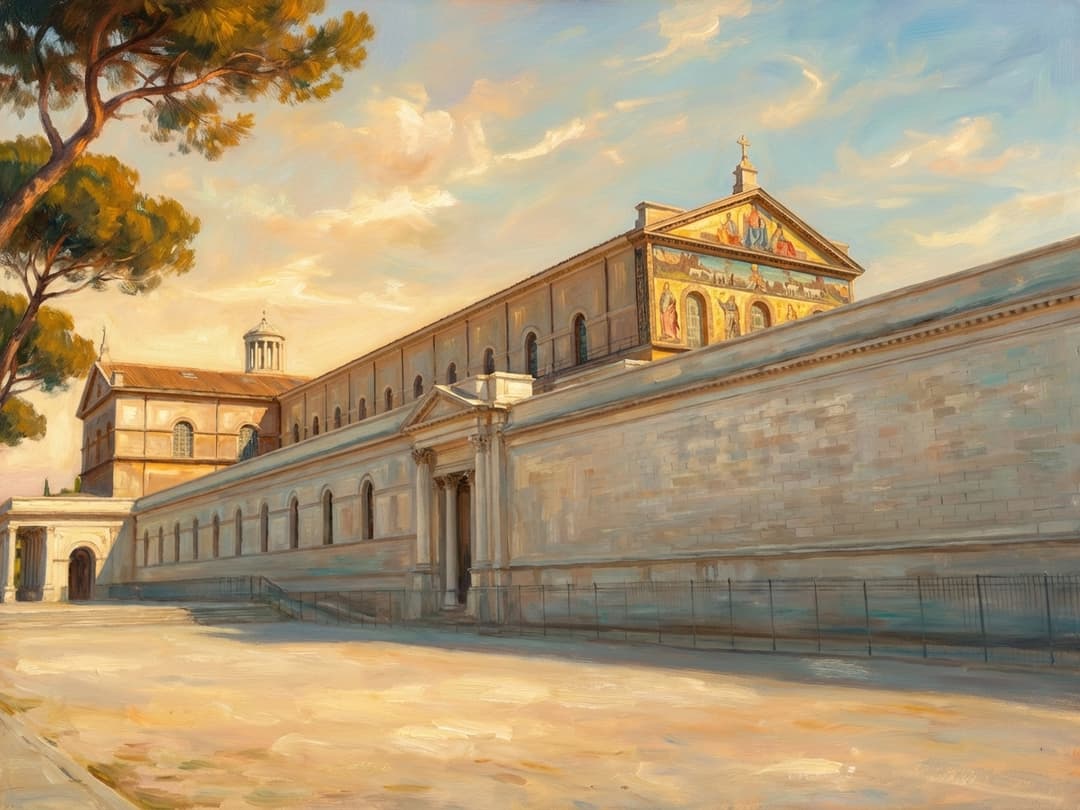
Visiting the Basilica of Saint Paul Outside the Walls offers a serene and awe-inspiring experience. The basilica's grand architecture and spiritual atmosphere create a profound sense of reverence. Visitors can explore the basilica's vast interior, admire its stunning mosaics and artwork, and reflect on the Apostle Paul's enduring legacy. Expect a peaceful environment with opportunities for prayer and contemplation.
Highlights
- Marvel at the stunning mosaics and artwork throughout the basilica.
- Visit the tomb of Saint Paul, located beneath the main altar.
- Explore the peaceful cloister and archaeological site.
Things to Know
- Dress modestly, as this is a place of worship.
- Be aware of the basilica's opening hours and admission fees for certain areas.
- Consider taking a guided tour to learn more about the basilica's history and significance.
Location
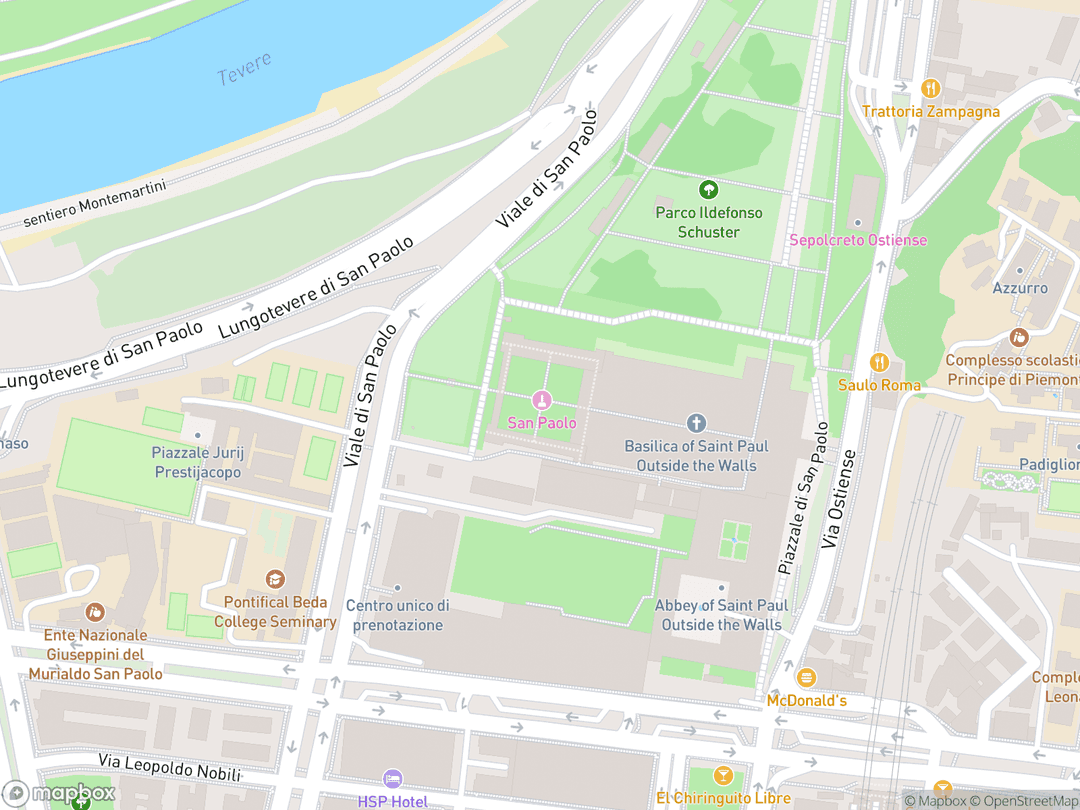
Piazzale San Paolo 1, 00146 Rome, Italy
Hours: Basilica: 7:00 AM to 6:30 PM daily. Cloister and archaeological site: 9:00 AM to 5:30 PM.
Getting There: Metro: Basilica San Paolo, Line B. Bus: Lines 23, 769, 770, 271, 269.
Get DirectionsAbout
The Basilica of Saint Paul Outside the Walls is one of Rome's four major papal basilicas, holding a place of prominence in Christian history and tradition. Along with the Basilicas of Saint John in the Lateran, Saint Peter's, and Saint Mary Major, it stands as a key destination for pilgrims and art lovers alike. While the Basilica lies within Italian territory, it is owned by the Holy See and enjoys extraterritorial rights.
The basilica was originally commissioned by Emperor Constantine I in the 4th century, marking the burial site of Paul the Apostle. Over the centuries, it underwent several expansions and renovations, culminating in a grand reconstruction in the 19th century after a devastating fire. The current basilica largely reflects the Neoclassical style of this reconstruction, maintaining its original structure with a nave and four side aisles.
Today, the Basilica of Saint Paul Outside the Walls continues to serve as a vibrant center of Catholic worship and a testament to the enduring legacy of Saint Paul. It was designated a UNESCO World Heritage Site in 1980, recognizing its cultural and historical significance. Visitors can explore its magnificent architecture, admire its stunning mosaics, and reflect on the profound spiritual heritage embodied within its walls.
Gallery
Symbolic Elements
The temple's exterior features intricate carvings, each rich with spiritual meaning:

Tomb of Saint Paul
The basilica was built over the burial site of Saint Paul. The Apostle's tomb is located beneath the main altar, making it a central focus of pilgrimage and veneration.

Statue of Saint Paul
The statue of Saint Paul in the quadriportico holds a book, symbolizing his mission as a messenger of the Word of God. He also holds a sword, symbolizing his martyrdom and unwavering faith.

Portraits of the Popes
The basilica contains a series of mosaic portraits depicting every pope from Saint Peter to Pope Francis. These portraits represent the unbroken lineage of the papacy and the continuity of the Catholic Church.

Holy Door
As one of the four major basilicas in Rome, it contains a Holy Door that is opened only during Jubilee years. The Holy Door symbolizes a special path to forgiveness and reconciliation with God.

Apsidal Mosaic
The apse is dominated by a mosaic featuring Christ the Redeemer with the Gospels, Saints Peter and Paul, the apostles, and Pope Honorius III. This mosaic represents the heavenly court and the divine authority of Christ.

Granite Columns
The interior is divided by 80 monolithic granite columns, which create a sense of grandeur and stability. These columns symbolize the strength and enduring nature of the Church.

Cloister
The cloister, built in the 13th century, features double columns of different shapes. This serene space provides a place for contemplation and reflection, symbolizing the monastic tradition and the pursuit of spiritual knowledge.

Alabaster Windows
The windows, which appear to be stained glass, are actually made of translucent alabaster. These windows filter the light, creating a soft and ethereal atmosphere that enhances the spiritual ambiance of the basilica.
Interesting Facts
The Basilica is built over the tomb of Saint Paul, who was beheaded in Rome around 67 AD.
It is one of the four major papal basilicas in Rome.
The basilica is second in size only to St. Peter's Basilica in Vatican City.
The Holy See owns the basilica, and it is part of the Vatican's extraterritoriality.
The basilica was almost entirely destroyed by a fire in 1823.
The basilica has been welcoming worshippers for nearly 1,700 years.
Legend says that when there is no more room for another papal medallion, the world will come to an end.
The basilica boasts a series of 266 mosaic portraits depicting every pope from Peter to Francis.
The windows, which appear to be stained glass, are actually made of translucent alabaster.
The basilica is at the center of a famous prophecy.
The basilica's acoustics are so finely tuned that a whisper at one end can be heard clearly at the other.
An ancient tunnel beneath the basilica, reportedly built by Emperor Constantine, was used by early Christians for secret gatherings during persecution.
Common Questions
What is the significance of the Basilica of Saint Paul Outside the Walls?
The basilica is one of Rome's four major papal basilicas and is built over the tomb of Saint Paul the Apostle, making it a significant pilgrimage destination and a testament to Christian history.
When was the original basilica built?
The original basilica was commissioned by Emperor Constantine I in the 4th century and consecrated by Pope Sylvester in 324 AD.
What caused the basilica to be rebuilt in the 19th century?
A devastating fire in 1823 severely damaged the basilica, leading to a major reconstruction effort that began in 1825 and concluded with the consecration of the rebuilt basilica in 1854.
What are some of the key architectural features of the basilica?
Key features include the nave and four side aisles, 80 monolithic granite columns, a wood and stucco-decorated ceiling, mosaics in the apse and on the facade, a cloister built in the 13th century, and a large quadriportico with a statue of St. Paul.
What are the visiting hours for the Basilica of Saint Paul Outside the Walls?
The basilica is open from 7:00 AM to 6:30 PM daily. The cloister and archaeological site are open from 9:00 AM to 5:30 PM.
Related Stories
Explore the rich history, traditions, and people connected to this sacred site.
Featured Stories
The Great Fire of 1823
July 15, 1823
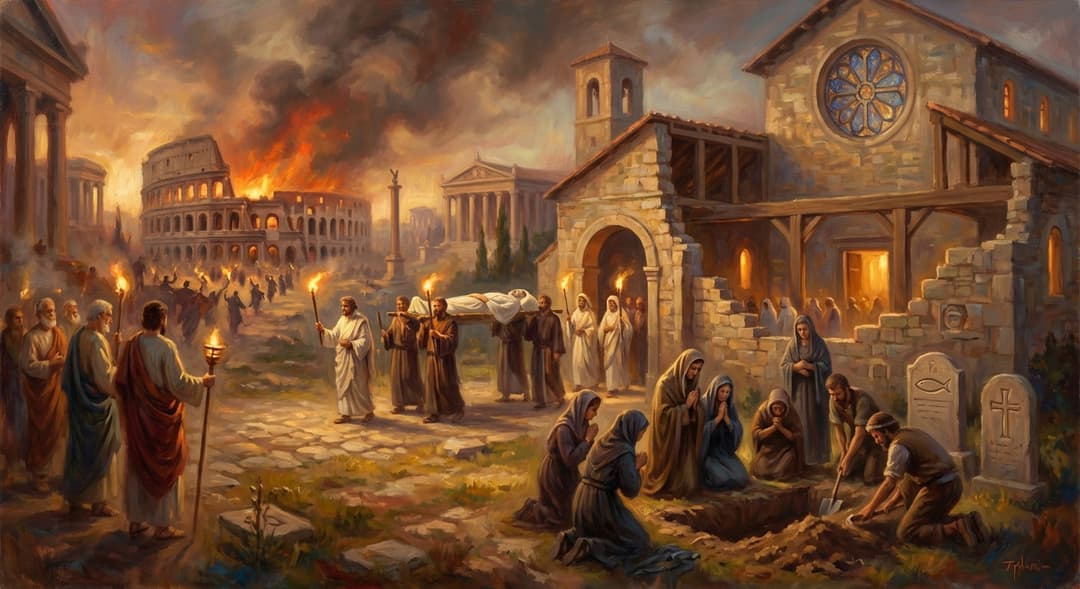
On the night of July 15, 1823, a devastating fire broke out in the Basilica of Saint Paul Outside the Walls, causing immense damage to the historic structure. The fire, which started due to negligence by workmen repairing the roof, quickly spread throughout the basilica, consuming its wooden beams, priceless artwork, and ancient relics. The event was a tragedy that shocked the Christian world, prompting widespread mourning and a fervent desire to rebuild the basilica.
News of the fire reached far and wide, inspiring Pope Leo XII to appeal to Catholics worldwide for assistance in the reconstruction effort. Donations poured in from various countries, reflecting the basilica's universal significance and the collective determination to restore this sacred site to its former glory. The reconstruction became a symbol of unity and resilience, demonstrating the enduring power of faith in the face of adversity.
The rebuilding process was a monumental undertaking, involving architects, artists, and craftsmen from across Europe. The basilica was meticulously reconstructed, preserving its original layout and architectural style while incorporating new elements that reflected the spirit of the 19th century. The dedication of the rebuilt basilica in 1854 marked a triumphant moment, celebrating the restoration of a cherished landmark and the enduring legacy of Saint Paul.
Source: Rome.net
The Consecration of the Rebuilt Basilica
December 10, 1854
On December 10, 1854, Pope Pius IX solemnly consecrated the rebuilt Basilica of Saint Paul Outside the Walls, marking the culmination of decades of dedicated effort to restore the basilica after the devastating fire of 1823. The consecration ceremony was a grand and joyous occasion, attended by dignitaries, clergy, and faithful from around the world. The event symbolized the triumph of faith over adversity and the enduring importance of the basilica as a center of Christian worship.
The consecration ceremony was rich in symbolism, with Pope Pius IX anointing the altar and walls of the basilica with holy oil, invoking the blessings of God upon the sacred space. The basilica was filled with the sounds of sacred music and the prayers of the faithful, creating an atmosphere of profound reverence and spiritual renewal. The event was a testament to the unwavering commitment of the Catholic Church to preserve its heritage and to provide a place of worship for generations to come.
The rebuilt basilica stood as a testament to the generosity and dedication of countless individuals who contributed to its restoration. The consecration ceremony was a moment of profound gratitude and celebration, honoring the legacy of Saint Paul and the enduring power of faith to inspire hope and renewal. The basilica continued to serve as a beacon of light, welcoming pilgrims and visitors from around the world to experience its beauty and spiritual significance.
Source: Iubilaeum2025.va
The Visit of King Charles III
October 23, 2025
On October 23, 2025, King Charles III made a historic visit to the Basilica of Saint Paul Outside the Walls, marking a significant moment in the relationship between the United Kingdom and the Holy See. The visit was part of a broader tour of Italy and the Vatican, reflecting the King's interest in interfaith dialogue and cultural exchange. The event highlighted the basilica's importance as a global center of Christian worship and its role in fostering understanding between different cultures and traditions.
During his visit, King Charles III was given a tour of the basilica, including the tomb of Saint Paul and the various chapels and artworks that adorn the sacred space. He met with Vatican officials and religious leaders, discussing issues of mutual concern and exploring opportunities for collaboration in areas such as environmental protection and social justice. The visit was an opportunity to strengthen ties between the United Kingdom and the Vatican and to promote shared values of peace, tolerance, and respect.
The visit of King Charles III to the Basilica of Saint Paul Outside the Walls was a symbol of unity and cooperation, demonstrating the power of cultural exchange and interfaith dialogue to bridge divides and build a more harmonious world. The event served as a reminder of the basilica's enduring legacy as a place of pilgrimage and spiritual renewal, welcoming people of all backgrounds to experience its beauty and significance.
Source: vatican.va
Timeline
Shrine Erected Over Saint Paul's Tomb
Following the execution of Paul the Apostle around 67 AD, his followers erected a shrine over his burial place along the Via Ostiense.
MilestoneConstantine Orders Construction of Basilica
Emperor Constantine I ordered the construction of a basilica over the Apostle's tomb, which was consecrated by Pope Sylvester in 324 AD.
MilestoneBasilica Enlarged by Emperors
Between 386 and 395, Emperors Theodosius I, Valentinian II and Honorius significantly enlarged the basilica, creating a nave and four aisles.
MilestoneMosaic Work Continues
Work on the mosaics continued into the pontificate of Leo I (440-461).
EventBasilica Damaged by Saracen Raid and Earthquake
The basilica was damaged during a Saracen raid. In 801, an earthquake caused the roof to collapse, but it was rebuilt by Leo III.
RenovationCloister Built
The cloister was built between 1220 and 1241, featuring double columns of different shapes.
MilestoneMosaics Added to Facade
Luigi Poletti decorated the upper band of the facade with 17th-century mosaics.
RenovationFire Severely Damages Basilica
A fire in 1823 severely damaged the basilica, leading to a major reconstruction effort.
RenovationReconstruction Begins
Reconstruction began between 1825 and 1854, with contributions from many countries.
RenovationAltar of the Confession Consecrated
Pope Gregory XVI consecrated the Altar of the Confession and the Transept. The basilica was reopened.
DedicationRebuilt Basilica Consecrated
Pope Pius IX consecrated the rebuilt basilica.
DedicationFacade Mosaics Completed
The facade's mosaics were completed.
RenovationQuadriportico Built
Guglielmo Calderini built the quadriportico, based on Luigi Poletti's project.
RenovationBasilica Placed Under Archpriest Control
Pope Benedict XVI placed the basilica under the control of an archpriest.
EventRestoration Agreement Signed
The Governorate of Vatican City and the Heydar Aliyev Foundation signed an agreement to restore the Basilica.
RenovationKing Charles III Visits Basilica
King Charles III visited the basilica.
EventSimilar Temples

Sources & Research
Every fact on Temples.org is backed by verified Sources & Research. Each piece of information is rated by source tier and confidence level.
View All Sources (1)
| Field | Source | Tier | Retrieved |
|---|---|---|---|
| About & Historical Background | Vatican (opens in a new tab) | A | 2024-02-29 |