The Pioneer Temples: Faith, Sacrifice, and Innovation in Kirtland and Nauvoo
Temple History

The Pioneer Temples: Faith, Sacrifice, and Innovation in Kirtland and Nauvoo

An architectural and historical journey through the first temples of the Restoration, exploring their unique designs, construction sacrifices, and enduring legacies.

Temples.org Editorial May 29, 2026 8 min read

Historical Timeline

Click on any temple to explore its era and details.

A New Era of Sacred Space

In the early 1830s, the concept of a temple was entirely new to the followers of the young Latter Day Saint movement. While Christian worship of the era took place in traditional meetinghouses and chapels, a series of revelations to Joseph Smith outlined a command to build a different kind of structure—a dedicated "House of the Lord." This was envisioned not as a typical hall for preaching, but as a holy sanctuary where heaven and earth could meet, covenants could be made, and spiritual power could be poured out.

The construction of these early temples in Ohio and Illinois occurred during times of severe economic hardship and religious persecution. For the early Saints, building a temple was not a project funded from excess wealth, but an act of total consecration that demanded their labor, their safety, and their meager resources. These structures became the physical symbols of their faith and the crucible in which their unique community identity was forged.

The Kirtland Temple: A House of Vision and Revelation

“The wilderness tabernacle had become a permanent sanctuary of stone, built in poverty but rich in spiritual promise.”

— Joseph Smith

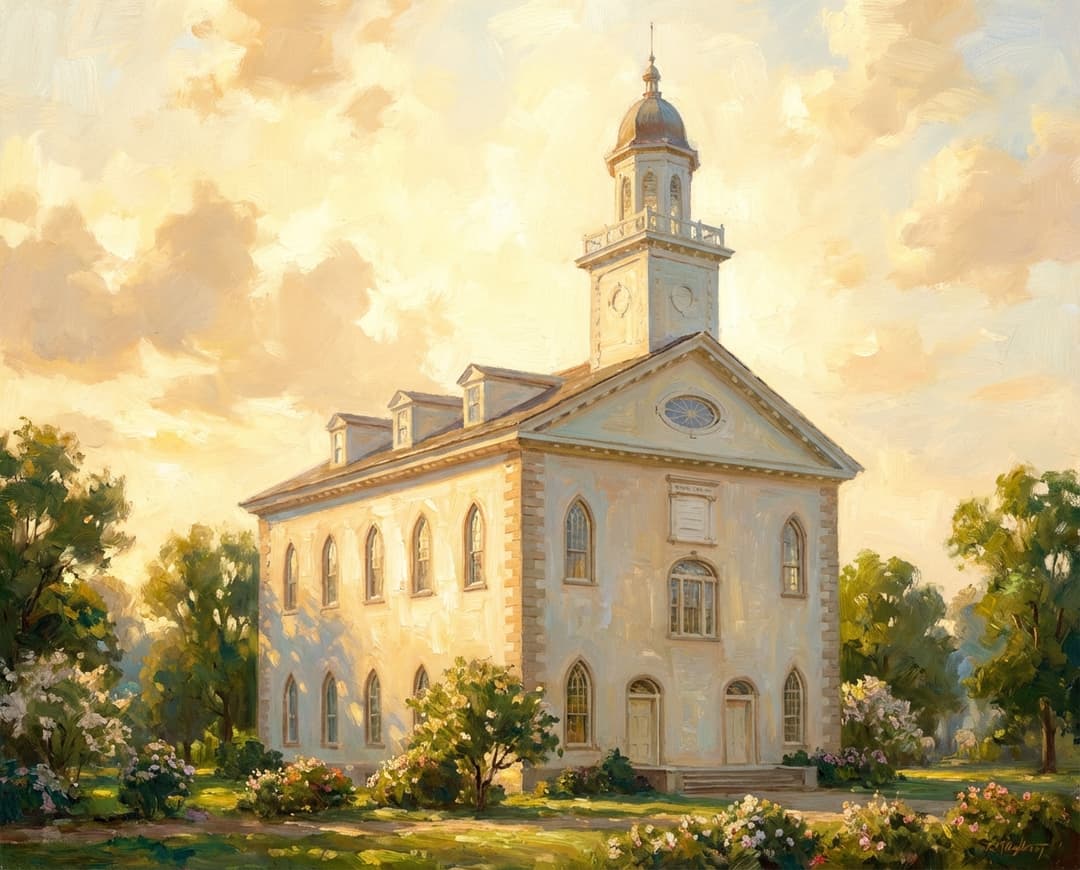
Constructed between 1833 and 1836 in Kirtland, Ohio, the Kirtland Temple was the first temple completed in modern times. The building's layout was unique, featuring a three-story design with two large, stacked assembly halls. Unlike later temples, it did not contain a basement or a baptismal font, as proxy baptisms had not yet been revealed. Instead, it was designed as a multi-functional space for worship, education, and administration.

Architecturally, the building blended Federal, Georgian, and Gothic Revival styles, designed according to a pattern Joseph Smith and his counselors saw in a vision. The interior halls featured unique, four-tiered pulpits at each end of the room, representing the Aaronic and Melchizedek priesthood hierarchies. Drop-down canvas curtains, suspended from the ceiling, allowed the large rooms to be partitioned into smaller classrooms for the School of the Prophets.

The temple's dedication on March 27, 1836, was accompanied by reports of extraordinary spiritual manifestations, including visions of angels and tongues of fire. Just one week later, on April 3, 1836, Jesus Christ appeared to Joseph Smith and Oliver Cowdery to accept the temple, followed by the appearance of the ancient prophets Moses, Elias, and Elijah, who restored crucial priesthood keys for the gathering of Israel and the sealing of families.

The Nauvoo Temple: Triumph and Tragedy on the Mississippi

“We dedicated the house of the Lord while our wagons were loaded to cross the river into the western wilderness.”

— Nauvoo Exile Journal

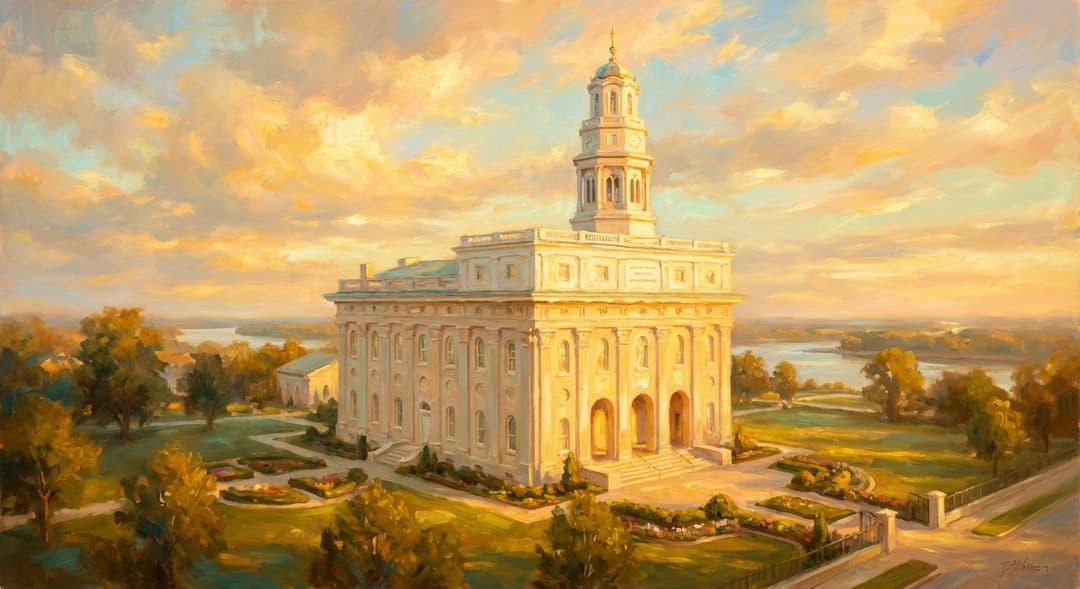
Following their expulsion from Ohio and Missouri, the Saints gathered in Nauvoo, Illinois, where they immediately commenced construction on a second, grander temple. Designed by architect William Weeks under the direction of Joseph Smith, the Nauvoo Temple was built of light gray limestone and designed in the popular Greek Revival style, but decorated with unique celestial iconography.

The exterior featured thirty pilasters, each bearing a carved Moonstone at the base, a Sunstone in the middle, and a Starstone at the top—representing the degrees of glory. The interior reflected a major shift in theological practice. For the first time, the temple featured a basement housing a massive baptismal font carved from white pine and supported by twelve hand-carved wooden oxen, symbolizing the twelve tribes of Israel. It also included dedicated upper rooms for the newly introduced endowment ceremonies.

The construction was fraught with tragedy. Joseph Smith was assassinated in 1844, and mob violence intensified, forcing the main body of the Saints to plan an exodus to the West. Determined to complete their offering, workers labored through the winter of 1845–1846. The temple was dedicated in private ceremonies on April 30, 1846, even as wagons were crossing the frozen Mississippi River. The building was subsequently abandoned, burned by an arsonist in 1848, and leveled by a tornado in 1850.

Sacrifice and Craftsmanship

The construction of both pioneer temples stands as a testament to the extraordinary sacrifice of early Latter-day Saint men and women. In Kirtland, where poverty was extreme, construction required nearly every able-bodied man to work on the walls one day in four. Women spun and wove raw wool to make clothing for the builders and curtains for the temple's interior. One of the most famous stories of sacrifice involves the exterior plastering of the Kirtland Temple: under the direction of Artemus Millet, women gathered their precious china and glassware, which was crushed and mixed into the stucco, giving the temple's outer walls a brilliant, shimmering appearance under the sun.

In Nauvoo, members dedicated one-tenth of their time and resources to construction, working in nearby stone quarries and timber yards. Despite the tragic destruction of the original Nauvoo Temple, the blueprints and traditions established there survived. When the pioneers settled in the Salt Lake Valley, they used the lessons learned in Ohio and Illinois to construct a new generation of temples, ensuring that the legacy of pioneer craftsmanship would shape Latter-day Saint sacred architecture for centuries to come.

Comparing the Pioneer Temples of the Restoration

Temple Dedication YearPrimary MaterialKey InnovationsArchitectural Style
The Kirtland Temple: A House of Vision and Revelation 1836Local sandstone covered in glass-infused stuccoDual pulpits, adjustable canvas partitionsFederal, Gothic Revival, and Georgian
The Nauvoo Temple: Triumph and Tragedy on the Mississippi 1846Light gray limestone quarried from the Mississippi riverbedBaptismal font on twelve oxen, dedicated ordinance roomsGreek Revival with custom celestial iconography

Watch and Learn

The Kirtland Temple: A House of House and Sanctuary

An educational tour and history of the Kirtland Temple, focusing on its architecture and Restoration events.

The Rebuilt Nauvoo Illinois Temple

Exploring the history, destruction, and modern rebuilding of the Nauvoo Temple on its original site.

Sources & Research

Every fact on Temples.org is backed by verified Sources & Research. Each piece of information is rated by source tier and confidence level.

Tier A
Official Primary source from official institution
Tier B
Academic Peer-reviewed or encyclopedic source
Tier C
Secondary News articles, travel sites, or general reference
Tier D
Commercial Tour operators, booking agencies, or promotional content
View All Sources (3)
Field Source Tier Retrieved
Kirtland Temple Historical Overview The Church of Jesus Christ of Latter-day Saints (opens in a new tab) A 2026-05-29
Nauvoo Temple Historical Overview The Church of Jesus Christ of Latter-day Saints (opens in a new tab) A 2026-05-29
The Architecture of the Kirtland Temple BYU Religious Studies Center (opens in a new tab) B 2026-05-29
Back to Learning Hub