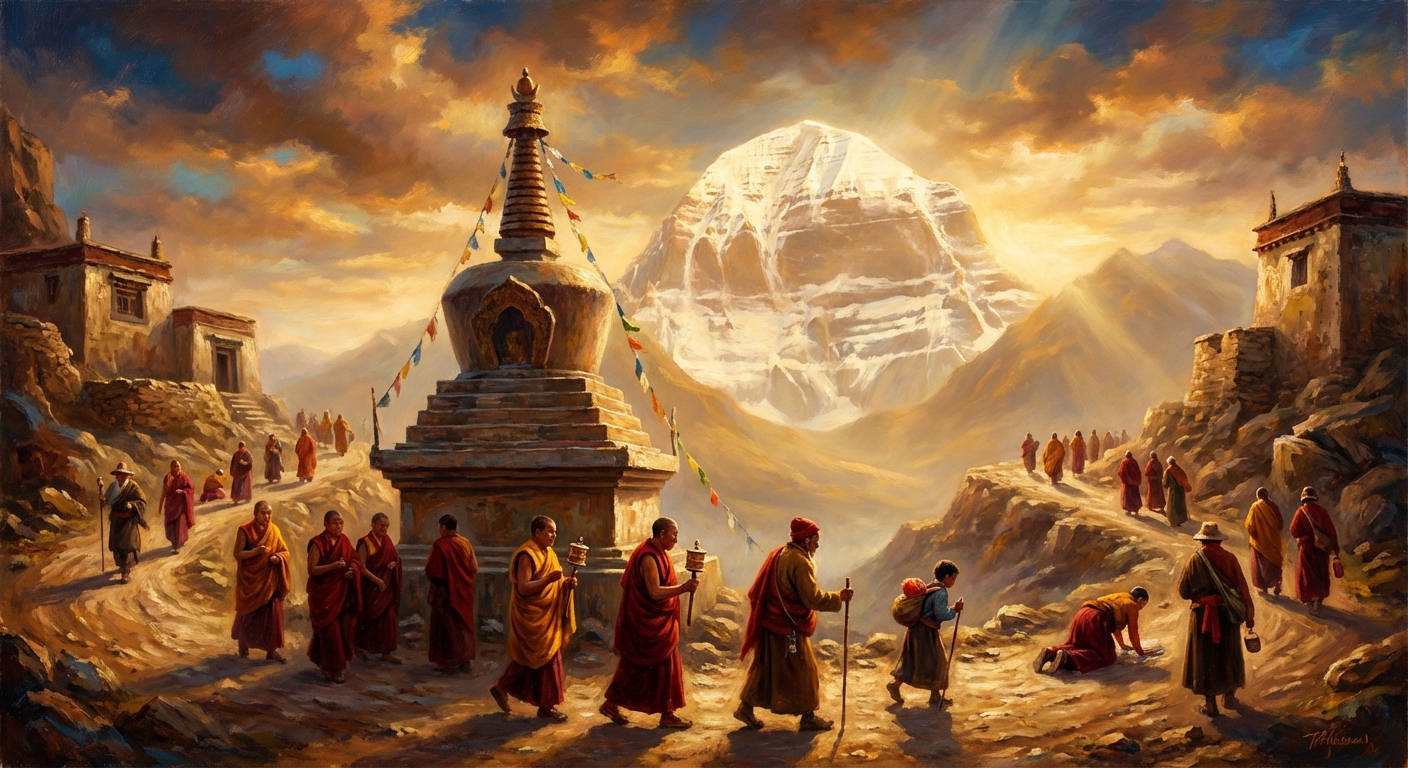
The act of circumambulation, known as "kora" in the Himalayan regions, is a profound spiritual practice deeply embedded in the traditions of Hinduism, Buddhism, Jainism, and the indigenous Bon religion. It involves walking a sacred path around a revered object or place, symbolizing a journey of devotion, purification, and enlightenment. While variations exist across different faiths, the core principle remains the same: to accumulate merit, cleanse negative karma, and draw closer to the divine. The repetitive nature of the practice is intended to quiet the mind, fostering a meditative state that allows for a deeper connection with the sacred.
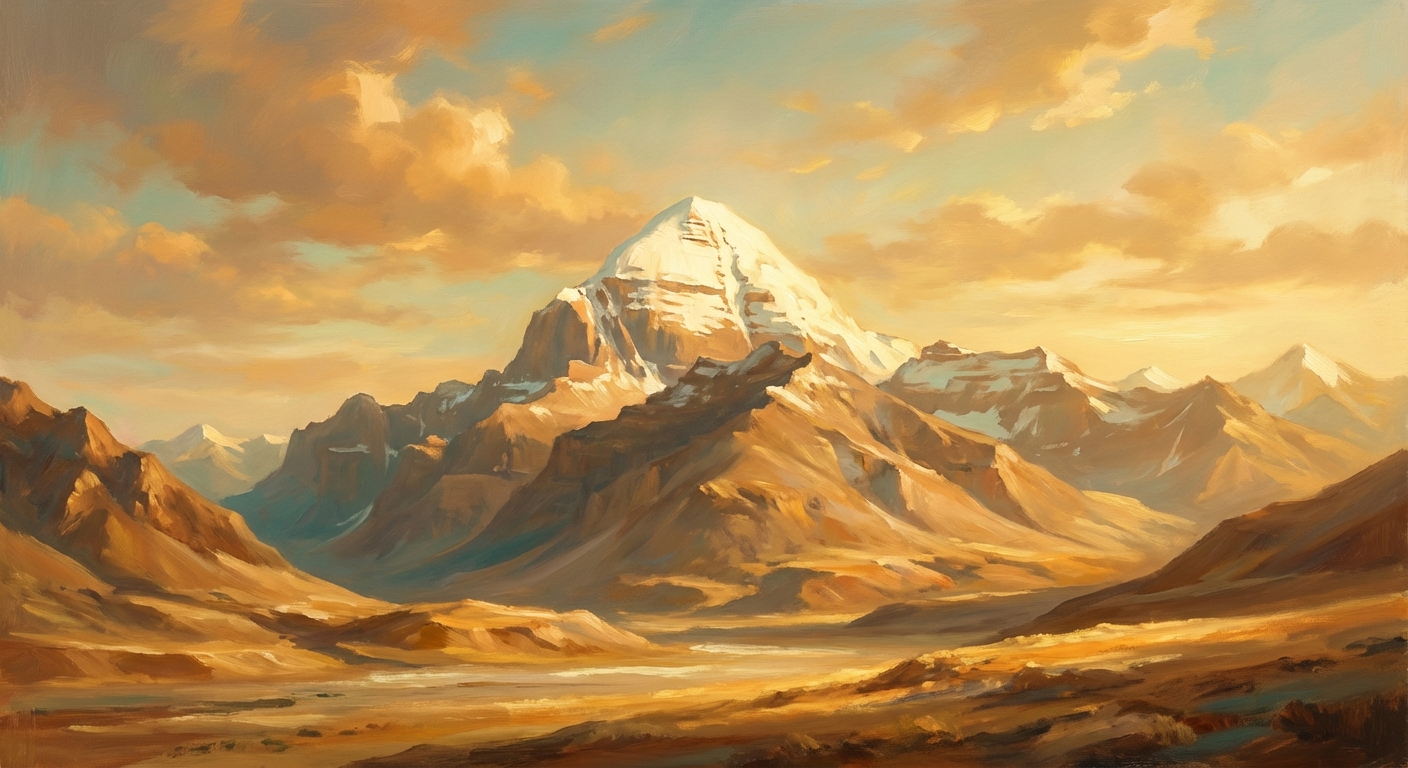
Mount Kailash, a majestic peak in the remote Tibetan Himalayas, stands as a focal point for this ancient tradition. Revered as the abode of Lord Shiva in Hinduism, the home of Demchog in Buddhism, and a sacred site for Jains and Bonpos, Kailash is considered the axis of the world, a place where the earthly and spiritual realms converge. The kora around Mount Kailash is thus considered one of the most sacred and challenging pilgrimages in the world, attracting devotees from diverse backgrounds who seek spiritual transformation.
The traditional kora route spans approximately 52 kilometers (32 miles) and typically takes three days to complete, testing the physical and mental endurance of pilgrims. Along the way, significant sites such as Dirapuk Monastery, offering breathtaking views of Kailash's north face, and Dolma La Pass, the highest point on the route symbolizing death and rebirth, punctuate the journey. Pilgrims believe that a single circumambulation washes away the sins of a lifetime, while 108 circumambulations are said to guarantee enlightenment, making the arduous trek a testament to their unwavering faith and devotion.
The kora around Mount Kailash is more than just a physical journey; it is a profound inner transformation. It represents a confrontation with one's limitations, a surrender to the divine, and a tangible expression of the desire for purification and enlightenment. The shared reverence for the mountain across multiple religions underscores its unique position as a sacred site of universal significance, a beacon of hope and inspiration for those seeking spiritual liberation.
Key Details
- Distance of Kora 52 kilometers (32 miles)
- Religions that Revere Kailash Hinduism, Buddhism, Jainism, Bon
- Dolma La Pass Altitude 5,630 meters (18,471 feet)
- Significance of 108 Koras Said to guarantee enlightenment
- Hindu Deity Associated Lord Shiva
- Buddhist Deity Associated Demchog
Sources & Research
Every fact on Temples.org is backed by verified Sources & Research. Each piece of information is rated by source tier and confidence level.
View All Sources (4)
| Field | Source | Tier | Retrieved |
|---|---|---|---|
| Evening Star, 1953 | Library of Congress (opens in a new tab) | C | 2024-01-01 |
| Evening Star, 1956 | Library of Congress (opens in a new tab) | C | 2024-01-01 |
| The Sun, 1886 | Library of Congress (opens in a new tab) | C | 2024-01-01 |
| Mount Kailash Information | Encyclopedia Britannica (opens in a new tab) | B | 2024-01-01 |