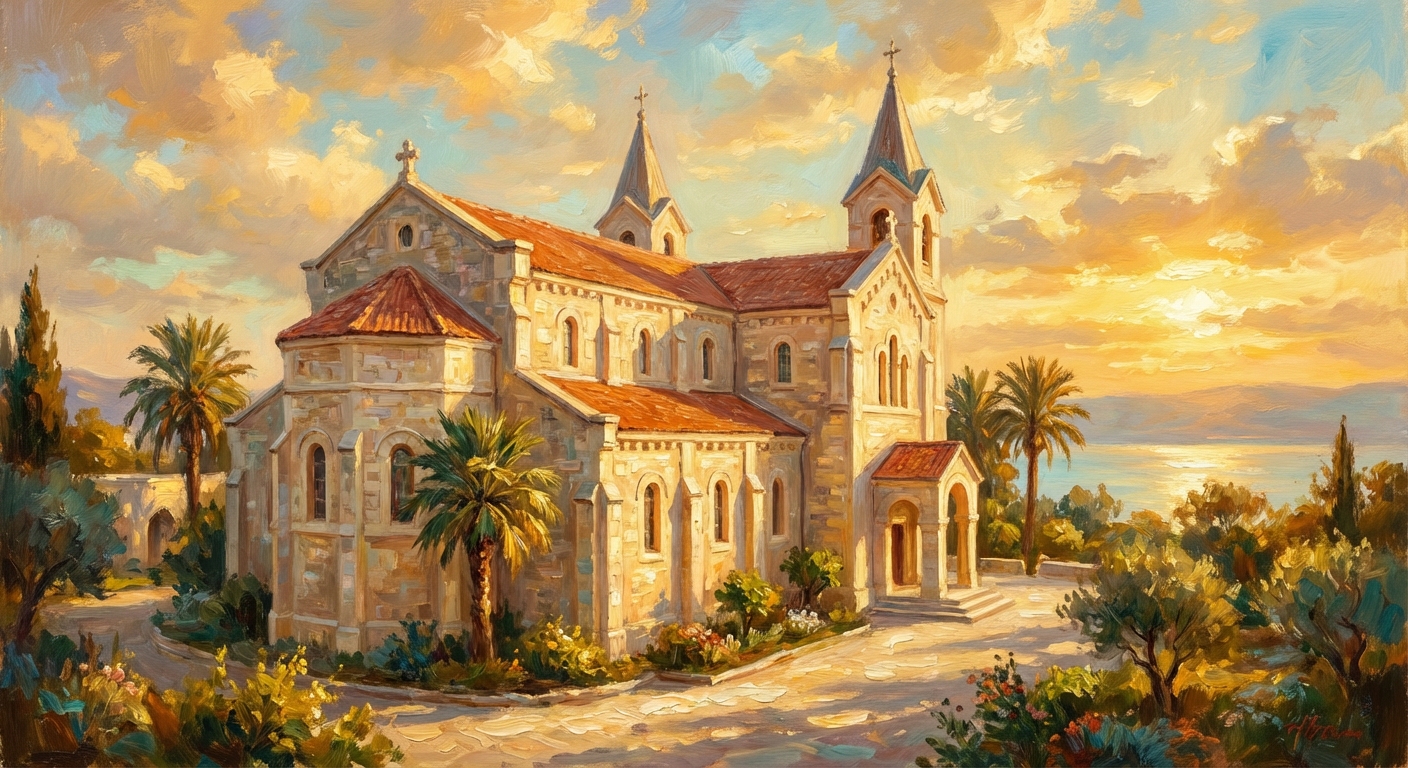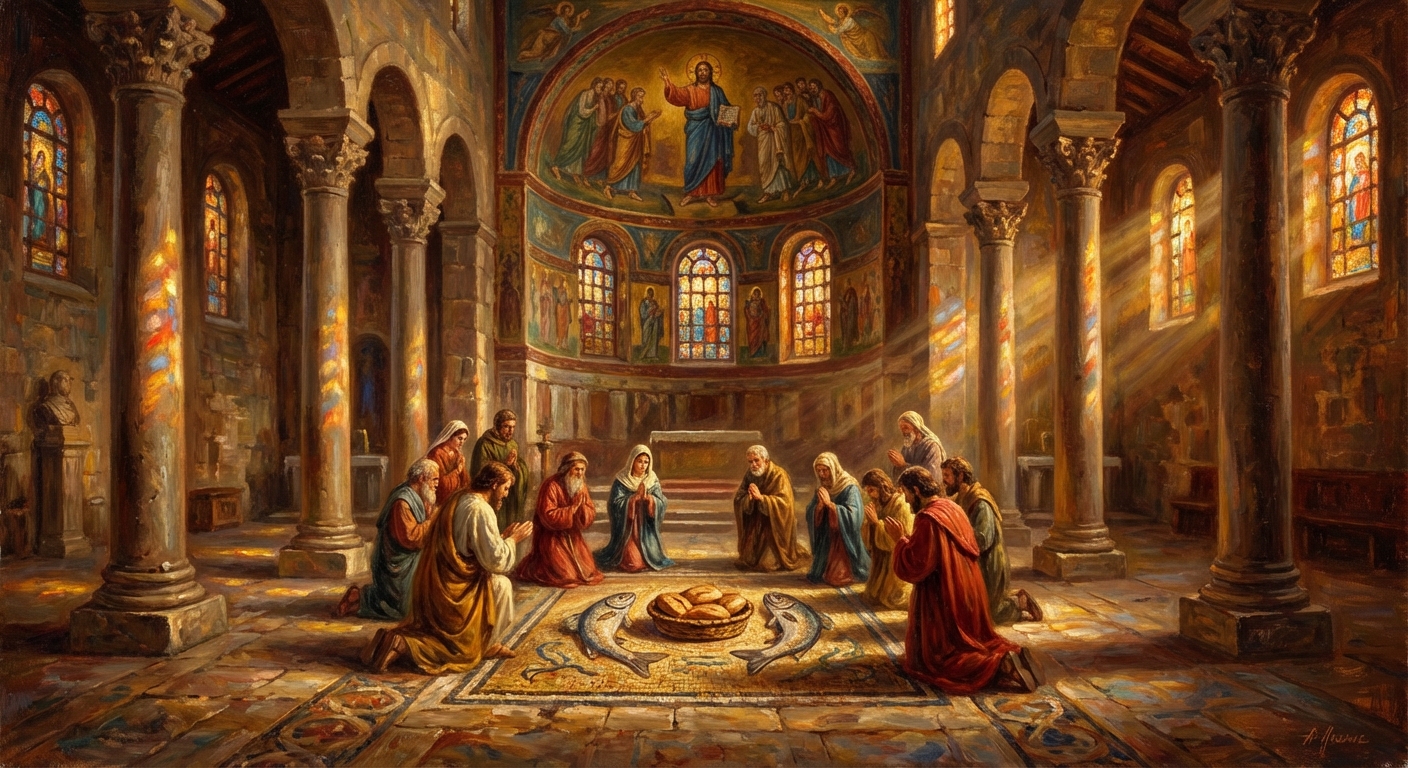
Nestled within the Church of the Multiplication in Tabgha, Israel, lies a remarkable testament to early Christian faith and artistry: the Mosaic of the Loaves and Fishes. This intricate mosaic, a surviving fragment of a 5th-century Byzantine basilica, marks the traditional site of one of Jesus' most renowned miracles – the Feeding of the 5,000. The mosaic serves not only as a historical artifact but also as a powerful symbol of Christ's compassion, abundance, and the enduring significance of this pivotal biblical event.
The story of the Feeding of the 5,000 is recounted in all four Gospels, narrating how Jesus, faced with a multitude of hungry followers, miraculously multiplied five loaves of bread and two fish to feed them all. This extraordinary act demonstrated Jesus' divine power and his deep concern for both the physical and spiritual well-being of his followers. The location in Tabgha, on the shores of the Sea of Galilee, has been venerated as the site of this miracle since the early centuries of Christianity.
The mosaic itself, positioned prominently before the altar, depicts a basket containing four loaves of bread, flanked by two fish. While the Gospels mention five loaves, it is believed that the mosaic may have originally featured five, with one now lost due to the ravages of time. This exquisite artwork stands as a tangible link to the early Christian community that revered this sacred site. Its creation during the Byzantine era reflects the artistic styles and techniques prevalent at the time, showcasing a blend of naturalism and symbolic representation.
Today, the Mosaic of the Loaves and Fishes continues to inspire pilgrims and visitors from around the world. It serves as a focal point for prayer and reflection, reminding all who behold it of the importance of faith, generosity, and trust in God's unwavering provision. The image of the loaves and fishes has become an iconic symbol of Christian charity and the boundless capacity of divine grace. The mosaic's enduring presence ensures that the story of Christ's miraculous feeding continues to resonate with generations, offering a message of hope and abundance to all.
Key Details
- Location Tabgha, Israel
- Date of Mosaic Creation 5th Century
- Biblical Event Feeding of the 5,000
- Church Construction Originally 4th Century, Rebuilt 1982
- Artistic Style Byzantine
- Symbolism Christ's Provision and Charity
Timeline
First Chapel Erected
A small chapel was built on the traditional site of the miracle.
component.timeline.groundbreakingByzantine Basilica Constructed
A more elaborate basilica was built, including the Mosaic of the Loaves and Fishes.
component.timeline.groundbreakingBasilica Destroyed
The Byzantine basilica was destroyed, likely during the Persian invasion.
component.timeline.historicalModern Church Consecrated
A new church was built by the German Benedictine Order, preserving the mosaic remains.
DedicationSources & Research
Every fact on Temples.org is backed by verified Sources & Research. Each piece of information is rated by source tier and confidence level.
View All Sources (3)
| Field | Source | Tier | Retrieved |
|---|---|---|---|
| The Catholic Times (Columbus, Ohio) | Library of Congress (opens in a new tab) | A | 2024-01-01 |
| The Fargo Forum and Daily Republican (Fargo, N.D.) | Library of Congress (opens in a new tab) | A | 2024-01-01 |
| Iron County News (Hurley, Wis.) | Library of Congress (opens in a new tab) | A | 2024-01-01 |