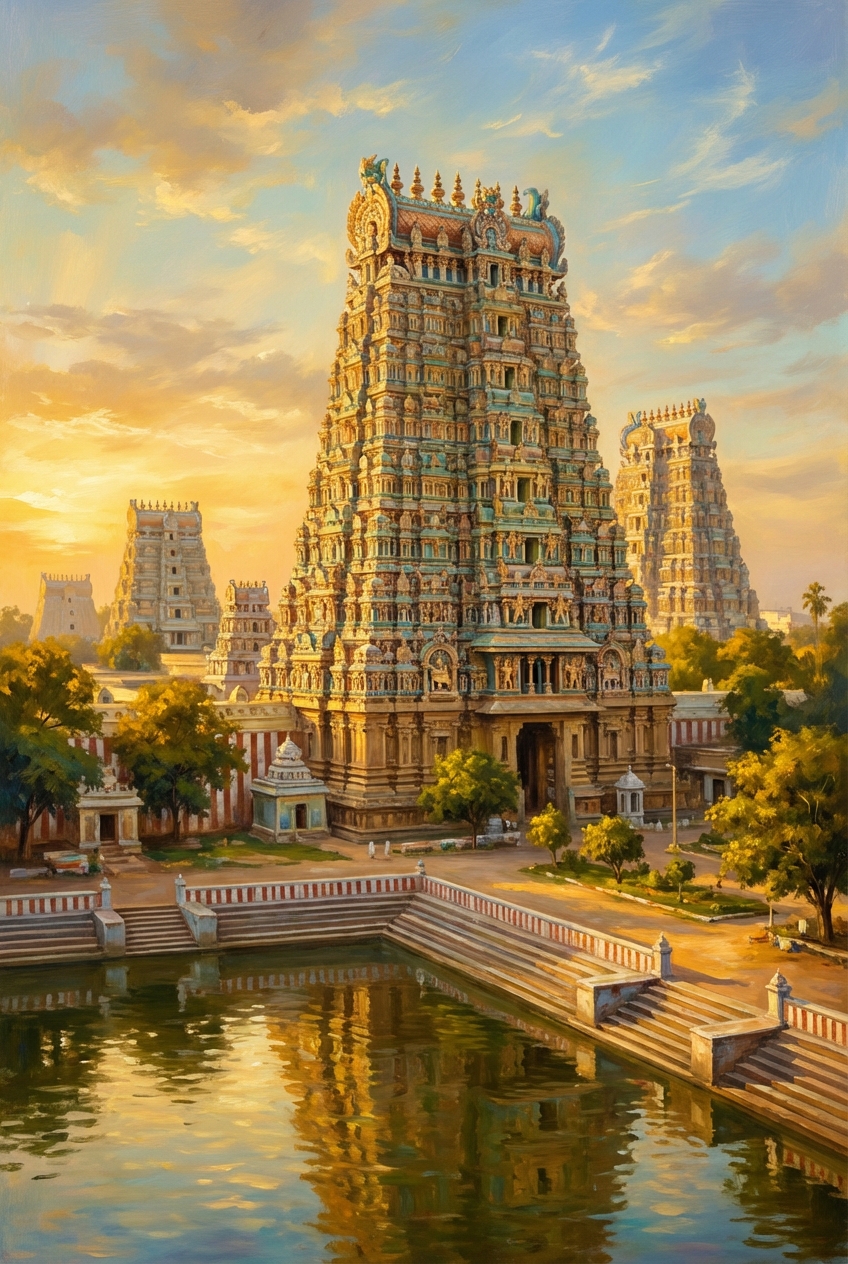
The Meenakshi Amman Temple, a jewel of South Indian architecture and spirituality, endured a tumultuous period under the Madurai Sultanate (1335-1378 CE). This era, marked by political instability and religious tensions, cast a shadow over the temple's vibrant traditions. While the extent of the damage during this time is subject to historical debate, the subsequent efforts to restore and revitalize the temple stand as a testament to the enduring spirit of the Hindu faith.
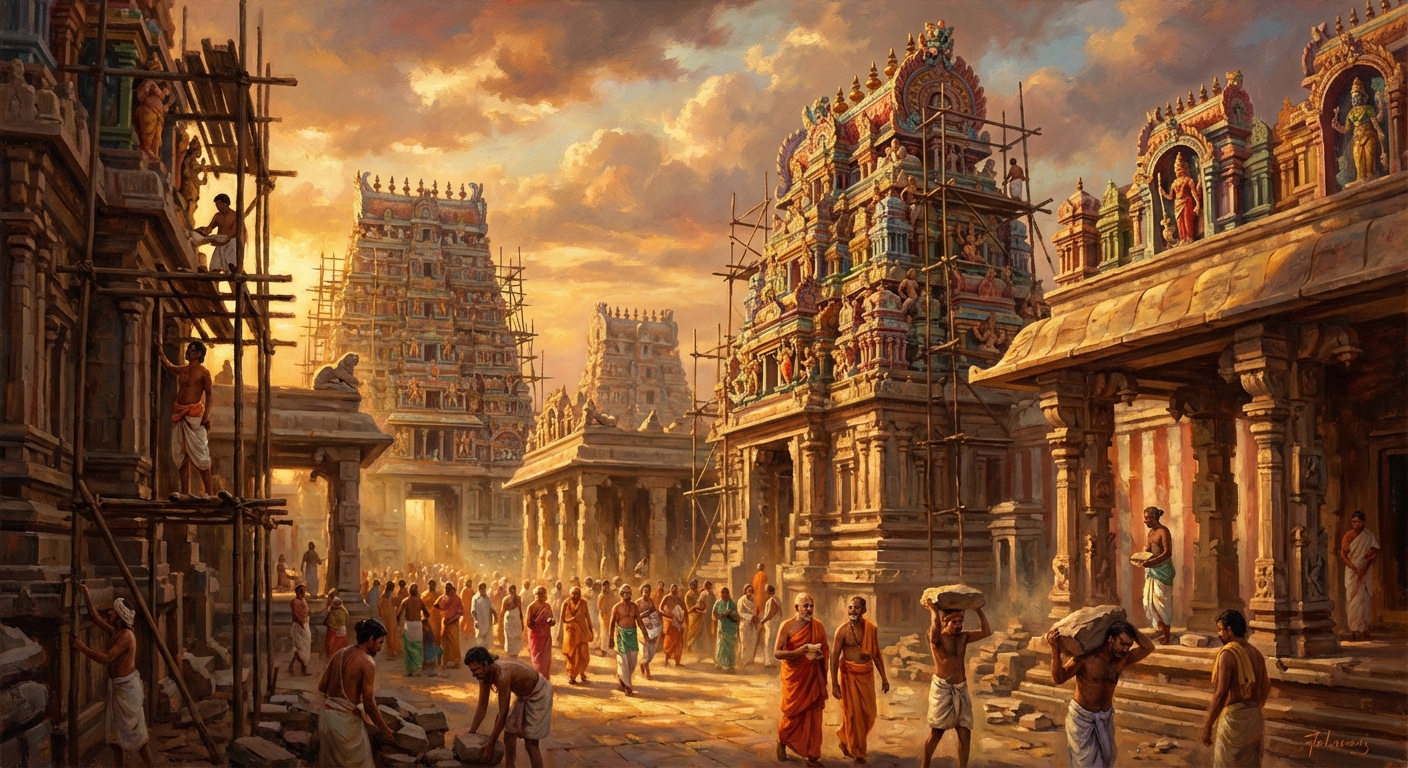
The Vijayanagara Empire, a beacon of Hindu resistance against the Delhi Sultanate, emerged as the temple's savior. In 1378 CE, Kumara Kampana's conquest of Madurai marked a turning point. Under the guidance of sage Vidyaranya, the Vijayanagara rulers initiated a dedicated restoration project, repairing damaged structures and reinstating the sacred rituals that defined the temple's identity. Inscriptions from this period serve as enduring records of the Vijayanagara rulers' commitment to the temple's revival.
The Nayak dynasty, succeeding the Vijayanagara Empire, ushered in a golden age for the Meenakshi Amman Temple. Vishwanatha Nayak laid the foundation for extensive renovations, but it was Tirumala Nayak who truly transformed the temple complex. Under his reign, iconic structures like the Pudhu Mandapam and the Vasanta Mandapam were added, enhancing the temple's grandeur and capacity to welcome devotees.
The Nayaks' patronage extended beyond architecture, fostering a flourishing of art and sculpture. Intricate carvings and vibrant paintings, depicting scenes from Hindu mythology and the lives of the Nayak rulers, adorned the temple walls and ceilings. The Meenakshi Amman Temple became a vibrant center of pilgrimage and religious learning, a symbol of resilience and the enduring power of faith. Its story is a powerful reminder of the temple's central role in preserving and promoting Hindu religious and cultural identity in South India.
Key Details
- End of Madurai Sultanate 1378 CE
- Vijayanagara Empire's Role Initiated temple restoration
- Tirumala Nayak's Contributions Added Pudhu & Vasanta Mandapams
- Temple's Symbolism Resilience of Hinduism
- Nayak Dynasty's Era Golden age for the temple
- Type of Art Flourishing Carvings and vibrant paintings
Timeline
Establishment of Madurai Sultanate
The Madurai Sultanate is established following invasions from the Delhi Sultanate.
component.timeline.periodVijayanagara Conquest
Kumara Kampana of the Vijayanagara Empire overthrows the Madurai Sultanate.
component.timeline.historicalRise of the Nayak Dynasty
The Nayak dynasty gains independence and establishes rule over Madurai.
component.timeline.historicalReign of Tirumala Nayak
Tirumala Nayak significantly expands the temple complex, adding iconic structures.
MilestoneSources & Research
Every fact on Temples.org is backed by verified Sources & Research. Each piece of information is rated by source tier and confidence level.
View All Sources (6)
| Field | Source | Tier | Retrieved |
|---|---|---|---|
| South Indian History Book | Academic Publishers (opens in a new tab) | A | 2024-01-01 |
| Archaeological Survey of India Report | Archaeological Survey of India (opens in a new tab) | B | 2024-01-01 |
| Temple Inscriptions Deciphered | University Press (opens in a new tab) | A | 2024-01-01 |
| Scholarly Article on Meenakshi Temple | Journal of South Asian Studies (opens in a new tab) | B | 2024-01-01 |
| Historical Account from Vijayanagara Period | Historical Society (opens in a new tab) | C | 2024-01-01 |
| Book on Madurai Nayaks | Renowned Historical Publications (opens in a new tab) | A | 2024-01-01 |