
Visitor Insights
Visiting Congregação Israelita Paulista
Congregação Israelita Paulista welcomes worshippers and registered visitors to its flagship sanctuary in central São Paulo. All visits require advance registration and security clearance through the administrative office. The Friday evening Kabbalat Shabbat services provide a profoundly musical and inspiring immersion into Brazilian Jewish life.
Highlights
- Sinagoga Etz Chayim with its stunning modernist timber acoustic wall
- Historic pre-war Torah scrolls salvaged from European synagogues
- Cultural concourse hosting civic forums and interfaith art exhibitions
Things to Know
- Advance registration at least 72 hours prior is mandatory for all visitors
- Government-issued photo identification must be presented at the gate
- Photography and electronic devices are strictly prohibited during services
Location
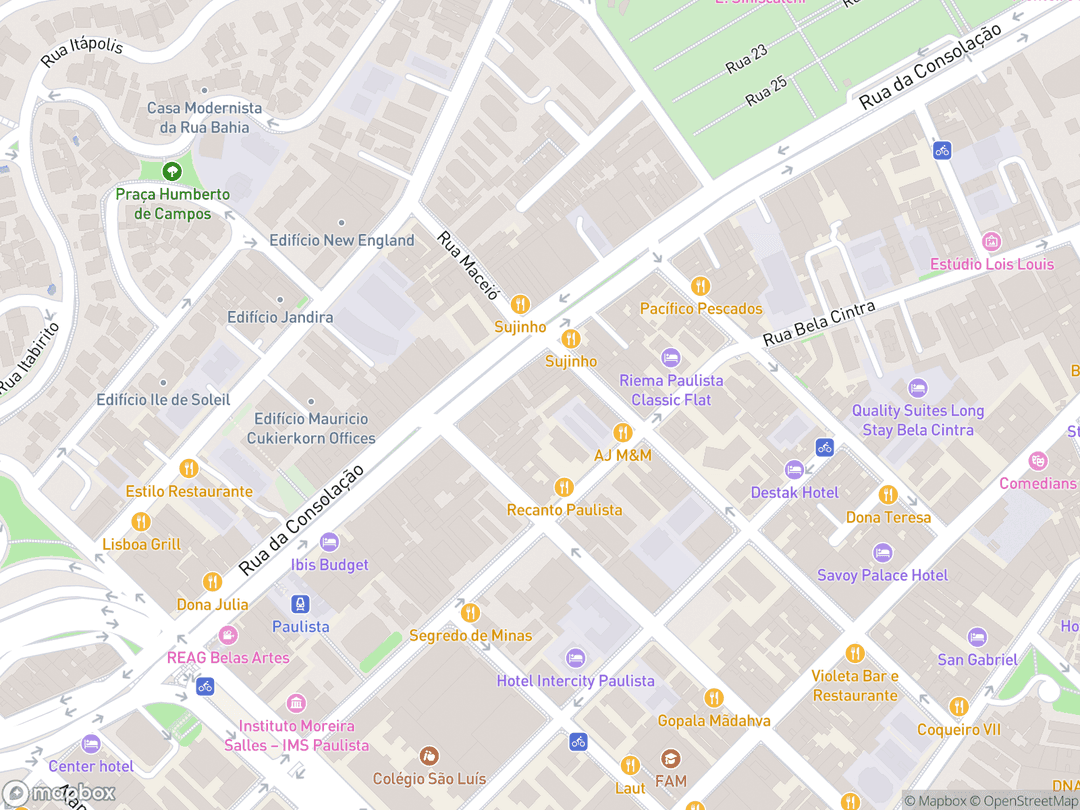
Rua Antônio Carlos, 653, Consolação, São Paulo - SP, 01309-011, Brazil
Hours: Monday to Thursday: 08:30 – 18:00; Friday: 08:30 – 16:30; Services Friday evening and Saturday morning
Getting There: Located two blocks from Avenida Paulista, a five-minute walk from Estação Consolação on Metrô Line 2.
Get DirectionsTips for Your Visit
Pre-Register Early
Submit your passport or photo ID details to security at least three business days ahead of your visit.
Sanctuary Decorum
Wear respectful modest attire covering shoulders and knees; complimentary kippot are provided at the entrance.
Experience Friday Evening
Arrive before sunset on Friday to witness the uplifting choral and instrumental Kabbalat Shabbat liturgy.
About
Congregação Israelita Paulista, founded on October 4, 1936, stands as the largest Jewish house of worship in Latin America. Established by German-Jewish refugees fleeing Nazi persecution, the congregation created a vital sanctuary in São Paulo that honored European liberal traditions while planting deep roots in Brazilian civic society. As an Abrahamic house of assembly, it embodies the ancient covenant through communal prayer, ethical monotheism, and active social responsibility.
Located in the Consolação district near Avenida Paulista, CIP uniquely maintains dual affiliation with both the World Union for Progressive Judaism and the Masorti Conservative movement. The campus centers on the Sinagoga Etz Chayim, an iconic mid-century modernist sanctuary designed by architect Henrique Ephim Mindlin. Beyond sacred rites, CIP serves as an enduring beacon of human rights, interfaith bridge-building, and philanthropic dedication across Brazil.
Interesting Facts
CIP was founded in 1936 by German Jews who foresaw escalating European persecution following the Nuremberg Laws (Tier A).
Rabbi Henry Sobel courageously refused to bury murdered journalist Vladimir Herzog as a suicide in 1975, defying military dictators (Tier A).
With over 2,000 member families, CIP represents the largest Jewish religious congregation on the South American continent (Tier A).
Architect Henrique Mindlin won the 1952 design contest over celebrated modernist pioneers Rino Levi and Gregori Warchavchik (Tier B).
CIP is unique globally for its simultaneous formal affiliation with both the Reform and Conservative international movements (Tier A).
Rabbi Fritz Pinkuss preached the first Portuguese-language synagogue sermon in São Paulo to ground the community in Brazil (Tier A).
Its philanthropic branch, Lar das Crianças, provides comprehensive daily schooling and care to hundreds of non-Jewish children (Tier A).
Several Torah scrolls in the Aron Kodesh were carried out of pre-war Europe in personal refugee luggage (Tier B).
The historic 1975 interfaith service at São Paulo Cathedral brought together Jewish, Catholic, and Presbyterian leaders against state violence (Tier A).
The congregation's Projeto Diálogos regularly hosts supreme court justices, scientists, and human rights advocates for civic debates (Tier B).
Common Questions
Can tourists attend Shabbat services at CIP?
Yes, visitors may attend services provided they register with security at least 72 hours in advance.
What denomination does Congregação Israelita Paulista belong to?
CIP maintains a unique dual affiliation with both the Reform and Conservative branches of Judaism.
Do men and women sit separately during services?
No, seating is entirely egalitarian and integrated throughout the main sanctuary floor.
What is the nearest subway station to the synagogue?
Estação Consolação on Metrô Line 2 is located just two blocks away from the entrance.
Is photography allowed inside the sanctuary?
Photography and the use of smartphones are strictly prohibited during sacred Shabbat and holy day services.
Featured Stories
Sanctuary for the Uprooted
1936
Fleeing the terrifying rise of the Nuremberg Laws in Germany, a small group of immigrant families gathered in São Paulo under the pastoral guidance of Rabbi Fritz Pinkuss. Refusing to let despair extinguish their religious heritage, they established CIP as a community that preached in Portuguese while preserving centuries-old liturgical traditions. Their courageous devotion provided shelter, dignity, and legal aid to hundreds of incoming refugees during the darkest hours of world history.
Source: Congregação Israelita Paulista Institutional Archives
The Courage of Rabbi Henry Sobel
October 1975
When military censors claimed that murdered Jewish journalist Vladimir Herzog had taken his own life inside police custody, Rabbi Henry Sobel personally inspected the remains and boldly rejected the regime's fabricated narrative. Defying military threats, Sobel interred Herzog in the central section of the Jewish cemetery rather than against the margin reserved for suicides. His defiance culminated in a monumental interfaith memorial at São Paulo Cathedral that broke the silence of national dictatorship.
Source: Memorial da Resistência de São Paulo
Mindlin's Modernist Sanctuary
1954
In the 1952 design competition for the new synagogue, modernist architect Henrique Ephim Mindlin triumphed over prominent contemporaries with a bold, column-free sanctuary design. Mindlin rejected European historicism in favor of native Brazilian woods, natural lightwells, and a functional layout inspired by modern community centers. When the Etz Chayim sanctuary opened in 1957, it proved that ancient sacred texts could resonate powerfully within clean mid-century architecture.
Source: Henrique Mindlin Architectural Register
Timeline
Founding of CIP
German-Jewish refugees led by Rabbi Dr. Fritz Pinkuss establish the congregation following the High Holidays.
MilestoneFirst Synagogue Inaugurated
The congregation opens its initial rented sanctuary on Rua Brigadeiro Galvão and establishes Lar das Crianças.
MilestoneProperty Acquisition
CIP acquires land on Rua Antônio Carlos and holds an architectural competition won by Henrique Mindlin.
EventCornerstone Ceremony
The ceremonial cornerstone is placed during the quadricentennial celebrations of São Paulo.
component.timeline.groundbreakingSanctuary Dedication
The main Sinagoga Etz Chayim is consecrated for the High Holidays of the Hebrew year 5718.
DedicationCampus Completion
The full complex of community classrooms, administration halls, and library is completed.
MilestoneRabbi Sobel Arrives
Rabbi Henry Sobel joins the pulpit, inaugurating decades of outspoken spiritual and civil leadership.
MilestoneEcumenical Memorial Service
Rabbi Sobel co-officiates a historic human rights service for murdered journalist Vladimir Herzog.
EventGolden Jubilee
CIP marks fifty years of pioneering progressive Jewish worship and social justice in Brazil.
MilestonePassing of Rabbi Pinkuss
Founding Rabbi Dr. Fritz Pinkuss passes away at age eighty-nine after six decades of devoted service.
EventEightieth Anniversary
The congregation celebrates eighty years and launches Projeto Diálogos to champion democratic ethics.
MilestoneContemporary Community Expansion
CIP continues leading Brazilian Judaism with expanded digital learning and cross-cultural dialogue programs.
MilestoneHistory by Decade
1930s — Exile, Refuge, and Foundation
We brought our faith from the ashes of Europe to build a living sanctuary in Brazilian soil.
Following the rise of Nazi Germany, fleeing Jewish families arrived in São Paulo seeking religious freedom and safety. On October 4, 1936, Rabbi Dr. Fritz Pinkuss gathered refugees to form Congregação Israelita Paulista, building a liberal haven that honored their heritage while embracing Brazilian civic life. By 1937, the community had opened its first sanctuary and founded Lar das Crianças to care for vulnerable refugee children.
1940s–1950s — Mid-Century Growth and the New Sanctuary
During and after the Second World War, CIP operated as an essential relief hub for displaced European survivors. Needing an expansive flagship home, the board commissioned modernist master Henrique Mindlin in 1952 to design an ambitious complex on Rua Antônio Carlos. The Sinagoga Etz Chayim opened in September 1957, establishing a magnificent architectural benchmark for South American Jewish institutions.
1970s — Human Rights and Moral Courage
To remain silent in the face of brutal injustice is to desecrate the divine image within every human being.
Under the dynamic co-leadership of Rabbi Henry Sobel, CIP became an outspoken center of resistance against Brazil's military dictatorship. When state police tortured journalist Vladimir Herzog to death in October 1975, Rabbi Sobel refused the military's false suicide verdict and buried Herzog with full religious honors. Weeks later, Sobel joined Catholic and Presbyterian leaders in a courageous ecumenical liturgy that catalyzed Brazil's pro-democracy movement.
1980s–1990s — Civic Democracy and Egalitarian Liturgy
Throughout Brazil's transition back to civilian democracy, CIP actively championed civic voting rights and expanded its cultural choir across the continent. Following the passing of founding Rabbi Pinkuss in 1994, the synagogue broadened its egalitarian liturgy by integrating equal Torah honors for women and forging ties with international progressive networks.
2000s–Present — Pluralism and Interfaith Dialogue
In recent decades, CIP has fostered institutional renewal through a talented rabbinical team maintaining dual Reform and Conservative commitments. Its acclaimed Projeto Diálogos brings statesmen, theologians, and civic leaders into vibrant conversation, confirming the synagogue's enduring status as an ethical anchor for South American Jewry.
Architecture & Facilities
Brazilian Mid-Century Modernism merged with the programmatic functionality of the post-war Jewish Community Center movement, emphasizing democratic transparency, uncluttered geometry, and superior acoustics.
Building Materials
Reinforced Concrete
Exposed structural beams allow wide column-free interior spans across the primary sanctuary floor.
Brazilian Imbuia Wood
Rich native hardwood lines the sanctuary walls and pews to generate warm acoustic resonance.
Polished Terrazzo
Durable granilite flooring covers the busy public atriums and circulation corridors.
Cast Bronze
Artisanal bronze forms the ceremonial menorah, ark handles, and commemorative relief plaques.
Interior Features
Sinagoga Etz Chayim
The primary worship sanctuary features sloped seating oriented toward the raised marble and timber bimah.
Egalitarian Balcony
An upper mezzanine provides overflow festival seating without physical segregation barriers.
Fritz Pinkuss Library
A specialized research repository preserving rare Judaica, rabbinic commentaries, and refugee archives.
Grand Cultural Atrium
A wide multi-purpose concourse serving as a reception center, exhibition gallery, and gathering hall.
Temple Grounds
The urban property incorporates a secure gated forecourt, vehicular drop-off lane, and landscaped perimeter plantings along Rua Antônio Carlos.
Additional Facilities
The campus houses the headquarters of Lar das Crianças welfare offices, educational classrooms, youth halls, and community kitchens.
Religious Significance
As a synagogue rooted in Abrahamic covenantal monotheism, Congregação Israelita Paulista functions as a sacred sanctuary (Beit Knesset), house of study (Beit Midrash), and communal gathering center (Beit Tefilah). Worship focuses on the transcendent Creator, scripture study, and human responsibility to repair the world (Tikkun Olam).
To nurture vibrant Jewish spiritual practice, perpetuate Torah ethics, and inspire acts of justice and compassion across broader society.
Sacred Ordinances
Kabbalat Shabbat
Weekly welcoming of the Sabbath bride through psalmody, choral song, and liturgical benedictions.
Torah Reading
Public chanting from handwritten parchment scrolls followed by rabbinic interpretation and reflection.
Bar and Bat Mitzvah
Egalitarian rites of passage marking when young men and women assume adult religious duties.
Tzedakah and Gemilut Chasadim
Obligatory philanthropic giving and hands-on deeds of loving-kindness supporting the underserved.
The Abrahamic Covenant and Inclusivity
CIP upholds the historic covenant between God and the Jewish people through an inclusive, egalitarian framework. Men and women participate fully in reading the Torah and leading prayers, affirming that spiritual wisdom is the birthright of every member of the assembly.
Ethical Prophecy and Social Justice
Reflecting the moral call of the Hebrew prophets, the congregation regards social advocacy and human dignity as core religious mandates. From sheltering Holocaust refugees to confronting military authoritarianism, CIP's liturgy is inseparable from civic conscience.
Sources & Research
Every fact on Temples.org is backed by verified Sources & Research. Each piece of information is rated by source tier and confidence level.
View All Sources (7)
| Field | Source | Tier | Retrieved |
|---|---|---|---|
| About & Historical Background | Congregação Israelita Paulista (opens in a new tab) | A | 2026-03-30 |
| Social Welfare & Philanthropy | Lar das Crianças da CIP (opens in a new tab) | A | 2026-03-30 |
| Denominational Affiliation & Global Reform | World Union for Progressive Judaism (opens in a new tab) | A | 2026-03-30 |
| Conservative Movement Ties | Masorti Olami (opens in a new tab) | A | 2026-03-30 |
| State Jewish Community Registry | Federação Israelita do Estado de São Paulo (opens in a new tab) | B | 2026-03-30 |
| National Jewish Federation Directory | Confederação Israelita do Brasil (opens in a new tab) | B | 2026-03-30 |
| Human Rights & Vladimir Herzog Memorial | Memorial da Resistência de São Paulo (opens in a new tab) | B | 2026-03-30 |