Visitor Insights
Visiting Sinagoga Histórica Justo Sierra 71
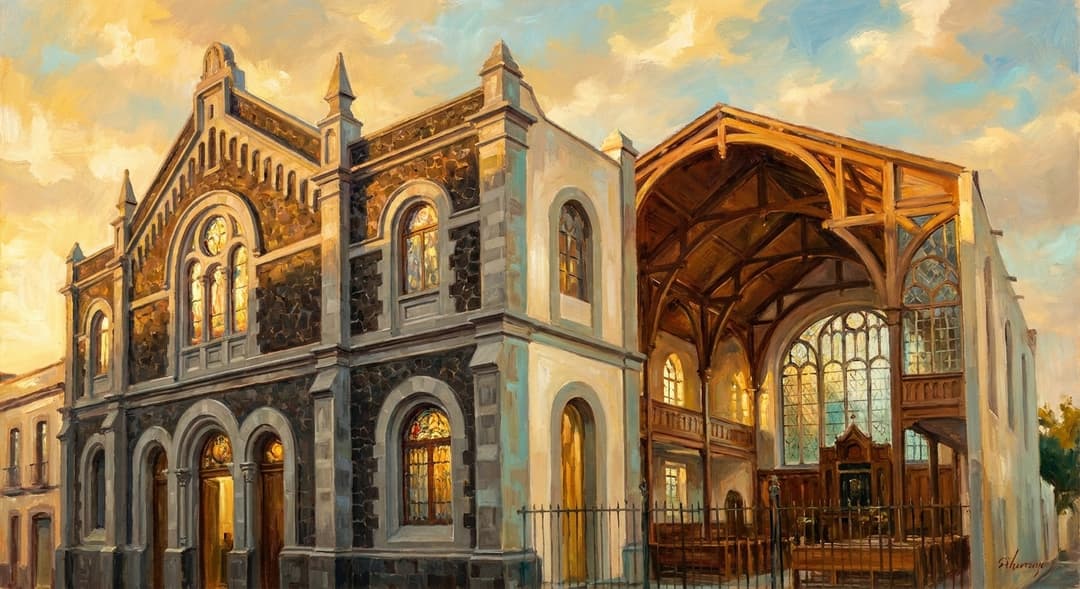
Sinagoga Justo Sierra 71 offers visitors a rare opportunity to step into a preserved 1940s Ashkenazi sanctuary concealed behind a Mexican colonial façade. Located in Mexico City's Centro Histórico, it serves both as an active museum and a consecrated sacred space.
Highlights
- Intricately carved wooden Aron Kodesh (Holy Ark) modeled after lost European synagogues
- Camouflaged red volcanic tezontle exterior masking a soaring two-story sanctuary
- Central Bimah featuring rare stained-glass panels of biblical musical instruments
Things to Know
- Visitor access is restricted on Saturdays (Shabbat) and major Jewish holidays
- Guided architectural and heritage walking tours are available on Sunday mornings
Location
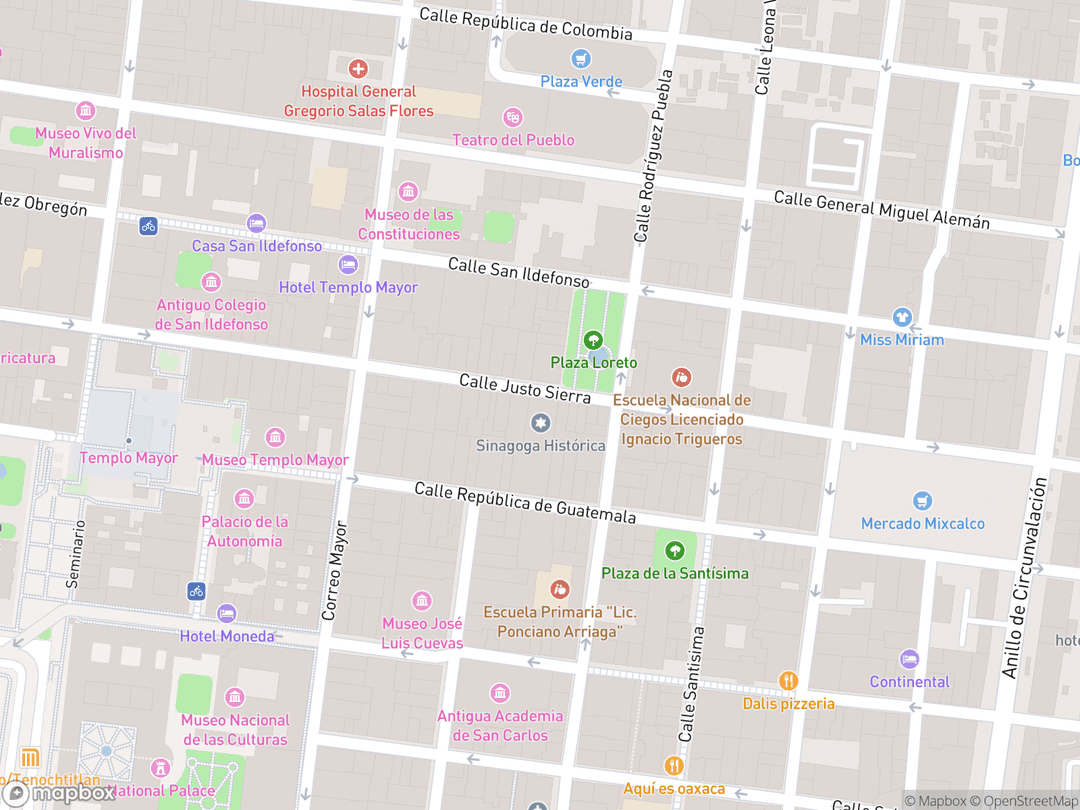
Calle Justo Sierra 71, Centro Histórico, Delegación Cuauhtémoc, 06020 Ciudad de México, CDMX, Mexico
Hours: Sunday through Friday: 10:00 AM – 5:00 PM; Closed Saturdays
Getting There: Take Metro Line 2 to Zócalo / Tenochtitlan Station and walk 5 minutes northeast past the Metropolitan Cathedral.
Get DirectionsTips for Your Visit
Plan for Sunday Walking Tours
Sunday morning visits allow integration with guided walking tours of Mexico City's historic Jewish quarter.
Respect Sacred Spaces
Modest attire is requested when entering the active sanctuary and upper gallery areas.
About
The Sinagoga Histórica Justo Sierra 71, officially known as Sinagoga Nidhei Israel, stands as a sacred sanctuary within the Abrahamic family of faith. Sharing a common heritage with sister monotheistic traditions, Judaism centers its life on worshiping the One Creator, revering holy scripture, and gathering in sacred houses of assembly (Beit Knesset).
Inaugurated in 1941 by Eastern European Ashkenazi immigrants, the sanctuary preserves Lithuanian Orthodox religious customs in Mexico City. From its elevated women's gallery (Ezrat Nashim) to its central reading podium (Bimah) and holy Ark (Aron Kodesh) facing Jerusalem, the sanctuary embodies the living survival and transatlantic integration of Jewish tradition.
Gallery
Symbolic Elements
The temple's exterior features intricate carvings, each rich with spiritual meaning:

Magen David
The Star of David is incised subtly on the entrance doors and showcased in interior medallions.

Aron Kodesh
The Holy Ark stands against the eastern wall facing Jerusalem to hold the sacred Torah scrolls.

Ner Tamid
The Eternal Light hangs above the Ark representing the everlasting divine presence.

Central Bimah
The elevated central podium facilitates public reading of scripture to the surrounding congregation.

Ezrat Nashim Balcony
The upper gallery provides dedicated seating for women in accordance with Orthodox tradition.

Luchot HaBrit
Carved wooden plaques of the Ten Commandments surmount the pinnacle of the Holy Ark.

Psalm 150 Glass Panels
Inlaid stained-glass panels on the Bimah depict ancient biblical musical instruments.

Tallit Motifs
Blue and black painted stripes along decorative friezes mirror traditional prayer shawls.
Interesting Facts
The street facade uses Mexican volcanic tezontle stone to blend with colonial architecture. (Tier A)
The interior sanctuary was built as a direct replica of a Lithuanian synagogue lost in WWII. (Tier B)
Inaugurated in September 1941, it provided comfort during the darkest days of the Holocaust. (Tier A)
It was the first purpose-built Ashkenazi synagogue constructed in the Republic of Mexico. (Tier A)
Remaining sealed for over thirty years helped preserve its original 1941 decorative interior. (Tier B)
Stained-glass panels inside the Bimah depict ancient instruments listed in Psalm 150. (Tier B)
It occupies two distinct colonial residential plots purchased by Nidhei Israel in 1937. (Tier A)
It is the only synagogue in Mexico officially designated as a Historic Synagogue and Museum. (Tier A)
Common Questions
Is Sinagoga Justo Sierra 71 an active house of worship?
Yes, it operates primarily as a historic museum while remaining a consecrated Orthodox sanctuary. (Tier A)
Why does the exterior look like a Mexican colonial building?
The facade was designed to match historic municipal codes and provide architectural discretion. (Tier B)
Can non-Jewish visitors tour the synagogue?
Yes, the building welcomes all visitors for museum tours, lectures, and cultural events. (Tier A)
Is the synagogue open on Saturdays?
No, the building is closed to the public on Saturdays in observance of Shabbat. (Tier A)
Featured Stories
Lithuania in La Merced
1937–1941
When donor Zvi Kessel and immigrant leaders commissioned the synagogue, they requested a design mirroring the Great Synagogue of Šiauliai, Lithuania. Completed in 1941 as European sanctuaries were destroyed in the Holocaust, the Mexico City building preserved a piece of lost heritage.
Source: Kehilá Ashkenazí de México Research
The Camouflage Façade
1941
To respect local colonial architecture and maintain safety, builders constructed a discreet Mexican tezontle stone facade. Behind this ordinary streetfront, visitors step through heavy doors into a breathtaking two-story European sanctuary.
Source: Instituto Nacional de Antropología e Historia
The Thirty-Year Time Capsule
1965–2008
When the original congregation migrated to new residential districts in the 1960s, the sanctuary was left largely shuttered. This decade-long hibernation unintentionally protected its original 1940s painted murals, woodwork, and light fixtures from modernization.
Source: Mónica Unikel-Fasja Cultural Documentation
Timeline
Establishment of Nidhei Israel
Ashkenazi immigrants found the Nidhei Israel Charitable Society near Jardín de La Santísima. (Tier A)
MilestoneProperty Acquisition
The society purchases adjacent colonial plots at Calle Justo Sierra 71 and 73. (Tier A)
MilestoneSanctuary Inauguration
Construction finishes and the synagogue opens in September 1941 during World War II. (Tier A)
DedicationPeak Community Hub
The sanctuary serves as the central religious, Yiddish linguistic, and social hub in Mexico City. (Tier B)
EventSuburban Relocation
Congregants move to suburban neighborhoods, initiating a thirty-year period of quiet disuse. (Tier B)
EventRestoration Project Begins
A comprehensive restoration effort is launched by the Ashkenazi Kehilá de México. (Tier A)
RenovationRe-opening as Historic Synagogue
The restored building re-opens as Mexico's first official Historic Synagogue and cultural center. (Tier A)
DedicationHistory by Decade
1920s–1930s
Jewish families fleeing European persecution settled in Mexico City's La Merced quarter. In 1922, they established the Nidhei Israel society, purchasing property on Justo Sierra Street in 1937 to build a permanent home.
1940s–1950s
Inaugurated in September 1941, the synagogue became a vital refuge for Yiddish speakers receiving news of the Holocaust. It functioned as a house of study, administrative office, and social center throughout the decade.
1960s–1990s
As families moved to new suburban districts, daily worship shifted away from the city center. The sanctuary remained largely sealed for over three decades, unintentionally protecting its original 1940s finishes.
2000s–Present
Led by cultural historians and the Ashkenazi community, a complete restoration culminated in its 2009 re-opening. Today, it operates as a vibrant museum, concert venue, and active sanctuary.
Architecture & Facilities
Sinagoga Justo Sierra 71 exhibits a dual architectural identity, pairing a discreet Spanish Neo-Colonial exterior of volcanic tezontle stone with a dramatic Eastern European Neo-Romanesque interior sanctuary. Designed to conform with local historic preservation codes while acting as structural camouflage, the building hides a soaring two-story hall modeled directly after the historic wooden synagogues of Lithuania.
Building Materials
Tezontle Volcanic Stone
Dark red porous volcanic stone forms the traditional Mexican street façade.
Cantera Limestone
Grey limestone framing trims the exterior windows and arched main doorways.
Carved Cedar Wood
Rich hand-carved cedar crafts the multi-tiered Aron Kodesh and central Bimah.
Artisanal Stained Glass
Colorful leaded glass panels decorate the Bimah inserts and sanctuary windows.
Interior Features
Aron Kodesh (Holy Ark)
A multi-tiered carved wooden Ark flanked by gilded columns housing Torah scrolls.
Central Bimah
An elevated wooden reader platform centered in the hall following traditional Ashkenazi layout.
Ezrat Nashim Balcony
A three-sided upper gallery supported by iron columns providing separate seating for women.
Vaulted Starburst Ceiling
A high barrel vault painted sky blue with gold starbursts and stenciled borders.
Temple Grounds
The building occupies two narrow colonial lots within the dense urban streetscape of Mexico City's historical center, featuring an inner entry courtyard.
Additional Facilities
Includes a Yiddish cultural exhibit space, a historical archive, lecture facilities, and a visitor orientation gallery.
Religious Significance
As a sacred place of assembly (Beit Knesset) within the Abrahamic tradition, Sinagoga Justo Sierra 71 provides a dedicated environment for communal prayer, Torah reading, and spiritual fellowship.
To serve as a house of prayer, a house of study (Beit Midrash), and a repository of Ashkenazi Jewish heritage in Mexico.
Sacred Ordinances
Shabbat Tefillah
Traditional Orthodox communal prayer services conducted on the Sabbath.
Keri'at HaTorah
Public reading of the sacred Torah scrolls from the elevated central Bimah.
Life Cycle Ceremonies
Sacred observances including Bar Mitzvah celebrations, weddings, and memorial prayers.
Ashkenazi Liturgical Tradition
The sanctuary layout strictly maintains the Orthodox Ashkenazi arrangement, centering the Bimah and segregating seating via the Ezrat Nashim balcony.
Sources & Research
Every fact on Temples.org is backed by verified Sources & Research. Each piece of information is rated by source tier and confidence level.
View All Sources (8)
| Field | Source | Tier | Retrieved |
|---|---|---|---|
| About & Historical Background | Sinagoga Histórica Justo Sierra 71 (opens in a new tab) | A | 2026-02-23 |
| Religious Significance & Culture | Kehilá Ashkenazí de México (opens in a new tab) | A | 2026-02-23 |
| Visitor Insights & Heritage | Secretaría de Cultura de la Ciudad de México (opens in a new tab) | A | 2026-02-23 |
| Architecture & Restoration | Instituto Nacional de Antropología e Historia (INAH) (opens in a new tab) | A | 2026-02-23 |
| Historical Background & Decade Timeline | Enlace Judío México (opens in a new tab) | B | 2026-02-23 |
| Featured Stories & Cultural Events | Diario Judío México (opens in a new tab) | C | 2026-02-23 |
| Visitor Insights & Location | Mexico City Tourism Board (opens in a new tab) | D | 2026-02-23 |
| Timeline & Architectural History | Universidad Nacional Autónoma de México (UNAM) (opens in a new tab) | B | 2026-02-23 |