Visitor Insights
Visiting Temple Emanuel
Temple Emanuel offers an intimate setting for prayer and communal learning in Pocatello's east-side neighborhood. Visitors are welcomed with warmth during scheduled Sabbath services, holiday celebrations, and community cultural lectures.
Highlights
- Active sanctuary featuring an authentic Aron Kodesh and suspended Ner Tamid.
- Historic community center fostering interfaith dialogue in the Intermountain West.
Things to Know
- Head coverings and prayer shawls are provided in the foyer for liturgical worship.
- Advance contact is recommended for visitors planning to attend regular services.
Location
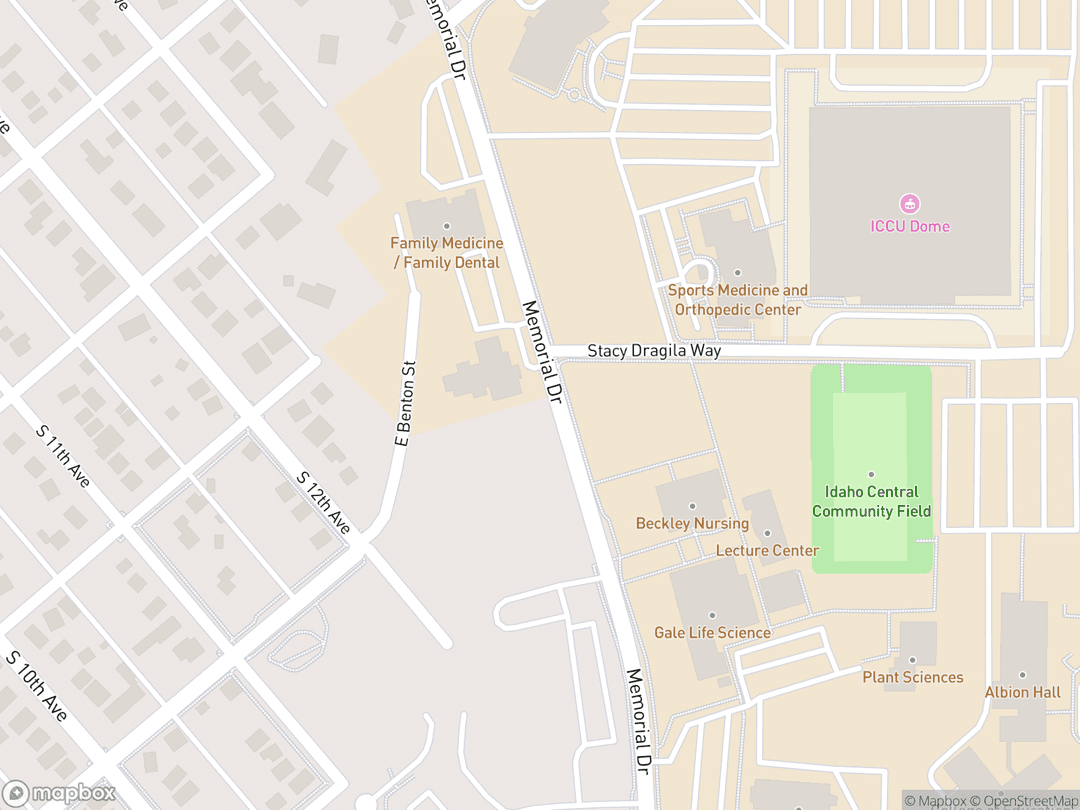
306 N 18th Ave, Pocatello, ID 83201
Hours: Friday evening Shabbat services at 7:30 PM on scheduled dates; special holy days vary.
Getting There: Easily reached via Interstate 15 at Exit 69, approximately 1.5 miles east of Historic Downtown Pocatello.
Get DirectionsTips for Your Visit
Service Etiquette
Modest attire is customary during religious services and formal lifecycle events.
Interfaith Welcome
Guests of all faith traditions are warmly invited to observe worship and join the fellowship hour.
About
Temple Emanuel is the oldest continuously active Jewish congregation in Eastern Idaho, serving as a beacon of Abrahamic faith, scholarship, and community along the Snake River Plain. First organized in 1923, the congregation has sustained sacred traditions across generations of frontier life.
Operating within the rabbinic framework of the synagogue as a house of prayer, study, and holy assembly, Temple Emanuel blends traditions to embrace all backgrounds. Its mid-century sanctuary provides a warm spiritual home for Jewish families and welcomes respectful interfaith engagement.
Gallery
Symbolic Elements
The temple's exterior features intricate carvings, each rich with spiritual meaning:

Aron Kodesh
The holy wooden ark stands against the eastern wall to house sacred hand-written Torah scrolls.
Ner Tamid
The perpetual lamp hangs before the ark to represent God's eternal presence and the ancient Temple menorah.

Luchot HaBrit
Stone tablets depicting the Ten Commandments recall the divine covenant established at Mount Sinai.

Magen David
The six-pointed star serves as a universal emblem of Jewish identity and communal solidarity.

Bimah Platform
The elevated platform provides an accessible focal point for scripture reading and congregational prayer.

Parochet
An ornamental velvet curtain hangs before the ark doors, recalling the sanctuary veil of antiquity.
Sanctuary Menorah
The multi-branched candelabrum recalls the golden lampstand described in the biblical sanctuary.
Interesting Facts
Congregants historically nicknamed their cooperative worship 'Conformoxaho' to reflect unity across traditions. (Tier B)
Architectural historian David Fisher designed the 1961 synagogue pro bono for his fellow congregants. (Tier B)
Local builder Clarence Elle agreed to construct the building at a fair price without demanding a rigid initial estimate. (Tier B)
Temple Emanuel is the oldest continuously operating Jewish congregation anywhere in Eastern Idaho. (Tier A)
Scientists working at the Idaho National Laboratory significantly expanded membership during the 1950s. (Tier B)
Lay leaders guided religious rituals and lifecycle ceremonies across multiple decades without a resident rabbi. (Tier A)
Rabbi Sara Goodman was installed in 2023 as the first resident female rabbi in the congregation's history. (Tier A)
A dedicated section of Pocatello's Mountain View Cemetery historically reflects the community's inclusive character. (Tier B)
Common Questions
Which Jewish movement does Temple Emanuel align with?
The congregation operates independently with an egalitarian, welcoming ethos affiliated with the Union for Reform Judaism.
Are non-Jewish visitors permitted to attend services?
Visitors of all religious backgrounds are welcome to attend open services and educational presentations.
How old is the current synagogue building?
The present synagogue was constructed in 1961 and dedicated on September 10, 1961.
Is parking available on site?
Paved on-site parking is available directly adjacent to the synagogue building.
Featured Stories
The Frontier Spirit of Conformoxaho
1963
Faced with isolation from major urban centers, congregants forged a unified worship style blending Orthodox, Conservative, and Reform elements. Coined by librarian Eli Oboler, the pragmatic tradition ensured every Jewish pioneer found an authentic spiritual home under one roof.
Source: Congregation Archives
Building on Faith with Clarence Elle
1960
When drafting plans for their permanent home on North 18th Avenue, the building committee turned to local contractor Clarence Elle. Elle committed to erecting the entire sacred building within the congregation's modest means, completing the project in time for the 1961 High Holy Days.
Source: Idaho State Historical Records
A Century of Resilience in the Gate City
May 13, 2023
In May 2023, descendants of early railway merchants joined university professors and regional civic leaders to celebrate the congregation's centennial. The milestone honored one hundred continuous years of Torah study, mutual charity, and steadfast community perseverance.
Source: Temple Emanuel Centennial Commemoration
Timeline
Pioneer Settlers
Jewish settlers arrive in Southeast Idaho along the expanding Oregon Short Line Railroad.
MilestoneFirst Holy Day Services
Pocatello merchants host early High Holy Day services in private family residences.
EventB'nai B'rith Charter
Regional Jewish families unite to charter B'nai B'rith Lodge #970.
MilestoneFormal Incorporation
The congregation officially incorporates under the name Temple Emanuel.
MilestoneFirst Physical Home
The congregation acquires a former church building at Arthur Avenue and Custer Street.
MilestoneRegional Expansion
Atomic scientists from Idaho Falls join the congregation, expanding its communal scope.
EventGroundbreaking Design
University architectural historian David Fisher drafts plans for a dedicated modern synagogue.
component.timeline.groundbreakingSanctuary Consecration
The custom-designed synagogue at 306 North 18th Avenue is dedicated for High Holy Day services.
DedicationEgalitarian Reform
The congregation updates its operational charter to ensure complete ritual gender equality.
EventCentennial Celebration
Temple Emanuel marks one hundred years of continuous congregational life in Southeast Idaho.
MilestoneRabbinic Installation
Rabbi Sara Goodman is installed as the congregation's first settled female resident rabbi.
EventHistory by Decade
1920s — Formal Chartering
Jewish merchants and railroad families from across Southeast Idaho gathered in 1923 to charter B'nai B'rith Lodge #970. In 1924, the community incorporated Temple Emanuel, establishing formal governance and communal life under lay leadership.
1930s–1940s — Wartime and First Home
During the Great Depression and World War II, dedicated lay leaders conducted services in rented halls and welcomed Jewish service members. In 1946, the congregation purchased a former church building on Arthur Avenue as its first permanent sanctuary.
1950s — Nuclear Energy Growth
The development of the National Reactor Testing Station in the Snake River Plain brought Jewish scientists and engineers to Eastern Idaho. This influx bolstered congregational ranks and generated momentum to build a modern, purpose-built synagogue.
1960s — Modern Sanctuary Construction
Designed by university professor David Fisher, the North 18th Avenue synagogue was completed by contractor Clarence Elle in 1961. The building provided modern classrooms, a dedicated social hall, and an inspiring sanctuary consecrated for autumn Holy Days.
1970s–1990s — Lay Dedication and Inclusion
Sustained by committed volunteers like Nate Block, the congregation maintained weekly services and educational classes without a permanent rabbi. In 1995, the synagogue amended its foundational policies to adopt full egalitarian ritual participation.
2000s–Present — Centennial and New Horizons
Temple Emanuel expanded adult education, interfaith alliances, and technological connections across rural Idaho. In 2023, the congregation celebrated its centennial anniversary and welcomed Rabbi Sara Goodman as its first settled female resident rabbi.
Architecture & Facilities
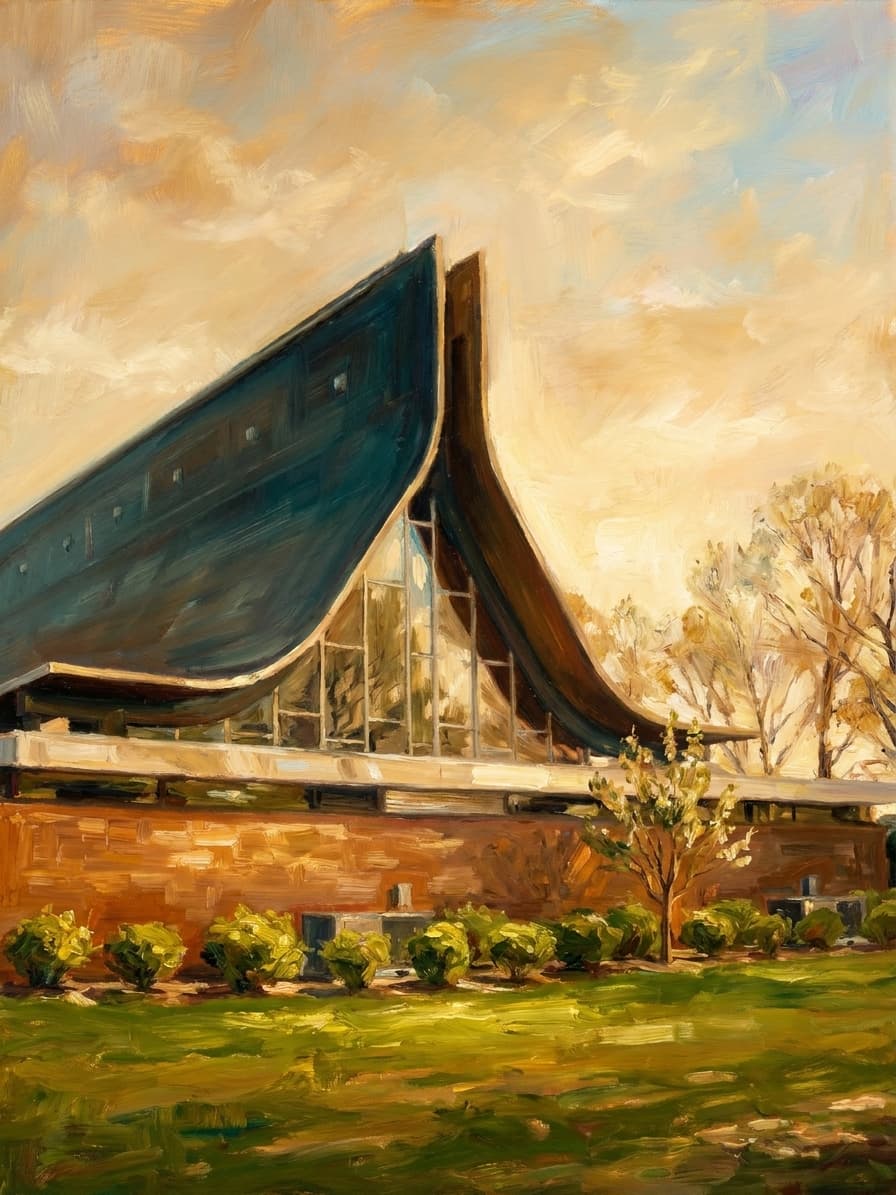
The building represents Mid-Century Modern Ecclesiastical design tailored to Eastern Idaho, featuring clean geometric massing, warm brick masonry, and generous natural illumination.
Building Materials
Painted Brick Veneer
Light-toned exterior brick provides durable weather protection against regional winters.
Structural Stucco
Smooth finished panels accent the window bands and lower exterior elevations.
Interior Timber
Warm Douglas fir accents provide acoustic resonance and visual warmth across the ceiling.
Ribbon Glazing
Clerestory glass panels channel diffused natural daylight into the prayer space.
Interior Features
Main Sanctuary
The primary worship hall is oriented east with flexible seating for prayer and study.
The Bimah
A raised wooden platform anchors the reading desk and sacred ceremonial appointments.
Aron Kodesh Cabinet
A custom wood ark holds the holy Torah scrolls behind an embroidered ceremonial curtain.
Social Hall
A multipurpose gathering space accommodates communal fellowship meals and holiday seders.
Temple Grounds
The 0.31-acre parcel features manicured perimeter lawns, hardy evergreens, low-maintenance shrubs, and paved on-site vehicle parking.
Additional Facilities
Classroom wings provide dedicated space for youth religious instruction, adult Hebrew literacy classes, and administrative meetings.
Religious Significance
Temple Emanuel embodies the sacred tradition of the synagogue as a threefold institution: a house of prayer, a house of study, and a house of assembly. As an Abrahamic sanctuary, it grounds the community in covenantal fidelity and the timeless teachings of divine scripture.
To preserve sacred Jewish worship, promote Torah scholarship, and provide a welcoming communal home for the Jewish people of Southeast Idaho.
Sacred Ordinances
Shabbat Services
Communal Sabbath worship marked by psalmody, liturgical prayers, and Torah readings.
Torah Reading
The public chanting of the sacred biblical scroll from the bimah lectern.
High Holy Day Observance
Solemn prayer and spiritual renewal during Rosh Hashanah and Yom Kippur.
Lifecycle Ceremonies
Egalitarian celebrations marking births, b'nei mitzvah, marriages, and memorial tributes.
The Frontier Minyan
In rabbinic theology, a quorum of ten adults constitutes a full sanctuary of prayer anywhere in the world. Temple Emanuel exemplifies this principle, sustaining authentic covenantal life hundreds of miles from metropolitan centers.
Similar Temples
Sources & Research
Every fact on Temples.org is backed by verified Sources & Research. Each piece of information is rated by source tier and confidence level.
View All Sources (8)
| Field | Source | Tier | Retrieved |
|---|---|---|---|
| About & Historical Background | Union for Reform Judaism (opens in a new tab) | A | 2026-03-30 |
| About & Historical Background | Temple Emanuel (opens in a new tab) | A | 2026-03-30 |
| Historical Timeline | B'nai B'rith International (opens in a new tab) | A | 2026-03-30 |
| Historical Timeline | Idaho State Historical Society (opens in a new tab) | B | 2026-03-30 |
| Architecture & Facilities | Idaho State University (opens in a new tab) | B | 2026-03-30 |
| Religious Significance & Practices | Union for Reform Judaism (opens in a new tab) | A | 2026-03-30 |
| Centennial Milestones & Community | East Idaho News (opens in a new tab) | C | 2026-03-30 |
| Civic History & Regional Records | City of Pocatello (opens in a new tab) | B | 2026-03-30 |