Visitor Insights
Visiting Wilshire Boulevard Temple
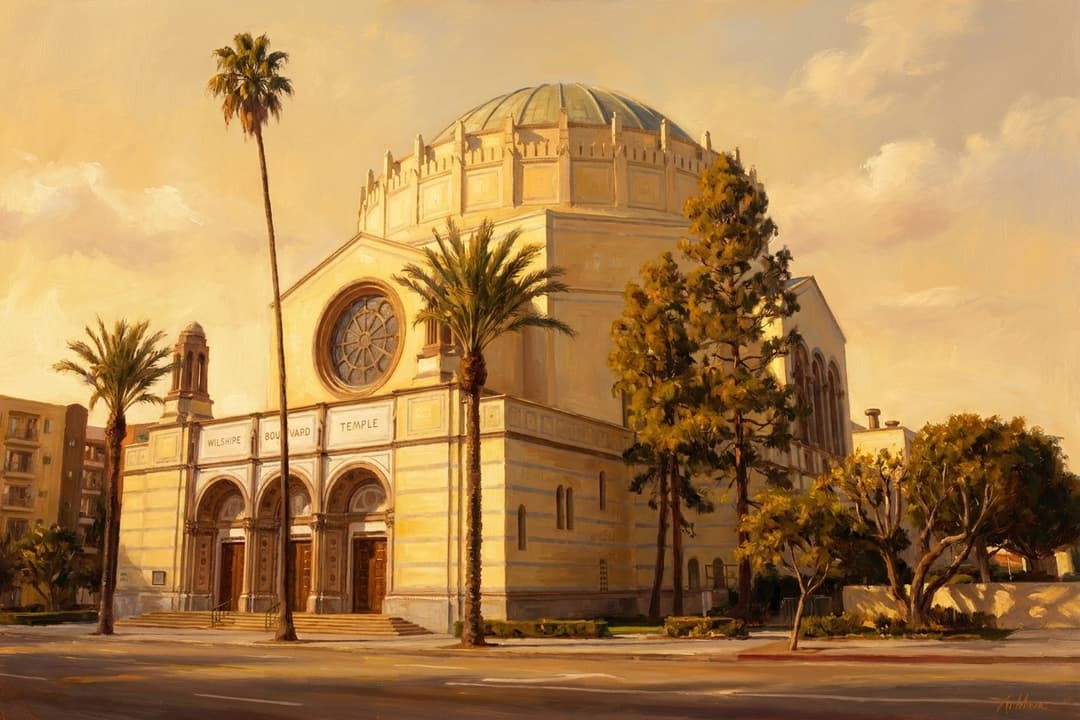
Visitors experience a breathtaking synthesis of Byzantine majesty, dramatic narrative art, and contemporary architecture on a bustling urban block. The historic 1929 sanctuary features awe-inspiring acoustic design, vibrant historic murals, and an intimate spiritual atmosphere. The adjacent Audrey Irmas Pavilion provides a striking modern contrast celebrating civic gathering and creative community life.
Highlights
- The 320-foot continuous Warner Memorial Murals painted by silent film director Hugo Ballin
- A 100-foot-high coffered Byzantine dome featuring a radiant central oculus and gold-leaf details
- Monumental pierced-bronze chandeliers styled after traditional Havdalah spice containers
- The dramatic trapezoidal architecture of the contemporary Audrey Irmas Pavilion
Things to Know
- Security checkpoints and government-issued photo ID are required for all visitors
- Drop-in sightseeing is restricted; interior access is limited to scheduled worship, events, and booked docent tours
- Photography is prohibited inside the sanctuary during Shabbat and High Holy Day worship services
- Visitors are asked to dress respectfully in business casual attire when entering the sacred space
Location
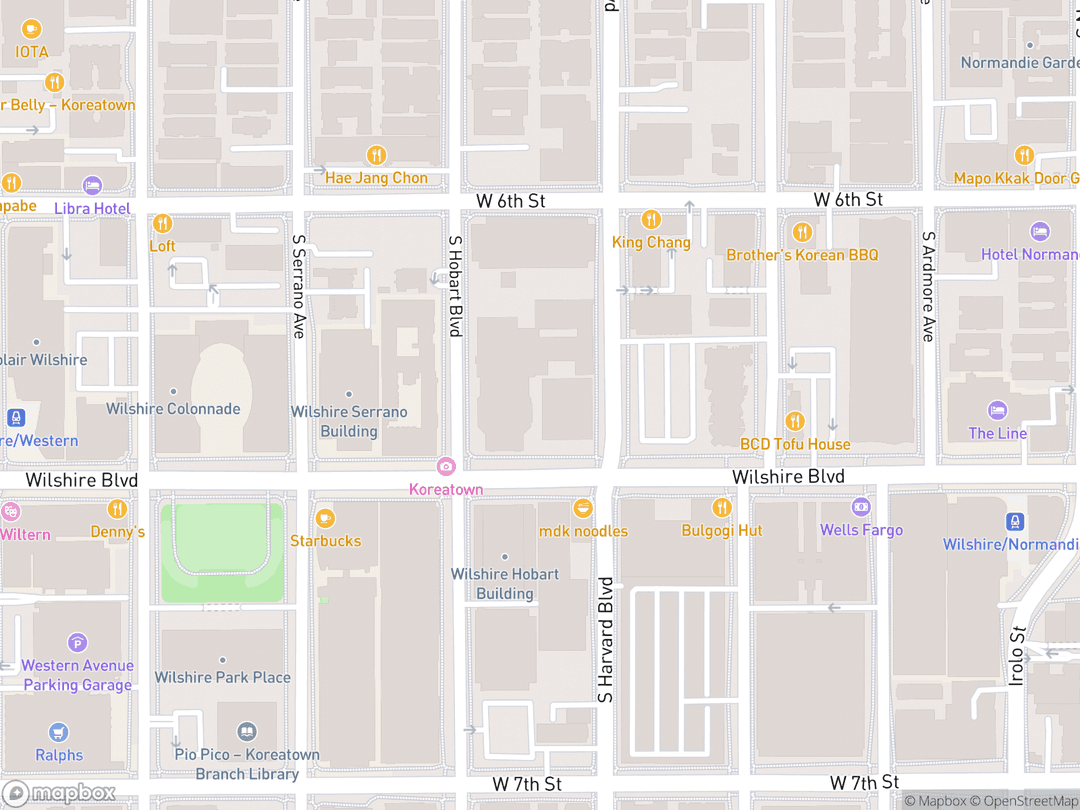
3663 Wilshire Boulevard, Los Angeles, California 90010
Hours: Friday Shabbat services at 6:00 PM; Saturday Torah study at 9:00 AM; guided docent tours by advance appointment
Getting There: Accessible via the Metro D Line at Wilshire/Normandie or Wilshire/Western stations, with Metro bus routes 20 and 720 stopping adjacent to the campus
Get DirectionsTips for Your Visit
Arrive for Afternoon Light
Visit during late afternoon when sunlight streams through the west stained-glass windows to illuminate the dome coffers.
Schedule an Architectural Tour
Book an official docent walking tour to gain close-up access to the intricate historic murals and architectural archives.
Review Security Guidelines
Allow extra arrival time to clear security screening at the campus perimeter gates before services or public lectures.
About
Wilshire Boulevard Temple stands as the historic spiritual home of Congregation B'nai B'rith, founded in 1862 as the first Jewish congregation in Southern California. Grounded in the Abrahamic covenant and ethical monotheism, the congregation represents a landmark evolution in American Reform Judaism, emphasizing prophetic ethics, universal brotherhood, and active civic engagement.
Dedicated in 1929 along Los Angeles' historic Wilshire corridor, the monumental sanctuary fuses Eastern Mediterranean Byzantine architecture with theatrical Romanesque grandeur. Conceived by Rabbi Edgar F. Magnin and prominent Hollywood studio pioneers, the campus reflects an enduring commitment to Jewish heritage and urban community service in the heart of modern Los Angeles.
Gallery
Symbolic Elements
The temple's exterior features intricate carvings, each rich with spiritual meaning:

Aron Kodesh
The sacred Ark housing hand-scribed parchment Torah scrolls represents the ancient Holy of Holies.

Ner Tamid
The eternal hanging sanctuary lamp signifies God's unending covenant and perpetual presence.

Luchot HaBrit
Gilded tablets above the Ark portray the Ten Commandments inscribed in ancient Paleo-Hebrew script.

Spice-Box Chandeliers
Pierced-bronze octagonal lanterns evoke traditional silver Havdalah spice containers marking the end of Shabbat.

The Gilded Oculus
A circular sky-window rimmed in gold leaf and Hebrew script symbolizes the infinite heavens above.

Warner Memorial Murals
Continuous painted narrative friezes celebrate the survival and moral pilgrimage of the Jewish people.

Oliver Smith Stained Glass
Towering triple-lancet stained glass windows diffuse jewel-toned biblical scenes throughout the sanctuary.

Modernist Doorpost Mezuzot
Custom-cast angular metal mezuzot fulfill the commandment to sanctify the entrance doorposts of the home.
Interesting Facts
The sanctuary layout intentionally omits a center aisle, using side aisles to prevent latecomers from disrupting services (Tier A).
Pioneering film moguls Jack, Harry, and Albert Warner personally funded the temple's 320-foot historic perimeter murals (Tier A).
Hugo Ballin painted the entire 320-foot narrative mural cycle inside Warner Bros. soundstages before it was installed (Tier B).
The sanctuary was dedicated in June 1929, just four months before the catastrophic Wall Street stock market crash (Tier A).
Lead architect Abram M. Edelman was the son of Rabbi Abraham Wolf Edelman, the congregation's original 1862 spiritual leader (Tier A).
A rare 1929 four-manual Kimball pipe organ houses 4,100 pipes concealed entirely behind gilded architectural screens (Tier B).
The adjacent Audrey Irmas Pavilion represents architecture firm OMA's first-ever commission for a religious institution (Tier B).
The on-site Karsh Family Social Service Center provides free medical, dental, and legal care to local Koreatown neighbors (Tier A).
Common Questions
Can non-members visit the historic sanctuary?
Yes, visitors can attend public Friday evening services or reserve spots on scheduled architectural docent tours.
Why is Wilshire Boulevard Temple called the 'Temple of the Stars'?
Early Hollywood studio moguls and cinema pioneers helped finance, design, and champion the grand 1929 sanctuary.
Are human figures permitted in Jewish sacred art?
While traditional synagogues avoid figurative human art, Reform leaders permitted the educational murals as a celebration of Jewish history.
What services does the Karsh Center provide to the neighborhood?
The non-denominational center offers free dental, vision, mental health, and legal services to the local Koreatown community.
Featured Stories
Hollywood Pioneers Build a Sanctuary
June 7, 1929
When Rabbi Edgar F. Magnin set out to erect a world-class synagogue, Los Angeles' nascent motion picture industry rallied to his call. The Warner brothers funded the extensive perimeter murals, Louis B. Mayer donated the stained-glass lancets, and Sid Grauman provided the black Belgian marble columns. This cinematic collaboration transformed the temple into a cultural bridge linking ancient biblical storytelling with 20th-century artistic ambition.
Source: Historical Archives of Wilshire Boulevard Temple
Breaking the Mold with Hugo Ballin's Murals
1929
Hugo Ballin's 320-foot mural cycle created intense theological debate due to traditional rabbinic prohibitions against human figurative depictions in prayer spaces. Rabbi Magnin vigorously defended the artwork, insisting that modern Jews were not in danger of idolatry and needed inspiring visual representations of their historical resilience. Ballin painted the vast canvasses inside Warner Bros. soundstages before mounting them directly onto the sanctuary's acoustic plaster.
Source: Los Angeles Conservancy Architectural Records
Anchor in Koreatown: Refusal to Flee
1970s
As demographic shifts transformed the Wilshire corridor into vibrant Koreatown during the 1970s, many religious bodies sold their properties and moved west. Rabbi Magnin and temple trustees firmly rejected relocation, committing to serve their historic neighborhood across cultural boundaries. Decades later, that determination culminated in the on-site Karsh Center, which provides non-denominational healthcare, legal, and food assistance to local immigrant families.
Source: Union for Reform Judaism Profiles
Timeline
Congregation B'nai B'rith Founded
Lay leader Joseph Newmark charters Southern California's first Jewish congregation in historic downtown Los Angeles.
MilestoneFirst Fort Street Synagogue
The congregation completes its first permanent brick house of worship on Fort Street in downtown Los Angeles.
DedicationNinth and Hope Cornerstone Laid
Architect Abram M. Edelman oversees construction of the community's second synagogue building at Ninth and Hope Streets.
MilestoneRabbi Edgar F. Magnin Arrives
Charismatic leader Edgar F. Magnin assumes rabbinic leadership and begins transforming the congregation into a major civic institution.
MilestoneWilshire Boulevard Property Purchased
The congregation secures land along the emerging Wilshire corridor to establish an expansive regional center.
MilestoneWilshire Cornerstone Laid
Civic and religious leaders gather to lay the cornerstone for the grand Byzantine-style sanctuary on Wilshire Boulevard.
component.timeline.groundbreakingSanctuary Dedicated
A three-day communal dedication celebration opens the majestic new sanctuary four months before the Wall Street crash.
DedicationAdoption of Wilshire Boulevard Temple Name
The congregation formally embraces its iconic boulevard name to reflect its civic prominence and regional identity.
MilestoneDesignated Historic-Cultural Monument
The City of Los Angeles officially designates the landmark sanctuary as Historic-Cultural Monument No. 116.
MilestoneNational Register of Historic Places Listing
The sanctuary is formally listed on the National Register of Historic Places for its unique architectural and cultural significance.
MilestoneComprehensive Sanctuary Restoration Reopens
Architect Brenda Levin completes an exhaustive seismic retrofit and meticulous artistic restoration of the 1929 sanctuary.
RenovationAudrey Irmas Pavilion Opened
The OMA-designed cultural pavilion opens adjacent to the historic temple to foster civic dialogue and intergenerational programming.
DedicationHistory by Decade
1850s–1860s — Pioneer Foundations
We organized as brothers of the covenant to keep the faith of our fathers alive on the Pacific frontier.
Following the establishment of the Hebrew Benevolent Society in 1854, thirty Jewish pioneers in Gold Rush Los Angeles established Congregation B'nai B'rith in 1862. Led by lay rabbi Joseph Newmark and ordained rabbi Abraham Wolf Edelman, the small community met in rented downtown halls to observe traditional rites. They laid the moral and institutional groundwork for Jewish religious life across Southern California.
1870s–1890s — Growth and Reform Transition
In 1873, the congregation erected its first modest brick Gothic Revival synagogue on Fort Street in downtown Los Angeles. By 1896, rapid communal growth prompted the construction of a larger Victorian and Moorish-inspired synagogue at Ninth and Hope Streets, designed by Abram M. Edelman. During this transitional era, the congregation progressively embraced American Reform Judaism, introducing choir music, organ accompaniment, and English readings into worship.
1910s–1920s — Rabbi Magnin and the Wilshire Vision
A house of God must speak with majesty, uplifting the human spirit through beauty and truth.
The arrival of Rabbi Edgar F. Magnin in 1915 galvanized the congregation with an ambitious civic mission. Anticipating the city's westward suburban expansion, Magnin spearheaded the purchase of property on Wilshire Boulevard in 1921. Supported by Hollywood studio founders, the congregation dedicated its monumental $1.5 million Byzantine sanctuary in June 1929, completing construction just months before the onset of the Great Depression.
1930s–1950s — National Influence and Wartime Relief
Adopting the name Wilshire Boulevard Temple in 1933, the institution mobilized extensive relief and spiritual assistance throughout the Great Depression and World War II. Rabbi Magnin became a prominent national voice against fascism and an energetic pioneer in interfaith dialogue across Los Angeles. Following the war, the congregation expanded into youth education and founded pioneer summer camps to nurture future generations.
1970s–1980s — Urban Commitment in a Changing City
As the surrounding neighborhood evolved into modern Koreatown and neighboring institutions relocated west, temple leadership faced intense pressure to sell the property. Rabbi Magnin adamantly refused to abandon the historic urban core, reaffirming the temple's responsibility to remain an active urban sanctuary. Following Magnin's death in 1984, the congregation preserved its historic headquarters while later inaugurating a companion Westside campus in 1998.
2000s–2010s — The Sanctuary Renaissance
Under the leadership of Senior Rabbi Steven Z. Leder, the congregation launched a $150 million campus revitalization master plan rather than departing Mid-City. In 2011, the historic sanctuary closed for a two-year, $47.5 million seismic overhaul and delicate conservation effort led by architect Brenda Levin. The restored sanctuary reopened in September 2013, returning the original brilliance to Hugo Ballin's murals and the 100-foot coffered dome.
2020s — Civic Expansion and Future Horizons
In January 2022, the congregation inaugurated the 55,000-square-foot Audrey Irmas Pavilion, designed by Rem Koolhaas and Shohei Shigematsu of OMA. The bold contemporary structure houses gathering spaces, creative aging facilities, and cultural venues that serve the diverse Koreatown community. Today, the Erika J. Glazer Family Campus exemplifies a vibrant fusion of timeless sacred tradition, artistic preservation, and inclusive social responsibility.
Architecture & Facilities
Wilshire Boulevard Temple represents one of the nation's foremost examples of Byzantine Revival synagogue architecture, enriched with Romanesque massing, Moorish motifs, and Art Deco details. Architect Abram M. Edelman departed from prevailing Western European Gothic norms to forge an Eastern Mediterranean identity that evokes ancient Near Eastern roots while matching the dramatic glamour of 1920s cinema palaces.
Building Materials
Exterior Indiana Limestone
Carved Indiana limestone and ornamental cast stone form the monumental triple-arched south entrance portal.
Belgian Black Marble
Polished black Belgian marble columns frame the Holy Ark to establish dramatic contrast against the carved walnut bimah.
Acoustic Plaster and Gold Leaf
Hundreds of stepped hexagonal and octagonal ceiling coffers are finished in pigmented acoustic plaster and rich gold leaf.
Glass Fiber Reinforced Concrete (Pavilion)
Over 1,200 interlocking hexagonal concrete panels clad the neighboring Audrey Irmas Pavilion in modern parametric geometry.
Interior Features
Edgar F. Magnin Sanctuary
The vast theatrical auditorium accommodates approximately 1,700 worshippers beneath a soaring 100-foot domed ceiling.
The Holy Ark (Aron Kodesh)
The bimah focal point features hand-carved Italian walnut, gilded cresting, and bronze doors housing the sacred Torah scrolls.
The Warner Memorial Murals
A continuous 320-foot-long narrative painted canvas encircles the entire sanctuary perimeter to depict Jewish history.
The Central Oculus
A gilded circular opening at the apex of the dome symbolizes divine revelation connecting heaven and the assembly.
Temple Grounds
The full-block Erika J. Glazer Family Campus integrates landscaped pedestrian plazas, protected courtyards, and rooftop terraces linking the historic 1929 sanctuary with contemporary educational and social service facilities.
Additional Facilities
The campus houses the Karsh Family Social Service Center providing free medical and social aid, the Brawerman Elementary School, the Erika J. Glazer Early Childhood Center, and the Wallis Annenberg GenSpace.
Religious Significance
As a premier sanctuary of American Reform Judaism, Wilshire Boulevard Temple is consecrated to ethical monotheism, covenantal fidelity to God, and the sacred teachings of the Hebrew Scriptures. In the shared Abrahamic tradition, the synagogue functions as a sacred house of gathering (Beit Knesset), house of study (Beit Midrash), and house of prayer (Beit Tefilah). The temple interprets Jewish covenantal duty through prophetic ethics and the commandment of Tikkun Olam—repairing a fractured world through acts of justice, compassion, and civic solidarity.
To provide an inclusive sanctuary for prayer, lifelong Torah study, and meaningful social action that nurtures Jewish identity while blessing the broader urban community.
Sacred Ordinances
Shabbat Worship
Weekly communal prayers, psalms, and choral celebrations welcoming the Sabbath with contemplation and spiritual peace.
Torah Reading (Kriat HaTorah)
The ritual chanting of sacred biblical portions from parchment scrolls from the bimah before the assembled congregation.
High Holy Days (Yamim Noraim)
Sacred services of reflection, repentance, and renewal marking Rosh Hashanah and the Day of Atonement, Yom Kippur.
Bar and Bat Mitzvah
Rites of passage welcoming young people into full religious adulthood through Torah reading and moral commitment.
Tikkun Olam Outreach
Fulfilling divine covenant through volunteer feeding programs, healthcare services, and multi-faith advocacy.
The Sanctuary as Theatrical House of God
Departing from Orthodox synagogue floor plans centered around a central bimah, the temple embraced an auditorium layout with two side aisles and unobstructed sightlines. This design reflects early American Reform liturgical philosophy: elevating clear sermon delivery, inspiring congregational unison, and creating an inclusive family worship space.
Universalism and Jewish Continuity
Hugo Ballin's murals conclude not with visions of messianic return to the Middle East, but with Jewish arrivals in early America and Abraham Lincoln's emancipation ideals. This visual journey embodies the Reform conviction that human redemption unfolds wherever freedom, moral righteousness, and human dignity are established.
Sources & Research
Every fact on Temples.org is backed by verified Sources & Research. Each piece of information is rated by source tier and confidence level.
View All Sources (8)
| Field | Source | Tier | Retrieved |
|---|---|---|---|
| About & Historical Background | Wilshire Boulevard Temple (opens in a new tab) | A | 2026-03-31 |
| Religious Significance & Reform Traditions | Union for Reform Judaism (opens in a new tab) | A | 2026-03-31 |
| Historic Landmark Nomination Records | National Park Service National Register of Historic Places (opens in a new tab) | A | 2026-03-31 |
| Historic-Cultural Monument Registry | Los Angeles Department of City Planning (opens in a new tab) | A | 2026-03-31 |
| Community Outreach & Social Services | Karsh Family Social Service Center (opens in a new tab) | A | 2026-03-31 |
| Architecture & Sanctuary Design | Los Angeles Conservancy (opens in a new tab) | B | 2026-03-31 |
| Audrey Irmas Pavilion Expansion | Office for Metropolitan Architecture (OMA) (opens in a new tab) | B | 2026-03-31 |
| Restoration & Historic Preservation | Levin & Associates Architects (opens in a new tab) | B | 2026-03-31 |