Visitor Insights
Visiting Sinai Temple
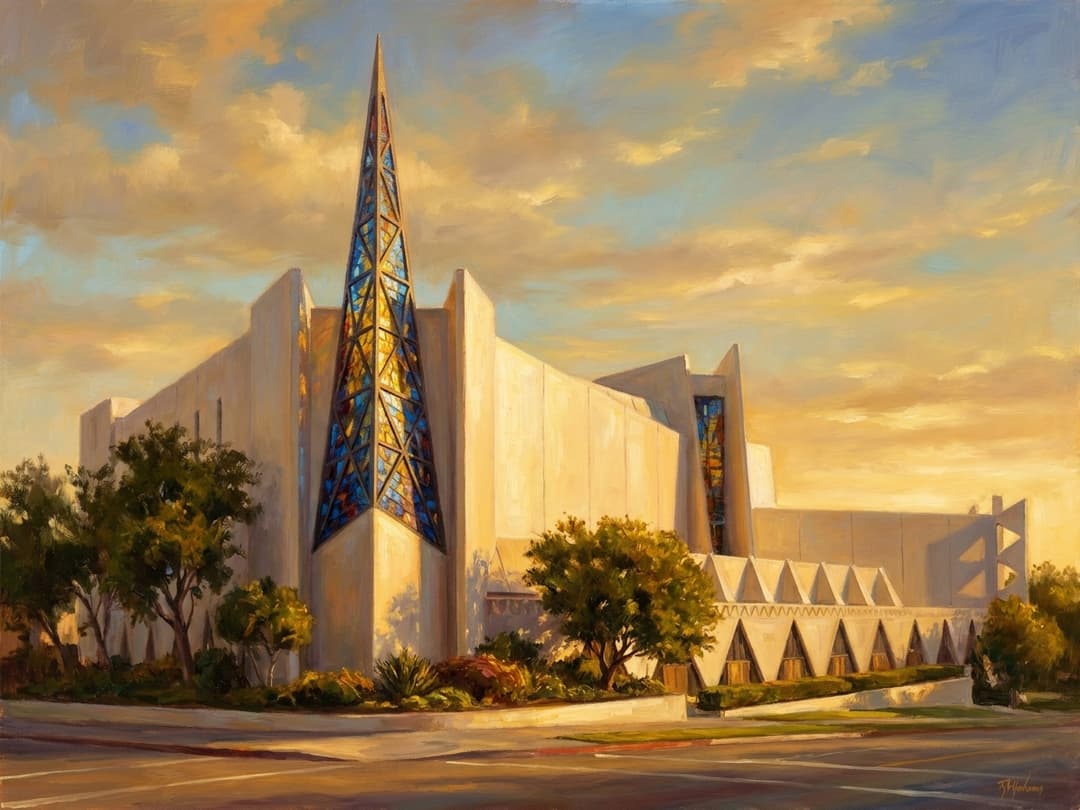
Sinai Temple welcomes congregants and guests to daily services, Shabbat worship, and educational programs on Wilshire Boulevard. Visitors experience vibrant traditional liturgy combined with inspiring mid-century modern architecture in Westwood.
Highlights
- Expressive folded concrete façade with 13 geometric pyramids along Wilshire Boulevard
- Biblical courtyard garden featuring botanical species referenced in the Hebrew Bible
- Monumental sanctuary providing column-free views toward the Holy Ark
Things to Know
- Visitors must present valid photo identification and pass security checkpoints upon entry
- Modest attire is customary during religious services and prayer gatherings
Location
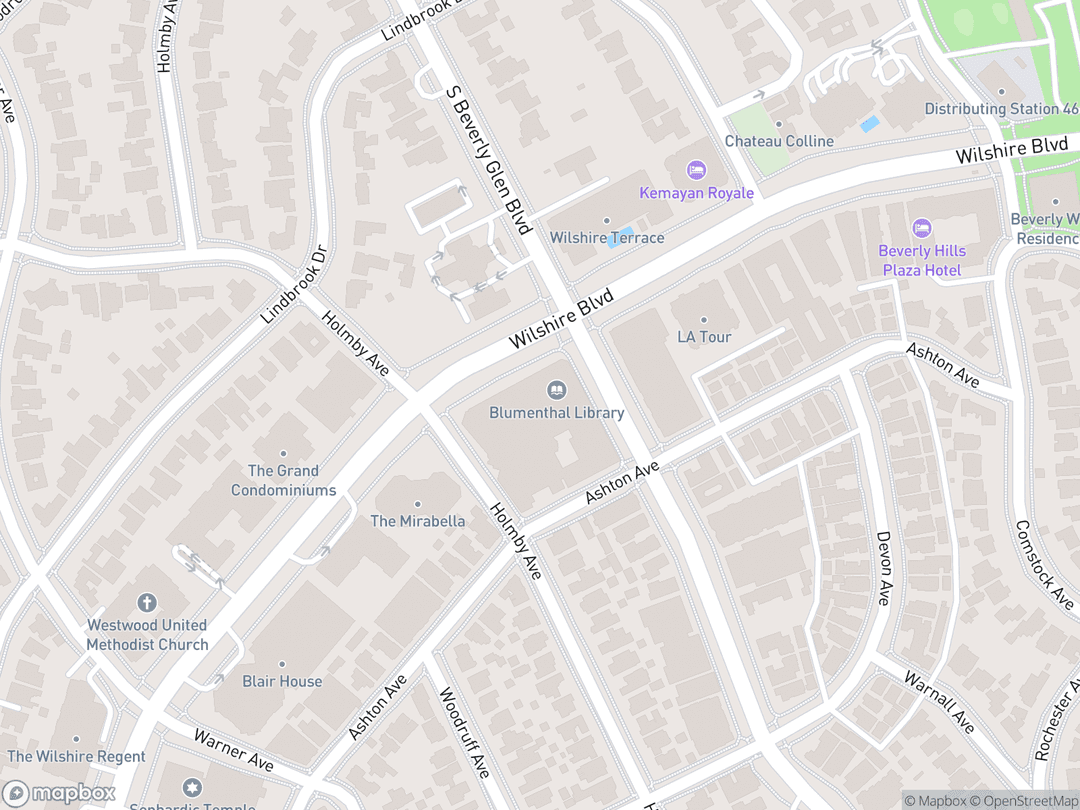
10400 Wilshire Boulevard, Los Angeles, CA 90024
Hours: Administrative offices open Monday–Thursday 8:30 AM–5:00 PM and Friday 8:30 AM–3:00 PM; daily minyan and Shabbat service schedules vary.
Getting There: Located at Wilshire Boulevard and Beverly Glen Boulevard in Westwood, accessible via I-405 or I-10, with subterranean parking entered from Warner Avenue or Beverly Glen Boulevard.
Get DirectionsTips for Your Visit
Shabbat Services
Main Saturday morning Shabbat services begin at 9:00 AM in the sanctuary.
Architectural Tours
Architectural and educational group visits should be arranged in advance with temple administration.
About
Sinai Temple stands as a premier center of Jewish spiritual, educational, and cultural life in West Los Angeles. Founded in 1906 as the first Conservative Jewish congregation in Southern California, the synagogue anchors the Abrahamic covenantal tradition through its commitment to sacred scripture, prayer, and communal assembly (Beit Knesset, Beit Midrash, and Beit Tefillah).
The current sanctuary on Wilshire Boulevard, commissioned in 1956 and completed in 1960 by architect Sidney Eisenshtat, is a landmark of Mid-Century Expressionist architecture. Synthesizing modern concrete engineering with profound biblical symbolism, the temple expresses Conservative Judaism's balance between traditional Jewish law (Halakha) and modern historicism.
Gallery
Symbolic Elements
The temple's exterior features intricate carvings, each rich with spiritual meaning:

Aron Kodesh (Holy Ark)
Houses the sacred Torah scrolls and represents the Holy of Holies of the ancient Jerusalem Temple.
Ner Tamid (Eternal Light)
Suspended above the Ark, this perpetual flame symbolizes God's continuous presence.

Triangular Stained Glass
Geometric stained-glass windows whose triangular forms evoke the Five Books of Moses.
Thirteen Façade Pyramids
Concrete pyramids along Wilshire Boulevard evoke the Thirteen Attributes of Divine Mercy.
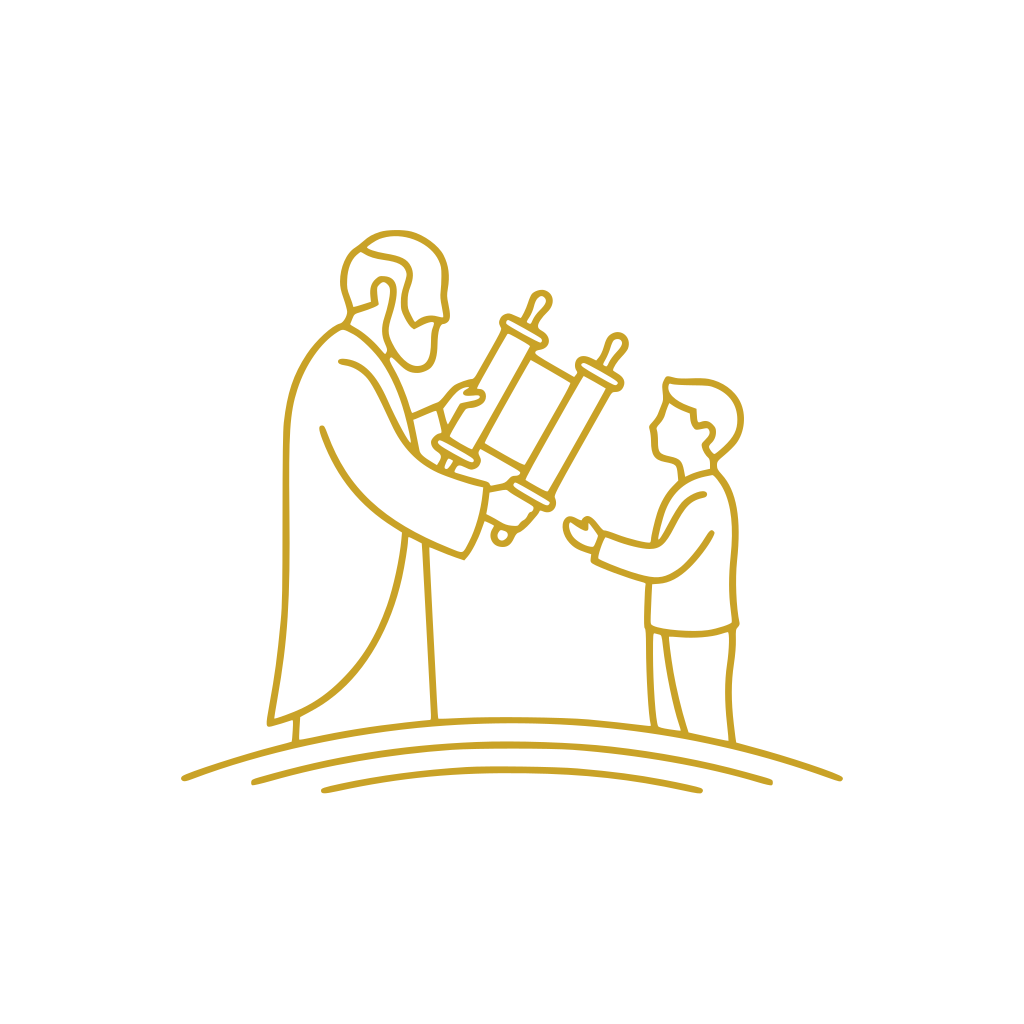
Bronze Torah Figure
An exterior bronze sculpture holding a Torah scroll depicts the transmission of faith through generations.

Biblical Flora
Courtyard plants such as olives, pomegranates, and figs connect the modern site with scriptural land traditions.
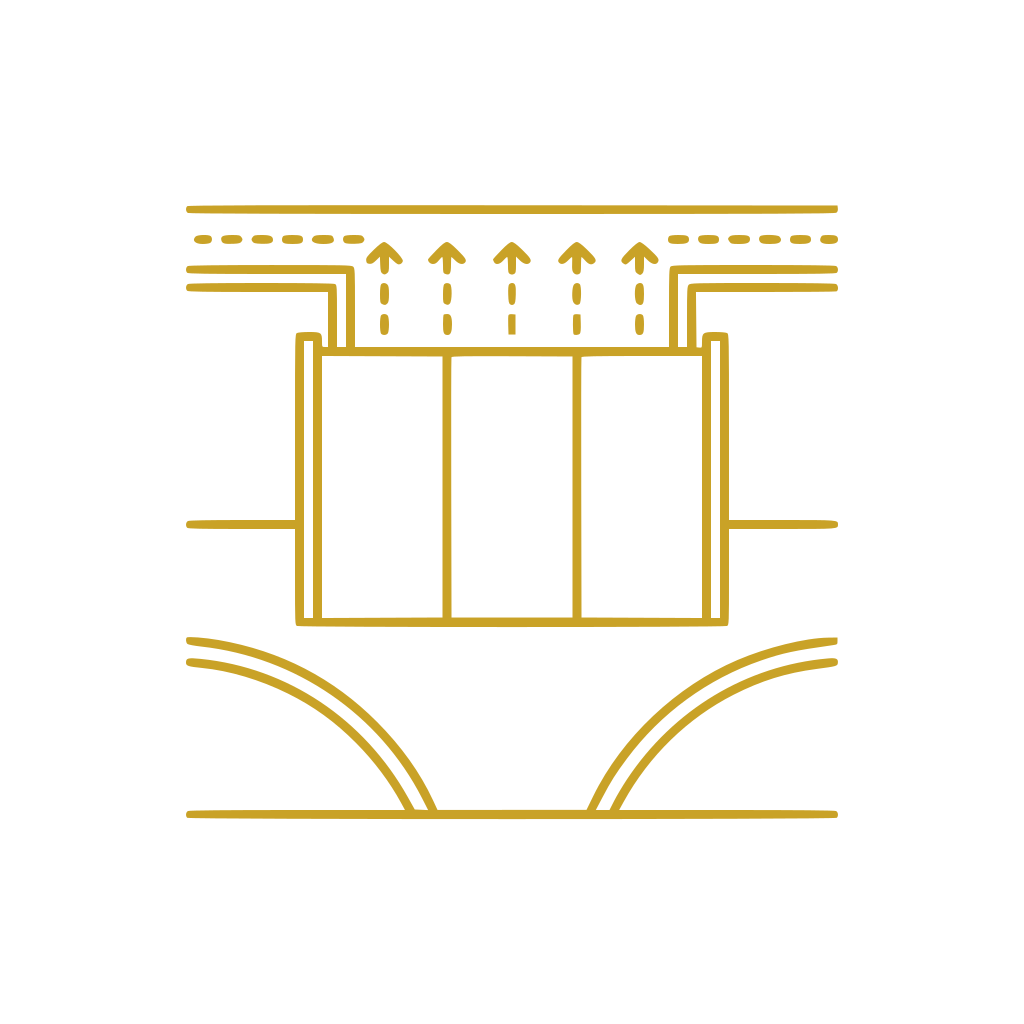
Movable Acoustic Wall
A 32-ton movable barrier lifts into the ceiling to unify sacred spaces for holiday assemblies.
Interesting Facts
A 32-ton movable acoustic wall lifts into the ceiling to expand sanctuary seating for over 1,600 people during High Holy Days. (Tier A)
Founded in 1906, Sinai Temple is the oldest Conservative Jewish congregation in Southern California. (Tier A)
The congregation's original 1909 sanctuary in downtown Los Angeles is the city's oldest surviving synagogue building. (Tier B)
Architect Sidney Eisenshtat drew inspiration from Frank Lloyd Wright and European Modernism to create column-free interior views. (Tier B)
Following the 1979 revolution in Iran, Sinai Temple became a vital spiritual home for thousands of Persian Jewish immigrants. (Tier A)
The temple sits on Wilshire Boulevard just one mile east of the Los Angeles California Temple of the LDS Church. (Tier B)
The 2,875-square-foot courtyard garden exclusively features botanical species mentioned in the Hebrew Bible. (Tier B)
The 13 concrete pyramids along the Wilshire façade intentionally represent the 13 Attributes of Divine Mercy. (Tier A)
The complex combines 1950s thin-shell structural expressionism with a major 1998 expansion designed by Mehrdad Yazdani. (Tier B)
Common Questions
What tradition does Sinai Temple belong to?
Sinai Temple is affiliated with Conservative Judaism and the United Synagogue of Conservative Judaism.
When was the current Westwood sanctuary built?
Land was acquired in 1956 and the completed sanctuary opened in September 1960.
Are non-members allowed to visit services?
Visitors are welcome to attend services but must present valid photo identification for security screening.
What is unique about the temple's architecture?
The building features 13 concrete pyramids along Wilshire Boulevard, thin-shell structural expressionism, and a 32-ton movable acoustic wall.
Featured Stories
Engineering the 32-Ton Movable Wall
1960
Architect Sidney Eisenshtat solved the challenge of accommodating High Holy Day crowds by designing a massive 64,000-pound movable partition. Suspended on precise counterweight systems, this 120-foot-wide wall lifts silently into the upper ceiling structure. This innovation effortlessly merges the main sanctuary with the adjacent social hall to seat over 1,600 worshippers.
Source: Los Angeles Conservancy Archives
Welcoming the Persian Jewish Diaspora
1979
Following the political upheaval of the 1979 Iranian Revolution, thousands of Iranian Jews settled in West Los Angeles seeking religious freedom. Sinai Temple opened its doors, integrating Persian families into its spiritual and educational life. This welcoming embrace transformed the congregation into a thriving multicultural home synthesizing Ashkenazic and Mizrahi customs.
Source: Sinai Temple Historical Records
The Legacy of the 1909 Pico-Union Synagogue
1909
Sinai Temple's original sanctuary at 12th and Valencia Streets represents a key chapter in Los Angeles history. Constructed in 1909, it stands today as the oldest surviving synagogue building in the city. Now preserved as the Pico Union Project, the historic structure continues to serve the local neighborhood as an interfaith cultural center.
Source: Los Angeles Historic Resources Survey
Timeline
Congregation Established
Sinai Temple is founded as the first Conservative Jewish congregation in Southern California.
MilestoneFirst Permanent Synagogue
The congregation constructs its original Classical Revival synagogue at 12th and Valencia Streets.
EventMove to Mid-Wilshire
Sinai Temple relocates westward to 4th Street and New Hampshire Avenue to accommodate growth.
MilestoneWestwood Site Acquired
Leadership purchases the Westwood lot and commissions architect Sidney Eisenshtat.
MilestoneSanctuary Dedication
The modern sanctuary opens in time for Selichot and the High Holy Days.
DedicationSinai Akiba Academy Campus
Facilities for Sinai Akiba Academy day school and the Kohn Chapel are completed.
EventPersian Jewish Integration
The temple welcomes thousands of Iranian Jewish families following the Iranian Revolution.
EventCampus Expansion Dedicated
Architect Mehrdad Yazdani completes a major campus expansion and interior overhaul.
RenovationBiblical Garden Created
Elysian Landscapes completes an urban courtyard garden planted with species from the Tanakh.
EventContemporary Leadership Era
The congregation continues to flourish as one of the largest Conservative synagogues in the nation.
EventHistory by Decade
1900s
Founded in 1906, Sinai Temple was Southern California's pioneer Conservative congregation. In 1909, the community built its first permanent synagogue at 12th and Valencia Streets in downtown Los Angeles.
1920s
Responding to population shifts, the congregation relocated westward in 1925 to Mid-Wilshire. Services were initially held in an unfinished shell due to overflowing crowds.
1950s
In 1956, temple leaders acquired land in Westwood at Wilshire and Beverly Glen. Modernist architect Sidney Eisenshtat was selected to design an innovative sanctuary.
1960s
The $3.5 million sanctuary opened in September 1960 for High Holy Day services. In 1969, campus facilities expanded with the addition of the Kohn Chapel and Sinai Akiba Academy.
1970s–1980s
Following the 1979 Iranian Revolution, Sinai Temple became a central spiritual home for Persian Jewish families. The congregation evolved into a vibrant, multicultural community.
1990s
In 1998, architect Mehrdad Yazdani directed a comprehensive $30 million campus expansion. The redesign modernized school facilities, banquet halls, and public spaces.
2000s–Present
A biblical courtyard garden was completed in 2002 along Wilshire Boulevard. Today, Sinai Temple remains a cornerstone of Conservative Jewish life on the West Coast.
Architecture & Facilities
Sinai Temple is a masterwork of Mid-Century Expressionist synagogue architecture designed by Sidney Eisenshtat. The building combines bold thin-shell concrete structural engineering with geometric symbolism, emphasizing monumental horizontal proportions and dramatic natural light over ornamental detail.
Building Materials
Thin-Slab Concrete
Cast thin-slab concrete forms the sweeping shell and sculptural exterior walls.
Faceted Cathedral Glass
Stained cathedral glass framed in structural steel fills the sanctuary with vibrant light.
Smooth Stucco Finish
Exterior masonry surfaces are finished in bright white stucco to reflect daylight.
Structural Steel Frame
Heavy structural steel framing enables wide interior spans without obstructing columns.
Interior Features
Main Sanctuary
A column-free worship space designed to provide clear sightlines to the Holy Ark.
Aron Kodesh Focal Wall
The sacred ark housing the Torah scrolls serves as the spiritual focus of the sanctuary.
Kohn Chapel
An intimate sanctuary space dedicated to daily minyan prayer and quiet contemplation.
Expanded Social Hall
A flexible banquet hall that connects seamlessly with the main sanctuary via the movable wall.
Temple Grounds
The temple grounds feature a 2,875-square-foot urban biblical courtyard garden along Wilshire Boulevard, landscaped with species mentioned in the Hebrew Bible, enclosed by sound-buffering masonry walls.
Additional Facilities
The campus includes Sinai Akiba Academy day school facilities, administrative suites, ceremonial banquet rooms, and subterranean parking structures.
Religious Significance
Rooted in the covenantal theology shared across Abrahamic traditions, Judaism centers sacred life on monotheistic devotion to God, study of Torah, and communal prayer. The synagogue serves three sacred functions: Beit Knesset (House of Assembly), Beit Midrash (House of Study), and Beit Tefillah (House of Prayer).
Sinai Temple fulfills these traditional Jewish roles within Conservative Judaism (Masorti), synthesizing halakhic tradition with contemporary American life.
Sacred Ordinances
Shabbat Worship
Weekly communal prayer and Torah reading observed on Friday evening and Saturday morning.
Daily Minyan
Morning and evening prayer services held daily in the chapel for communal worship and mourning rituals.
High Holy Day Observances
Solemn assemblies for Rosh Hashanah and Yom Kippur requiring expanded sanctuary seating.
Torah Education
Systematic learning for children and adults through Sinai Akiba Academy and adult study groups.
Conservative Jewish Synthesis
As Southern California's oldest Conservative congregation, Sinai Temple maintains traditional liturgical structures while engaging thoughtfully with modern culture and scientific inquiry.
Multicultural Community
The temple brings together Ashkenazic and Persian Jewish heritage, symbolizing the unity and resilience of the global Jewish diaspora.
Sources & Research
Every fact on Temples.org is backed by verified Sources & Research. Each piece of information is rated by source tier and confidence level.
View All Sources (8)
| Field | Source | Tier | Retrieved |
|---|---|---|---|
| About & Historical Background | Sinai Temple (opens in a new tab) | A | 2026-02-23 |
| Architecture & Facilities | Los Angeles Conservancy (opens in a new tab) | B | 2026-02-23 |
| Timeline & History | United Synagogue of Conservative Judaism (opens in a new tab) | A | 2026-02-23 |
| Architecture & Facilities | USC Libraries Special Collections (opens in a new tab) | B | 2026-02-23 |
| Religious Significance | Sinai Temple Religious Life (opens in a new tab) | A | 2026-02-23 |
| Timeline & History | Pico Union Project (opens in a new tab) | B | 2026-02-23 |
| Visitor Insights & Symbolism | Sinai Temple Visitor Information (opens in a new tab) | A | 2026-02-23 |
| Architecture & Facilities | Elysian Landscapes (opens in a new tab) | B | 2026-02-23 |