Visitor Insights
Visiting Sixth & I Historic Synagogue
Sixth & I offers a unique blend of active worship and dynamic civic venue programming in downtown Washington, D.C. Visitors can attend Friday evening Shabbat services or ticketed weeknight lectures, acoustic concerts, and author presentations in an intimate historic sanctuary setting.
Highlights
- Soaring 69-foot inner vaulted ceiling and central dome with rich acoustic resonance.
- Restored stained-glass rose window depicting the menorah above the sacred Holy Ark.
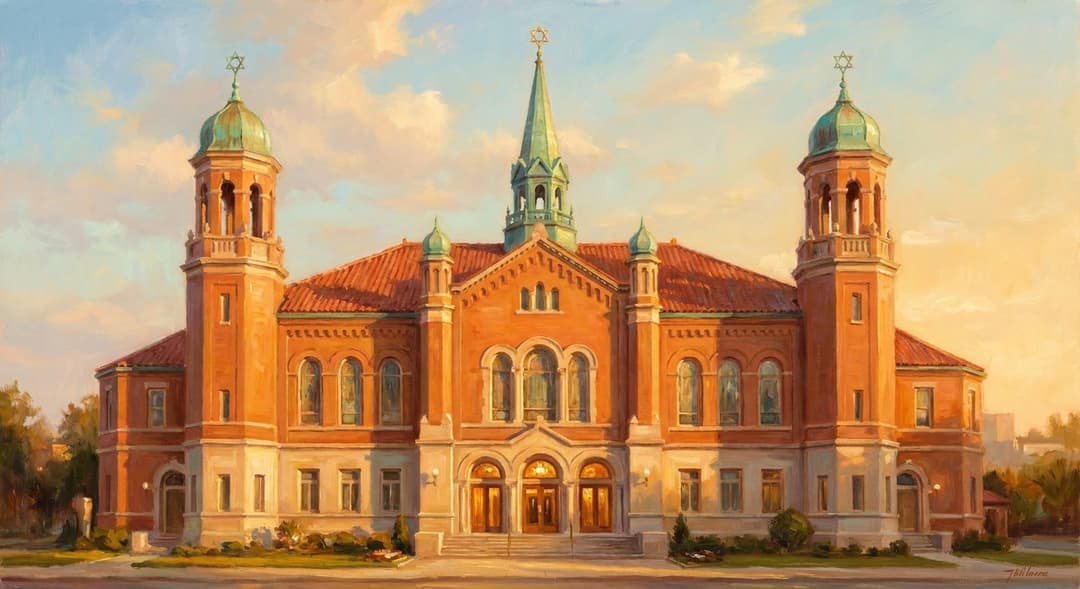
- Twin copper-domed corner spires crowned with green-patinated Stars of David.
- Inclusive non-membership model hosting spiritual, educational, and cultural events.
Things to Know
- Security screenings and bag checks are required for all services and public programs.
- Arrive 30 to 45 minutes early for popular ticketed evening events to secure seating.
- Non-denominational Friday night Shabbat services are open to all visitors without fee.
Location
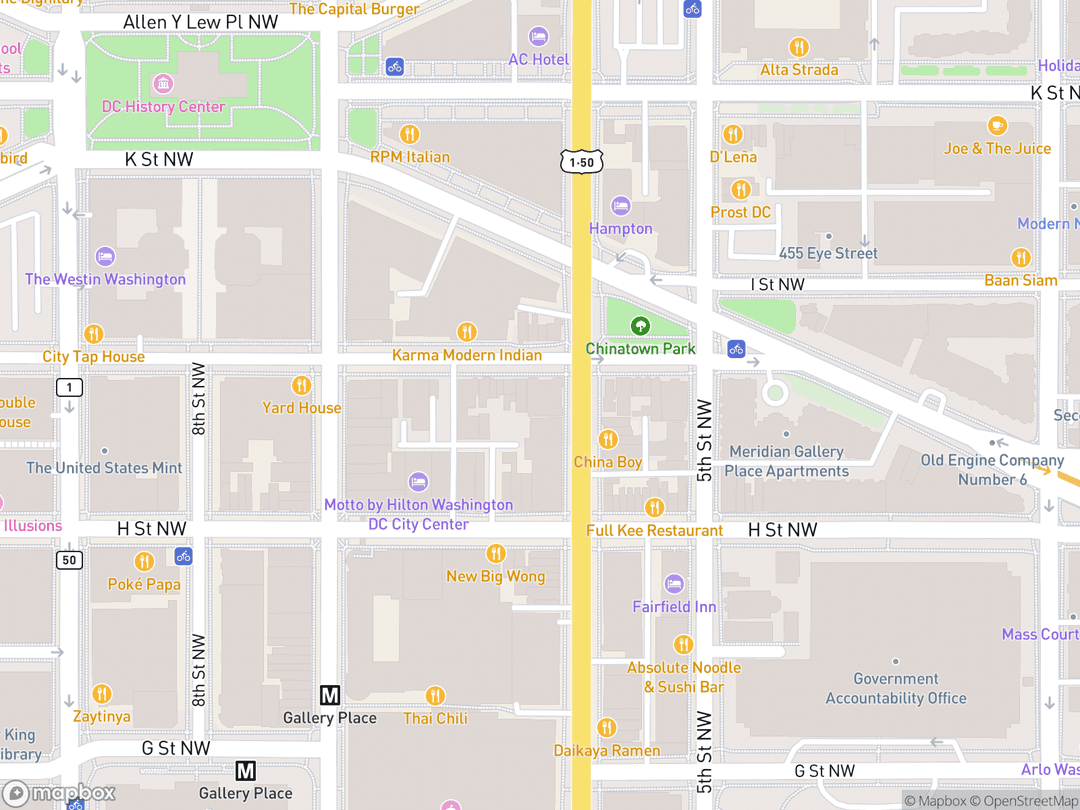
600 I Street NW, Washington, D.C. 20001
Hours: Administrative offices: Monday–Friday 9:00 AM–5:00 PM. Worship services and event times vary.
Getting There: Located two blocks from the Gallery Place-Chinatown Metro station (Red, Green, and Yellow Lines).
Get DirectionsTips for Your Visit
Public Transportation
Take the Metro to Gallery Place-Chinatown and exit toward 7th and H Streets for a short two-block walk.
Event Arrival
Seating in the main sanctuary pews and balcony is general admission for most ticketed lectures and concerts.
About
Constructed in 1908 in the heart of Washington, D.C., Sixth & I Historic Synagogue stands as a vibrant landmark of Jewish heritage and sacred gathering. Born out of the shared Abrahamic tradition of communal prayer, scriptural study, and assembly, the building originally served as the home for Adas Israel Congregation following an earlier split from Washington Hebrew Congregation over liturgical traditions.
For over five decades from 1951 to 2002, the sanctuary served as Turner Memorial African Methodist Episcopal Church. The African American congregation preserved the building's original Jewish architectural features, stained-glass windows, and ritual layout while converting the space into a vital center for urban ministry and civil rights community leadership.
Rescued from commercial conversion into a nightclub in 2002 by three local Jewish developers, the structure underwent a multi-million dollar restoration and was rededicated in 2004. Today, Sixth & I functions as an innovative non-membership, non-denominational synagogue and civic center, offering traditional Shabbat services alongside author talks, concerts, and public dialogues in Penn Quarter.
Gallery
Symbolic Elements
The temple's exterior features intricate carvings, each rich with spiritual meaning:
Star of David
Executed in green-patinated copper atop external cupolas to signify divine protection and communal Jewish identity.

Menorah Rose Window
Recreated stained-glass rose window positioned above the Ark, symbolizing eternal light and spiritual wisdom.

Aron Kodesh (Holy Ark)
Carved wooden cabinet set into the eastern wall facing Jerusalem to house the sacred handwritten Torah scrolls.
Bimah Platform
Elevated central platform forward of the Ark symbolizing Mount Sinai, where the Torah is read to the congregation.
Triple Dome Structure
Three roof cupolas spanning the skyline reflecting Byzantine sacred geometry and heavenly majesty.

Vitrified Brick Facade
High-fired orange-red brickwork decorated with terra cotta molding and keyhole arch portals.

Curved Oak Pews
Original curved wooden seating wrapping the main sanctuary floor and U-shaped balcony space.
Interesting Facts
Purchased within 24 hours in 2002 to stop commercial developers from turning the sanctuary into a nightclub. (Tier A)
Preserved for 51 years by Turner Memorial A.M.E. Church without removing original Jewish stained glass or Ark structures. (Tier A)
Delayed by city inspectors in 1906 due to doubts over its pioneering use of reinforced concrete columns. (Tier B)
Visited by President George W. Bush in 2005 to commemorate 350 years of American Jewish history. (Tier A)
Functions without annual family membership dues through a ticketed and pay-what-you-can event system. (Tier A)
Renowned among acoustic musicians for natural sound amplification created by its 69-foot inner vaulted dome. (Tier B)
Restored through complete pro bono architectural design services contributed by Shalom Baranes Associates. (Tier A)
Hosted live acoustic recordings and intimate performances by global recording artists like Adele and Matisyahu. (Tier B)
Common Questions
What Jewish denomination is Sixth & I Historic Synagogue?
Sixth & I is a non-denominational and pluralistic Jewish spiritual center that welcomes worshippers from all movement backgrounds.
Do I need an annual membership to attend services or events?
No, Sixth & I operates on a non-membership model where services are open to the public and events are individually ticketed.
Is the historic building accessible for visitors with disabilities?
Yes, the building features an ADA-accessible entrance ramp on I Street and elevator access to all sanctuary and event levels.
Can non-Jewish visitors attend lectures, concerts, and services?
Yes, all public lectures, cultural events, and Friday night Shabbat services are open to people of all faiths and backgrounds.
Featured Stories
The 24-Hour Sanctuary Purchase
2002
When Turner Memorial A.M.E. Church put the building on the market in 2002, commercial buyers sought to turn the sanctuary into a downtown nightclub. Learning of the threat, Jewish developers Abe Pollin, Shelton Zuckerman, and Douglas Jemal purchased the property within 24 hours to preserve its sacred heritage.
Source: Sixth & I History Archives
Preserved by Turner Memorial A.M.E.
1951
For 51 years, the African American congregation of Turner Memorial A.M.E. Church worshipped at 6th and I Streets. Out of deep respect for sacred tradition, the church meticulously maintained the Jewish architectural framework, including the stained-glass windows and Holy Ark, while leading civil rights efforts in downtown Washington.
Source: Capital Jewish Museum Historical Records
Presidents at the Sanctuary
September 14, 2005
The sanctuary has hosted key moments in American civic and presidential history. President Ulysses S. Grant attended the original 1876 opening of Adas Israel's first building, and President George W. Bush delivered a national address at Sixth & I in 2005 celebrating 350 years of Jewish life in North America.
Source: White House Press Release Archives
Timeline
Washington Hebrew Founded
German-Jewish immigrants establish D.C.'s first organized Jewish congregation.
Adas Israel Forms
Thirty-eight congregants resign to form Adas Israel to preserve traditional Orthodox practice.
President Grant Attends Opening
President Ulysses S. Grant attends the dedication of Adas Israel's initial sanctuary.
Chinatown Property Acquired
Adas Israel purchases the corner lot at 6th and I Streets NW for $17,500.
Cornerstone Laid
Cornerstone ceremony held following structural safety approvals for reinforced concrete columns.
Original Synagogue Dedicated
The new Moorish and Byzantine Revival sanctuary is formally dedicated for Adas Israel.
Sale to Turner Memorial A.M.E.
Adas Israel relocates uptown and sells the downtown building to an A.M.E. congregation.
Emergency Rescue Purchase
Three Jewish developers buy the building in 24 hours to block nightclub development.
Rededication as Sixth & I
Sanctuary formally rededicated after pro bono historic restoration by Shalom Baranes Associates.
President Bush Address
President George W. Bush speaks at Sixth & I marking 350 years of Jewish life in America.
History by Decade
1850s–1870s — Congregational Beginnings
In 1852, German-Jewish immigrants established Washington Hebrew Congregation as D.C.'s first Jewish community. In 1869, 38 members seeking traditional Orthodox worship split to form Adas Israel, dedicating their first sanctuary at 6th and G Streets NW in 1876 with President Ulysses S. Grant in attendance.
1900s — Construction and Architectural Milestone
Rapid growth prompted Adas Israel to purchase land at 6th and I Streets NW in 1905. Architect Louis Levi designed a new temple combining Byzantine, Romanesque, and Moorish styles. Despite construction delays caused by city inspectors evaluating its novel reinforced concrete framing, the synagogue was formally dedicated on January 5, 1908.
1910s–1940s — Heart of Downtown Jewish Life
For over four decades, the synagogue served as the vibrant hub for Washington's downtown Jewish commercial corridor. During High Holy Days, municipal police closed surrounding streets to accommodate thousands of congregants moving between downtown worship halls. The congregation formally aligned with Conservative Judaism in 1928.
1950s–1990s — The Turner Memorial A.M.E. Era
As congregants suburbanized, Adas Israel sold the building in 1951 to Turner Memorial African Methodist Episcopal Church. For 51 years, Turner Memorial preserved the sanctuary's historic pews, stained glass, and Hebrew inscriptions while serving as a prominent center for civil rights organizing and urban community ministry.
2000s — Emergency Purchase and Rededication
When Turner Memorial relocated in 2002, three local Jewish developers bought the building in a single day to stop commercial conversion into a nightclub. Following a multi-million dollar pro bono restoration by Shalom Baranes Associates, the building reopened on April 22, 2004 as Sixth & I Historic Synagogue.
2010s–2020s — Civic Renaissance and Modern Legacy
Sixth & I pioneered a non-membership organizational model combining pluralistic Jewish prayer with high-profile civic, literary, and cultural programming. Joining the Jewish Emergent Network, the site regularly hosts world leaders, authors, and artists, serving as an international model for urban religious revitalization.
Architecture & Facilities
Sixth & I showcases an eclectic synthesis of Byzantine Revival, Romanesque Revival, and Moorish Revival architecture popular in early 20th-century American synagogues to distinguish Jewish sacred spaces from traditional Christian neo-Gothic designs.
Building Materials
Vitrified Brick
High-fired orange-red exterior brickwork trimmed with decorative terra cotta molding.
Reinforced Concrete
Pioneering interior structural columns and poured floor slabs replacing standard timber framing.
Terra Cotta Roof Tile
Spanish red terra cotta roof tiles supporting three distinct copper-domed cupolas.
Patinated Copper
Green-patinated copper roof domes and custom exterior Star of David spire finials.
Interior Features
Main Sanctuary Vault
Central double-height auditorium capped by a 69-foot vaulted dome providing natural acoustic resonance.
Wrap-Around Balcony
U-shaped upper gallery seating originally serving as the Orthodox Ezrat Nashim women's gallery.
Holy Ark Alcove
Recessed eastern wall cabinet built from polished hardwood housing the handwritten Torah scrolls.
Subterranean Social Hall
Flexible lower-level space used for community dining, educational classes, and social gatherings.
Temple Grounds
Situated at the prominent corner of 6th and I Streets NW in Washington's Chinatown district, featuring recessed Romanesque entryway arches and an accessible ramped street portal.
Additional Facilities
Equipped with administrative office suites, multi-purpose classrooms, a full catering kitchen, and specialized acoustic staging gear for live broadcasts and musical performances.
Religious Significance
In Judaism and the broader Abrahamic family, sacred places function as centers for divine encounter, scripture study, and public prayer. Following the destruction of the Second Temple in Jerusalem, the synagogue emerged as a Bet Knesset (House of Assembly) where sacrificial offerings were replaced by Tefillah (prayer), Kriat HaTorah (Torah reading), and Gemilut Hasadim (deeds of lovingkindness).
To provide a pluralistic, accessible, and non-membership sanctuary where Jews of all backgrounds and civic neighbors can gather for spiritual devotion, study, and social action.
Sacred Ordinances
Shabbat Services
Friday evening and Saturday morning prayer gatherings incorporating traditional psalmody, silent devotion, and public Torah readings.
Torah Reading (Kriat HaTorah)
Public chanting of weekly scriptural portions from handwritten parchment scrolls stationed upon the central Bimah.
High Holy Day Rites
Rosh Hashanah and Yom Kippur services featuring the sounding of the Shofar and communal repentance prayers.
Orientation Toward Jerusalem
In alignment with ancient Jewish liturgical practice, the sanctuary interior and Holy Ark are oriented toward the east, directing congregational prayers toward the Temple Mount in Jerusalem.
Pluralism and Civic Openness
Operating without mandatory annual membership dues, Sixth & I integrates traditional prayer rites with open civic dialogue, welcoming non-Jewish neighbors to participate in educational and cultural events.
Sources & Research
Every fact on Temples.org is backed by verified Sources & Research. Each piece of information is rated by source tier and confidence level.
View All Sources (8)
| Field | Source | Tier | Retrieved |
|---|---|---|---|
| About & Historical Background | Sixth & I Historic Synagogue (opens in a new tab) | A | 2026-02-15 |
| About & Historical Background | National Park Service - National Register of Historic Places (opens in a new tab) | A | 2026-02-15 |
| Timeline & History | Capital Jewish Museum Archives (opens in a new tab) | A | 2026-02-15 |
| Timeline & History | Adas Israel Congregation History (opens in a new tab) | A | 2026-02-15 |
| Architecture & Interior | Shalom Baranes Associates Architects (opens in a new tab) | B | 2026-02-15 |
| Architecture & Interior | EHT Traceries Historic Preservation Consulting (opens in a new tab) | B | 2026-02-15 |
| Timeline & History | The Washington Post Historical Archives (opens in a new tab) | B | 2026-02-15 |
| Visitor Insights & Operations | District of Columbia Historic Preservation Office (opens in a new tab) | A | 2026-02-15 |