Visitor Insights
Visiting Concepción Chile Temple
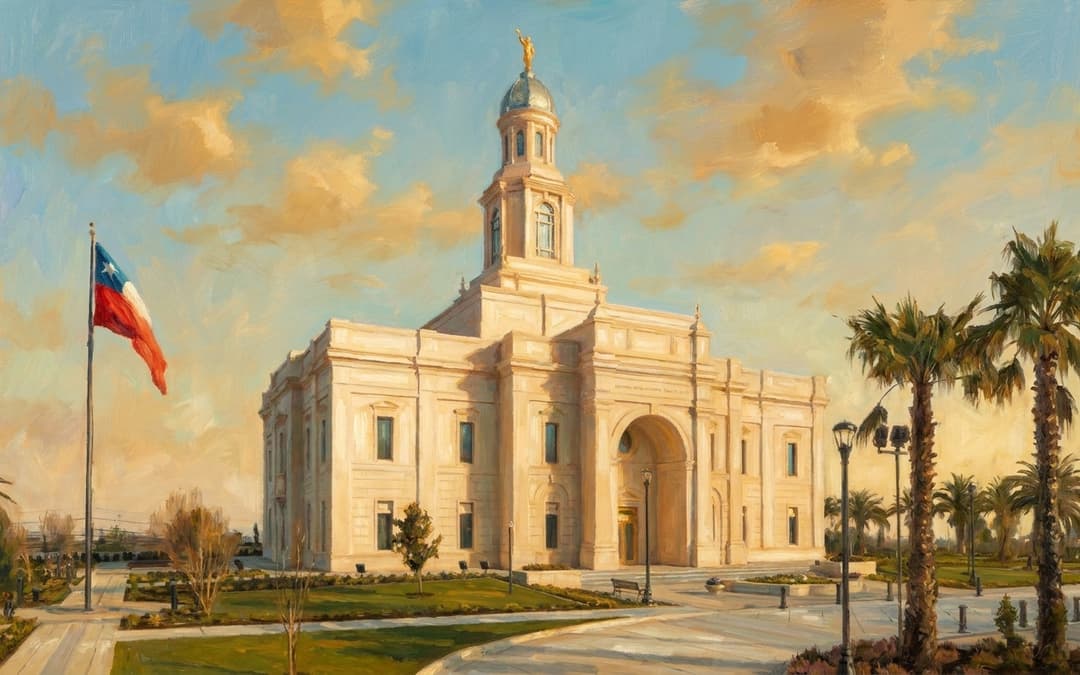
The Concepción Chile Temple offers a serene and peaceful environment for visitors of all faiths. Situated in the upscale Quinta Junge neighborhood, the temple grounds overlook the majestic Biobío River, providing a stunning backdrop for quiet contemplation and walks. Visitors are welcome to explore the beautifully manicured, European-style formal gardens, which feature native Chilean flora and historic Araucaria pines. While entry into the temple interior is reserved for members of the Church holding a valid temple recommend, the public grounds and patron housing area are open daily, offering a quiet escape from the bustling city.
Highlights
- Stunning panoramic views of the Biobío River from the western edge of the temple grounds.
- Beautifully preserved native Chilean Araucaria (monkey puzzle) trees and 96 mature palms.
- Classic European-style formal gardens with vibrant seasonal floral displays.
- The striking neoclassical exterior featuring a prominent dome tower and gilded Angel Moroni.
Things to Know
- The interior of the temple is closed to the general public, but the grounds are fully accessible.
- Modest attire is recommended when walking the sacred temple grounds.
- Photography is permitted on the outdoor grounds but strictly prohibited inside the temple.
- The grounds are most vibrant during the Southern Hemisphere's spring and summer months (October to March).
Location
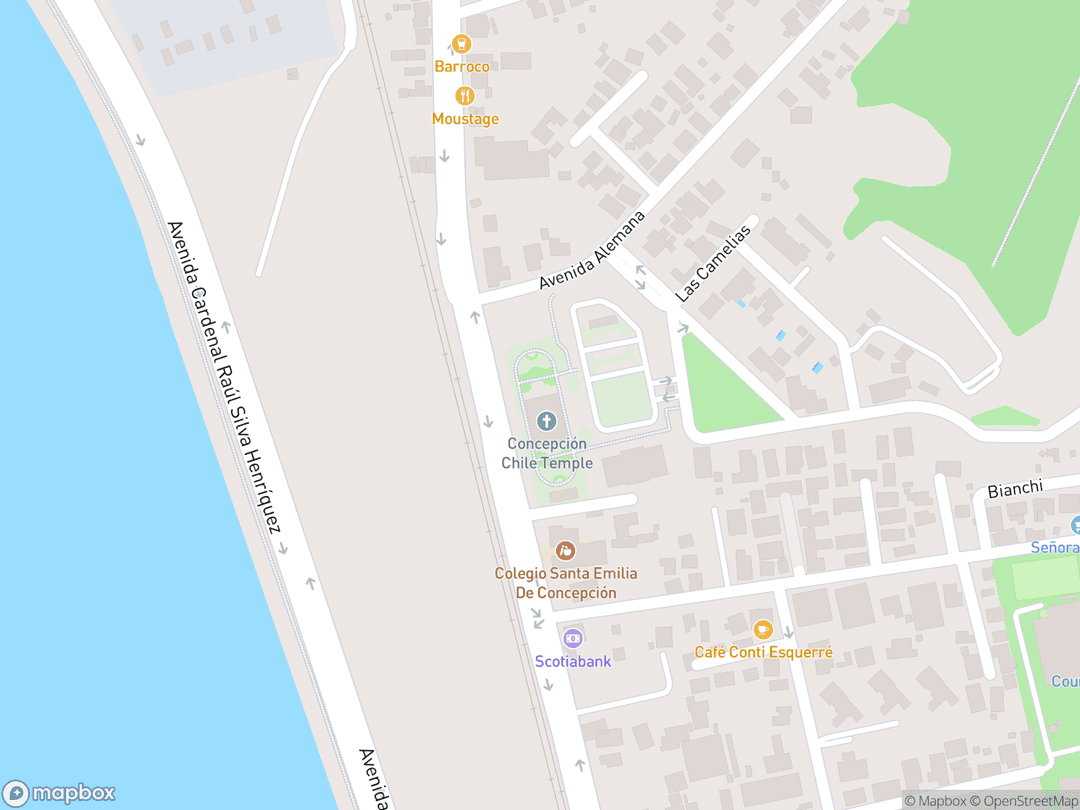
Avenida Quinta Junge, Concepción, Biobío, Chile
Hours: The temple grounds are open daily to the public from sunrise to sunset. Patron housing and temple services operate Tuesday through Saturday.
Getting There: Located on Avenida Quinta Junge in Concepción, the temple is easily accessible by taxi or private vehicle from the city center. Drive along Avenida Pedro de Valdivia and turn onto Quinta Junge. Ample public parking is available on-site.
Get DirectionsTips for Your Visit
Golden Hour Photography
Visit the temple grounds in the late afternoon. The setting sun casts a warm, golden glow on the precast concrete exterior and reflects beautifully off the Biobío River.
Explore the Native Flora
Take time to locate the rare, native Araucaria (monkey puzzle) trees on the grounds, which were carefully preserved and relocated by arborists during construction.
Respectful Conduct
Keep voices low and enjoy the peaceful atmosphere. Many visitors come to the gardens for quiet meditation and prayer.
About
The Concepción Chile Temple stands as a sacred monument of faith and modern engineering in the Biobío Region of southern Chile. Dedicated in 2018, this beautiful neoclassical structure serves as a spiritual sanctuary for over 122,000 Latter-day Saints across southern Chile and southwestern Argentina. In keeping with ancient Abrahamic traditions of setting apart holy ground to commune with the Divine, the temple is a literal House of the Lord, distinct from local meetinghouses. It represents a physical bridge between the temporal world and the eternal, where sacred covenants are made and family relationships are bound beyond the grave.
The temple's design beautifully harmonizes with the rich architectural heritage of Chile, drawing inspiration from 19th-century ecclesiastical buildings. Capped by a prominent dome tower, the temple's exterior is finished with precast concrete panels that replicate the historic cementitious faux limestone stucco seen in Santiago and Concepción. This aesthetic choice is matched by state-of-the-art structural engineering, featuring a sophisticated base isolation system designed to withstand the region's severe seismic activity. The temple grounds are equally stunning, featuring classic European-style formal gardens populated with native Chilean flora, including rare Araucaria pines and majestic palm trees.
Inside, the temple's interior reflects the highest standards of craftsmanship, utilizing premium materials sourced globally and locally. African Sapele Mahogany, milled in Argentina, provides rich woodwork throughout the rooms, while fine stone from Spain and Portugal adorns the floors. Most notably, the decorative elements incorporate native Chilean lapis lazuli, a deep blue semi-precious stone that symbolizes heavenly royalty. Through its architectural beauty, advanced engineering, and sacred purpose, the Concepción Chile Temple stands as a beacon of hope, peace, and eternal family progression for all who visit its sacred grounds.
Gallery
Symbolic Elements
The temple's exterior features intricate carvings, each rich with spiritual meaning:

The Bridge to Sacred Space
Reflecting ancient Abrahamic traditions of setting apart holy ground, the temple serves as a physical sanctuary from the world. It acts as a bridge where mortal patrons enter into eternal covenants with God, mirroring the biblical Tabernacle of Moses.

The Angel Moroni
Crowning the neoclassical dome is a gilded statue of the angel Moroni, a Book of Mormon prophet. This figure symbolizes the restoration of the gospel of Jesus Christ and the fulfillment of biblical prophecy in Revelation.

The Dome and Celestial Ascent
The central dome represents the vault of heaven, drawing the minds of patrons upward. In classical Christian architecture, domes symbolize the cosmos and the presence of God, reinforcing the doctrine of the eternal progression of the soul.

The Tree of Life
Stylized floral patterns in the art glass and the native Araucaria pines on the grounds symbolize the Tree of Life. In the Book of Mormon, this tree represents the love of God and the blessings of the Atonement of Jesus Christ.

Lapis Lazuli and Heavenly Royalty
The strategic use of native Chilean lapis lazuli in the interior trim carries deep symbolic resonance. Historically associated with royalty and the heavens, the deep blue stone reminds patrons of their divine heritage as children of God.

Neoclassical Pilasters
The exterior precast concrete panels feature elegant neoclassical pilasters. These structural elements symbolize strength, order, and the enduring nature of God's laws, anchoring the temple's aesthetic in classical architectural traditions.

The Baptismal Font
Resting on the backs of twelve sculpted oxen, the baptismal font symbolizes the twelve tribes of Israel. This sacred space is used for vicarious baptisms, representing the expansive reach of Christ's saving grace to all generations.

The Celestial Room Chandelier
A magnificent crystal chandelier hangs in the Celestial Room, symbolizing the light of Christ and the glory of the celestial kingdom. Its brilliant, refracted light represents the clarity and peace found in the presence of God.
Interesting Facts
The temple site was originally slated to become a private apartment complex. When the Church purchased the land, approximately 40 percent of the units had already been sold, prompting the developer to cancel the contracts and demolish the partially built structures. (Tier A)
The temple is one of the most seismically secure buildings in South America, utilizing 22 pendulum base isolators that allow the structure to sway up to 30 inches in any direction during major earthquakes. (Tier B)
President Russell M. Nelson referred to the dedication of this southern sanctuary as the 'heavenly crescendo' of his whirlwind five-nation South American tour in October 2018. (Tier A)
During site preparation, arborists successfully preserved and integrated 96 mature trees, including rare, native Chilean Araucaria (monkey puzzle) pines, into the final landscape design. (Tier B)
The beautiful African Sapele Mahogany used for the temple's interior doors and moldings was imported from Africa, sent to Argentina for expert milling, and then transported back across the Andes to Chile. (Tier B)
The Concepción Chile Temple is one of the few temples in the world to feature native Chilean lapis lazuli, a deep blue semi-precious stone sourced directly from local Andean mines, in its interior design. (Tier B)
Although located in Chile, the temple's district serves approximately 122,000 Latter-day Saints, including members residing in southwestern Argentina who cross the Andes Mountains to attend. (Tier A)
Official architectural records from NWL Architects confirm the temple's footprint is exactly 23,095 square feet, correcting various conflicting dimensions published by online tertiary sources. (Tier B)
The temple was the second built in Chile, dedicated 35 years after the landmark Santiago Chile Temple in 1983, representing the steady growth of the Church in the southern regions. (Tier A)
The neoclassical design with French detailing was specifically chosen to harmonize with the historic 19th-century religious and civic buildings of Concepción and Santiago. (Tier B)
Common Questions
Why does the Concepción Chile Temple have a base isolation system?
The Biobío Region of Chile experiences severe seismic activity, including major earthquakes measuring 7.8 to 8.8 on the Richter scale. To protect the temple's structural integrity and delicate interior artwork, engineers built the temple on 22 pendulum-type base isolators and eight viscous dampers, allowing the building to safely shift up to 30 inches in any direction during an earthquake.
Can the public tour the inside of the temple?
The interior of the temple was open to the general public during a special open house in September and October 2018. Currently, entry into the temple is reserved for faithful members of the Church who hold a valid temple recommend. However, the public is warmly invited to visit and enjoy the beautiful exterior grounds and gardens.
What is the significance of the blue stone used in the temple's interior?
The interior features accents of lapis lazuli, a deep blue semi-precious stone that is native to the Andes Mountains of Chile. Historically associated with royalty and divinity, the stone is used in the temple's decorative elements to honor the local geology and remind patrons of their divine heritage as children of God.
How many temples are there in Chile?
The Concepción Chile Temple was the second temple built in Chile. The first was the Santiago Chile Temple, dedicated in 1983. A third temple, the Antofagasta Chile Temple, is currently under construction, reflecting the steady growth of the Church in the nation.
What geographic area does the Concepción Chile Temple serve?
The temple serves approximately 122,000 Latter-day Saints living in southern Chile, as well as members residing in the southwestern regions of Argentina who cross the Andes Mountains to perform sacred ordinances.
Featured Stories
The Miracle of the Quinta Junge Site
December 15, 2009
In late 2009, Church leaders identified a beautiful 2.5-acre parcel of land in the upscale Quinta Junge neighborhood of Concepción as the ideal location for the newly announced temple. However, a private developer was already actively constructing an apartment complex on the site, with roughly 40 percent of the units already sold to eager buyers. In an extraordinary turn of events, the developer agreed to sell the land to the Church, subsequently cancelling all existing housing contracts and dismantling the partially completed structures. For local members, this sudden availability of prime land was a direct answer to their prayers, clearing the way for a sacred sanctuary to rise in place of private residences.
Source: Church Newsroom & Local Historical Records
The 'Heavenly Crescendo' of a South American Tour
October 28, 2018
The dedication of the Concepción Chile Temple marked the final stop of a whirlwind five-nation South American tour by President Russell M. Nelson. Traveling thousands of miles to minister to Latter-day Saints across the continent, President Nelson described the dedication of this southern sanctuary as the 'heavenly crescendo' of his entire journey. Thousands of local members gathered at the temple and in meetinghouses throughout Chile to witness the historic event, feeling a deep sense of gratitude for a prophet of God traveling to their corner of the world. The dedication solidified decades of pioneer faith and sacrifice, establishing a permanent house of covenant-making in southern Chile.
Source: The Church News of The Church of Jesus Christ of Latter-day Saints
The Arborists' Mission to Save the Araucarias
October 17, 2015
When construction began on the temple site, builders were faced with the challenge of clearing land that was home to numerous mature trees, including rare, native Araucaria (monkey puzzle) pines. Rather than simply clearing the vegetation, the Church hired expert arborists to carefully catalog and assess every tree on the property. Through meticulous planning and delicate excavation, the team successfully preserved and relocated 96 mature trees, including the sacred Araucarias, integrating them seamlessly into the final European-style formal gardens. This dedicated effort reflected the Church's commitment to environmental stewardship and respect for Chile's natural heritage, ensuring the temple grounds remained anchored in local ecology.
Source: NWL Architects Project Dossier & Landscape Records
Timeline
Temple Announced
President Thomas S. Monson announces the intent to construct a temple in Concepción, Chile, during the General Conference.
MilestoneLand Acquisition
The Church acquires a 2.5-acre parcel of land in the Quinta Junge neighborhood, formerly slated for private apartments.
EventApartment Contracts Cancelled
The developer cancels existing housing contracts for the planned apartment complex to clear the site for the temple.
EventSite Demolition
Demolition crews begin removing the partially completed apartment structures to prepare the ground for construction.
EventGroundbreaking Ceremony
Elder Walter F. González presides over the groundbreaking ceremony, which is broadcast live to stakes across southern Chile.
component.timeline.groundbreakingExcavation Begins
Heavy machinery arrives on site to begin deep excavation for the temple's advanced seismic foundation.
EventSeismic Isolators Installed
Engineers install the first of 22 state-of-the-art pendulum-type base isolators beneath the foundation.
MilestoneStructural Framing Completed
The concrete and steel structural framing of the temple is completed, outlining its neoclassical shape.
EventDome Tower Placed
The prominent neoclassical dome tower is hoisted and secured atop the temple structure.
EventAngel Moroni Installed
The gilded statue of the angel Moroni is anchored to the top of the neoclassical dome.
MilestoneInterior Craftsmanship Completed
Artisans finish installing the African Sapele Mahogany woodwork and native Chilean lapis lazuli accents.
EventPublic Open House Commences
The temple opens its doors to the public, allowing visitors of all faiths to tour the sacred interior.
EventOpen House Concludes
The public open house concludes after welcoming over 83,000 visitors, including civic and religious leaders.
EventYouth Cultural Celebration
Local youth perform in a vibrant cultural celebration showcasing Chilean dance, music, and heritage.
EventTemple Dedication
President Russell M. Nelson dedicates the Concepción Chile Temple, concluding his five-nation South American tour.
DedicationHistory by Decade
2000s — Announcement and Land Miracles
The history of the Concepción Chile Temple began on October 3, 2009, when Church President Thomas S. Monson announced the intent to construct a temple in southern Chile during the opening session of the 179th Semiannual General Conference. The announcement was met with immense joy by local members, who previously had to travel over 300 miles north to Santiago to attend a temple. Shortly after the announcement, on December 15, 2009, the Church acquired a 2.5-acre parcel of land in the prestigious Quinta Junge neighborhood. At the time, a private apartment complex was actively under development on the site, with construction already underway. Through cooperative negotiations, the developer agreed to cancel the housing contracts and remove the partially completed structures, clearing the way for the sacred project.
2010s — Construction, Open House, and Dedication
This temple stands as a monument to your faith, your devotion, and your love for the Lord Jesus Christ.
The formal construction phase commenced on October 17, 2015, with a groundbreaking ceremony presided over by Elder Walter F. González of the Seventy. Over the next three years, local members and international craftsmen worked in harmony to build the neoclassical structure. Advanced seismic engineering was integrated into the foundation to protect the building from Chile's frequent earthquakes. By September 2018, the temple was complete, and a public open house was held from September 15 to October 13, 2018. Over 83,000 visitors toured the interior, marveling at the African Sapele Mahogany and native lapis lazuli accents. On October 28, 2018, President Russell M. Nelson dedicated the temple, calling it a 'heavenly crescendo' to his South American tour.
2020s — A Beacon of Resilience
In the 2020s, the Concepción Chile Temple continued to serve as a vital spiritual center for Latter-day Saints in southern Chile and southwestern Argentina. Despite global challenges and temporary closures during the early part of the decade, the temple remained a beacon of hope and spiritual resilience. The temple's advanced seismic engineering was put to the test during minor regional tremors, proving the foresight of its designers. Today, the temple continues to welcome thousands of patrons who cross the Andes and travel from coastal communities to participate in sacred ordinances, strengthening families and communities across two nations.
Architecture & Facilities
The Concepción Chile Temple features a neoclassical architectural design with subtle French detailing, specifically selected to harmonize with the significant 19th-century religious and civic buildings of Chile. The structure is capped with a prominent dome tower, a common architectural feature in historic Chilean ecclesiastical design, which draws the eye upward and symbolizes a celestial ascent.
Building Materials
Exterior Precast Concrete Panels
Constructed of high-quality precast concrete panels designed to replicate the appearance of historic cementitious faux limestone stucco used in Santiago and Concepción, offering superior durability in the coastal climate.
Slate Roof Tiles
The roof is clad in historically appropriate slate tiles, providing a durable and aesthetically pleasing cover that matches the 19th-century ecclesiastical style of the region.
African Sapele Mahogany Woodwork
The primary interior hardwood is African Sapele Mahogany, which was imported from Africa, sent to Argentina for expert milling and preparation, and then transported across the Andes for installation.
Base Isolation Bearings
Built upon a state-of-the-art base isolation system consisting of 22 pendulum-type base isolators and eight viscous dampers, allowing the building to shift up to 30 inches in any direction during severe earthquakes.
Interior Features
The Celestial Room
A quiet, sacred space representing the peace and beauty of the celestial kingdom. It features a magnificent crystal chandelier, high ceilings, and elegant African Sapele Mahogany trim.
The Sealing Rooms
Rooms dedicated to the performance of eternal marriage covenants. They feature beautiful altars, facing mirrors symbolizing eternity, and delicate floral-patterned carpets.
The Baptistry
Located on the lower level, the baptistry features a large font resting on the backs of twelve sculpted oxen, symbolizing the twelve tribes of Israel, with decorative stone imported from Portugal and Spain.
The Bride's Room
A beautifully appointed room for brides preparing for their temple marriage, featuring elegant mirrors, comfortable seating, and soft, hand-tufted carpets with local floral motifs.
Temple Grounds
The temple sits on a 4.06-acre site overlooking the Biobío River, featuring classic European-style formal gardens. The landscape design showcases native Chilean flora, including 96 mature palm trees and rare Araucaria araucana (monkey puzzle) trees, many of which were carefully preserved and relocated from the site prior to construction.
Additional Facilities
The temple site includes a public patron housing facility to accommodate members traveling long distances, particularly those crossing the Andes Mountains from southwestern Argentina, as well as utility buildings and secure parking.
Religious Significance
In keeping with ancient Abrahamic traditions of setting apart holy ground to commune with the Divine, the Concepción Chile Temple is a literal House of the Lord. It stands as a sacred monument of faith, distinct from local meetinghouses, where members participate in ordinances that bridge the mortal experience with eternity.
The core spiritual purpose of the temple is to provide a sacred space where members of the Church can make eternal covenants with God, receive spiritual instruction, and perform saving ordinances for both the living and the deceased.
Sacred Ordinances
The Endowment
A sacred ceremony where patrons receive instruction regarding the plan of salvation, make covenants to keep God's commandments, and receive a promise of eternal blessings.
Eternal Marriage (Sealings)
An ordinance that binds husbands, wives, and children together for eternity, enabling family relationships to endure beyond death through the power of the priesthood.
Proxy Baptisms
Baptisms performed by living members on behalf of deceased ancestors, ensuring that all of God's children have the opportunity to accept or reject the saving ordinance of baptism.
The Abrahamic Covenant and Eternal Families
According to Latter-day Saint doctrine, the temple is the modern fulfillment of the covenants made with Abraham, Isaac, and Jacob. Through the sealing power restored to the earth, families are bound together across generations, ensuring that the blessings of the Abrahamic covenant are extended to all faithful individuals, both living and dead.
A Sanctuary of Peace and Revelation
Beyond the formal ordinances, the temple serves as a personal sanctuary where members can escape the noise of the world to pray, meditate, and seek divine guidance. The peaceful atmosphere of the temple is designed to facilitate personal revelation and a deeper connection with Heavenly Father and Jesus Christ.
Similar Temples
Sources & Research
Every fact on Temples.org is backed by verified Sources & Research. Each piece of information is rated by source tier and confidence level.
View All Sources (4)
| Field | Source | Tier | Retrieved |
|---|---|---|---|
| Architecture & Materials | NWL Architects (opens in a new tab) | B | 2026-03-30 |
| Interesting Facts & Interior Design | LDS Living (opens in a new tab) | B | 2026-03-30 |
| Timeline & Construction Milestones | Temples of The Church of Jesus Christ of Latter-day Saints (opens in a new tab) | C | 2026-03-30 |
| About & Historical Background | The Church of Jesus Christ of Latter-day Saints (opens in a new tab) | A | 2026-03-30 |