Visitor Insights
Visiting Mount Tai (Taishan)
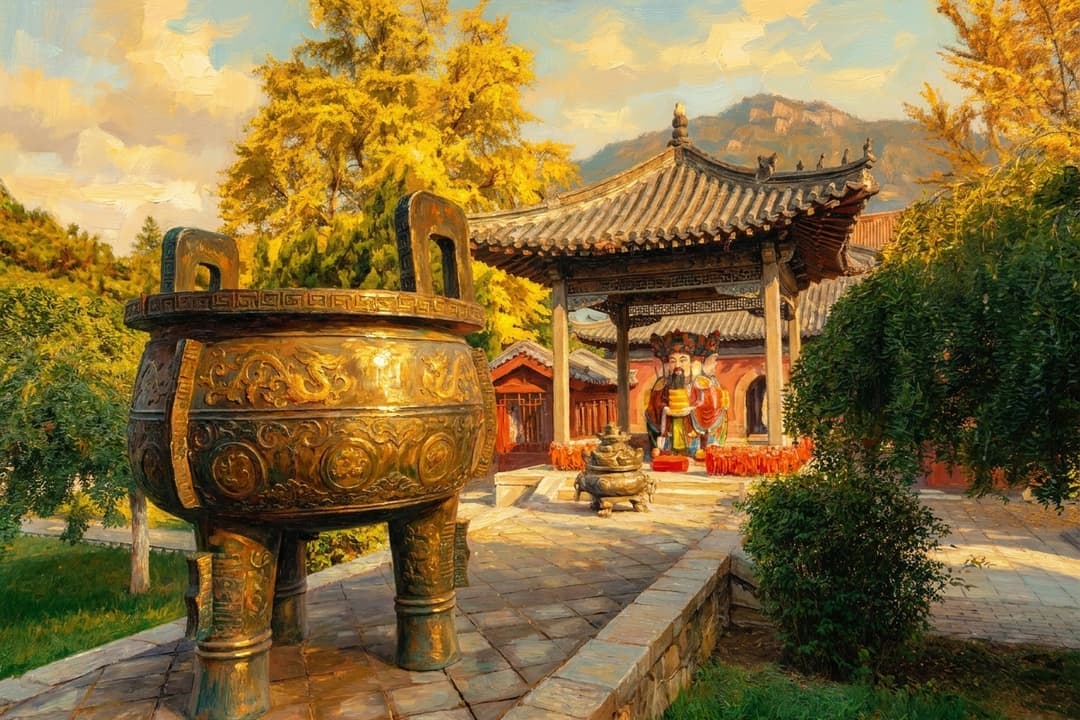
Ascending Mount Tai offers a profound immersion into ancient Chinese imperial ritual and natural grandeur. Pilgrims can trek the historic 7,200 granite steps or utilize cable car services from Middle Gate to Heaven.
Highlights
- Exploring the imperial palatial courtyard layout of Dai Temple at the mountain base.
- Climbing the famous Eighteen Mountain Bends up to Nantianmen (South Gate to Heaven).
- Watching the golden sunrise over the sea of clouds from Jade Emperor Peak.
- Viewing 2,200 years of historic stone calligraphy carved directly into granite cliff faces.
Things to Know
- Night ascents require warm windproof clothing, as summit temperatures drop significantly.
- Stone stairways can become slippery during wet weather or icy winter months.
Location
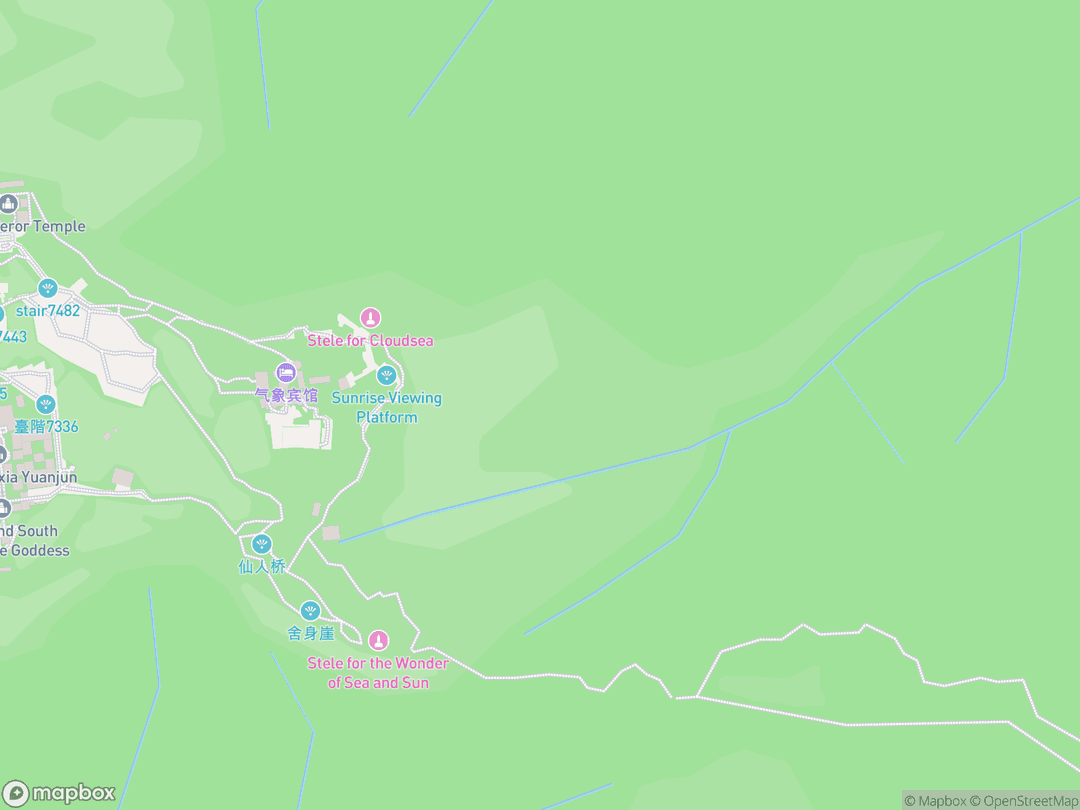
Taishan District, Tai'an City, Shandong Province, 271000, China
Hours: Mountain Trail: Open 24 Hours daily. Dai Temple: 8:00 AM – 5:30 PM. Bixia Temple: 6:30 AM – 5:00 PM.
Getting There: Take high-speed rail to Tai'an Railway Station, then take Bus K37 or a 20-minute taxi to Dai Temple or Red Gate trailhead.
Get DirectionsTips for Your Visit
Pacing the Stair Ascent
Break the 7,200-step climb into stages by resting at Red Gate, Middle Gate to Heaven, and South Gate to Heaven.
Dai Temple Baseline
Begin your journey at Dai Temple to understand the cosmological foundation before ascending the mountain.
Sunrise Preparation
Rent heavy coats near the summit or bring layers if planning to wait outdoors for the morning sunrise.
About
Mount Tai (Taishan) stands as the supreme Eastern Peak (Dongyue) among China's Five Sacred Mountains, embodying over three millennia of spiritual veneration and imperial state ritual. Rising dramatically above the North China Plain in Shandong Province, the mountain complex extends along a nine-kilometer vertical axis from the palatial Dai Temple at its base to the cloud-shrouded sanctuary of Jade Emperor Peak at 1,532.7 meters elevation.
For Chinese dynastic rulers, Mount Tai was the sole earthly venue authorized for the Feng and Shan sacrifices—grand state ceremonies where emperors addressed Heaven and Earth to validate their Mandate of Heaven. Today, Mount Tai remains an active spiritual sanctuary and a UNESCO Dual World Heritage site, welcoming millions of pilgrims who ascend its 7,200 granite steps to witness the sunrise and pay homage to its ancient deities.
Gallery
Symbolic Elements
The temple's exterior features intricate carvings, each rich with spiritual meaning:

7,200 Granite Steps
Represents the arduous spiritual transition from the mundane earthly world to the celestial realm.

360 Bronze Roof Tiles
Symbolizes the 360 degrees of the Chinese celestial cycle and complete cosmic order.

Five Pine Trees of Official Rank
Commemorates Emperor Qin Shi Huang conferring official rank on ancient pines that sheltered him.
Tang Dynasty Cliff Inscription
Engraved in gold leaf on sheer rock face to assert the eternal permanence of imperial decree.

Shi Gandang Stone Tablet
Sacred stones placed in home foundations across East Asia to ward off evil forces.

Jade Emperor Peak Stone
Raw mountain granite preserved inside the summit hall marking the divine axis of the earth.

Celestial Dipper Tablet
Held by Goddess Bixia Yuanjun as an emblem of authority over destiny and spiritual protection.
Tiankuang Hall Mural
Depicts the royal inspection procession of the Mountain Deity across a 62-meter painted canvas.
Interesting Facts
The Chinese word for pilgrimage, Chaosheng, originated directly from early historical journeys to Mount Tai. (Tier A)
Confucius climbed Mount Tai over 2,500 years ago and declared that the world appears small from its summit. (Tier B)
Only six emperors in all of Chinese history achieved the peace and stability needed to perform full Feng Shan rites. (Tier A)
The summit's Bixia Temple features 360 heavy cast-bronze tiles engineered to withstand fierce high-altitude mountain storms. (Tier A)
Mount Tai functions as Asia's largest open-air calligraphy gallery with over 1,800 cliff inscriptions and stone stelae. (Tier B)
The surrounding city name, Tai'an, comes from the ancient proverb asserting national security when Mount Tai is stable. (Tier A)
Small Mount Tai Shi Gandang stone tablets are built into houses across East Asia to ward off evil spirits. (Tier B)
Emperors worshipped the God of Mount Tai while ordinary pilgrims pray to Goddess Bixia Yuanjun for protection and blessings. (Tier A)
Mount Tai was designated in 1987 as China's very first UNESCO Dual Cultural and Natural World Heritage Site. (Tier B)
Common Questions
What is the official elevation of Mount Tai?
The official elevation of Jade Emperor Peak at the summit of Mount Tai is 1,532.7 meters (5,028.5 feet).
How many steps are on the pilgrimage stairway?
The traditional imperial route from the mountain base to the summit comprises exactly 7,200 hand-carved granite steps.
What were the Feng and Shan sacrifices?
They were the highest state rituals in imperial China, performed exclusively by emperors to address Heaven at the summit and Earth at the base.
Why is Mount Tai designated a UNESCO World Heritage Site?
Mount Tai was inscribed in 1987 as a Dual World Heritage Site for its outstanding natural metamorphic geology and 3,000 years of cultural history.
Featured Stories
Qin Shi Huang and the Official Pines
219 BC
When China's first emperor Qin Shi Huang descended Mount Tai after completing the inaugural Feng Shan rites, a violent mountain thunderstorm caught his procession off guard. Taking shelter beneath a grove of sturdy mountain pines, the emperor was so grateful for their protection that he conferred upon the five trees the official bureaucratic rank of Wudafu. Today, the legendary site remains an enduring symbol of the sacred connection between natural forces and political authority.
Source: Historical Records of the Grand Historian (Shiji)
The Imperial Procession of Empress Wu Zetian
666 AD
In 666 AD, Emperor Gaozong and Empress Wu Zetian led an unprecedented imperial expedition to Mount Tai accompanied by tens of thousands of soldiers, scholars, and envoys from across Asia. Empress Wu Zetian broke centuries of male-only tradition by presiding over the Subordinate Shan ceremony to honor the Earth deity at the mountain base. Her pivotal role at Mount Tai demonstrated her emerging supreme authority and set the stage for her eventual ascension as China's only female emperor.
Source: Old Book of Tang
Forging Metal Roofs Above the Clouds
1770 AD
Perched over 1,500 meters above sea level, the high-altitude sanctuaries of Mount Tai faced relentless mountain gale winds that repeatedly shattered standard ceramic roof tiles. During extensive restoration work in 1770, the Qing Emperor Qianlong commissioned master founders to cast 360 heavy bronze tiles for Bixia Temple's main hall, alongside cast-iron tiles for side pavilions. Interlocked and anchored directly into the granite mountain bedrock, these metallic roofs have withstood centuries of severe high-altitude weather.
Source: Qing Dynasty Court Records
Timeline
Zhou Dynasty Altars
States of Qi and Lu establish ceremonial altars for ritual sacrifices at the foot of Mount Tai.
MilestoneFirst Imperial Rites
Emperor Qin Shi Huang performs the inaugural unified Feng and Shan state sacrifices.
DedicationHan Expansion
Emperor Wu of Han expands Dai Temple and formalizes mountain worship into the high state cult.
RenovationTang Grand Procession
Emperor Gaozong and Empress Wu Zetian lead a massive international diplomatic procession up the mountain.
EventJi Tai Shan Ming Cliff Stele
Emperor Xuanzong of Tang orders the monumental golden calligraphy carved into the cliff face at Daiding.
MilestoneConstruction of Tiankuang Hall
Song Emperor Zhenzong builds Tiankuang Hall to house sacred celestial scriptures.
DedicationMing Dynasty Standardization
Emperor Hongwu re-establishes deified titles for the God of Mount Tai and restores summit gates.
RenovationQing Bronze Roof Renovation
Emperor Qianlong replaces storm-damaged summit roofs with 360 gilded bronze tiles.
RenovationUNESCO Dual World Heritage Inscription
UNESCO inscribes Mount Tai as China's first Dual Cultural and Natural World Heritage site.
MilestoneHistory by Decade
c. 1000s BC–200s BC — Ancient Veneration & Qin Unification
Sacred mountain veneration at Mount Tai originated during Neolithic culture and was codified under Zhou Dynasty law. Following the unification of China, Emperor Qin Shi Huang ascended the peak in 219 BC to perform the inaugural imperial Feng and Shan sacrifices, establishing the mountain as the supreme shrine for legitimizing royal rule.
100s BC–900s AD — Han and Tang Dynastic Imperial Rites
Emperor Wu of Han expanded Dai Temple and formalized the mountain cult into the premier state religion. During the Tang Dynasty, Emperor Gaozong, Empress Wu Zetian, and Emperor Xuanzong led grand pilgrimages, leaving monumental cliff calligraphy such as the golden Ji Tai Shan Ming inscription carved at the summit.
1000s AD–1900s AD — Song, Ming, and Qing Architectural Flowering
Song Emperor Zhenzong constructed the grand Tiankuang Hall in 1009 AD to house sacred scriptures. During the Ming and Qing Dynasties, emperors Hongwu and Qianlong renovated summit sanctuaries, with Qianlong ascending the peak 11 times and installing bronze roof tiles atop Bixia Temple to resist harsh mountain weather.
1980s–Present — World Heritage Protection and Modern Pilgrimage
UNESCO designated Mount Tai as China's first Dual Cultural and Natural World Heritage Site in 1987. Comprehensive restoration efforts continue to preserve the 7,200 granite steps, imperial wall murals, ancient pine forests, and stone calligraphy for millions of annual spiritual pilgrims.
Architecture & Facilities
The architecture of Mount Tai represents the pinnacle of ancient Chinese Greater Zhongyuan Imperial Palatial style seamlessly integrated with sacred mountain topography. Structured along a nine-kilometer vertical ceremonial axis from the palatial Dai Temple at the base to the summit shrines of Jade Emperor Peak, the complex incorporates grand timber-frame halls, double-eaved glazed roof systems, and fortified high-altitude granite masonry.
Building Materials
Timber Framework
Massive columns and complex bracket sets crafted from durable cedar and golden-thread nanmu wood.
Granite Masonry
Local blue-gray granite forming the 7,200 pilgrimage steps, retaining walls, and summit platforms.
Cast Bronze and Iron
Over 360 cast-bronze tiles and heavy cast-iron roof elements protecting high-altitude halls against storm winds.
Glazed Imperial Ceramics
Yellow glazed roof tiles covering major halls to designate highest imperial state status.
Interior Features
Tiankuang Hall Main Sanctuary
Houses the venerated statue of the Great Deity of Mount Tai beneath ornate timber roof beams.
Song Dynasty Mural Chamber
Encloses a monumental 62-meter painted mural depicting an imperial inspection procession.
Bixia Temple Main Sanctuary
Features a gilded bronze statue of Goddess Bixia Yuanjun holding the celestial Big Dipper tablet.
Jade Emperor Hall
Encloses the uncarved raw granite peak stone marking the geographical summit of the mountain.
Temple Grounds
The grounds encompass a 96,000-square-meter walled low-altitude temple enclosure, ancient cypress groves, steep gorge stairways, and high-altitude summit terraces spanning multiple climatic zones.
Additional Facilities
Visitor centers at Tianwaicun and Red Gate offer ticketing, shuttle buses, high-altitude cable car transit, and emergency mountain medical services.
Religious Significance
Mount Tai occupies a unique position in Chinese cosmic theology as the Eastern Peak (Dongyue), representing the source of life, spring renewal, and the physical pillar connecting Heaven and Earth.
To serve as the supreme cosmic venue where Chinese emperors validated their divine Mandate of Heaven through state sacrifices, and where pilgrims pray for spiritual health, cosmic balance, and family protection.
Sacred Ordinances
Feng Sacrifice
The supreme imperial ritual performed at the summit peak to address Heaven and declare peaceful dynastic rule.
Shan Sacrifice
The complementary imperial rite performed at lower altars to honor Earth and express gratitude for divine sustenance.
Mount Tai Pilgrimage (Chaosheng)
The traditional ascent up the 7,200 steps undertaken by millions to offer incense and pray for personal blessings.
Duality of Imperial State and Popular Faith
While imperial emperors worshipped the stern male deity Dongyue Dadi to legitimize cosmic state governance, popular folk religion focused on Bixia Yuanjun, the Goddess of Azure Clouds, as a compassionate protector of women, children, and daily human welfare.
Similar Temples
Sources & Research
Every fact on Temples.org is backed by verified Sources & Research. Each piece of information is rated by source tier and confidence level.
View All Sources (8)
| Field | Source | Tier | Retrieved |
|---|---|---|---|
| About & Historical Background | UNESCO World Heritage Centre (opens in a new tab) | B | 2026-03-30 |
| About & Historical Background | National Cultural Heritage Administration of China (opens in a new tab) | A | 2026-03-30 |
| Architecture & Structural Master Plan | Taishan District People's Government (opens in a new tab) | A | 2026-03-30 |
| Architecture & Structural Master Plan | Encyclopaedia Britannica (opens in a new tab) | B | 2026-03-30 |
| Religious Significance & Imperial Rites | Institute of Archaeology, Chinese Academy of Social Sciences (opens in a new tab) | B | 2026-03-30 |
| Religious Significance & Imperial Rites | Shandong Provincial Department of Culture and Tourism (opens in a new tab) | A | 2026-03-30 |
| Visitor Insights & Access | Ministry of Culture and Tourism of the People's Republic of China (opens in a new tab) | B | 2026-03-30 |
| Facts & Cartographic Measurements | Ministry of Natural Resources of the People's Republic of China (opens in a new tab) | A | 2026-03-30 |