Visitor Insights
Visiting Muhammad Ali Mosque
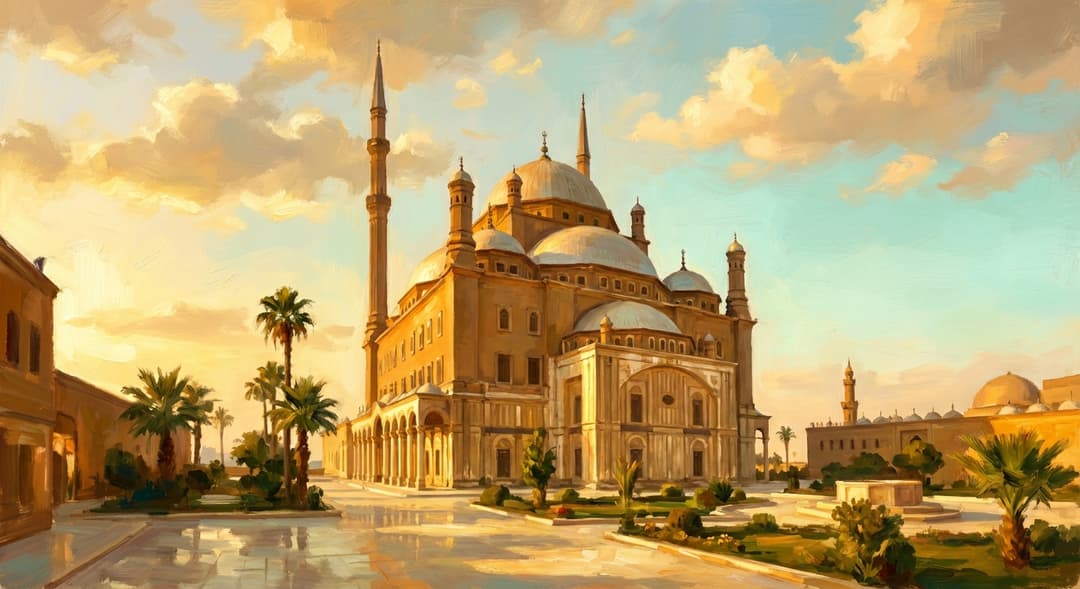
Visiting the Muhammad Ali Mosque offers a stunning glimpse into Ottoman imperial architecture and Islamic culture, set within the walls of the historic Citadel of Saladin high above Cairo. The mosque's soaring central dome, intricate calligraphy, and alabaster-clad walls create an atmosphere of quiet grandeur that rewards slow exploration. Visitors should plan to spend at least an hour here, combining the mosque interior with panoramic views of Cairo from the Citadel's terraces. The site is an active place of worship, so modest dress is required, and shoe covers are typically provided at the entrance.
Highlights
- Marvel at the towering central dome and slender minarets.
- Admire the intricate Islamic calligraphy and marble carvings in the prayer hall.
- Visit the tomb of Muhammad Ali Pasha, a significant historical figure.
Things to Know
- Dress modestly, covering shoulders and knees. Head coverings may be required for women.
- Photography is allowed, but be respectful and avoid using flash.
- The Citadel can be crowded, especially during peak tourist season.
Location
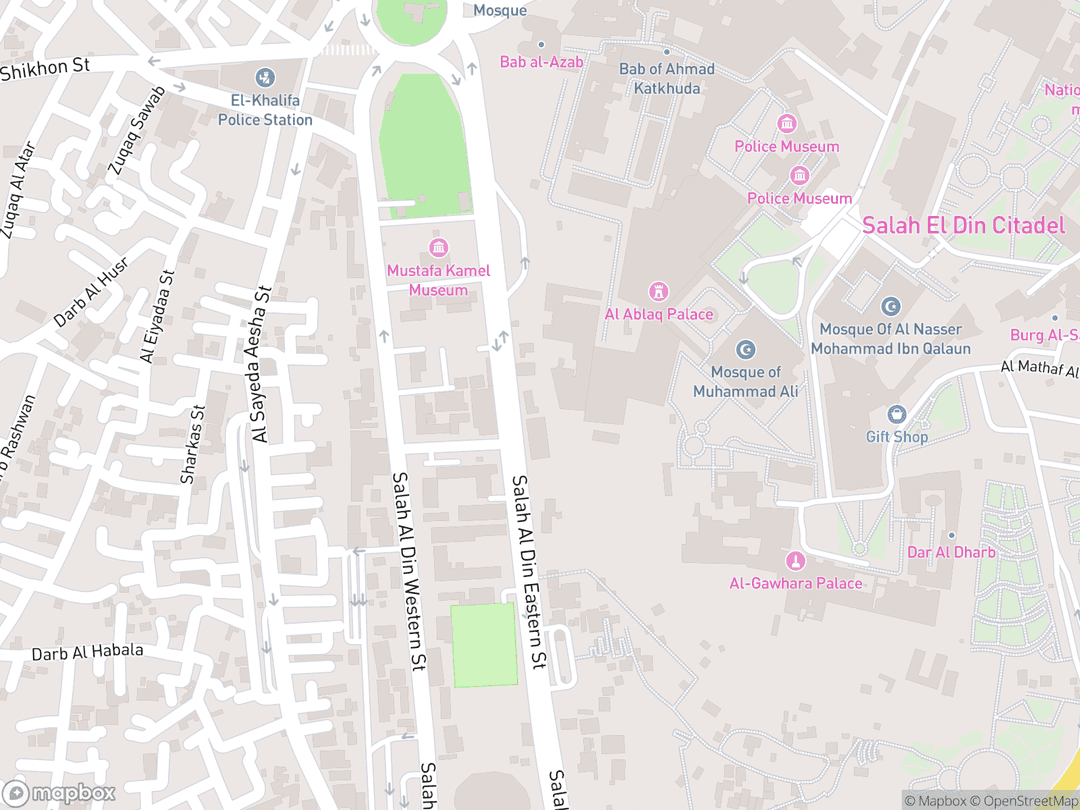
Al Abageyah, Qesm Al Khalifah, Cairo Governorate 4251101, Egypt
Hours: Generally open daily from 9:00 AM to 5:00 PM.
Getting There: Accessible by taxi, ride-sharing services, or public transportation. The nearest metro station is Salah El-Din, with a short taxi ride to the Citadel entrance.
Get DirectionsTips for Your Visit
Dress Code
Ensure you are dressed modestly to respect the religious site. Women should cover their heads, shoulders, and knees.
Best Time to Visit
Visit early in the morning to avoid crowds and enjoy a more peaceful experience.
About
The Muhammad Ali Mosque, also known as the Alabaster Mosque, stands as a prominent landmark within the Citadel of Saladin in Cairo, Egypt. Commissioned by Muhammad Ali Pasha, the Ottoman governor of Egypt, its construction began in 1830 and was completed in 1848, though extensive decoration continued until 1857. The mosque was designed by the Turkish architect Yusuf Bushnaq, drawing inspiration from the Sultan Ahmed Mosque in Istanbul, showcasing a blend of Ottoman architectural style with some European influences.
The mosque is renowned for its use of alabaster on its walls, giving it its alternate name. Its layout features a rectangular structure divided into an eastern section for prayer and a western courtyard. A central dome, supported by four massive pillars, dominates the skyline, surrounded by semi-domes and smaller corner domes. Two slender minarets, among the highest in Egypt, flank the mosque, adding to its grandeur.
Inside, the prayer hall is adorned with intricate Islamic calligraphy, carved marble, and stunning chandeliers. The mihrab indicates the direction of Mecca, guiding worshippers in their prayers. The tomb of Muhammad Ali Pasha is located in the southeastern corner of the mosque, constructed from Carrara marble. The mosque serves not only as a place of worship but also as a symbol of Muhammad Ali's ambition to modernize Egypt and his connection to the Ottoman Empire.
Gallery
Symbolic Elements
The temple's exterior features intricate carvings, each rich with spiritual meaning:

Central Dome
The large central dome symbolizes the universe and God's creation in Islamic architecture. It represents the heavens and the all-encompassing nature of the divine.

Minarets
The slender minarets are used to call Muslims to prayer five times a day. Their height signifies the importance of the mosque and the reach of the call to prayer, serving as a visual reminder of faith.

Mihrab
The mihrab is a niche in the wall that indicates the direction of the Kaaba in Mecca, toward which Muslims pray. It is a focal point in the prayer hall, guiding worshippers in their devotion.

Islamic Calligraphy
Intricate Islamic calligraphy adorns the walls, featuring verses from the Quran and the names of Allah and Prophet Muhammad. These inscriptions serve as a form of artistic expression and a reminder of religious teachings.

Ablutions Fountain
The fountain in the courtyard is used for ritual washing (ablutions) before prayer. This cleansing process symbolizes purification and preparation for communion with God.

Alabaster Walls
The extensive use of alabaster on the walls gives the mosque its alternate name, the Alabaster Mosque. Alabaster is a translucent material that creates a soft, luminous effect, symbolizing purity and spiritual enlightenment.

Ottoman Architecture
The mosque's Ottoman architectural style represents Muhammad Ali's connection to the Ottoman Empire and his ambition to modernize Egypt. It reflects a blend of Islamic and European influences, symbolizing progress and cultural exchange.

Chandeliers
The stunning chandeliers that hang inside the mosque are not only sources of light but also symbols of opulence and grandeur. They reflect the wealth and power of Muhammad Ali Pasha and the importance of the mosque as a place of worship.
Interesting Facts
The mosque is the largest Ottoman mosque built in the first half of the 19th century.
It is the most visible mosque in Cairo's skyline.
The mosque was built in memory of Muhammad Ali's eldest son, Tusun Pasha.
The design was influenced by the Sultan Ahmed Mosque in Istanbul.
The mosque is also known as the Alabaster Mosque due to its extensive use of the material.
The copper clock tower in the courtyard was a gift from King Louis Philippe of France.
The mosque's twin minarets are the highest in Egypt, reaching a height of 84 meters.
The main prayer hall can accommodate up to 10,000 worshippers.
Muhammad Ali Pasha is buried in a tomb inside the mosque.
The mosque is located on the site of former Mamluk palaces.
Common Questions
What is the Muhammad Ali Mosque also known as?
The Muhammad Ali Mosque is also known as the Alabaster Mosque due to the extensive use of alabaster in its construction.
Where is the Muhammad Ali Mosque located?
The mosque is located within the Citadel of Saladin in Cairo, Egypt.
When was the Muhammad Ali Mosque built?
Construction began in 1830 and was completed in 1848, with extensive decoration completed in 1857.
Who commissioned the Muhammad Ali Mosque?
The mosque was commissioned by Muhammad Ali Pasha, the Ottoman governor of Egypt.
What architectural style does the mosque showcase?
The mosque showcases Ottoman architectural style with some European influences, inspired by the Sultan Ahmed Mosque in Istanbul.
Is there a dress code for visiting the mosque?
Yes, modest clothing is required. Women must cover their heads and shoulders, and men must wear long pants.
Related Stories
Explore the rich history, traditions, and people connected to this sacred site.

Featured Stories
The Gift of the Clock Tower
1845
In 1845, King Louis Philippe of France gifted a copper clock tower to Muhammad Ali Pasha, a gesture of diplomatic goodwill and cultural exchange. This clock tower, now a prominent feature of the mosque's courtyard, was exchanged for an obelisk of Luxor, which now stands in the Place de la Concorde in Paris. This exchange symbolizes the complex relationship between Egypt and Europe during the 19th century, marked by both cooperation and colonial influence.
The clock tower, though intended as a symbol of modernization and progress, reportedly never functioned correctly, a poignant reminder of the challenges faced by Muhammad Ali in his efforts to transform Egypt. Despite its mechanical shortcomings, the clock tower remains a testament to the ambition and vision of both Muhammad Ali and King Louis Philippe, standing as a silent witness to the passage of time and the ebb and flow of history.
Source: Egypt Uncovered
Building in Memory
1830–1848
The construction of the Muhammad Ali Mosque began in 1830, initiated by Muhammad Ali Pasha as a grand project to solidify his legacy and modernize Cairo's skyline. However, the mosque also served as a memorial to his eldest son, Tusun Pasha, who had died in 1816. The mosque's location on the site of razed Mamluk palaces was a deliberate statement of Muhammad Ali's power and his break from the past.
As the mosque rose, it became a symbol of Muhammad Ali's ambition and his desire to create a lasting impact on Egypt. The intricate details, from the alabaster walls to the towering minarets, reflected his commitment to excellence and his vision for a modern, prosperous Egypt. The mosque, therefore, stands not only as a place of worship but also as a monument to a father's love and a leader's vision.
Source: Cairo Top Tours
The Alabaster's Luminous Glow
1857
The Muhammad Ali Mosque is often referred to as the Alabaster Mosque due to the extensive use of this translucent material in its construction. The choice of alabaster was not merely aesthetic; it was deeply symbolic. Alabaster, with its soft, luminous glow, was intended to evoke a sense of purity and spiritual enlightenment, creating an atmosphere of reverence and tranquility within the mosque.
The alabaster walls, illuminated by the sun during the day and by chandeliers at night, cast a gentle, ethereal light throughout the prayer hall. This light, combined with the intricate Islamic calligraphy and the grandeur of the architecture, creates a space that inspires awe and devotion. The Alabaster Mosque, therefore, is not just a building; it is a sanctuary of light and spirituality, a testament to the power of faith and the beauty of art.
Source: Islamic Architectural Heritage
Timeline
Muhammad Ali Appointed Governor
Muhammad Ali Pasha is appointed as the Ottoman governor of Egypt, marking the beginning of his rule.
MilestoneElimination of the Mamluks
Muhammad Ali eliminates the remaining Mamluks, consolidating his power in Egypt.
EventDeath of Tusun Pasha
Death of Tusun Pasha, Muhammad Ali's eldest son, who the mosque would later be dedicated in memory of.
EventConstruction Begins
Construction of the Muhammad Ali Mosque begins on the site of razed Mamluk palaces within the Citadel of Saladin.
component.timeline.groundbreakingClock Tower Gifted
A copper clock tower is gifted to Muhammad Ali Pasha by King Louis Philippe of France.
EventDeath of Muhammad Ali
Death of Muhammad Ali Pasha. Construction of the mosque is mostly completed.
EventBurial of Muhammad Ali
Muhammad Ali Pasha dies and is buried in a tomb prepared inside the mosque.
DedicationDecoration Completed
Extensive decoration of the mosque is completed during the reign of Sa'id Pasha. Muhammad Ali Pasha's body is transferred to the mosque from Hosh al-Basha.
MilestoneSigns of Cracking
The mosque begins to show signs of cracking, prompting concerns about its structural integrity.
RenovationRestoration Scheme Ordered
King Fuad orders a complete restoration scheme to address the cracking and deterioration of the mosque.
RenovationRestoration Completed
Restoration is completed under King Farouk I, and the mosque is reopened. King Farouk commissions a new alabaster minbar.
RenovationOngoing Preservation Efforts
Continued efforts to preserve and maintain the mosque as a significant historical and cultural landmark.
RenovationArchitecture & Facilities
Ottoman architectural style with European influences, designed by Turkish architect Yusuf Bushnaq and modeled after the Sultan Ahmed Mosque (Blue Mosque) in Istanbul. The mosque features a rectangular layout divided into an eastern prayer hall and a western courtyard measuring 55 by 57 meters. The central dome spans 21 meters in diameter and rises 52 meters high, supported by four massive pillars and surrounded by four semi-domes and four corner domes. Two slender Turkish-style minarets soar 84 meters — among the highest in Egypt. The exterior and courtyard are faced extensively in alabaster (earning it the name 'Alabaster Mosque'), while the interior features intricate Islamic calligraphy, carved marble, and ornate chandeliers. A copper clock tower gifted by King Louis Philippe of France in 1845 stands in the courtyard, given in exchange for the Luxor Obelisk now in Paris's Place de la Concorde.
Religious Significance
Muhammad Ali Mosque stands as one of the holiest sites in Islam, embodying the profound connection between the Muslim faithful and their Creator. In Islamic theology, mosques are not merely places of congregational prayer but are considered the houses of Allah (Baytullah), where the divine presence is especially felt and where the community of believers (ummah) gathers to fulfill their spiritual obligations. This mosque holds a unique and exalted position in Islamic history, tradition, and daily worship.
The mosque serves as a sacred space for the performance of salah (ritual prayer), the recitation and study of the Quran, and the cultivation of taqwa (God-consciousness). It is a center of spiritual life where Muslims gather five times daily to prostrate before Allah, seek forgiveness, express gratitude, and strengthen the bonds of brotherhood that unite the global Muslim community.
Sacred Ordinances
Salah (Ritual Prayer)
Muslims perform the five daily obligatory prayers (Fajr, Dhuhr, Asr, Maghrib, and Isha) facing the qiblah — the direction of the Kaaba in Mecca. Each prayer involves a sequence of standing, bowing, prostrating, and sitting, accompanied by Quranic recitation and supplication. Prayer performed in congregation at the mosque is considered to carry twenty-seven times the reward of individual prayer.
Jumu'ah (Friday Congregational Prayer)
The Friday prayer is the most important weekly gathering of the Muslim community. It includes a sermon (khutbah) delivered by the imam, followed by a shortened congregational prayer. Attendance is obligatory for adult Muslim men and is considered a cornerstone of Islamic communal worship.
Dhikr and Quran Recitation
Worshippers engage in dhikr (remembrance of Allah) through the repetition of His names and attributes, and in the recitation of the Quran, believed to be the literal word of God revealed to Prophet Muhammad. These practices are considered powerful means of spiritual purification and drawing closer to the divine.
Du'a (Supplication)
Believers offer personal prayers and supplications to Allah, seeking guidance, mercy, and blessings. The mosque is considered an especially auspicious place for du'a, as the act of prostration in prayer brings the worshipper closest to Allah.
The Five Pillars Connection
The mosque serves as the physical and spiritual center for fulfilling several of Islam's Five Pillars — the foundational acts of worship that define Muslim life. Salah (prayer) is performed here five times daily; Zakat (charitable giving) is often collected and distributed through the mosque; and during Ramadan, the mosque becomes a hub for communal iftar (breaking of the fast) and lengthy taraweeh night prayers. The mosque thus functions as the beating heart of Islamic spiritual practice, connecting individual devotion to communal obligation.
Architecture as Worship
Islamic architecture is itself an expression of worship — every dome, minaret, and geometric pattern reflects the Islamic principles of unity (tawhid), beauty (ihsan), and order. The absence of figurative imagery directs the worshipper's attention toward the transcendent, while the intricate geometric patterns and calligraphy that adorn the walls represent the infinite nature of Allah. The mosque's design creates an atmosphere of serenity and awe that facilitates the deepest forms of spiritual contemplation and surrender to the divine will.
Similar Temples

Sources & Research
Every fact on Temples.org is backed by verified Sources & Research. Each piece of information is rated by source tier and confidence level.
View All Sources (8)
| Field | Source | Tier | Retrieved |
|---|---|---|---|
| General Information | Egyptian Monuments (opens in a new tab) | A | 2024-01-01 |
| History and Architecture | Egypt Uncovered (opens in a new tab) | C | 2024-01-01 |
| Architectural Details | Cairo Top Tours (opens in a new tab) | D | 2024-01-01 |
| Location and Overview | Egypt Day Tours (opens in a new tab) | D | 2024-01-01 |
| Historical Context | Memphis Tours (opens in a new tab) | D | 2024-01-01 |
| Ministry of Tourism Information | State Information Service (Egypt) (opens in a new tab) | A | 2024-01-01 |
| Architectural Heritage | Islamic Architectural Heritage (opens in a new tab) | B | 2024-01-01 |
| Tour Information | Egypt Tours Plus (opens in a new tab) | D | 2024-01-01 |