Visitor Insights
Visiting Grande Synagogue de Paris
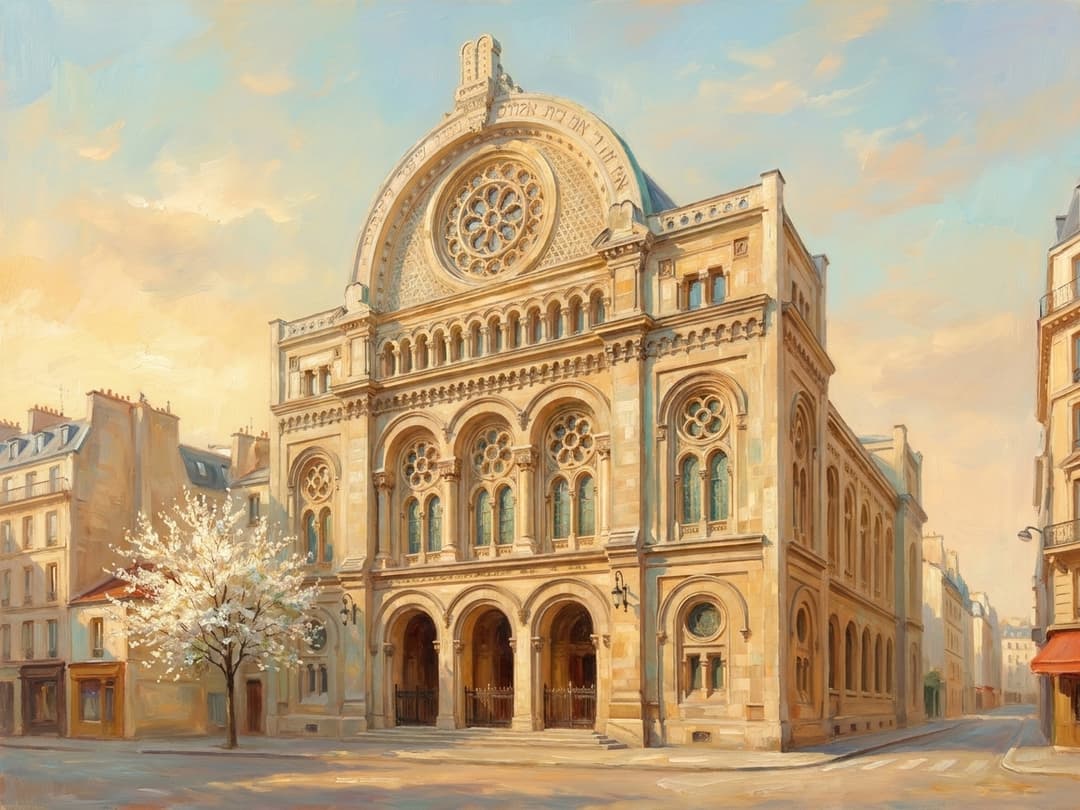
Visiting the Grande Synagogue de Paris offers a rare encounter with the majestic heritage of 19th-century French Judaism. The monumental sanctuary combines grand civic architecture with active Orthodox liturgical tradition in the heart of Paris.
Highlights
- Soaring Neo-Byzantine nave with seating for 1,800 congregants
- Historic 1875 Aristide Cavaillé-Coll pipe organ in the upper gallery
- Solid silver ceremonial Menorah donated by Baron Gustave de Rothschild
- Bilingual exterior facade featuring inscriptions in Hebrew and French
Things to Know
- Strict security screening requires advance reservation and valid government photo ID
- Unscheduled tourist walk-ins are not permitted due to national security protocols
- Modest attire covering shoulders and knees is required for all visitors
- Administrative offices and guided tours close during the month of August
Location
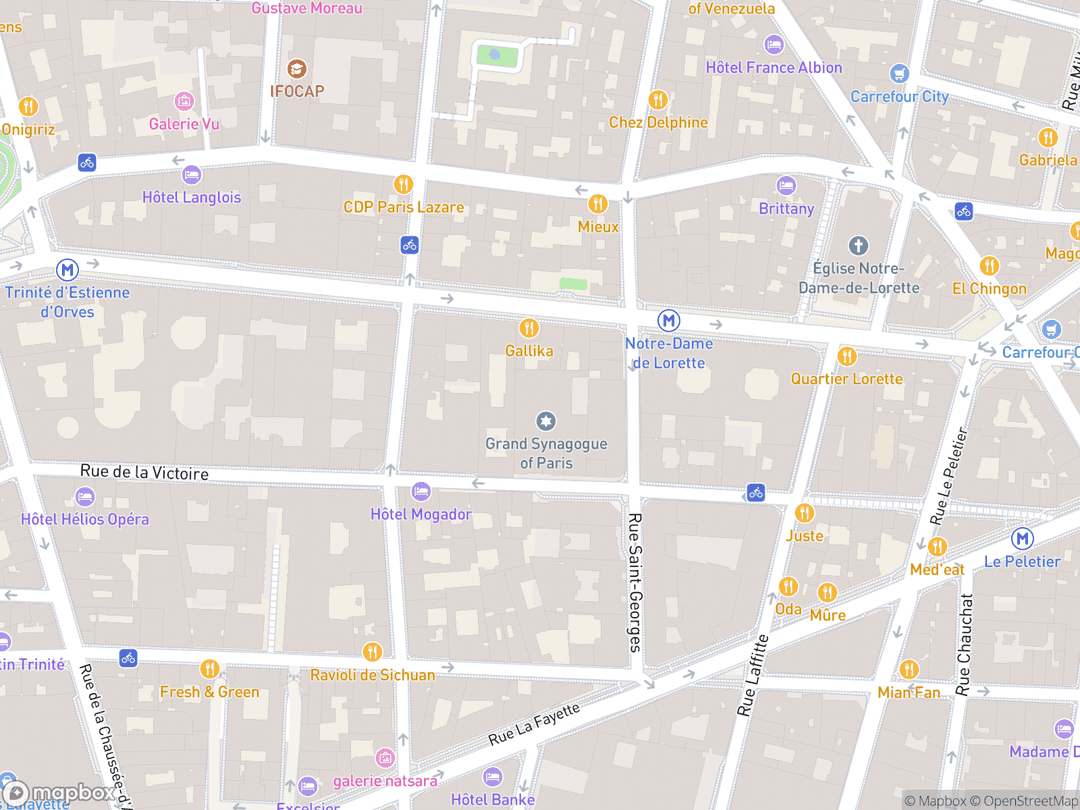
44, Rue de la Victoire, 75009 Paris, Île-de-France, France
Hours: Guided tours select weekday mornings (Mon/Thu 9:00 AM–12:00 PM by appointment); Shabbat services Sat 9:30 AM
Getting There: Metro Line 12 (Notre-Dame-de-Lorette / Trinité), Line 7 (Le Peletier / Chaussée d'Antin), or RER A (Auber)
Get DirectionsTips for Your Visit
Book Guided Tours in Advance
Contact the administrative office via email well before your visit to secure a reservation for weekday security clearance.
Respect Dress Code and Security Protocols
Bring a government-issued photo passport or ID card and wear formal, modest clothing covering shoulders and knees.
About
Across the Abrahamic traditions—Judaism, Christianity, and Islam—the sacred sanctuary serves as a dedicated space for assembly, prayer, and devotion to the God of Abraham. In the Judaic faith, this sacred environment is embodied in the synagogue, which traditionally serves three distinct functions: a house of assembly (Beit Knesset), a house of study (Beit Midrash), and a house of prayer (Beit Tefillah).
The Grande Synagogue de Paris, familiarly known as Synagogue de la Victoire, represents a pivotal milestone in modern Jewish history. Built following the emancipation of French Jews after the French Revolution, the sanctuary bridges traditional Orthodox Jewish liturgy—specifically the Ashkenazi-Alsatian choral rite—with the monumental civic architecture of 19th-century Imperial France.
Designed by architect Alfred-Philibert Aldrophe and consecrated in 1874, the building stands as both a sacred home for the divine presence (Shekhinah) and a national monument demonstrating the deep integration of Jewish life into the French Republic. Seating over 1,800 worshippers, it is the largest active synagogue in France and serves as the official seat for both the Chief Rabbi of France and the Chief Rabbi of Paris.
Gallery
Symbolic Elements
The temple's exterior features intricate carvings, each rich with spiritual meaning:

Tablets of the Law (Luchot HaBrit)
Perched atop the exterior pediment, stone sculptures representing the Ten Commandments identify the building as a sanctuary of Torah.

Hebrew & Civic Inscriptions
Façade carvings feature Genesis 28:17 in Hebrew alongside Leviticus 19:18 in French, blending faith with citizenship.
Twelve Stained-Glass Windows
Towering geometric stained-glass windows symbolize the Twelve Tribes of Israel gathered together in prayer.

Eternal Light (Ner Tamid)
A gilded bronze lamp continuously burning before the Holy Ark recalls the perpetual flame of the ancient Temple.
Solid Silver Menorah
A master-crafted silver multi-branched Menorah donated by Baron Gustave de Rothschild highlights major festival ceremonies.

Star of David (Magen David)
Interwoven into the rose window tracery and wrought-iron gallery railings, symbolizing divine protection and identity.
Holy Ark and Mosaic Arch
A white marble sanctuary facing Jerusalem framed by a grand celestial mosaic arch representing the heavens.
Cavaillé-Coll Organ Loft
A historic 1875 pipe organ loft positioned opposite the Ark, reflecting 19th-century French Consistorial choral traditions.
Interesting Facts
It is the largest active synagogue in France and the second largest in Europe, seating up to 1,800 worshippers. (Tier A)
Captain Alfred Dreyfus married Lucie Hadamard in the sanctuary in 1890, four years before the Dreyfus Affair erupted. (Tier A)
Theodor Herzl attended services here during the Dreyfus trial, which directly inspired his writing of 'Der Judenstaat'. (Tier B)
The sanctuary houses a rare 1875 pipe organ built by Aristide Cavaillé-Coll, creator of the organ at Notre-Dame de Paris. (Tier A)
Baron Gustave de Rothschild personally funded the land acquisition, silver Menorah, and velvet sanctuary draperies. (Tier A)
Parisian authorities forced architect Alfred Aldrophe to build on narrow Rue de la Victoire rather than broad Rue Saint-Georges. (Tier B)
The exterior facade features Leviticus 19:18 carved in French to emphasize universal civic values within the French Republic. (Tier A)
The national annual televised Holocaust memorial service for France is hosted inside the central sanctuary each year. (Tier A)
It serves simultaneously as the official seat for both the Chief Rabbi of France and the Chief Rabbi of Paris. (Tier A)
Despite fascist bomb damage in 1941 and a Gestapo raid in 1942, the core structure survived World War II intact. (Tier A)
Common Questions
What architectural style is the Grande Synagogue de Paris?
The building combines Neo-Byzantine, Romanesque Revival, and Second Empire architectural elements.
Can tourists visit the Grande Synagogue de Paris?
Guided group cultural tours are available on select weekday mornings by advance reservation with the administrative office.
Is the synagogue active for daily and Shabbat services?
Yes, the synagogue holds regular daily prayer services, Friday night Kabbalat Shabbat, and Saturday morning Shabbat services.
Why is the synagogue also called Synagogue de la Victoire?
It is familiarly named after its location on Rue de la Victoire in the 9th Arrondissement of Paris.
Featured Stories
The Wedding of Captain Alfred Dreyfus
April 21, 1890
On April 21, 1890, Captain Alfred Dreyfus married Lucie Hadamard in a grand ceremony inside the central nave of La Victoire. Four years later, Dreyfus was falsely accused of treason, sparking the historic Dreyfus Affair that profoundly tested French society and redefined modern political discourse.
Source: Consistoire Israélite de Paris Archives
Theodor Herzl and the Genesis of Political Zionism
1895
While covering the Dreyfus trial for a Viennese newspaper, Austrian journalist Theodor Herzl attended services inside the Grande Synagogue. Witnessing both the dignity of the French-Jewish congregation and the fierce antisemitic riots in Paris inspired Herzl to write 'Der Judenstaat' and found the modern political Zionist movement.
Source: Fondation pour la Mémoire de la Shoah
Survival and Rededication After World War II
1944
Despite facing a fascist bombing in 1941 and a brutal Gestapo raid in 1942 that ransacked the Holy Ark, the sanctuary's primary structure miraculously survived the German Occupation. Following the liberation of Paris in 1944, survivors gathered inside its damaged halls to rededicate the synagogue as a beacon of European Jewish rebirth.
Source: Synagogue de la Victoire Historic Records
Timeline
Consistorial Petition
The Parisian Consistory petitions municipal authorities to build a central sanctuary to serve Paris's growing Jewish population.
MilestoneArchitectural Authorization
Land is granted on Rue de la Victoire and architect Alfred-Philibert Aldrophe receives official authorization for the design.
MilestoneGroundbreaking Ceremony
Formal construction begins in the 9th Arrondissement with initial funding from public subscriptions and Baron Gustave de Rothschild.
component.timeline.groundbreakingGrand Consecration
The synagogue is solemnly consecrated, establishing the primary seat of the Chief Rabbi of Paris and Chief Rabbi of France.
DedicationInstallation of Pipe Organ
A monumental pipe organ crafted by renowned builder Aristide Cavaillé-Coll is installed in the western upper gallery.
EventWedding of Alfred Dreyfus
Captain Alfred Dreyfus marries Lucie Hadamard in the sanctuary four years before the historic Dreyfus Affair.
EventSeparation Law Transition
Following the French Law on the Separation of Church and State, ownership transfers to the Association Cultuelle Israélite de Paris.
MilestoneFascist Bombing Attack
A bomb detonated by French collaborationist extremists damages the exterior facade during the German Occupation.
EventGestapo Raid and Desecration
Vichy forces and Gestapo officers raid a Shabbat service, arresting congregants and damaging the Holy Ark.
EventMonument Historique Registration
The French Ministry of Culture officially registers the sanctuary as a national Monument Historique.
Milestone150th Anniversary Celebration
The congregation celebrates 150 years of continuous spiritual and civic service in Paris.
EventHistory by Decade
1850s–1860s — Planning and Civic Commissioning
Following the rapid expansion of Paris under Baron Haussmann, the Jewish population doubled to over 30,000, creating severe overcrowding in Marais synagogues. In 1859, the Parisian Consistory petitioned the city for land on Rue de la Victoire, commissioning architect Alfred-Philibert Aldrophe to design a monumental central sanctuary.
1870s — Construction and Grand Consecration
Construction was briefly suspended during the Franco-Prussian War and Paris Commune before resuming under the Third Republic. On September 9, 1874, the synagogue was grandly consecrated as the seat of the Chief Rabbi of Paris and France, installing an Aristide Cavaillé-Coll pipe organ the following year.
1890s — Civic Life, Dreyfus, and Herzl
La Victoire became the hub of French-Jewish civic life, hosting the 1890 wedding of Captain Alfred Dreyfus. The subsequent Dreyfus trial brought journalist Theodor Herzl to services at the synagogue, where observing the political crisis inspired his conceptualization of political Zionism.
1905–1930s — Separation Law and Interwar Refuge
The 1905 Law on the Separation of Church and State transferred ownership to the Consistoire Israélite de Paris. During World War I and the interwar period, the synagogue organized extensive relief operations for refugees fleeing Eastern European pogroms and rising Nazi persecution in Germany.
1940s — Occupation, Vandalism, and Liberation
During World War II, the synagogue suffered a fascist bombing in 1941 and a violent Gestapo raid during a Shabbat service in 1942. Despite interior destruction, the structural frame survived, enabling congregants to reopen the sanctuary immediately following the liberation of Paris in 1944.
1950s–Present — Post-War Rebirth and National Heritage
Post-war restorations repaired the Holy Ark and organ, while welcoming Sephardic immigrants arriving from North Africa in the 1960s. Designated a Monument Historique in 1993, La Victoire continues to host national televised Holocaust memorials and celebrated its 150th anniversary in 2024.
Architecture & Facilities
The Grande Synagogue de Paris represents 19th-century French Eclecticism, combining Neo-Byzantine, Romanesque Revival, and Second Empire architectural elements to establish a distinct Jewish monumental presence that avoided mimicking Gothic Christian churches.
Building Materials
Parisian Ashlar Limestone
Fine cut Parisian limestone quarried locally for the 36-meter exterior facade.
Polished Marble Columns
Interior structural marble pillars supporting two tiers of side-aisle galleries.
Wrought Iron & Bronze
Intricate gallery balustrades and gilded bronze chandeliers illuminating the nave.
Stained Glass
Artisanal glass windows depicting geometric patterns and symbols of the Twelve Tribes.
Interior Features
Holy Ark (Aron Kodesh)
A white marble sanctuary adorned with gold leaf facing east toward Jerusalem.
Bimah (Reader's Platform)
An elevated choir desk positioned before the Holy Ark to optimize acoustics and line of sight.
Women's Upper Galleries (Azara)
Two tiers of wrapped balconies framing the central nave for gender-separated seating.
Cavaillé-Coll Organ Gallery
An upper choir loft housing a historic pipe organ opposite the eastern sanctuary.
Temple Grounds
Situated on Rue de la Victoire in the 9th Arrondissement, the building occupies a compact urban footprint featuring gated perimeter security and limestone forecourt paving.
Additional Facilities
Includes administrative headquarters for the Chief Rabbinate, study halls, community reception spaces, and a subterranean choir rehearsal facility.
Religious Significance
Across the Abrahamic traditions, the sacred sanctuary provides a consecrated space for prayer and assembly before the God of Abraham. In Judaism, the synagogue functions as a house of assembly (Beit Knesset), study (Beit Midrash), and prayer (Beit Tefillah), serving as a vessel for the divine presence (Shekhinah).
To serve as the spiritual center of French Judaism, hosting daily prayer, Torah study, life-cycle commemorations, and national memorial services.
Sacred Ordinances
Torah Reading and Tefillah
Public chanting of scripture from handwritten parchment scrolls alongside traditional Ashkenazi liturgical prayers.
Choral Liturgy and Hazanut
Formal musical services led by a principal cantor and professional male choir utilizing classical Alsatian-Jewish melodies.
Life Cycle Rites
Sacred covenant ceremonies including Bar/Bat Mitzvahs, weddings, and memorial services for the community.
The Consistorial Tradition and Civic Integration
Established under Napoleon I, the French Consistorial system created a unified administrative structure that harmonized traditional Orthodox Jewish practice with modern citizenship in the French Republic.
Sources & Research
Every fact on Temples.org is backed by verified Sources & Research. Each piece of information is rated by source tier and confidence level.
View All Sources (8)
| Field | Source | Tier | Retrieved |
|---|---|---|---|
| About & Historical Background | Synagogue de la Victoire (opens in a new tab) | A | 2026-02-15 |
| About & Historical Background | Consistoire Israélite de Paris (opens in a new tab) | A | 2026-02-15 |
| Architecture & Structural Features | Ministère de la Culture - Base Mérimée (opens in a new tab) | A | 2026-02-15 |
| Timeline & Featured Stories | Fondation pour la Mémoire de la Shoah (opens in a new tab) | A | 2026-02-15 |
| Visitor Insights & Access | Mairie de Paris (opens in a new tab) | A | 2026-02-15 |
| Religious Significance & Sacred Traditions | Musée d'Art et d'Histoire du Judaïsme (opens in a new tab) | B | 2026-02-15 |
| Architecture & Structural Features | Bibliothèque Nationale de France (opens in a new tab) | B | 2026-02-15 |
| Timeline & Featured Stories | Alliance Israélite Universelle (opens in a new tab) | B | 2026-02-15 |