Visitor Insights
Visiting Congregation Beth Israel
Congregation Beth Israel welcomes visitors, architectural enthusiasts, and worshippers into its majestic 1928 Neo-Byzantine sanctuary. Guests experience breathtaking acoustic warmth, intricate art glass, and an uplifting egalitarian worship environment. Advance arrangements are required for architectural tours to accommodate facility security protocols.
Highlights
- Soaring 100-foot octagonal central dome illuminated by an amber Star of David skylight oculus.
- Historic 4,500-pipe Reuter symphonic pipe organ installed behind the raised walnut bima.
- Eighteen monumental arched stained-glass windows designed by artisan Albert Gerlach.
Things to Know
- All guests must clear standard security check-in protocols upon entry at the campus gates.
- Yarmulkes (kippot) and tallitot are available at the entrance; modest, respectful attire is customary.
- Photography and mobile device usage are strictly prohibited throughout formal religious services.
Location
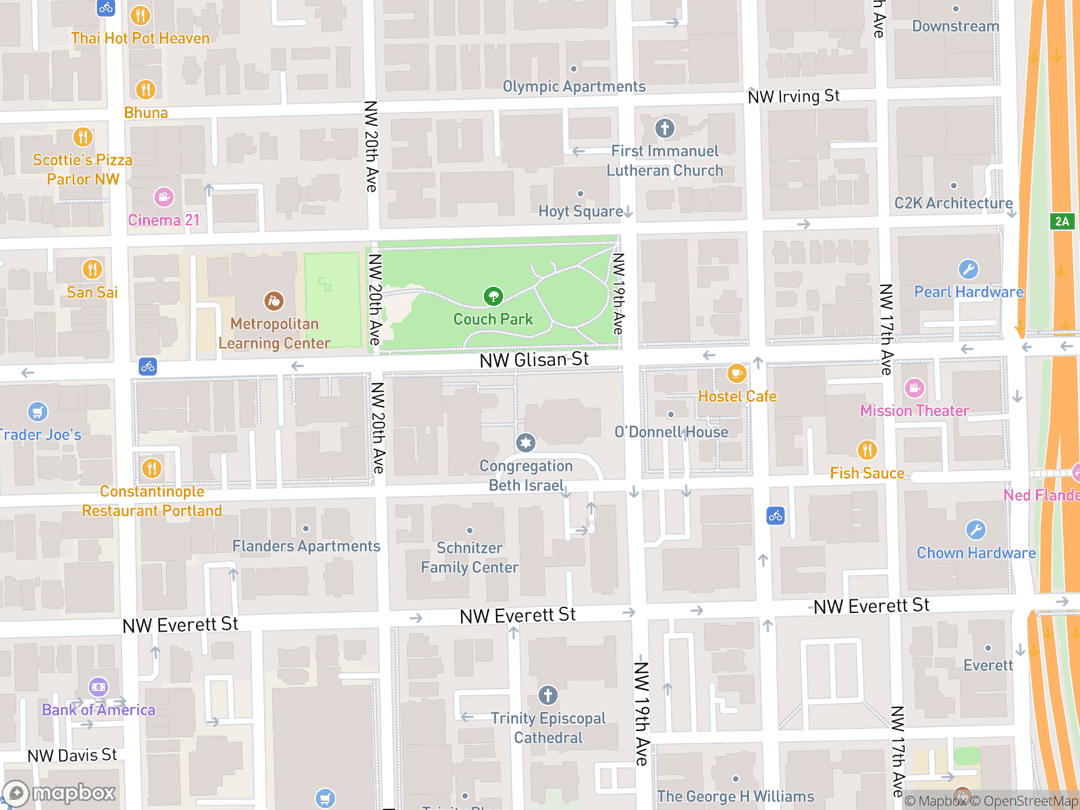
1972 NW Flanders Street, Portland, Oregon 97209, United States
Hours: Monday through Thursday 9:00 AM – 5:00 PM; Friday 9:00 AM – 4:00 PM; closed Saturdays and Sundays except for services.
Getting There: Accessible via TriMet Portland Streetcar NS Line at NW 21st and Glisan or NW 18th and Lovejoy, and TriMet Bus Lines 15 and 20.
Get DirectionsTips for Your Visit
Attend Friday Evening Shabbat
Experience the magnificent acoustic resonance of the sanctuary during musical Kabbalat Shabbat services held weekly at 6:00 PM.
Book Docent Tours in Advance
Arrange guided architectural visits by contacting the administrative office several weeks ahead of your planned Portland visit.
Observe Morning Lighting
Visit on clear mornings to witness sunlight illuminating the western Menorah rose window and the radiant dome skylight.
About
Founded in June 1858 while Oregon was an unincorporated territory, Congregation Beth Israel stands as the oldest Jewish congregation in the Pacific Northwest. Operating within the broader Abrahamic covenantal tradition, this sacred assembly functions as a consecrated minor sanctuary dedicated to ethical monotheism, communal study, and sacred prayer.
As the first Reform Jewish congregation on the Pacific Coast, Beth Israel pioneered egalitarian worship, liturgical choral music, and active civic integration across the American West. Its spiritual community embraces continuous revelation and prophetic justice, directing religious life toward the moral obligation of world repair.
The current Flanders Street sanctuary was consecrated in April 1928 following the tragic loss of its predecessor downtown temple to an arson fire. Designed by architect Herman Brookman, the monument combines Neo-Byzantine domes, rich regional sandstone, and exquisite stained glass into a transcendent civic landmark.
Gallery
Symbolic Elements
The temple's exterior features intricate carvings, each rich with spiritual meaning:

Dome Oculus and Star of David Corona
At the 100-foot ceiling apex, an amber and cobalt skylight casts natural illumination directly over the gathered congregation.

The Eternal Light (Ner Tamid)
Suspended before the Holy Ark, this sculpted bronze lamp burns perpetually to represent God's enduring divine presence.
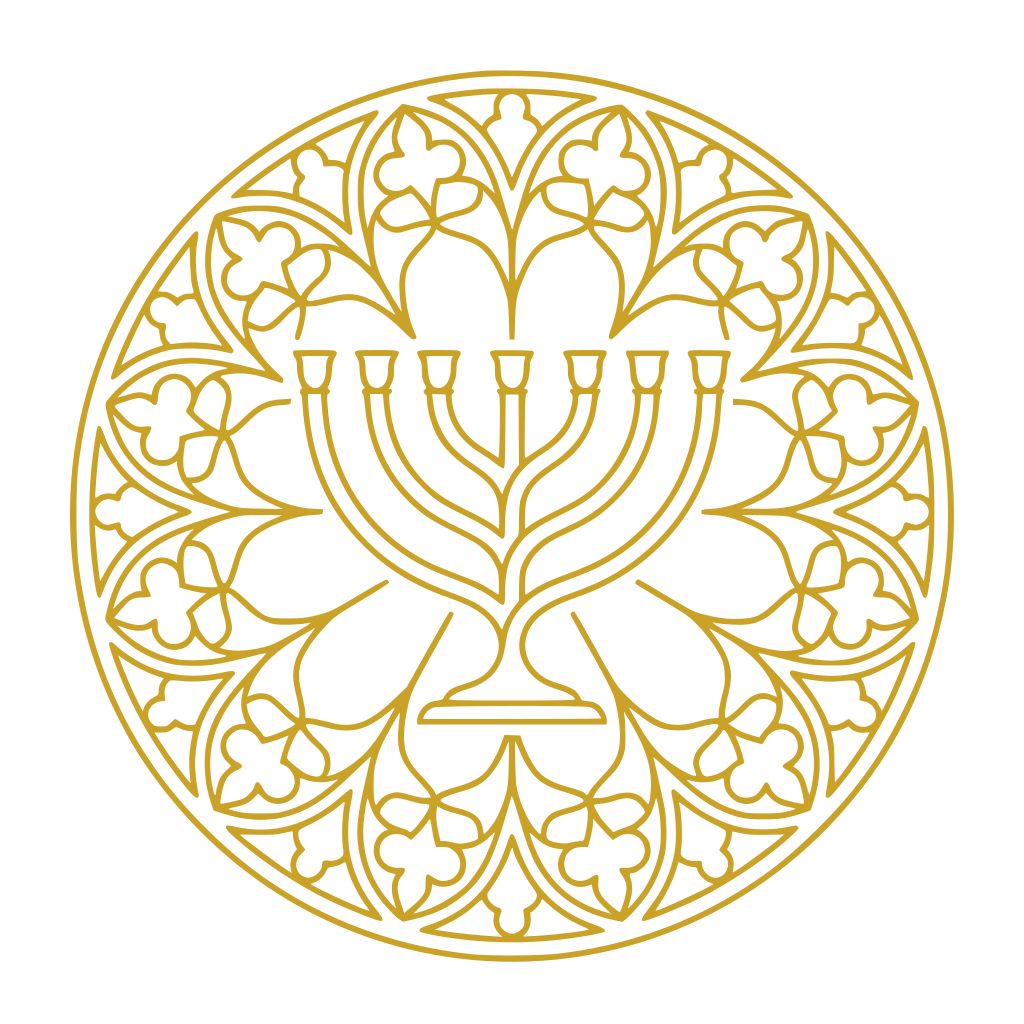
The Menorah Rose Window
Dominating the western wall, the round stained glass portrays a glowing seven-branched candelabrum symbolizing spiritual illumination.

The Ten Commandments (Luchot HaBrit)
Gilded hardwood tablets carved with the initial Hebrew letters of the Decalogue crown the upper frame of the ark.

Twelve Tribes of Israel Window Cycle
Heraldic medallions integrated into eighteen arched windows illustrate biblical emblems assigned to the ancient tribes of Israel.

The Good Fellowship Window
Presented by 168 non-Jewish citizens in 1928, this window bears Malachi 2:10 to celebrate universal brotherhood.

Tree of Life (Etz Chayim) Carvings
Intertwined vine and pomegranate motifs carved into the ark woodwork symbolize the nourishing life of the Torah.
Interesting Facts
Founded in June 1858 during Oregon territorial days, Beth Israel is the oldest continuous Jewish congregation in the Pacific Northwest. (Tier A)
The congregation held its first religious services and Oregon's first Jewish wedding in a loft above a livery stable and blacksmith forge. (Tier B)
Beth Israel was the first Pacific Coast congregation to affiliate with the American Reform movement when it joined in 1879. (Tier A)
When the 1889 Moorish temple burned in 1923, five neighboring Christian churches opened their doors for Beth Israel services. (Tier B)
Portland civic and Christian cathedral leaders raised funds to dedicate the Good Fellowship Window inside the 1928 sanctuary. (Tier A)
Architect Herman Brookman modeled Beth Israel's 100-foot dome after the 1913 Alte Synagoge in Essen, Germany. (Tier B)
Renowned civil rights advocate Rabbi Stephen S. Wise served as senior rabbi here before co-founding the NAACP. (Tier B)
The building was among the earliest western synagogues added individually to the National Register of Historic Places in 1979. (Tier A)
The Reuter Organ Company built a custom 4,500-pipe late-Romantic symphonic organ for the sanctuary in 1928. (Tier B)
Rabbi Emanuel Rose served Beth Israel for 46 consecutive years from 1960 to 2006, leading statewide civil rights efforts. (Tier A)
Common Questions
Is Congregation Beth Israel open to visitors of different religious traditions?
Yes, visitors from all faith backgrounds are welcome to attend weekly public Shabbat services and scheduled community programs.
When was the current sanctuary constructed?
Construction on the present Flanders Street sanctuary commenced in 1926 and the building was consecrated in April 1928.
Are architectural tours available for visitors?
Guided architectural and historical tours are provided by advance appointment made through the temple administrative office.
What should guests wear when visiting the sanctuary?
Respectful, modest business-casual attire is customary, and kippot are provided at the entrance for all who wish to wear them.
What is the musical tradition during worship services?
Services feature an egalitarian musical tradition combining choral singing, guitar, and the historic 4,500-pipe Reuter organ.
Featured Stories
Pioneer Beginnings Above the Blacksmith Forge
June 1858
In June 1858, twenty-one Jewish frontier merchants gathered in Portland to establish Oregon's first congregation. Lacking a dedicated synagogue, they rented Burke's Hall, a modest room situated directly above a blacksmith forge and livery stable. In this unadorned space, pioneer families celebrated religious holy days and solemnized Oregon's first Jewish wedding.
Source: Congregation Beth Israel Historical Archives
A City's Embrace After the 1923 Arson Fire
December 29, 1923
When a devastating arson fire leveled the congregation's beloved 1889 Moorish temple, grief gripped Jewish Portland. Within hours, five Christian churches across the city opened their sanctuaries so the congregation could worship without interruption. This extraordinary interfaith solidarity culminated in non-Jewish leaders funding the Good Fellowship Window for the new 1928 sanctuary.
Source: Oregon Historical Society
The Moral Pulpit of Rabbi Stephen S. Wise
1900
Arriving in Portland in 1900, Rabbi Stephen S. Wise transformed Beth Israel's pulpit into a center for Progressive Era activism. He fearlessly challenged municipal corruption and campaigned for pioneering state child labor protections. His courageous tenure established Beth Israel's enduring legacy of civic advocacy before he co-founded the NAACP.
Source: Union for Reform Judaism Archives
Timeline
Congregational Founding
Twenty-one pioneer merchants establish Congregation Beth Israel in a rented room above a blacksmith shop in Portland.
MilestoneFirst Synagogue Dedicated
The congregation consecrates a single-story Gothic wooden sanctuary at SW 5th and Oak Streets.
DedicationAdoption of Reform Prayer
Beth Israel adopts Isaac Mayer Wise's Minhag America prayer book, shifting decisively toward Reform Judaism.
EventAffiliation with the Reform Movement
The congregation becomes the first Pacific Coast synagogue to affiliate with the Union of American Hebrew Congregations.
MilestoneConsecration of Moorish Temple
A monumental twin-domed Moorish-style synagogue seating 750 worshippers is dedicated at SW 12th and Main Streets.
DedicationPulpit of Rabbi Stephen S. Wise
Rabbi Stephen S. Wise begins an influential six-year rabbinate marked by national leadership in progressive social reforms.
EventTragic Sanctuary Arson
An arson fire destroys the 1889 temple, prompting five neighboring Christian churches to offer their worship halls.
EventGroundbreaking in Nob Hill
Construction begins on an expansive campus at NW 19th and Flanders Street in the historic Alphabet District.
component.timeline.groundbreakingPresent Sanctuary Consecration
Congregants consecrate the current Neo-Byzantine sanctuary crowned by a 100-foot central dome and Reuter pipe organ.
DedicationNational Historic Registration
The Flanders Street sanctuary is formally added to the National Register of Historic Places.
MilestoneStained Glass Restoration
A comprehensive conservation initiative begins to clean, relead, and protect Albert Gerlach's eighteen sanctuary windows.
RenovationHistory by Decade
1850s–1860s — Frontier Foundations
Our pioneers built an altar of faith amidst the rugged wilderness of the Pacific Northwest.
Following their 1858 founding in an unadorned rental loft, twenty-one Jewish pioneer merchants purchased property at SW 5th and Oak Streets. In May 1861, they dedicated the Pacific Northwest's first synagogue, a single-story Gothic wooden hall seating 200 congregants. This initial sanctuary anchored Jewish civic life as Oregon transitioned from territorial status to early statehood.
1870s–1880s — The Moorish Edifice
During the 1870s, Beth Israel embraced liturgical modernization and formally affiliated with the Union of American Hebrew Congregations in 1879. Rapid growth prompted the commissioning of architect Warren H. Williams to design a monumental Moorish temple at SW 12th and Main Streets. Consecrated in 1889, the building's twin 165-foot towers defined the Portland skyline.
1890s–1910s — Civic Activism and Progressive Reform
At the turn of the century, Beth Israel welcomed visionary rabbinic leaders, notably Rabbi Stephen S. Wise in 1900 and Rabbi Jonah B. Wise in 1906. The congregation became a regional engine for civic philanthropy, interfaith alliances, and pioneering child labor legislation. Its sanctuary hosted major community assemblies while benevolent societies welcomed European immigrants.
1920s — Tragedy, Unity, and Rebirth
Have we not all one Father? Hath not one God created us all?
On December 29, 1923, an arson fire destroyed the downtown Moorish temple, prompting neighboring Christian churches to house Jewish services. Congregants purchased land in Nob Hill and retained architect Herman Brookman to design a fireproof Neo-Byzantine sanctuary. Consecrated in April 1928, the domed complex stood as a triumphant testament to interfaith cooperation.
1930s–1950s — Wartime Relief and Centennial
During the Great Depression and World War II, Rabbi Henry J. Berkowitz spearheaded relief efforts for European refugees fleeing persecution. The post-war years brought campus growth, including the 1948 dedication of the Sherman Education Center across Flanders Street. In 1958, Beth Israel celebrated its centennial with statewide civic recognition.
1960s–Present — Civil Rights and Modern Renewal
Rabbi Emanuel Rose began an extraordinary 46-year rabbinate in 1960, becoming a leading moral voice for the Civil Rights Movement and interfaith cooperation. The sanctuary gained National Register landmark status in 1979 and expanded its campus in the 1990s with the Schnitzer Family Center. Under senior rabbi leadership today, the historic sanctuary continues its prophetic calling toward community advocacy.
Architecture & Facilities
The 1928 sanctuary reflects a monumental Neo-Byzantine (Byzantine Revival) design infused with Romanesque massing and subtle early Art Deco geometric detailing. Inspired by the 1913 Alte Synagoge in Essen, Germany, architect Herman Brookman employed an octagonal, domed auditorium plan that maximizes democratic sightlines, acoustic warmth, and vertical celestial focus.
Building Materials
Tenino Sandstone
Fine-grained exterior stone quarried near Tenino, Washington, provides tactile weather resistance.
Variegated Face Brick
Warm-toned buff and red face brick clads the reinforced concrete and structural steel frame.
California Terracotta Tiles
Curved Mediterranean barrel tiles cover the lower roof decks and hip intersections in warm earth tones.
Mouth-Blown Art Glass
Antique pot metal and opalescent stained glass leaded by Albert Gerlach adorns eighteen arched windows.
American White Oak
Custom octagonal pews, bima screening, and entrance porticoes were crafted from fine white oak.
Cast Bronze and Plaster
Bronze light fixtures complement warm acoustic plaster finished in hand-stenciled polychrome motifs.
Interior Features
Central Octagonal Sanctuary
A clear-span auditorium seating 1,000 worshippers beneath a monumental 100-foot-high ribbed dome.
Aron HaKodesh (Holy Ark)
The elevated cedar and walnut ark houses the sacred Torah scrolls behind bronze grilles.
Reuter Pipe Organ Chamber
An integrated acoustic chamber above the bima encloses the 4,500 pipes of Opus 227.
Lipman Memorial Foyer
A ceremonial entrance hall featuring historic terrazzo flooring, bronze lanterns, and oak portals.
Pollin Chapel
An intimate daily chapel on campus used for small prayer services, lifecycle events, and study.
Temple Grounds
The campus occupies an urban parcel in the Alphabet Historic District, framed by broad stone steps, accessible ramps, wrought iron railings, and manicured street trees buffering neighborhood traffic.
Additional Facilities
The campus encompasses the Sherman Education Center with 20 classrooms, the Schnitzer Family Center, the Blumauer Auditorium, and the Amy R. Goldsmith Library housing extensive Pacific Northwest Judaica.
Religious Significance
Within the Abrahamic monotheistic lineage, Congregation Beth Israel serves as a Mikdash Me'at (minor sanctuary), providing a consecrated space where the covenant community gathers for prayer, scripture reading, and world repair.
To foster covenantal communion with God through ethical monotheism, sacred study, egalitarian communal worship, and prophetic social action.
Sacred Ordinances
Kabbalat Shabbat
Weekly Friday evening musical prayer welcoming the Sabbath with psalms, traditional blessings, and choral singing.
Kriat HaTorah (Torah Service)
Saturday morning liturgical chanting and communal study from the sacred handwritten parchment scrolls.
Lifecycle Ceremonies
Consecration of covenantal passages including brit milah, baby namings, b'nei mitzvah, and egalitarian weddings.
Tikkun Olam
Active community mobilization dedicated to fulfilling the biblical mandate of repairing a broken world.
The Synagogue as Sacred Assembly
Beth Israel stands in continuity with ancient biblical gatherings, serving as a house of prayer (Beit Tefilah), a house of study (Beit Midrash), and an assembly hall (Beit Knesset).
The Reform Covenant
Affiliated with the Union for Reform Judaism, Beth Israel emphasizes moral autonomy, complete gender egalitarianism, and the ongoing interpretation of biblical ethics in modern civic life.
Similar Temples
Sources & Research
Every fact on Temples.org is backed by verified Sources & Research. Each piece of information is rated by source tier and confidence level.
View All Sources (7)
| Field | Source | Tier | Retrieved |
|---|---|---|---|
| About & Historical Background | Congregation Beth Israel (opens in a new tab) | A | 2026-02-28 |
| About & Historic Registration | National Park Service (opens in a new tab) | A | 2026-02-28 |
| Religious Significance & Reform Heritage | Union for Reform Judaism (opens in a new tab) | A | 2026-02-28 |
| Architecture & Historic Preservation | City of Portland Bureau of Planning and Sustainability (opens in a new tab) | A | 2026-02-28 |
| Regional History & Pioneer Archives | Oregon Historical Society (opens in a new tab) | B | 2026-02-28 |
| Sanctuary Organ & Musical Heritage | The Reuter Organ Company (opens in a new tab) | B | 2026-02-28 |
| Pacific Northwest Jewish History | Oregon Jewish Museum and Center for Holocaust Education (opens in a new tab) | B | 2026-02-28 |