Visitor Insights
Visiting Saint-Alexandre-Nevsky Russian Orthodox Cathedral
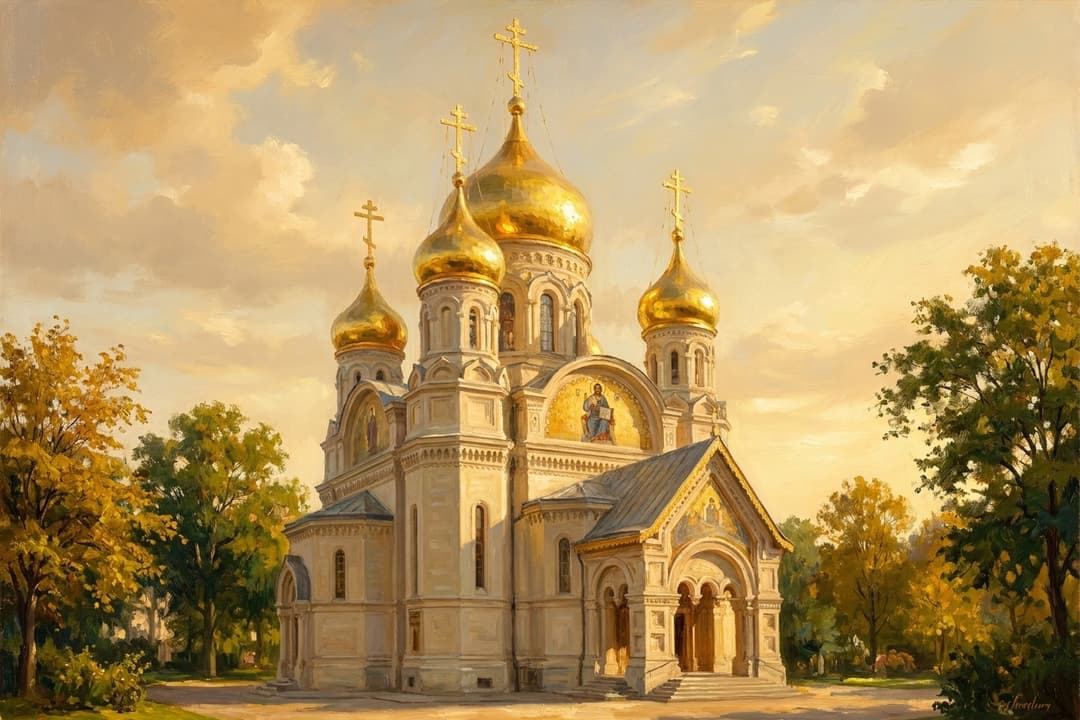
Located near Parc Monceau in Paris, the cathedral welcomes visitors during specific non-service hours while remaining an active parish. Its gilded domes and serene interior frescoes offer an immersive experience of Eastern Orthodox art and spirituality.
Highlights
- Five shimmering gold-leaf onion cupolas topped with three-bar Orthodox crosses
- Upper sanctuary adorned with monumental frescoes by Egraph Sorokine
- Gilded multi-tiered iconostasis framing the altar threshold
- Intimate brick-vaulted Crypt of the Most Holy Trinity
Things to Know
- Open to visitors on Tuesday, Thursday, Friday, and Sunday from 3:00 PM to 6:00 PM
- Modest dress code is expected during sanctuary visits
- Liturgical services are conducted in Church Slavonic upstairs and French in the crypt
Location
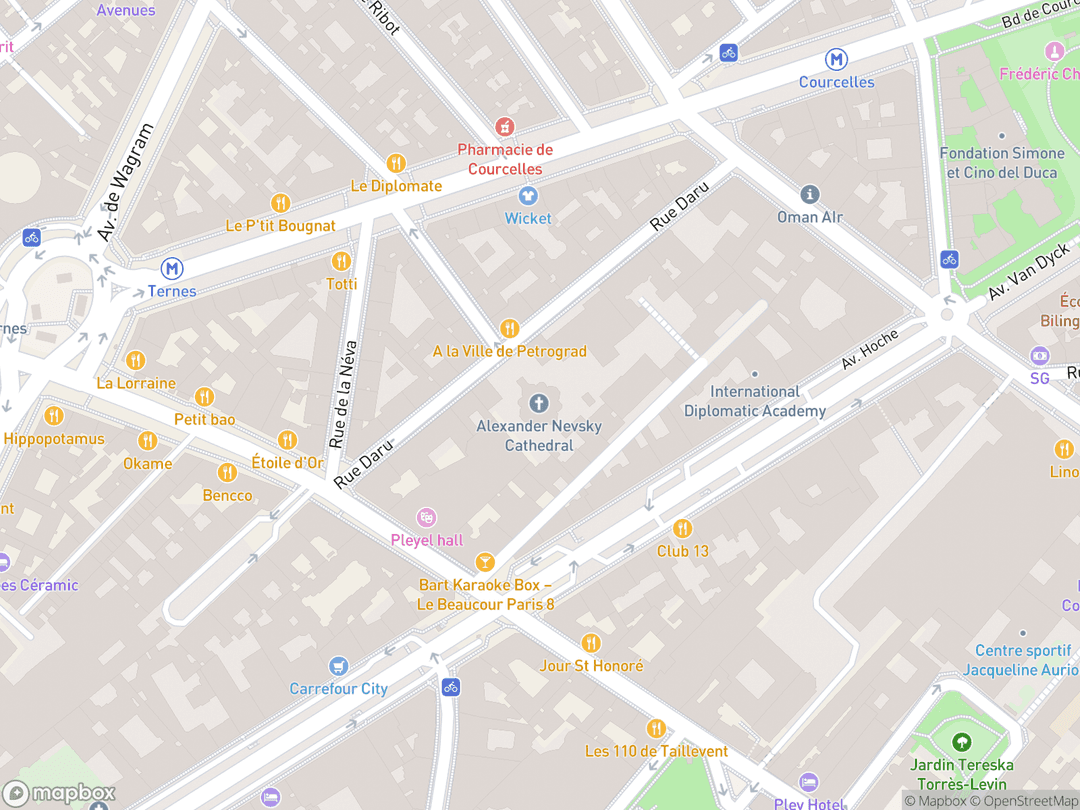
12 Rue Daru, 75008 Paris, France
Hours: Tuesday, Thursday, Friday, Sunday: 3:00 PM – 6:00 PM
Getting There: Metro Line 2 to Courcelles (250m) or Ternes (400m); 10-minute walk from Charles de Gaulle – Étoile.
Get DirectionsTips for Your Visit
Photography Etiquette
Avoid photography during religious services and refrain from flash inside the upper sanctuary.
Direct Sunlight Timing
Visit on sunny mid-afternoons when sunlight illuminates the gold cupolas against the sky.
About
Consecrated in 1861, Saint-Alexandre-Nevsky Russian Orthodox Cathedral stands as the first permanent Russian Orthodox place of worship in France. Financed through international subscriptions supported by Tsar Alexander II, the cathedral remains an architectural jewel of Paris's 8th arrondissement.
Built in the Neo-Russian Byzantine style by Roman Kouzmine and Ivan Strom, the cathedral features a Greek cross plan topped with five gold-leaf cupolas. Declared a French Monument Historique in 1981, it serves as the mother church for the Archdiocese of Orthodox Churches of Russian Tradition in Western Europe.
Beyond its spiritual significance, the cathedral holds rich cultural history as the site of Pablo Picasso's 1918 wedding and funerals for Ivan Turgenev and Christian Dior. Today, it remains an active sanctuary welcoming worshipers and visitors from around the world.
Gallery
Symbolic Elements
The temple's exterior features intricate carvings, each rich with spiritual meaning:
Central Gilded Cupola
Symbolizes Jesus Christ as the supreme head of the Christian church reigning over creation.
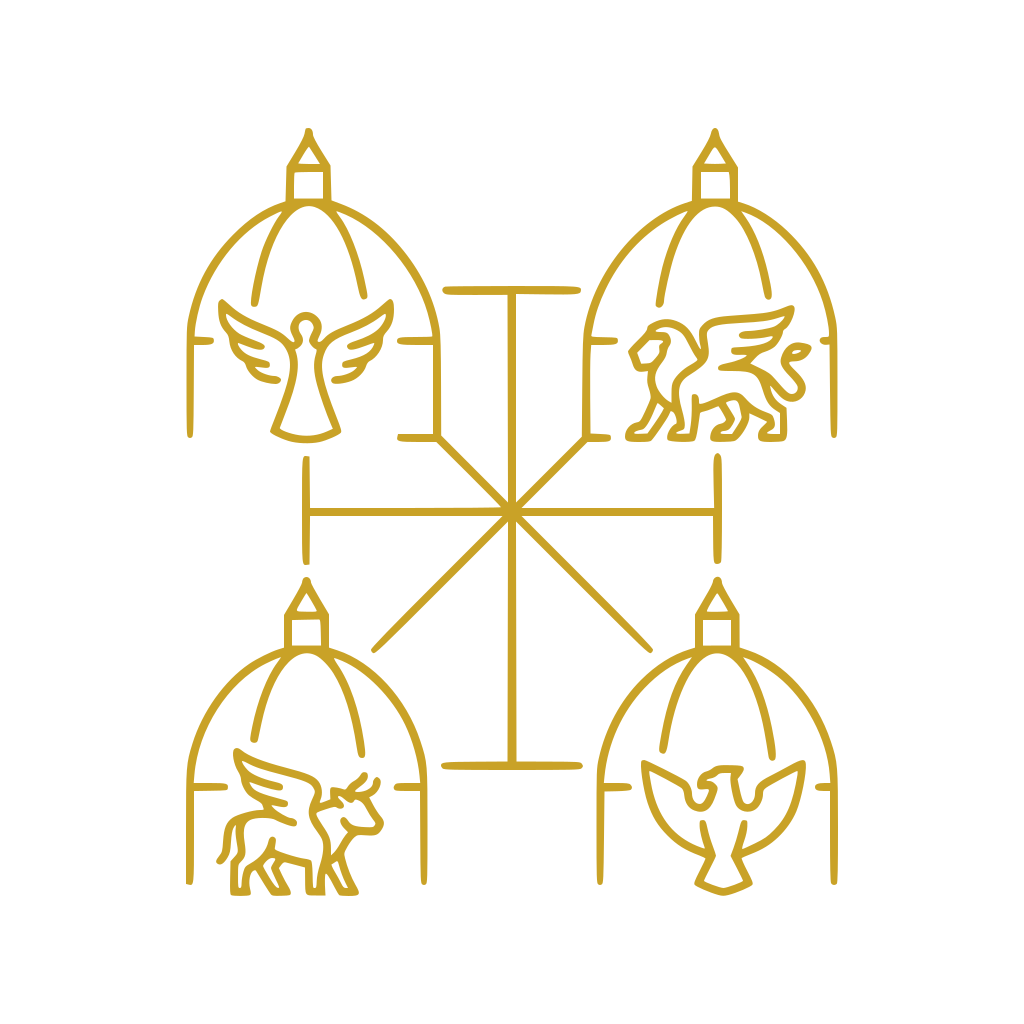
Four Corner Domes
Represent the Four Evangelists—Saints Matthew, Mark, Luke, and John—who carried the Gospel worldwide.
Onion Flame Shape
Resembles a burning candle flame, symbolizing constant prayer ascending toward heaven.
Three-Bar Orthodox Cross
Includes the upper title board, the main crossbar, and the slanted footrest signifying the two thieves.
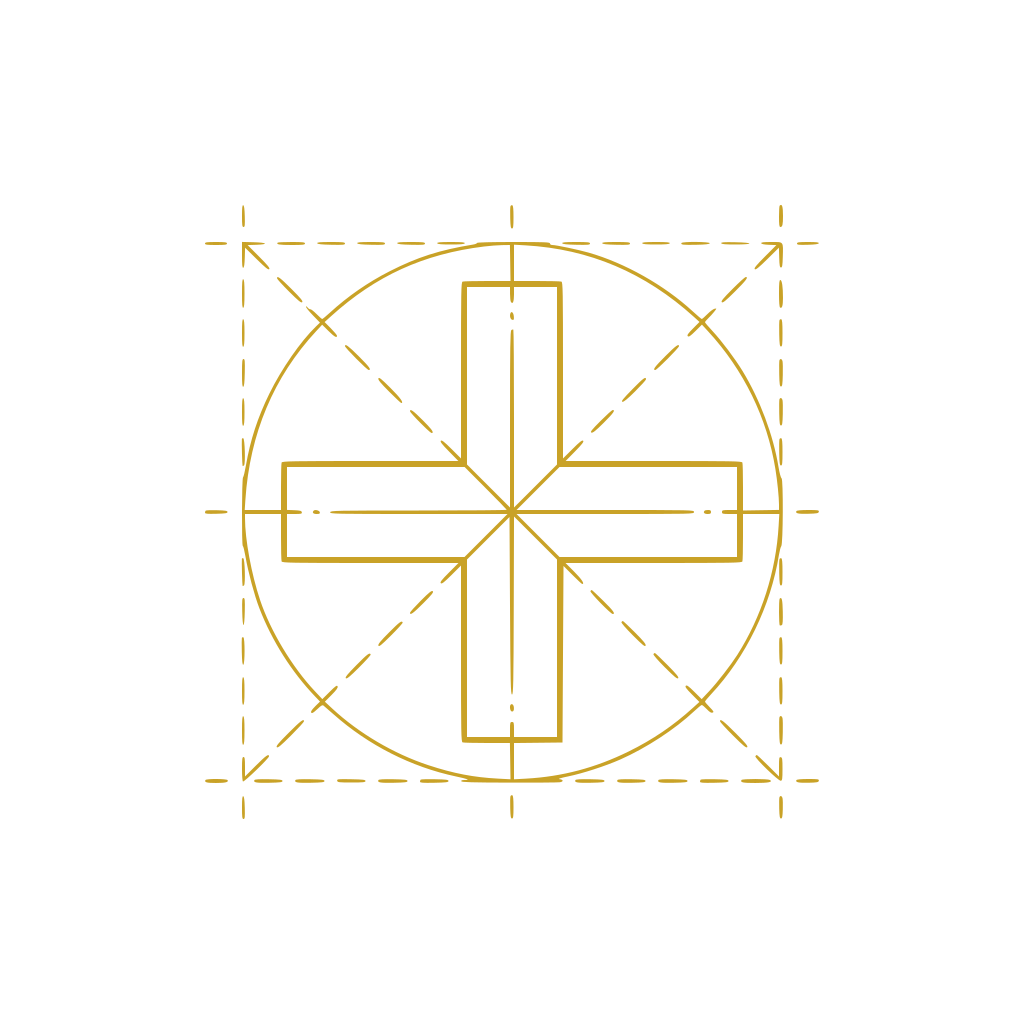
Greek Cross Layout
Reflects equal arms extending in four directions to signify the universal reach of salvation.
The Iconostasis Screen
Serves as a threshold between the earthly nave and the uncreated glory of the altar.
Entrance Pediment Mosaic
Depicts Saint Alexander Nevsky, honoring the grand prince as patron saint of the sanctuary.
Crypt Brick Vaulting
Houses an 18th-century embassy iconostasis, providing a quiet sanctuary dedicated to the Holy Trinity.
Interesting Facts
Pablo Picasso married Russian dancer Olga Khokhlova here in 1918, witnessed by Jean Cocteau and Sergei Diaghilev. (Tier B)
Tsar Alexander II contributed 150,000 gold francs directly from his personal treasury to fund initial construction. (Tier A)
Funding for the cathedral came from Orthodox, Catholic, and Protestant donors across Europe. (Tier B)
It was the first permanent Russian Orthodox place of worship in Paris, replacing a small chapel in the embassy. (Tier A)
Services upstairs are conducted in Church Slavonic, while the crypt parish holds services in French. (Tier A)
Renowned writer Ivan Turgenev's funeral service was held here in 1883 before his body was repatriated to Russia. (Tier B)
French fashion pioneer Christian Dior was honored with a solemn funeral in the upper sanctuary in 1957. (Tier B)
Russian émigrés settled around Rue Daru after 1917, forming a vibrant neighborhood known as Little Russia. (Tier B)
Architects incorporated French limestone and Romanesque motifs to blend the building into Parisian streetscapes. (Tier B)
It remains distinct from the 2016 Holy Trinity Cathedral near the Eiffel Tower, serving as the historical archdiocese seat. (Tier A)
Common Questions
Is Saint-Alexandre-Nevsky Cathedral open to the public?
Yes, visitors can tour the sanctuary on Tuesdays, Thursdays, Fridays, and Sundays between 3:00 PM and 6:00 PM.
How does this church differ from the Orthodox cathedral near the Eiffel Tower?
Saint-Alexandre-Nevsky was built in 1861 and serves as the historic archdiocese seat, whereas Holy Trinity Cathedral opened in 2016.
Which metro stations are closest to the cathedral?
Courcelles and Ternes on Metro Line 2 are within a 5-minute walk from the Rue Daru entrance.
What language are the services held in?
Services in the upper cathedral use Church Slavonic, while lower crypt services are conducted in French.
Featured Stories
The Avant-Garde Wedding of Pablo Picasso
July 12, 1918
In July 1918, Spanish master Pablo Picasso married Russian dancer Olga Khokhlova inside the cathedral's gilded sanctuary. The celebration brought together cultural luminaries including Jean Cocteau, Max Jacob, Sergei Diaghilev, and Guillaume Apollinaire. This event highlighted the cathedral's role as an artistic nexus connecting Russian tradition with Parisian modernism.
Source: Archdiocese of Orthodox Churches of Russian Tradition in Western Europe
An Imperial Donation and Global Subscription
March 3, 1859
When Archpriest Joseph Vasiliev sought to build a permanent sanctuary for Paris's Russian community, Tsar Alexander II personally contributed 150,000 gold francs. Additional contributions poured in from Orthodox, Catholic, and Protestant donors across Europe. This broad financial support enabled architects Roman Kouzmine and Ivan Strom to complete the landmark Neo-Russian cathedral.
Source: French Ministry of Culture Base Mérimée
The Sanctuary of Exiles and 'Little Russia'
January 1, 1920
Following the 1917 Russian Revolution, thousands of exiled émigrés sought refuge in Paris and gathered around Rue Daru. The cathedral became the spiritual anchor of a vibrant neighborhood known as 'Little Russia,' complete with tea rooms and bakeries. In 1922, Archbishop Eulogius officially elevated the sanctuary to cathedral status as the seat of the regional archdiocese.
Source: Historical Records of the Archdiocese of Russian Tradition
Timeline
Groundbreaking Ceremony
Construction begins on Rue Daru supported by Tsar Alexander II and international donations.
component.timeline.groundbreakingCathedral Consecration
Metropolitan Leontius consecrates Paris's first permanent Russian Orthodox church.
DedicationFuneral of Ivan Turgenev
The cathedral hosts the memorial service for author Ivan Turgenev prior to his burial in St. Petersburg.
EventWedding of Pablo Picasso
Pablo Picasso marries dancer Olga Khokhlova in the cathedral surrounded by Paris avant-garde artists.
EventElevation to Cathedral Status
Archbishop Eulogius designates the sanctuary as the episcopal seat of the Western European Archdiocese.
MilestoneFuneral of Christian Dior
A solemn memorial service honors French fashion designer Christian Dior following his sudden death.
EventFrench Parish Establishment in Crypt
The Crypt of the Most Holy Trinity is established as an autonomous French-language parish.
MilestoneHistorical Monument Classification
The French Republic officially classifies the cathedral and its interior furnishings as a Monument Historique.
MilestoneDome Regilding and Structural Restoration
Comprehensive exterior projects reinforce the central spire and re-gild the five onion domes.
RenovationHistory by Decade
1840s–1850s
In 1847, Archpriest Joseph Vasiliev initiated plans for a permanent sanctuary to replace a cramped embassy chapel. Tsar Alexander II provided 150,000 gold francs, complemented by international subscriptions from multiple Christian denominations. Construction officially broke ground on March 3, 1859.
1860s
Architects Roman Kouzmine and Ivan Strom completed the Neo-Russian structure in 1861. Metropolitan Leontius consecrated the cathedral on September 11, 1861, establishing Paris's first permanent Russian Orthodox church.
1880s–1910s
The sanctuary developed into a cultural refuge for Russian intellectuals, hosting Ivan Turgenev's funeral in 1883. In 1918, artist Pablo Picasso married ballerina Olga Khokhlova here amidst prominent avant-garde witnesses.
1920s–1950s
Elevated to cathedral status in 1922, the church became the seat of the Western European Archdiocese. Artist Albert Benois restored interior frescoes in the 1950s, and fashion designer Christian Dior's funeral was held here in 1957.
1960s–1980s
In 1964, the lower crypt was established as a French-language parish. The French Republic officially declared the cathedral a protected Monument Historique on May 11, 1981.
1990s–Present
Comprehensive exterior restorations in the 1990s re-gilded the five onion domes and reinforced the central spire. Today, Saint-Alexandre-Nevsky remains the historic center of Russian Orthodoxy in Paris.
Architecture & Facilities
Saint-Alexandre-Nevsky Cathedral is a premier example of 19th-century Byzantine-Muscovite Revival (Neo-Russian) architecture adapted to urban Paris. Designed by Roman Kouzmine and Ivan Strom, the edifice combines traditional 17th-century Russian sacral forms with French limestone facade elements to harmonize with surrounding Haussmannian streetscapes.
Building Materials
Facade Dimension Stone
High-grade French dimension limestone carved with Romanesque arcades and decorative relief bands.
Gilded Cupolas
Five flame-shaped onion domes covered in gold leaf and topped with traditional three-bar crosses.
Main Entrance Porch
Gabled triple-arch portico supported by twin columns and centered around a Saint Alexander Nevsky mosaic.
Interior Frescoes
Academic oil and gold leaf wall paintings executed by Russian Academy painter Egraph Sorokine.
Interior Features
Main Sanctuary Nave
Central gilded square bay enclosed by four semi-circular apses under a light-filled central cupola.
Grand Iconostasis
Multi-tiered gilded wooden screen featuring 19th-century academic realist icons of sacred figures.
Crypt of the Most Holy Trinity
Brick-vaulted lower sanctuary housing an 18th-century embassy oak iconostasis for French services.
Altar Sanctuary
Holy of Holies area behind the iconostasis decorated with religious canvases by Alexey Bogolyubov.
Temple Grounds
The cathedral occupies a compact urban site at 12 Rue Daru in Paris's 8th arrondissement. Enclosed by wrought-iron gating, the front courtyard allows visitors to view the triple-arch entrance and rising gilded cupolas from street level.
Additional Facilities
Facilities include a lower crypt chapel for French-language worship, a parish bookshop offering Orthodox literature and icons, and administrative offices for the archdiocese.
Religious Significance
In Eastern Orthodox theology, a cathedral is not merely a meeting space but a living cosmic image of heaven on earth. Every architectural detail in Saint-Alexandre-Nevsky Cathedral serves to connect worshipers with divine reality during the Divine Liturgy.
To serve as the episcopal seat for the archdiocese and provide a sacred space for Orthodox sacramental life, communal prayer, and spiritual sanctuary in Paris.
Sacred Ordinances
Divine Liturgy
The primary Eucharistic service wherein the community gathers to participate in scripture, prayer, and Holy Communion.
Sacramental Matrimony
The Orthodox crowning service uniting spouses in a sacred covenant of faith and love.
Vespers and Matins
Evening and morning prayer services celebrating the liturgical cycle through hymns and psalmody.
The Theology of Icons and Iconostasis
Icons inside the cathedral are revered as theological windows into eternity rather than artistic idols. The iconostasis bridges the earthly nave and heavenly altar, guiding worshipers into spiritual communion with Christ and the saints.
The Flame of the Domes
The flame-shaped onion cupolas represent burning candle flames ascending toward God, reminding the surrounding city of perpetual prayer and uncreated divine light.
Sources & Research
Every fact on Temples.org is backed by verified Sources & Research. Each piece of information is rated by source tier and confidence level.
View All Sources (8)
| Field | Source | Tier | Retrieved |
|---|---|---|---|
| About & Historical Background | Archdiocese of Orthodox Churches of Russian Tradition in Western Europe (opens in a new tab) | A | 2026-02-15 |
| About & Historical Background | French Ministry of Culture (Base Mérimée) (opens in a new tab) | A | 2026-02-15 |
| Architecture & Structural Design | POP : la plateforme ouverte du patrimoine (opens in a new tab) | B | 2026-02-15 |
| Featured Stories & Cultural Impact | Ville de Paris - Patrimoine Historique (opens in a new tab) | B | 2026-02-15 |
| Religious Significance & Symbolism | Archdiocese of Orthodox Churches of Russian Tradition (opens in a new tab) | A | 2026-02-15 |
| Timeline & Featured Stories | Ministère de la Culture de la République Française (opens in a new tab) | B | 2026-02-15 |
| Visitor Insights & Location | Paris Convention and Visitors Bureau (opens in a new tab) | C | 2026-02-15 |
| About & Historical Background | Direction Régionale des Affaires Culturelles Île-de-France (opens in a new tab) | B | 2026-02-15 |