Visitor Insights
Visiting Cave of the Patriarchs
Visiting the Cave of the Patriarchs is a deeply moving experience, steeped in history and religious significance. The site is an active place of worship for both Jews and Muslims, creating a unique atmosphere of reverence and reflection. Visitors should be prepared for enhanced security measures and a politically sensitive environment.
Highlights
- Witness the impressive Herodian-era enclosure, a testament to ancient architectural prowess.
- Explore the cenotaphs commemorating the biblical patriarchs and matriarchs.
- Experience the shared heritage of Judaism, Islam, and Christianity at this sacred site.
Things to Know
- Be aware of the politically sensitive nature of the area and potential security measures.
- Dress modestly out of respect for the religious significance of the site.
- Check the visiting hours and access restrictions, which may vary depending on the religious calendar.
Location
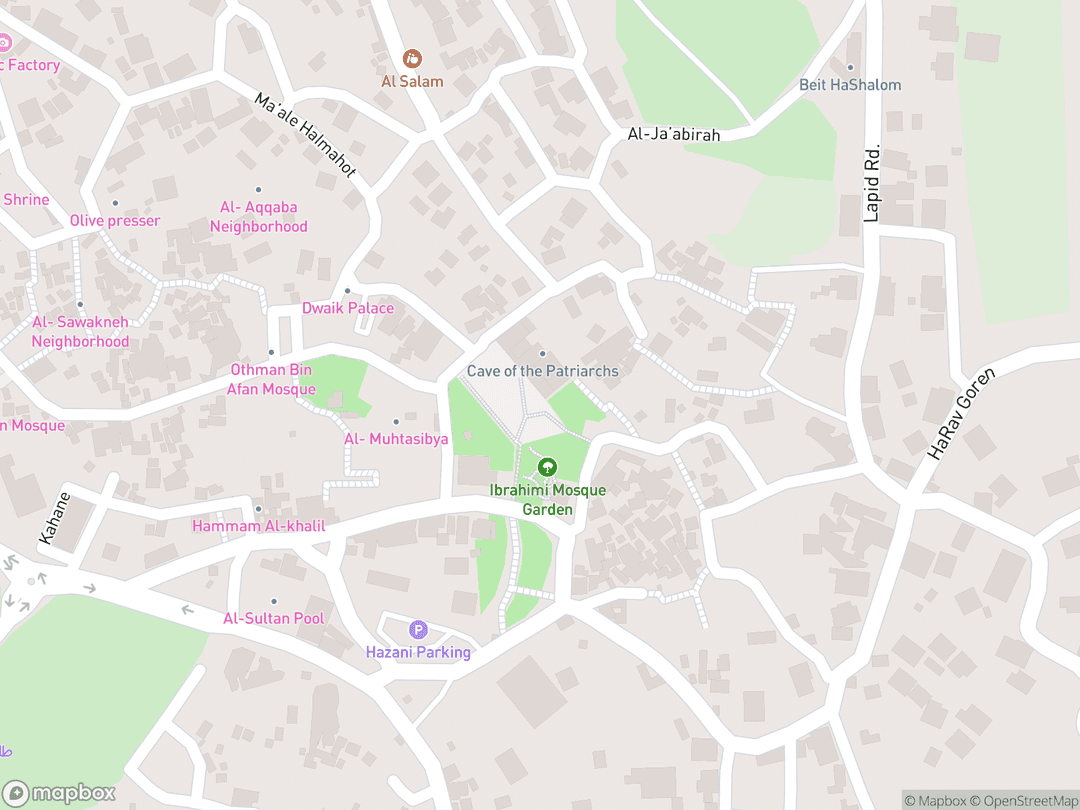
Hebron, West Bank
Hours: Visiting hours vary depending on the day and time of year. It is advisable to check the current schedule before visiting.
Getting There: The Cave of the Patriarchs is located in Hebron, West Bank. Egged buses travel from major Israeli cities to Kiryat Arba, near Hebron. Bus lines 381 or 383 from Jerusalem can be taken to reach the cave.
Get DirectionsTips for Your Visit
Dress Modestly
Out of respect for the religious significance of the site, it is recommended to dress modestly.
Check Visiting Hours
Visiting hours may vary depending on the day and time of year. Check the current schedule before visiting.
About
The Cave of the Patriarchs, known to Jews as the Cave of Machpelah (מְעָרַת הַמַּכְפֵּלָה, Me'arat HaMachpelah, meaning "Cave of the Double") and to Muslims as the Ibrahimi Mosque (المسجد الإبراهيمي, al-Masjid al-ʾIbrāhīmī), is a site of immense religious significance located in Hebron, in the West Bank. It is considered the second holiest site in Judaism, after the Temple Mount in Jerusalem. The site is also revered in Islam and Christianity, as it is believed to be the burial place of the biblical patriarchs and matriarchs. These include Abraham and Sarah, Isaac and Rebecca, and Jacob and Leah.
As part of the Abrahamic traditions, the Cave of the Patriarchs holds a unique place in the shared heritage of Judaism, Islam, and Christianity. The Hebrew name Hebron (Ḥevron) and the Arabic name Al-Khalīl both refer to Abraham's epithet as "the friend of God," underscoring the site's importance to all three faiths. The site serves as a testament to the enduring legacy of Abraham and his descendants, who are considered foundational figures in monotheistic religion.
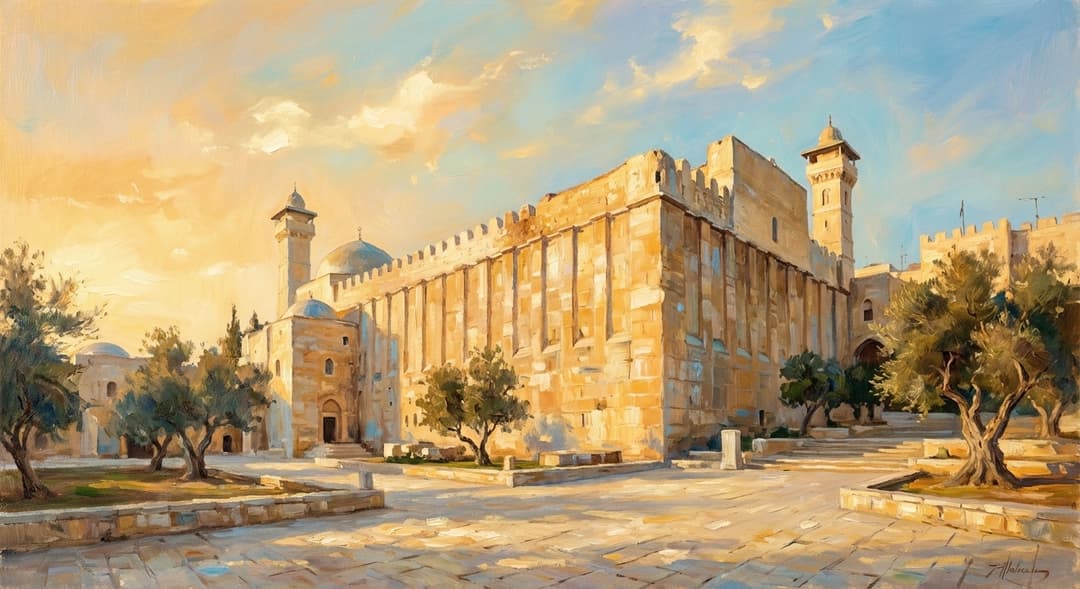
The structure itself has undergone numerous architectural changes reflecting the influence of different cultures and religions. The most prominent feature is the Herodian-era rectangular enclosure, traditionally attributed to Herod the Great (late 1st century BCE). Over time, the site has been transformed into a mosque and has seen the addition of minarets and cenotaphs. Today, the site remains an active place of worship and pilgrimage for both Jews and Muslims, though it has also been the site of conflict and division.
Gallery
Symbolic Elements
The temple's exterior features intricate carvings, each rich with spiritual meaning:

Herodian Stonework
The massive limestone blocks of the Herodian enclosure are a testament to the architectural prowess of the era. The finely dressed ashlars, characterized by smooth drafted margins surrounding a slightly raised central boss, are a distinctive feature of Herodian construction.

Cenotaphs
The cenotaphs within the Cave of the Patriarchs commemorate the biblical patriarchs and matriarchs: Abraham, Sarah, Isaac, Rebecca, Jacob, and Leah. These structures serve as symbolic representations of the burial places of these revered figures.
Minarets
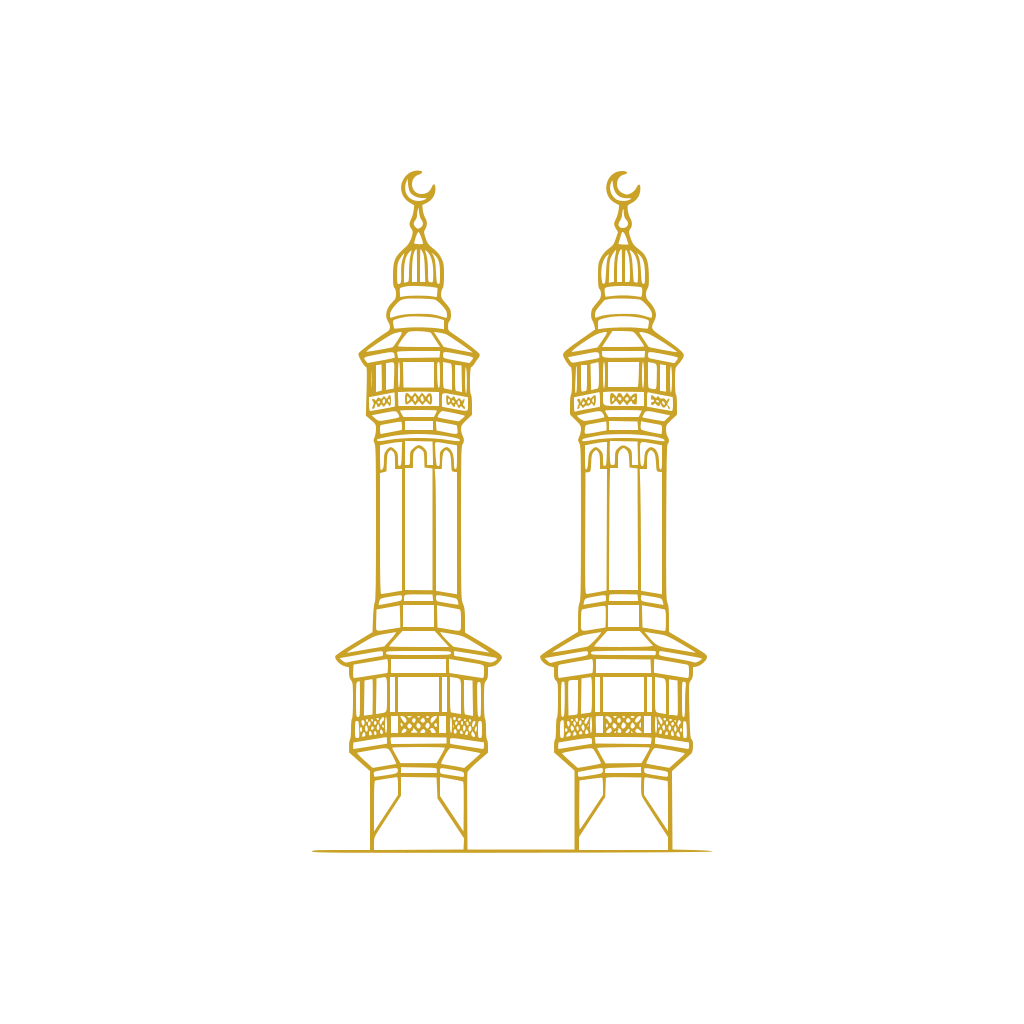
The minarets, added during the Mamluk period, are a prominent feature of the Ibrahimi Mosque. These towers serve as a visual reminder of the site's Islamic heritage and are used to call Muslims to prayer.

Mihrab
The mihrab, a niche in the wall of the Ibrahimi Mosque, indicates the direction of Mecca and serves as a focal point for Muslim prayer. It is a symbol of the site's importance as a place of Islamic worship.

Arches
The arches within the Cave of the Patriarchs reflect various architectural styles and periods. They serve as both structural and decorative elements, adding to the site's unique character.

Dome
The dome above the cenotaphs is a symbol of reverence and architectural grandeur. It represents the sacred nature of the site and the importance of the figures commemorated within.

Entrance Gate
The entrance gate to the Cave of the Patriarchs serves as a symbolic threshold between the secular world and the sacred space within. It represents the act of entering a place of religious significance and historical importance.

Stone Walls
The ancient stone walls surrounding the Cave of the Patriarchs stand as a testament to the enduring history and resilience of this sacred site. They have witnessed centuries of change and conflict, yet continue to enclose and protect the tombs of the patriarchs and matriarchs.
Interesting Facts
The Hebrew name 'Machpelah' means 'doubled,' possibly referring to the double cave structure or the four couples believed to be buried there.
The Herodian enclosure is the only fully intact structure from that period.
Legend says no one has entered the cave and survived, except for Rabbi Abraham Azulai, who was lowered to retrieve a Sultan's sword.
The site is considered the oldest continuously used space in the world.
Some traditions suggest Adam and Eve are also buried at the site, marking it as the spiritual gateway to the Garden of Eden.
The structure is divided into three rooms: Ohel Avraham, Ohel Yitzhak, and Ohel Ya'akov.
The Israeli military controls access to the site, while the Waqf maintains most of it.
The building now houses both the Ibrahimi Mosque and synagogues.
The site has been a Jewish mausoleum, a Byzantine basilica, and a mosque.
The double cave was discovered several years ago, revealing artifacts from the Early Israelite Period.
Common Questions
What is the significance of the Cave of the Patriarchs?
The Cave of the Patriarchs is considered the second holiest site in Judaism and is also revered in Islam and Christianity. It is believed to be the burial place of the biblical patriarchs and matriarchs, including Abraham, Sarah, Isaac, Rebecca, Jacob, and Leah. The site holds immense religious and historical importance for all three faiths.
Who is buried in the Cave of the Patriarchs?
According to tradition, the Cave of the Patriarchs is the burial place of Abraham and Sarah, Isaac and Rebecca, and Jacob and Leah. These figures are considered the founding fathers and mothers of the Jewish people and are also revered in Islam and Christianity.
What is the architectural style of the Cave of the Patriarchs?
The most prominent feature of the Cave of the Patriarchs is the Herodian-era rectangular enclosure, traditionally attributed to Herod the Great (late 1st century BCE). This structure is constructed of massive limestone walls and is the only fully intact Herodian structure still standing. Over time, the site has undergone numerous architectural changes reflecting the influence of different cultures and religions.
How can I visit the Cave of the Patriarchs?
The Cave of the Patriarchs is located in Hebron, West Bank. The site is open to tourists and visitors of all faiths. However, due to the politically sensitive nature of the area, it is advisable to visit with a guided tour. Egged buses travel from major Israeli cities to Kiryat Arba, near Hebron. Bus lines 381 or 383 from Jerusalem can be taken to reach the cave.
What are the visiting hours for the Cave of the Patriarchs?
Visiting hours vary depending on the day and time of year. It is advisable to check the current schedule before visiting. Jews are given access to the Muslim section on ten auspicious religious days a year.
Featured Stories
Abraham's Purchase of the Cave
c. 1677 BCE
According to the Book of Genesis, Abraham sought a burial place for his wife Sarah after her death. He negotiated with the Hittites, who inhabited the land of Canaan, and purchased the cave of Machpelah and the surrounding field for four hundred shekels of silver. This act marked the first recorded instance of land ownership by Abraham's descendants in Canaan and solidified the connection between the Jewish people and the Land of Israel.
The purchase of the Cave of Machpelah was not merely a transaction; it was a symbolic act of claiming a stake in the promised land. Abraham's determination to secure a proper burial place for Sarah demonstrated his faith in God's covenant and his commitment to establishing a lasting legacy for his descendants. This event continues to resonate with Jews today, serving as a reminder of their historical ties to the land of Israel.
Source: Genesis 23
The Herodian Enclosure
Late 1st Century BCE
During the reign of Herod the Great, a monumental enclosure was constructed over the Cave of the Patriarchs. This impressive structure, built of massive limestone blocks, served as a testament to Herod's architectural prowess and his desire to commemorate the sacred site. The Herodian enclosure remains the only fully intact structure from that period, standing as a silent witness to centuries of history.
The construction of the Herodian enclosure transformed the Cave of the Patriarchs into a grand and imposing complex. The massive walls and intricate stonework reflected the power and sophistication of the Herodian dynasty. This architectural marvel not only protected the sacred tombs but also served as a symbol of Jewish identity and resilience in the face of Roman rule.
Source: Madain Project
The Ibrahimi Mosque Massacre
February 25, 1994
On February 25, 1994, during the month of Ramadan, a tragic event unfolded at the Ibrahimi Mosque. Baruch Goldstein, an Israeli settler, opened fire on Muslim worshippers, killing 29 and wounding many others. This horrific act sent shockwaves throughout the world and further inflamed tensions between Israelis and Palestinians.
The Ibrahimi Mosque massacre remains a painful reminder of the ongoing conflict surrounding the Cave of the Patriarchs. The event led to increased security measures at the site and further restrictions on access for both Jews and Muslims. The massacre also sparked renewed efforts to find a peaceful resolution to the Israeli-Palestinian conflict and to ensure the safety and security of all those who visit this sacred site.
Source: The Times of Israel
Timeline
Abraham Purchases the Cave
According to Genesis, Abraham purchases the cave and the surrounding field from the Hittites as a burial place for his wife, Sarah, marking the first recorded instance of land ownership by Abraham's descendants in Canaan.
MilestoneBiblical Story Origin
Some scholars believe the biblical story of Abraham's burial dates back to this time.
EventHerod the Great Builds Enclosure
Herod the Great builds a large, rectangular enclosure over the cave to commemorate the site. This is the only fully surviving Herodian structure.
MilestoneChristian Basilica Built
A Christian basilica is built on the site during the Byzantine period.
EventConversion to Ibrahimi Mosque
The structure is converted into the Ibrahimi Mosque following the Muslim conquest of the Levant.
EventCrusader Control
Crusaders take control, but the site is retaken by Saladin in 1188, who reconverts it into a mosque.
EventMamluk Transformation
The Mamluks transform the site into an exclusively Islamic sanctuary, banning Christians and Jews. Architectural enhancements include minarets and domed cenotaphs.
RenovationJewish Access Restricted
Jewish access to the cave is restricted; Jews are only allowed up to the seventh step on a staircase outside the building.
EventHebron Under Istanbul Administration
The Hebron district becomes part of the Sanjak of Jerusalem, administered directly from Istanbul.
EventBritish Occupation
The British occupy Hebron during World War I.
EventHebron Massacre
A massacre in Hebron results in the death of 67 Jews.
EventJordanian Occupation
After Jordan occupies the West Bank, Jews are prohibited from entering the territory and visiting the tomb.
EventIsraeli Control
Following the Six-Day War, Israel gains control of Hebron, and Jews regain access to the Cave of the Patriarchs.
EventCave of the Patriarchs Massacre
The Cave of the Patriarchs massacre occurs when Baruch Goldstein opens fire on Muslim worshippers, killing 29 and wounding many others.
EventHebron Agreement
The Hebron Agreement divides control of the site between Jewish and Muslim authorities.
EventReligious Significance
The Cave of the Patriarchs holds immense religious significance for Judaism, Islam, and Christianity, all of whom trace their lineage back to Abraham. It is believed to be the burial place of the biblical patriarchs and matriarchs, making it a sacred site for all three faiths.
The core spiritual purpose of the Cave of the Patriarchs is to honor the memory of the patriarchs and matriarchs and to connect with their legacy of faith and devotion. The site serves as a place of prayer, reflection, and pilgrimage for those seeking to deepen their spiritual connection to the Abrahamic traditions.
Sacred Ordinances
Prayer
Prayer is a central practice at the Cave of the Patriarchs, with Jews and Muslims offering their devotions in separate sections of the site. Prayers are offered for peace, healing, and guidance, as well as in remembrance of the patriarchs and matriarchs.
Remembrance
The Cave of the Patriarchs serves as a place of remembrance, where visitors can reflect on the lives and legacies of the patriarchs and matriarchs. Their stories of faith, courage, and devotion continue to inspire people of all faiths.
Abrahamic Traditions
As part of the Abrahamic traditions, the Cave of the Patriarchs holds a unique place in the shared heritage of Judaism, Islam, and Christianity. The site serves as a testament to the enduring legacy of Abraham and his descendants, who are considered foundational figures in monotheistic religion.
Similar Temples
Sources & Research
Every fact on Temples.org is backed by verified Sources & Research. Each piece of information is rated by source tier and confidence level.
View All Sources (7)
| Field | Source | Tier | Retrieved |
|---|---|---|---|
| Overview & Historical Context | Britannica (opens in a new tab) | B | 2024-01-02 |
| Jewish History & Significance | Jewish Virtual Library (opens in a new tab) | B | 2024-01-02 |
| Historical Background | Kiddle (opens in a new tab) | C | 2024-01-02 |
| Travel Information & Security | Bein Harim Tours (opens in a new tab) | D | 2024-01-02 |
| Ancient History & Legends | Ancient Origins (opens in a new tab) | C | 2024-01-02 |
| Architectural Details & Herodian Structure | Madain Project (opens in a new tab) | B | 2024-01-02 |
| Jewish Perspective & Significance | Aish.com (opens in a new tab) | A | 2024-01-02 |