Visitor Insights
Visiting Archbasilica of Saint John Lateran
Visiting Saint John Lateran offers direct engagement with seventeen centuries of Christian architecture, papal history, and monumental Baroque art.
Highlights
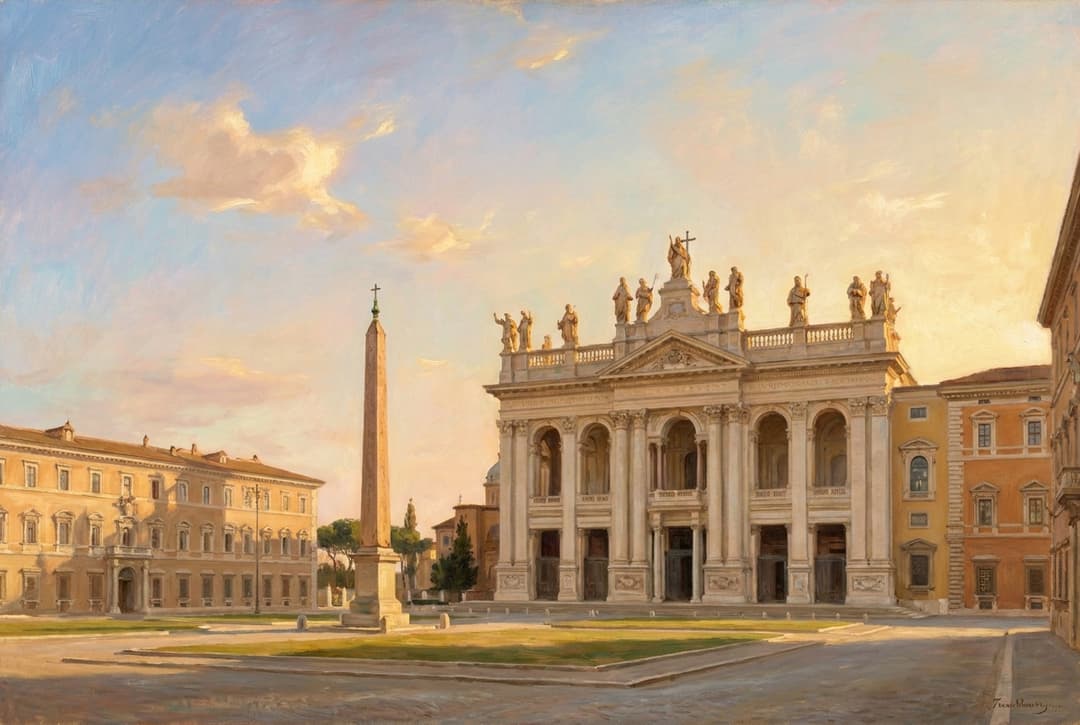
- The colossal Neoclassical facade topped by 15 seven-meter-tall statues.
- Borromini's Baroque nave featuring twelve monumental statues of the Apostles.
- The ancient 1st-century BC bronze doors from the Roman Senate House.
- The 13th-century Cosmatesque cloister and octagonal Lateran Baptistery.
Things to Know
- Strict dress code requires shoulders and knees to be covered for entry.
- Security checkpoint screening with metal detectors is mandatory at the portico.
Location
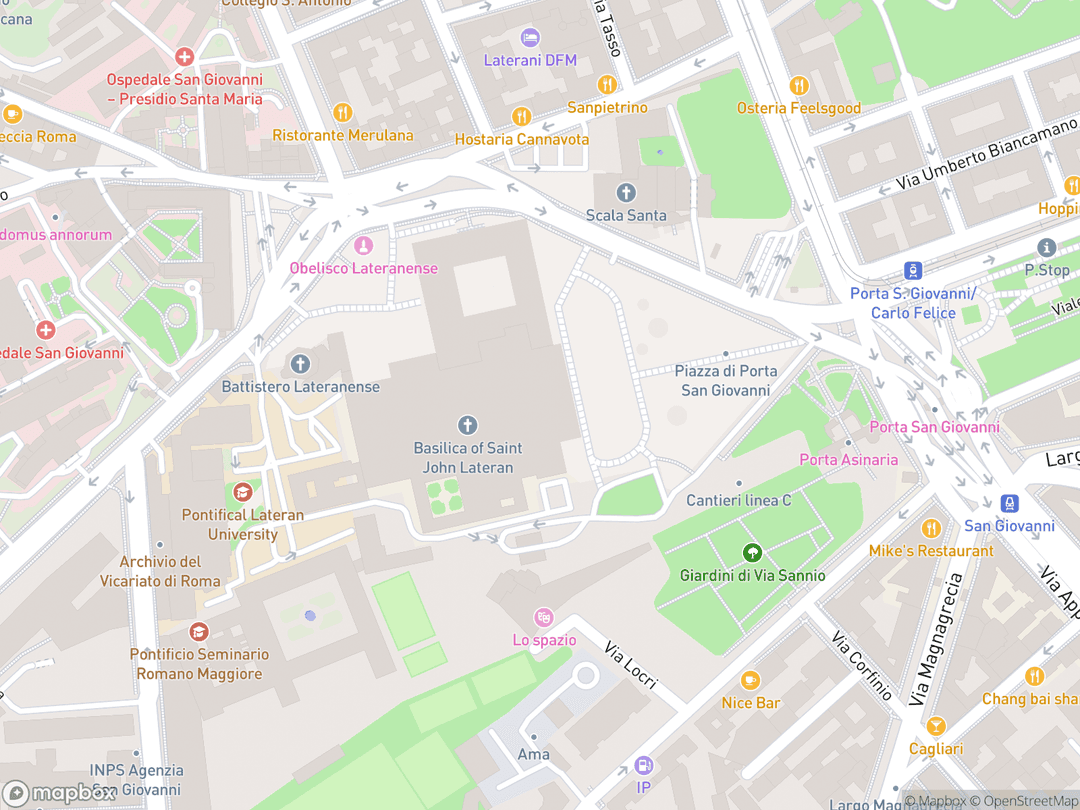
Piazza di San Giovanni in Laterano, 4, 00184 Roma RM, Italy
Hours: Main Basilica open daily 7:00 AM – 6:30 PM; Cloister open daily 9:00 AM – 6:00 PM.
Getting There: Take Metro Line A to San Giovanni station and walk 5 minutes south across the plaza.
Get DirectionsTips for Your Visit
Best Time to Visit
Arrive early between 7:30 AM and 9:00 AM on weekdays to experience the nave with quiet light and few crowds.
Explore the Complex
Do not miss the Scala Santa and Sancta Sanctorum located directly across the piazza.
About
The Archbasilica of Saint John Lateran is the oldest public place of Christian worship in Western Europe and ranks as the principal cathedral of the Diocese of Rome. Consecrated by Pope Sylvester I in AD 324 under the patronage of Emperor Constantine I, the archbasilica holds the title of 'Mother and Head of all churches in Rome and in the World.'
Rooted in the shared Abrahamic tradition of sacred gathering spaces, the archbasilica represents the liturgical focal point of Catholic unity. It houses the papal throne (cathedra) and serves as the official ecclesiastical seat of the Pope, standing as a primary monument of Latin Christianity.
Throughout seventeen centuries, the basilica has undergone masterwork additions by renowned artists and architects including Domenico Fontana, Francesco Borromini, and Alessandro Galilei. The complex enjoys extraterritorial diplomatic status held by the Holy See under the Lateran Treaty of 1929.
Gallery
Symbolic Elements
The temple's exterior features intricate carvings, each rich with spiritual meaning:

The Cathedra (Papal Chair)
The marble throne located in the apse representing episcopal authority and papal teaching jurisdiction.

Mater et Caput Inscription
The facade inscription proclaiming the basilica as the mother and head of all churches worldwide.

Statues of the Twelve Apostles
Twelve monumental white marble statues illustrating the apostolic foundation supporting the Church.

Curia Julia Bronze Doors
Ancient 1st-century BC Senate doors symbolising the Christian transformation of classical Rome.

The Holy Door
A ceremonial portal opened exclusively during Jubilee Years to symbolise Christ as the gateway to grace.

Octagonal Baptistery
An eight-sided architectural layout symbolising resurrection and the eighth day of creation.

Gothic Ciborium
A 14th-century canopy elevated above the high altar housing sacred reliquaries of Saints Peter and Paul.
Interesting Facts
Saint John Lateran is the official cathedral of Rome and the true ecclesiastical seat of the Pope. (Tier A)
The main bronze doors originally belonged to the Roman Senate House in the Roman Forum. (Tier A)
The adjacent Lateran Obelisk is the tallest standing ancient Egyptian obelisk in the world. (Tier B)
The upper tier of the ciborium contains reliquary busts housing relics of Saints Peter and Paul. (Tier B)
The octagonal Lateran Baptistery served as the prototype for medieval baptisteries across Europe. (Tier A)
The site hosted five historical Ecumenical Councils between the 12th and 16th centuries. (Tier B)
The complex enjoys extraterritorial diplomatic rights under the 1929 Lateran Treaty. (Tier A)
The chapel of the Blessed Sacrament contains a wooden fragment traditionally associated with the Last Supper. (Tier C)
Common Questions
Is Saint John Lateran older than St. Peter's Basilica?
Yes, consecrated in AD 324, it is the oldest public Christian church in Rome.
Why is this basilica called the cathedral of Rome instead of St. Peter's?
Saint John Lateran contains the papal cathedra, making it the official seat of the Bishop of Rome.
Are the bronze doors at the entrance original Roman artifacts?
Yes, the main bronze doors were relocated from the Curia Julia Senate House in the Roman Forum.
Is there an entry fee to visit the archbasilica?
Entry to the main basilica is free, though a small fee applies for the medieval cloister.
Featured Stories
The Imperial Gift of Constantine
AD 312–324
Following victory at the Battle of Milvian Bridge, Emperor Constantine I donated the imperial cavalry land to Pope Miltiades. This act established Rome's first public Christian sanctuary and set a legal precedent for ecclesiastical properties across Western civilization.
Source: The Holy See
Borromini's Baroque Renewal
1646–1650
In preparation for the 1650 Jubilee Year, Pope Innocent X commissioned Baroque architect Francesco Borromini to rebuild the decaying nave. Borromini ingeniously encased the ancient masonry into massive piers housing sculpted niches for the Twelve Apostles.
Source: Vatican City State
The Sovereign Treaty of 1929
February 11, 1929
Signed inside the adjacent Lateran Palace, the Lateran Treaty resolved the 'Roman Question' between Italy and the Holy See. The accord granted extraterritorial rights to the archbasilica complex, preserving its independent status.
Source: Diocese of Rome
Timeline
Constantinian Donation
Emperor Constantine donates the imperial cavalry barracks land to the Bishop of Rome.
MilestoneSolemn Consecration
Pope Sylvester I consecrates the cathedral as the Basilica of the Savior.
DedicationVandal Reconstruction
Pope Leo I restores the structure following the Vandal sack of Rome.
RenovationThe Cadaver Synod
Pope Stephen VI conducts a formal trial of the exhumed remains of Pope Formosus.
EventFirst Lateran Council
The archbasilica hosts the first Ecumenical Council held in Western Europe.
EventFirst Holy Jubilee
Pope Boniface VIII proclaims the first Holy Jubilee Year from the loggia.
EventUrban Remodeling
Domenico Fontana constructs the new Lateran Palace and northern facade.
RenovationBorromini Baroque Interior
Francesco Borromini completes the interior Baroque transformation for the Jubilee.
RenovationNeoclassical Facade Completed
Alessandro Galilei erects the monumental travertine main facade.
RenovationLateran Treaty Signed
The treaty establishes sovereign extraterritorial rights for the Lateran complex.
MilestoneHistory by Decade
310s–320s — Constantinian Foundation
Emperor Constantine donated the estate of the Laterani family following his victory at the Milvian Bridge. Pope Sylvester I consecrated the basilica in 324 AD as the central cathedral for Rome's Christian community.
450s–890s — Early Medieval Restoration
Following the Vandal sack of 455 AD, Pope Leo I led major restoration efforts. Earthquakes in the late 9th century required further rebuilding under Pope Sergius III, who dedicated the sanctuary to St. John the Baptist.
1100s–1300s — Councils and Papal Residence
The Lateran complex served as the primary papal residence and hosted five Ecumenical Councils. Devastating fires during the Avignon Papacy damaged the nave, leading to the relocation of the papal palace to the Vatican Hill upon the return to Rome.
1580s–1650s — Renaissance and Baroque Reconstruction
Pope Sixtus V initiated comprehensive urban renovations, commissioning Domenico Fontana for the Lateran Palace. Pope Innocent X later selected Francesco Borromini to redesign the nave interior with dramatic Baroque architecture.
1730s–1880s — Neoclassical Facade and Apse Expansion
Architect Alessandro Galilei won an architectural competition to construct the colossal Neoclassical travertine facade in 1735. In the late 19th century, Pope Leo XIII expanded the apse to preserve and restore the medieval mosaics.
1920s–Present — Lateran Treaty and Contemporary Era
The signing of the Lateran Treaty in 1929 established extraterritorial jurisdiction for the archbasilica under Holy See sovereignty. The cathedral continues to serve as the active seat for papal solemnities and diocesan governance.
Architecture & Facilities
A monumental synthesis of Early Christian basilican spatial planning, 13th-century Cosmatesque stone craftsmanship, High Baroque interior sculpting by Borromini, and Neoclassical facade design by Alessandro Galilei.
Building Materials
Travertine Stone
Quarried near Tivoli and utilized for the monumental 18th-century main facade.
Verde Antico Marble
Green marble columns reused by Borromini to frame the nave niches.
Ancient Bronze
First-century BC bronze salvaged from the Roman Senate House for the portal.
Porphyry and Glass Mosaics
Polished colored stone used in the medieval Cosmatesque cloister.
Interior Features
Central Nave
Reconstructed by Borromini with twelve niches holding statues of the Apostles.
Papal High Altar
Surmounted by a 14th-century Gothic ciborium containing papal reliquaries.
The Apse
Features a reconstructed 13th-century mosaic depicting the gemmed cross.
Cosmatesque Cloister
Thirteenth-century walkway decorated with twisted, mosaic-encrusted marble pillars.
Temple Grounds
The basilica fronts the expansive Piazza di San Giovanni in Laterano, housing the 32-meter-tall Lateran Obelisk and the adjacent Lateran Palace.
Additional Facilities
Includes the Octagonal Lateran Baptistery, Treasury Museum, and the nearby Sancta Sanctorum complex housing the Holy Stairs.
Religious Significance
Within Christian liturgy and Catholic theology, Saint John Lateran represents the universal center of episcopal jurisdiction and unity under the Bishop of Rome.
As the official cathedral of Rome, the archbasilica serves as the seat for diocesan governance, papal consecrations, and Holy Week solemnities.
Sacred Ordinances
The Solemn Mass
The Eucharistic liturgy celebrated by the Pope or his vicar upon the ancient papal altar.
Sacrament of Baptism
Administered at the historic Lateran Baptistery, the ancient model for Christian initiation.
Papal Blessing (Urbi et Orbi)
Imparted from the central blessing loggia during major ecclesiastical occasions.
The Cathedra and Magisterial Teaching
The papal chair symbolises authentic teaching authority within the Catholic Church, serving as the physical seat of the Bishop of Rome.
Mother Church of the World
The basilica's canonical title affirms its primacy as the spiritual parent of all Catholic parish churches worldwide.
Similar Temples


Sources & Research
Every fact on Temples.org is backed by verified Sources & Research. Each piece of information is rated by source tier and confidence level.
View All Sources (5)
| Field | Source | Tier | Retrieved |
|---|---|---|---|
| About & Historical Background | The Holy See (opens in a new tab) | A | 2026-02-08 |
| Governance & Diocesan Administration | Diocese of Rome (opens in a new tab) | A | 2026-02-08 |
| UNESCO Heritage & Extraterritorial Status | UNESCO World Heritage Centre (opens in a new tab) | B | 2026-02-08 |
| Historical Timeline & Ecumenical Councils | Encyclopaedia Britannica (opens in a new tab) | B | 2026-02-08 |
| Papal Liturgies & Jubilees | Holy See Press Office (opens in a new tab) | A | 2026-02-08 |