Visitor Insights
Visiting Temple of Apollo (Taranto)
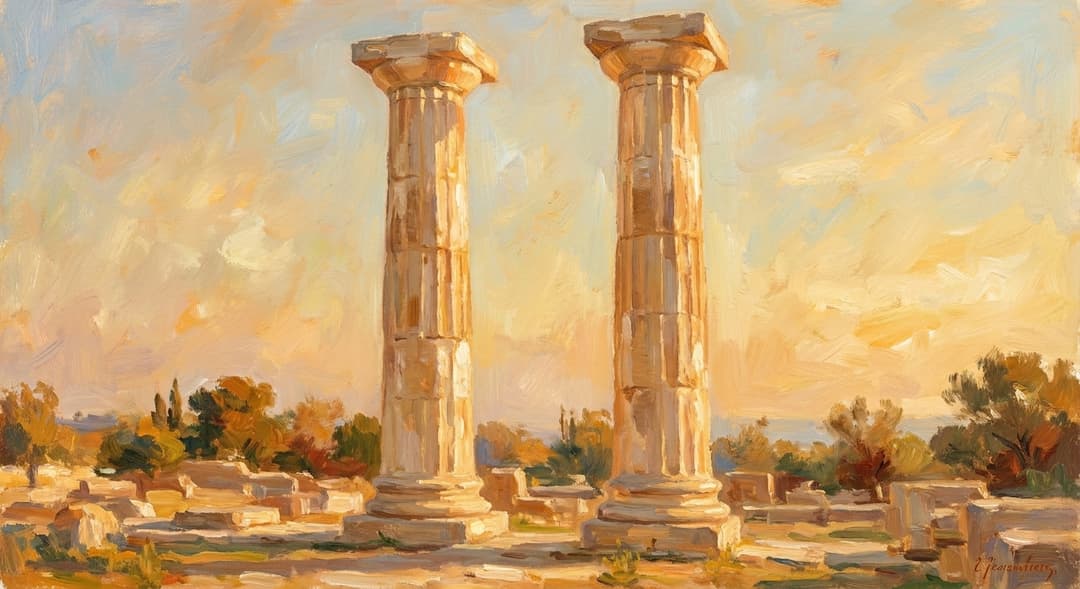
The Temple of Apollo in Taranto, though largely in ruins, offers a captivating glimpse into the city's ancient Greek past. Visitors can view the remaining columns and base in Piazza Castello, imagining the temple's former grandeur. The site provides a tangible connection to the religious and architectural traditions of Magna Graecia.
Location
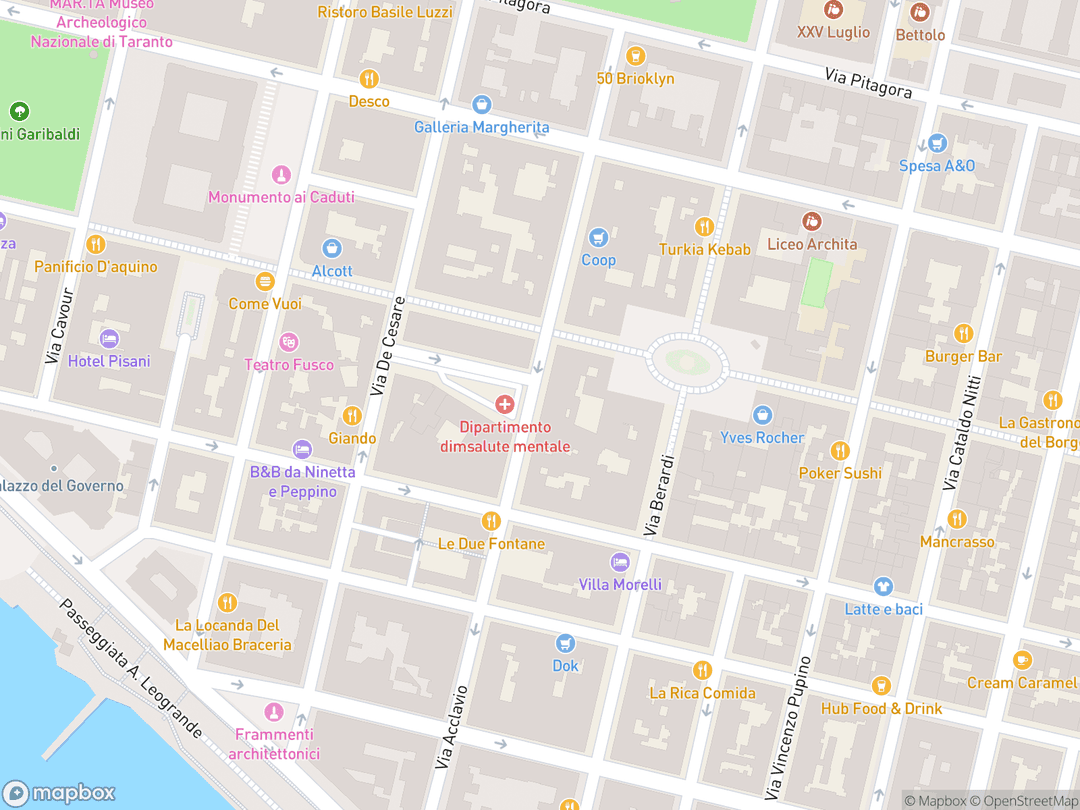
Piazza Castello, Taranto, Italy
Get DirectionsAbout
The Temple of Apollo in Taranto stands as a testament to the ancient Greek presence in Magna Graecia. Constructed in the early 6th century BC, it is believed to be the oldest Doric temple in the region. The temple's existence highlights the importance of Taranto (then known as Taras) as a significant Spartan colony.
Today, only two columns and a base remain of this once-grand structure. These remnants offer a glimpse into the architectural prowess and religious practices of the ancient Greeks. The temple's location in Piazza Castello, within Taranto's historic center, makes it an accessible and intriguing site for visitors interested in exploring the city's rich past.
Despite its ruined state, the Temple of Apollo continues to captivate historians and archaeologists. Ongoing research and preservation efforts aim to further uncover the temple's secrets and ensure its legacy endures for future generations. The site serves as a reminder of Taranto's pivotal role in the ancient world and its enduring connection to Greek civilization.
Gallery
Symbolic Elements
The temple's exterior features intricate carvings, each rich with spiritual meaning:

Doric Columns
The Doric columns are a defining feature of the temple's architecture, characterized by their simple, unadorned capitals and fluted shafts. These columns reflect the classical Greek architectural style and symbolize strength and stability.

Carparo Stone
The temple was constructed using local carparo stone, a type of limestone found in the Taranto region. The use of this material highlights the temple's connection to its local environment and the resourcefulness of its builders.

Exastyle Design
The temple's exastyle design, featuring six columns on the short sides, was a common architectural layout for Greek temples. This design provided a balanced and symmetrical facade, reflecting the Greek emphasis on harmony and proportion.

Temple Orientation
The temple's orientation towards the navigable canal of Taranto suggests the importance of maritime trade and connection to the sea for the ancient city. This orientation may have also held symbolic significance, aligning the temple with the natural world and the city's economic lifeblood.
Apollo
As the potential dedicatee of the temple, Apollo embodies music, poetry, light, healing, and prophecy. The temple would have served as a center for worship, where rituals and sacrifices were performed to honor the god and seek his favor.

Religious Rituals
The temple was a site for religious rituals, including sacrifices and prayers, aimed at honoring the deity and seeking divine favor. These practices were central to the religious life of the ancient Greeks and played a vital role in maintaining social order and cosmic harmony.

Spartan Heritage
As a colony of Sparta, Taranto held a unique position in Magna Graecia. The temple reflects the Spartan influence on the city's culture and religious practices, blending Greek traditions with Spartan values of discipline and order.

Ruins
The ruined state of the temple serves as a poignant reminder of the passage of time and the impermanence of human creations. Despite its decay, the temple continues to inspire awe and curiosity, inviting visitors to reflect on the rich history and cultural legacy of ancient Taranto.
Interesting Facts
The Temple of Apollo in Taranto is the oldest Greek temple in Magna Graecia.
Although traditionally called the Temple of Poseidon, it may have been dedicated to Artemis, Persephone, or Hera.
The temple was built by the Spartan colony of Taras.
After the Roman conquest, the site was repurposed for various uses, including granaries and a Christian church.
The rediscovery of the temple ruins began in 1881.
Only two columns remain standing today.
Archaeological findings suggest the temple had six columns on the short sides and thirteen on the long sides.
The columns are made of local carparo stone.
The temple's front likely faced the navigable canal of Taranto.
In 2022, a new temple to Apollo was built in Taranto by a Religio Romana organization, but it is not related to the ruins.
Common Questions
What is the Temple of Apollo in Taranto?
The Temple of Apollo in Taranto is an ancient Greek temple ruin located in Taranto, Italy. It is believed to be the oldest Greek temple in Magna Graecia.
When was the Temple of Apollo built?
The temple was constructed in the early 6th century BC.
What is the current status of the temple?
The temple is currently a ruin, with only two columns and a base remaining.
Where is the Temple of Apollo located?
The temple is located in Piazza Castello in the historic center of Taranto.
Who was the temple dedicated to?
The temple was possibly dedicated to Apollo, but potentially Artemis, Persephone, or Hera.
Featured Stories
The Founding of Taranto
8th Century BC
Taranto, originally known as Taras, was founded in the 8th century BC by Spartan settlers. These early colonists, seeking new opportunities and resources, established a thriving community on the Italian peninsula. The city quickly became a major center of Greek culture and commerce in Magna Graecia, playing a pivotal role in the region's development.
The construction of the Temple of Apollo in the 6th century BC further solidified Taranto's importance as a religious and cultural hub. The temple served as a focal point for the community, hosting religious ceremonies, festivals, and other important events. Its presence underscored the city's deep connection to the Greek world and its commitment to preserving its cultural heritage.
The legacy of Taranto's founding continues to resonate today, as the city remains a vibrant center of Italian culture and history. The ruins of the Temple of Apollo stand as a testament to the city's rich past, inviting visitors to explore its ancient roots and discover the enduring influence of its Spartan founders.
Rediscovery and Preservation
1881
After centuries of neglect and repurposing, the ruins of the Temple of Apollo began to reemerge in the late 19th century. In 1881, archaeologist Luigi Viola rediscovered the shaft of one of the temple's columns, sparking renewed interest in the site. This discovery marked the beginning of a long and ongoing process of excavation, preservation, and research.
Over the years, archaeologists have worked tirelessly to uncover the temple's secrets, piecing together its history and architectural design. The unearthing of the second column in the 1970s further illuminated the temple's grandeur and significance. These efforts have helped to raise awareness of the site's importance and to ensure its protection for future generations.
Today, the Temple of Apollo stands as a symbol of Taranto's commitment to preserving its cultural heritage. Ongoing preservation efforts aim to stabilize the ruins, protect them from further decay, and enhance the visitor experience. The site serves as a valuable resource for education and research, providing insights into the ancient world and the enduring legacy of Greek civilization.
A New Temple Rises
2022
In a remarkable turn of events, a new temple dedicated to Apollo was constructed in Taranto in 2022. This modern temple, built by the Italian Religio Romana organization, Pietas – Comunità Gentile, represents a revival of ancient religious traditions. While not directly related to the ruins of the ancient temple, the new structure symbolizes a renewed interest in the city's classical past.
The construction of the new temple has sparked both excitement and debate within the community. Some see it as a welcome addition to Taranto's cultural landscape, while others question its authenticity and relevance. Regardless of differing opinions, the new temple has undoubtedly brought attention to the city's rich history and its enduring connection to the ancient world.
The presence of both the ancient ruins and the modern temple creates a unique juxtaposition, inviting visitors to reflect on the evolution of religious beliefs and practices over time. Taranto stands as a testament to the enduring power of the past, as well as the ongoing efforts to preserve and reinterpret its cultural heritage.
Timeline
Early Wooden Structure
An earlier wooden structure was likely built by the first Spartan settlers.
MilestoneStone Temple Construction
The stone temple was constructed, becoming the oldest Greek temple in Magna Graecia.
MilestoneFounding of Taranto
Taranto was founded as a Spartan colony in Magna Graecia.
MilestoneTemple Design
It is believed that the temple was an exastyle temple, with six columns on the short sides.
MilestoneRoman Conquest
After the Roman conquest, the site was gradually abandoned.
MilestoneReuse of Site
The site was reused as granaries and for storage.
RenovationChristian Church
The remains of the temple were briefly used as a Christian church.
RenovationIndustrial Use
Part of the area was converted for industrial use, including clay settling tanks and kilns.
RenovationRediscovery of Column
Archaeologist Luigi Viola rediscovered the shaft of one column.
MilestoneUncovering of Second Column
The second column was fully uncovered.
MilestoneNew Temple Construction
A new temple to Apollo was built in Taranto by the Italian Religio Romana organization, Pietas – Comunità Gentile.
EventHistory by Decade
8th Century BC
In the 8th century BC, Spartan settlers arrived in the region and established the colony of Taras, which would later become Taranto. These early settlers likely constructed a wooden structure on the site of the future Temple of Apollo, marking the beginning of the area's religious significance.
6th Century BC
During the early 6th century BC, the wooden structure was replaced by a more permanent stone temple dedicated to Apollo (or possibly another deity). This temple became the oldest Greek temple in Magna Graecia, solidifying Taranto's position as a major religious and cultural center in the region.
3rd Century BC
Following the Roman conquest of Taranto in the 3rd century BC, the temple gradually fell into disuse. As the city's political and economic landscape shifted, the temple's religious significance diminished, and the site was eventually abandoned.
6th-14th Centuries AD
Over the centuries, the temple site was repurposed for various uses. In the 6th century AD, it served as granaries and storage facilities. Later, in the 10th century, the temple remains were briefly used as a Christian church. By the 14th century, part of the area was converted for industrial use, including clay settling tanks and kilns.
19th Century
In 1881, archaeologist Luigi Viola rediscovered the shaft of one of the temple's columns, sparking renewed interest in the site. This discovery marked the beginning of efforts to excavate and preserve the temple ruins, recognizing their historical and cultural significance.
20th-21st Centuries
Throughout the 20th and 21st centuries, archaeological work continued at the temple site, leading to the uncovering of the second column in the 1970s. Today, the ruins of the Temple of Apollo stand as a testament to Taranto's rich past, inviting visitors to explore its ancient roots. In 2022, a new temple to Apollo was built in Taranto by the Italian Religio Romana organization, Pietas – Comunità Gentile.
Architecture & Facilities
The Temple of Apollo in Taranto exemplifies the Doric order, characterized by its simple yet imposing design. The temple's columns, constructed from local carparo stone, feature unadorned capitals and fluted shafts, reflecting the classical Greek emphasis on harmony and proportion. The temple's exastyle layout, with six columns on the short sides, further contributes to its balanced and symmetrical facade.
Building Materials
Carparo Stone
The temple was constructed using local carparo stone, a type of limestone found in the Taranto region. This material provided a durable and readily available building resource, reflecting the resourcefulness of the ancient builders.
Temple Grounds
The temple ruins are located in Piazza Castello, within Taranto's historic center. The site is accessible to the public and offers a space for reflection and appreciation of the city's ancient heritage.
Religious Significance
The Temple of Apollo in Taranto held significant religious importance for the ancient Greeks, serving as a center for worship and devotion to the god Apollo (or possibly another deity). The temple's construction and maintenance reflected the community's commitment to honoring the divine and seeking divine favor.
The core spiritual purpose of the temple was to provide a sacred space for communication with the divine. Through rituals, sacrifices, and prayers, worshippers sought to establish a connection with Apollo and to receive his blessings and guidance.
Sacred Ordinances
Sacrifices
Animal sacrifices were a common practice in ancient Greek religion, offered to the gods as a sign of respect and gratitude. These sacrifices were often performed at temples, with the priests officiating the ceremonies.
Prayers
Prayers were an essential part of religious worship, allowing individuals to express their devotion and to petition the gods for assistance. Prayers could be offered individually or collectively, often accompanied by specific gestures and rituals.
The Role of Apollo
Apollo was one of the most important and multifaceted of the Olympian deities, associated with music, poetry, light, healing, and prophecy. Temples dedicated to Apollo served as centers for worship, where rituals and sacrifices were performed to honor the god and seek his favor.
Similar Temples
Sources & Research
Every fact on Temples.org is backed by verified Sources & Research. Each piece of information is rated by source tier and confidence level.
View All Sources (4)
| Field | Source | Tier | Retrieved |
|---|---|---|---|
| About & Historical Background | ITAP World (opens in a new tab) | C | 2024-02-29 |
| About & Historical Background | Ministero della cultura (opens in a new tab) | B | 2024-02-29 |
| Symbolic Elements | Theoi.com (opens in a new tab) | B | 2024-02-29 |
| Symbolic Elements | Britannica (opens in a new tab) | B | 2024-02-29 |