Visitor Insights
Visiting Aedes Minervae
Visiting the sites of the Aedes Minervae offers a glimpse into ancient Roman religious practices and architectural grandeur. While the Temple of Minerva in the Forum of Nerva is largely dismantled, fragments like the colonnacce columns provide tangible evidence of its former glory. The Aventine temple's location, though not fully accessible, evokes a sense of history and the goddess's enduring presence in Roman culture.
Location

Rome, Italy
Get DirectionsAbout
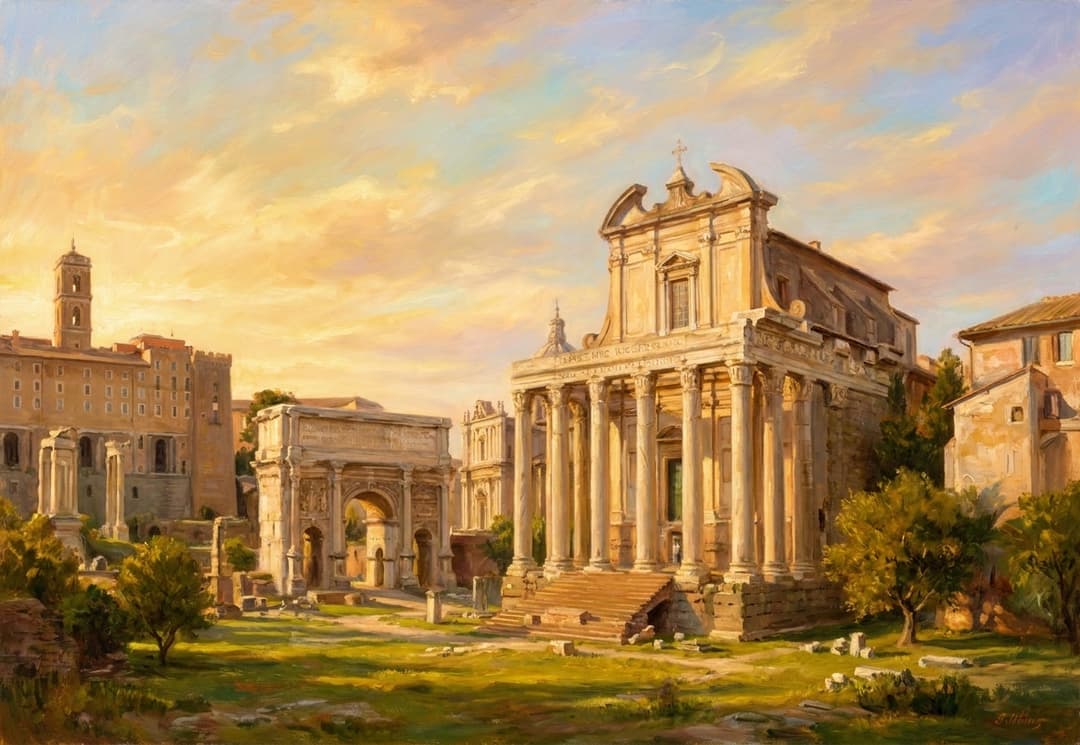
The Aedes Minervae refers to two significant temples in ancient Rome, each dedicated to the goddess Minerva. One was situated on the Aventine Hill, while the other was located in the Forum of Nerva, also known as the Forum Transitorium. These temples served as important centers of worship and reflected the prominent role of Minerva in Roman religious and cultural life.
The Temple of Minerva in the Forum of Nerva was primarily constructed during the reign of Emperor Domitian and was completed by his successor, Emperor Nerva, in 97 CE. Domitian, who considered Minerva his patron deity, dedicated the temple to her, highlighting her association with wisdom, war strategy, and craftsmanship. This temple stood as a testament to the emperor's devotion and the goddess's significance in Roman society.
The Aventine temple, on the other hand, had an earlier origin, with a key cult temple likely built around 263 BCE. This temple underwent restoration by Augustus, further emphasizing its importance and enduring presence in the city. The Aventine temple served as a gathering place for various guilds and associations, including poets and actors, who made votive offerings to Minerva.
Gallery
Symbolic Elements
The temple's exterior features intricate carvings, each rich with spiritual meaning:

Owl
The owl is a sacred creature associated with Minerva, symbolizing her connection to wisdom, knowledge, and insight. It represents her ability to see clearly and understand complex situations. The owl's presence in depictions of Minerva underscores her role as a goddess of intellect and strategic thinking.

Olive Tree
The olive tree is another significant symbol associated with Minerva, representing peace, prosperity, and victory. It signifies her role as a bringer of civilization and a protector of the Roman state. The olive tree's association with Minerva highlights her multifaceted nature as a goddess of both war and peace.

Snake
The snake is a symbol of wisdom, healing, and rebirth, often associated with deities of knowledge and medicine. In connection with Minerva, it represents her understanding of hidden truths and her ability to bring about positive change. The snake's presence underscores her role as a goddess of intellect and strategic thinking.

Corinthian Columns
The Corinthian columns, with their ornate capitals adorned with acanthus leaves, represent the architectural grandeur and sophistication of the Temple of Minerva in the Forum of Nerva. These columns symbolize the temple's importance as a center of worship and a testament to Roman artistic skill. Their presence underscores the temple's role as a prominent landmark in the city.

Hexastyle Facade
The hexastyle facade, featuring six columns across the front, is a characteristic architectural element of the Temple of Minerva in the Forum of Nerva. This design reflects the temple's classical Roman style and its adherence to traditional architectural principles. The hexastyle facade symbolizes the temple's importance as a prominent and well-designed structure.

Acanthus Leaves
The acanthus leaves, used to adorn the capitals of the Corinthian columns, are a symbol of artistic skill, refinement, and beauty. Their presence on the Temple of Minerva in the Forum of Nerva underscores the temple's role as a showcase of Roman artistic achievement. The acanthus leaves represent the temple's dedication to Minerva, the goddess of arts and crafts.

Phrygian Marble
The use of Phrygian marble in the construction of the Temple of Minerva in the Forum of Nerva signifies the temple's opulence, grandeur, and imperial patronage. This type of marble, known for its distinctive colors and patterns, was a valuable and prestigious building material. Its presence underscores the temple's importance as a symbol of Roman power and wealth.

Colonnacce
The Colonnacce, the remaining columns of the Temple of Minerva in the Forum of Nerva, serve as a tangible link to the temple's past and a reminder of its former grandeur. These columns, though fragmented, provide valuable evidence of the temple's architectural design and its significance as a landmark in ancient Rome. They symbolize the enduring legacy of Minerva and her temples.
Interesting Facts
The Temple of Minerva in the Forum of Nerva was part of a building complex begun by Emperor Domitian and completed by his successor, Emperor Nerva.
The Forum of Nerva was also known as the Forum Transitorium, because it acted as a narrow passageway connecting the larger imperial forums.
Domitian dedicated the temple to Minerva, who was also his patron deity.
The frieze on the colonnade illustrates the myth of Minerva and Arachne, a story where Arachne, a mortal, dared to challenge the goddess to a weaving contest.
During the Middle Ages, the space where the Temple of Minerva in the Forum of Nerva stood was used for housing, and by the 16th century it served as part of Rome's sewer system.
The temple on the Aventine became the headquarters of a guild of writers and actors, most prominent during the Second Punic War.
The Romans celebrated Minerva's festival from March 19 to March 23.
As Minerva Medica, she was the goddess of medicine and physicians.
The Minerva of the diplomas is the name given to part of the earlier library belonging to the temple of Augustus.
The Minerva in Nova Roma was honored on the seventh day of the Nova Roman ludi Conditorium.
Common Questions
What was the significance of the Aedes Minervae in ancient Rome?
The Aedes Minervae, referring to the temples dedicated to Minerva on the Aventine Hill and in the Forum of Nerva, were significant centers of worship and reflected the prominent role of Minerva in Roman religious and cultural life. They served as gathering places for various guilds and associations, and stood as testaments to the goddess's importance in Roman society.
Where were the two temples of Minerva located in Rome?
One temple was located on the Aventine Hill, while the other was situated in the Forum of Nerva, also known as the Forum Transitorium. The Aventine temple had an earlier origin, while the Temple of Minerva in the Forum of Nerva was constructed primarily under Emperor Domitian and completed by Emperor Nerva.
What were some of the architectural features of the Temple of Minerva in the Forum of Nerva?
The Temple of Minerva in the Forum of Nerva featured a hexastyle facade with six Corinthian columns made of Phrygian marble. There were three more columns on each side. At the back of the temple was a small apse that once held the cult statue of Minerva. Running alongside the temple was a colonnade known today as le colonnacce.
What were some of the symbolic elements associated with Minerva?
Minerva was the Roman goddess of wisdom, justice, law, victory, and the sponsor of arts, trade, and strategy. She is often depicted with her sacred creature, an owl, which symbolizes her association with wisdom and knowledge. She is also associated with the snake and the olive tree.
What happened to the Temple of Minerva in the Forum of Nerva?
The Temple of Minerva in the Forum of Nerva was largely dismantled in the early 17th century. Today, fragments including the colonnacce columns and relief panels provide key evidence of its form. During the Middle Ages, the space where the temple stood was used for housing, and by the 16th century it served as part of Rome's sewer system.
Featured Stories
The Dedication of the Temple in the Forum of Nerva
97 CE
In 97 CE, Emperor Nerva completed the Temple of Minerva in the Forum of Nerva, a project initiated by his predecessor, Domitian. The dedication ceremony was a grand affair, attended by Roman dignitaries and citizens alike. The temple, dedicated to Minerva, the goddess of wisdom, war strategy, and craftsmanship, stood as a testament to Roman architectural prowess and imperial patronage.
The completion of the temple marked a significant moment in Nerva's reign, solidifying his commitment to honoring the Roman pantheon and continuing the building projects of his predecessors. The temple's location in the Forum of Nerva, a bustling center of Roman life, ensured that it would be a prominent landmark and a place of worship for generations to come.
The Guild of Poets and Actors at the Aventine Temple
207 BCE
In 207 BCE, during the Second Punic War, the Aventine temple of Minerva became the headquarters of a guild of poets and actors. This association reflected the temple's role as a center of cultural and artistic activity in Rome. The guild members would gather at the temple to make votive offerings to Minerva, seeking her favor and inspiration in their creative endeavors.
The presence of the guild at the Aventine temple underscored Minerva's connection to the arts and her role as a patron of creative expression. The temple served as a gathering place for artists and intellectuals, fostering a vibrant cultural scene in the city. The guild's activities at the temple contributed to its enduring legacy as a center of Roman cultural life.
The Myth of Minerva and Arachne
Ancient Times
The frieze on the colonnade of the Temple of Minerva in the Forum of Nerva illustrated the myth of Minerva and Arachne, a story where Arachne, a mortal, dared to challenge the goddess to a weaving contest. In the contest, Arachne's skill equaled Minerva's, but Arachne wove a tapestry depicting the misdeeds of the gods. Minerva, enraged by Arachne's hubris and disrespect, transformed her into a spider, condemning her to weave for eternity.
The myth of Minerva and Arachne served as a cautionary tale about the dangers of pride and the importance of respecting the gods. The frieze on the temple colonnade reminded visitors of the consequences of challenging divine authority and the importance of humility. The story also highlighted Minerva's role as a patron of the arts and her connection to the craft of weaving.
Timeline
Construction of a key cult temple to Minerva on the Aventine Hill.
A significant temple dedicated to Minerva was likely built on the Aventine around this time, marking an early center of her worship in Rome.
MilestoneErection of a smaller shrine to Minerva Capta on Mons Caelius.
A smaller shrine dedicated to Minerva Capta was erected on Mons Caelius after the taking of Falerii, expanding her presence in the city.
MilestoneFormation of a guild of poets and actors at the Aventine temple.
A guild of poets and actors was formed to meet and make votive offerings at the temple of Minerva on the Aventine Hill, highlighting its cultural significance.
EventVote to erect a temple to Isis and Serapis near the Temple of Minerva.
The triumvirs voted to erect a temple to Isis and Serapis near the Temple of Minerva, reflecting the diverse religious landscape of Rome.
EventRepressive measures against Egyptian cults near the Temple of Minerva.
Augustus carried out repressive measures against Egyptian cults near the Temple of Minerva, indicating the tensions between Roman and foreign religious practices.
EventCompletion and dedication of the Temple of Minerva in the Forum of Nerva.
The Temple of Minerva in the Forum of Nerva was completed and dedicated by Emperor Nerva, marking a significant addition to the city's religious architecture.
DedicationRepurposing of the Temple of Minerva in the Forum of Nerva for residential use.
The Temple of Minerva in the Forum of Nerva was repurposed for residential use during the Middle Ages, reflecting the changing urban landscape of Rome.
EventDemolition of the Temple of Minerva in the Forum of Nerva.
Pope Paul V ordered the demolition of the Temple of Minerva in the Forum of Nerva, leading to the loss of a significant historical monument.
RenovationPossible dedication day of the Aventine temple.
The Aventine temple's dedication day is given as either March 19, marking a significant event in its history.
EventPossible dedication day of the Aventine temple.
The Aventine temple's dedication day is given as either June 19, marking a significant event in its history.
EventLikely construction of a key cult temple to Minerva on the Aventine.
A key cult temple to Minerva was likely built on the Aventine around this time, establishing an important center of worship.
MilestoneErection of a shrine to Minerva Capta.
A smaller shrine to Minerva Capta was erected on Mons Caelius after the taking of Falerii, expanding Minerva's presence.
MilestoneGuild of poets and actors formed.
A guild of poets and actors was formed to meet and make votive offerings at the temple of Minerva on the Aventine Hill.
EventAugustus's measures against Egyptian cults.
Augustus carried out repressive measures against Egyptian cults near the Temple of Minerva.
EventTemple of Minerva in the Forum of Nerva completed.
The Temple of Minerva in the Forum of Nerva was completed and dedicated by Emperor Nerva.
DedicationTemple repurposed for housing.
The Temple of Minerva in the Forum of Nerva was repurposed for housing during the Middle Ages.
EventSimilar Temples
Sources & Research
Every fact on Temples.org is backed by verified Sources & Research. Each piece of information is rated by source tier and confidence level.
View All Sources (4)
| Field | Source | Tier | Retrieved |
|---|---|---|---|
| Basic Facts & Temple of Minerva in the Forum of Nerva | Ancient Rome Live (opens in a new tab) | A | 2024-01-02 |
| Basic Facts & Aventine Temple | University of Chicago (opens in a new tab) | B | 2024-01-02 |
| Historical Timeline & Aventine Temple | Nova Roma (opens in a new tab) | D | 2024-01-02 |
| Symbolic Elements & Minerva's Attributes | Britannica (opens in a new tab) | B | 2024-01-02 |