Visitor Insights
Visiting Temple of Aegeria
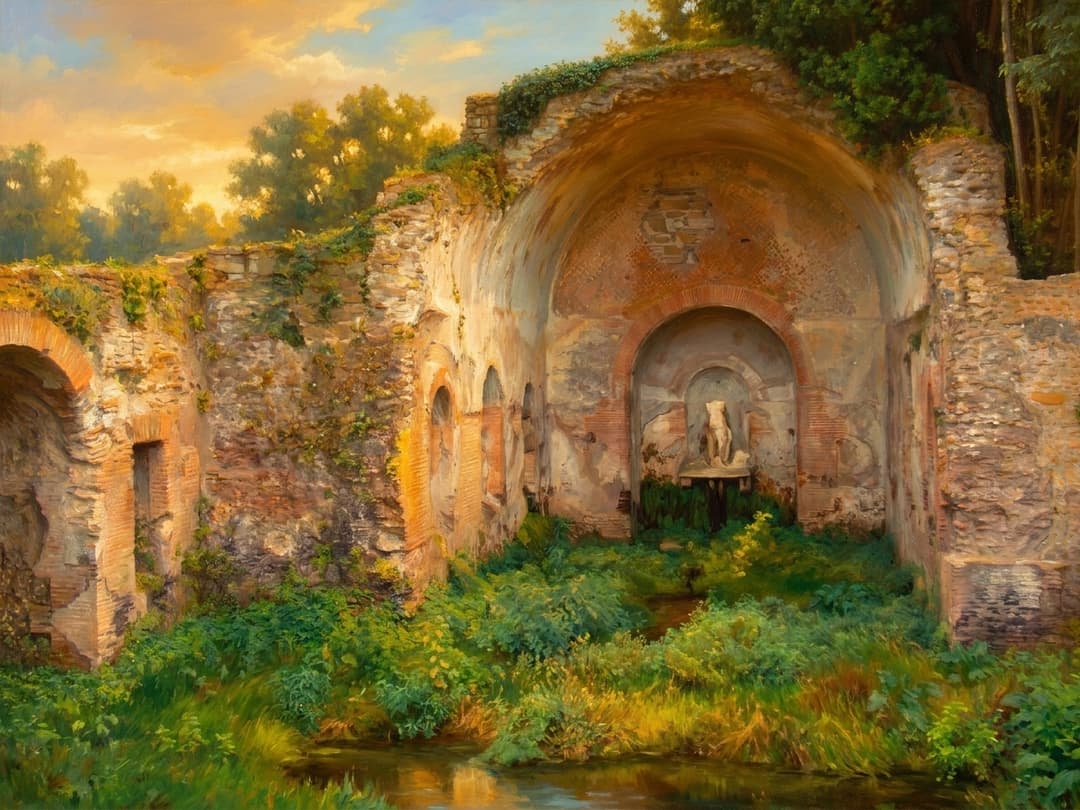
The Nymphaeum of Egeria, nestled within the serene Caffarella Park, offers a tranquil escape into ancient Roman history and mythology. Visitors can explore the semi-ruinous structure, imagining its former glory as a sanctuary dedicated to the water nymph Egeria. The park provides a peaceful atmosphere, ideal for a leisurely walk or a moment of reflection amidst the natural beauty and historical significance of the site. Expect a blend of nature and history, with the opportunity to connect with the legends of ancient Rome.
Highlights
- Explore the ruins of the ancient Nymphaeum.
- Wander through the scenic Caffarella Park.
- Learn about the mythology of Egeria and Numa Pompilius.
Things to Know
- The site is in a semi-ruinous state.
- Wear comfortable shoes for walking.
- Check park hours before visiting.
Location

Caffarella Park, Rome, Italy
Hours: Open daily during daylight hours; check Caffarella Park website for specific times.
Getting There: Accessible by public transportation (metro Furio Camillo) or car; parking available near the park entrance.
Get DirectionsTips for Your Visit
Plan Your Visit
Check the Caffarella Park website for updated hours and any special events.
Wear Comfortable Shoes
The park involves walking on uneven terrain, so comfortable shoes are recommended.
About
The Temple of Aegeria, more accurately known as the Nymphaeum of Egeria, is a historical site located within the Caffarella Park in Rome, Italy. Constructed in the 2nd century AD during the reign of the Antonines, it was part of a larger complex possibly belonging to Herodes Atticus. While not a temple in the traditional sense, it served as a nymphaeum, a sanctuary dedicated to the water nymph Egeria.
Egeria was a significant figure in Roman mythology, believed to be the wife or advisor of Numa Pompilius, the second king of Rome. Legend states that Numa received divine guidance from Egeria in establishing Roman religious institutions. The nymphaeum itself was designed to honor the Almone River, which flows through the Caffarella valley, emphasizing the importance of water in ancient Roman culture and religious practices.
Today, the Nymphaeum of Egeria stands in a semi-ruinous state, a testament to the passage of time and the changing landscape of Rome. It remains a popular destination for visitors to Caffarella Park, offering a glimpse into the ancient world and the beliefs of the people who once revered the sacred waters and the nymph who presided over them. The site provides a serene escape and a connection to the rich history and mythology of Rome.
Gallery
Symbolic Elements
The temple's exterior features intricate carvings, each rich with spiritual meaning:

Egeria
Egeria, the water nymph, embodies wisdom, prophecy, and the life-giving properties of water. She was a divine counselor and advisor, representing the sacred feminine and the power of intuition. Her presence at the Nymphaeum signifies the importance of seeking guidance from the natural world.

Almone River
The Almone River, honored by the Nymphaeum, symbolizes purification, renewal, and the continuous flow of life. As a source of fresh water, it was essential for the survival and prosperity of the ancient Romans. Its presence underscores the connection between nature and the divine.

Nymphs
Nymphs, in general, were considered sacred maidens of nature, often associated with springs and fresh water. They represent the beauty, fertility, and untamed spirit of the natural world. Their presence at the Nymphaeum highlights the reverence for nature in ancient Roman culture.

Opus Mixtum
The opus mixtum construction technique, characterized by alternating bands of brick and stone, symbolizes the blend of human ingenuity and natural materials. It represents the harmonious integration of architecture with the surrounding environment. This technique showcases the Romans' skill in engineering and construction.

Apse
The apse, a semi-circular recess in the Nymphaeum, symbolizes the sacred space and the connection to the divine. It served as a focal point for rituals and ceremonies, representing the spiritual heart of the sanctuary. Its architectural design reflects the Romans' understanding of sacred geometry.

Water
Water, the central element of the Nymphaeum, symbolizes purification, healing, and the source of life. It represents the transformative power of nature and the essential role it plays in human existence. The presence of water underscores the importance of respecting and preserving this precious resource.

Caffarella Park
The Caffarella Park, in which the Nymphaeum is located, symbolizes the preservation of nature and history. It represents a sanctuary for both the natural world and the cultural heritage of ancient Rome. Its existence allows visitors to connect with the past and appreciate the beauty of the present.

Ruins
The ruins of the Nymphaeum symbolize the passage of time and the impermanence of human creations. They serve as a reminder of the rise and fall of civilizations and the enduring power of nature. Their presence invites reflection on the cyclical nature of history.
Interesting Facts
Egeria was believed to provide wisdom and prophecy in exchange for libations of water or milk.
The Nymphaeum was built to honor the Almone River, which runs through the Caffarella valley.
According to legend, when Numa died, Egeria wept so much that she was transformed into a spring.
The Nymphaeum was mistakenly identified as the actual grotto of Egeria during the Renaissance.
The Nymphaeum was a popular destination for young European aristocrats in the 18th century.
Numa Pompilius was said to have received laws and rituals pertaining to ancient Roman religion from Egeria.
The water from the spring was considered sacred and miraculous, believed to treat stomach illnesses.
Herodes Atticus, a wealthy Roman politician, built the Nymphaeum as part of his vast estate.
The name Egeria is used as an eponym for a female advisor or counselor.
The structure was originally adorned with various types of precious marble and mosaics in the niches.
Common Questions
Who was Egeria?
Egeria was a water nymph in Roman mythology, known for advising King Numa Pompilius and providing him with divine guidance in establishing Roman religious institutions. She was revered as a source of wisdom and prophecy.
What is a nymphaeum?
A nymphaeum is a sanctuary dedicated to nymphs, often associated with springs, fountains, and other sources of fresh water. It served as a place of worship and a celebration of nature's beauty and life-giving properties.
When was the Nymphaeum of Egeria built?
The Nymphaeum of Egeria was constructed in the 2nd century AD, during the reign of the Antonine emperors. It was part of a larger estate possibly belonging to Herodes Atticus.
Where is the Nymphaeum of Egeria located?
The Nymphaeum of Egeria is located within the Caffarella Park in Rome, Italy, approximately five kilometers southeast of the Roman Forum.
What is the current state of the Nymphaeum?
The Nymphaeum of Egeria is currently in a semi-ruinous state, but it is preserved as an archaeological site and public park, open to visitors.
Featured Stories
The Divine Counsel of Egeria
Pre-8th Century BC
In the mists of early Roman history, King Numa Pompilius sought wisdom and guidance to shape the religious institutions of his burgeoning kingdom. Legend tells of his encounters with Egeria, a water nymph of profound intellect and divine insight. In the quietude of her sacred grove, Egeria imparted knowledge of rituals, laws, and the very essence of piety.
Numa, guided by Egeria's counsel, established the foundations of Roman religious practice, weaving a tapestry of tradition and spirituality that would endure for centuries. Her influence extended beyond mere ritual, shaping the moral compass of the Roman people and instilling a sense of reverence for the divine. The stories of their communion echo through time, a testament to the power of wisdom and the enduring legacy of a nymph's guidance.
Source: Livy, *Ab Urbe Condita*, Book 1
The Transformation of Egeria
Ancient Roman Era
The bond between Numa Pompilius and Egeria was one of profound respect and mutual understanding. When Numa's mortal journey came to an end, Egeria was overcome with grief, her sorrow echoing through the sacred grove they had shared. Legend says that her tears flowed so abundantly that she was transformed into a spring, her essence forever intertwined with the life-giving waters she had always represented.
The spring became a sacred site, its waters believed to possess healing properties and miraculous powers. Pilgrims would journey to the spring, seeking solace and restoration, drawn by the enduring presence of the nymph who had once walked among them. The transformation of Egeria serves as a poignant reminder of the enduring connection between humanity and the natural world, and the transformative power of love and loss.
Source: Ovid, *Metamorphoses*, Book 15
Rediscovering the Nymphaeum
18th Century
Centuries after the fall of the Roman Empire, the Nymphaeum of Egeria lay in ruins, its former glory obscured by the passage of time. Yet, the allure of the ancient world persisted, drawing travelers and artists to the forgotten sanctuary. In the 18th century, young European aristocrats, eager to experience the romanticism of classical antiquity, rediscovered the Nymphaeum, drawn by its legendary association with Egeria and Numa Pompilius.
Artists like Piranesi captured the haunting beauty of the ruins in their engravings, further fueling the fascination with the site. The Nymphaeum became a symbol of the enduring legacy of Rome, a testament to the power of history and the enduring allure of the past. Its rediscovery marked a renewed appreciation for the cultural heritage of ancient Rome and the importance of preserving its treasures for future generations.
Source: Johann Wolfgang von Goethe, *Italian Journey*
Timeline
Egeria in Roman Legend
Legends place Egeria as the wife or advisor of Numa Pompilius, the second king of Rome, who received divine guidance from her.
MilestoneConstruction of the Nymphaeum
The Nymphaeum of Egeria is constructed as part of Herodes Atticus's estate in the Caffarella Valley.
MilestonePart of Herodes Atticus's Villa
The Nymphaeum became part of Herodes Atticus's luxurious Triopio, the famous villa/farm dominating the entire Caffarella Valley.
EventDecline and Disrepair
The Nymphaeum falls into disrepair as the Roman Empire declines, and the surrounding area becomes overgrown.
RenovationDestination for Travelers and Artists
The site becomes a popular destination for European travelers and artists, including Chateaubriand, Goethe, and Piranesi.
EventTherapeutic Use of Spring
The spring at the site is used for therapeutic purposes, with the construction of thermal facilities.
EventPreservation as Archaeological Site
The Nymphaeum and Caffarella Park are preserved as an archaeological site and public park, open to visitors.
RenovationPiranesi Engraving
Giovanni Battista Piranesi creates an engraving of the Nymphaeum, further popularizing the site.
EventVisit by Goethe
Johann Wolfgang von Goethe visits the Nymphaeum and documents his impressions in his writings.
EventChateaubriand's Description
François-René de Chateaubriand describes the Nymphaeum in his travel memoirs, contributing to its romantic image.
EventArchaeological Excavations
Archaeological excavations are conducted at the site, revealing more about its history and construction.
RenovationCaffarella Park Established
Caffarella Park is officially established, ensuring the protection of the Nymphaeum and its surrounding environment.
MilestoneRestoration Efforts
Restoration efforts are undertaken to preserve the Nymphaeum and enhance its accessibility for visitors.
RenovationOngoing Research
Ongoing research continues to shed light on the history and significance of the Nymphaeum of Egeria.
EventContinued Public Access
The Nymphaeum remains a popular destination within Caffarella Park, attracting tourists and locals alike.
EventHistory by Decade
Pre-8th Century BC
Legends surrounding Egeria place her as the wife or advisor of Numa Pompilius, the second king of Rome. She is said to have provided him with divine guidance in establishing Roman religious institutions, shaping the early religious landscape of Rome.
2nd Century AD
The Nymphaeum of Egeria is constructed as part of Herodes Atticus's estate in the Caffarella Valley. This period marks the height of Roman architectural and artistic achievement, reflecting the wealth and influence of the Roman elite.
Post-Roman Empire
Following the decline of the Roman Empire, the Nymphaeum falls into disrepair, and the surrounding area becomes overgrown. The site's significance diminishes as new powers and cultures emerge in the region.
1700-1800s
The site experiences a revival of interest as European travelers and artists, including Chateaubriand, Goethe, and Piranesi, document the site in descriptions and drawings. This period marks a renewed appreciation for classical antiquity and its influence on European culture.
19th Century
The spring at the site is used for therapeutic purposes, with the construction of thermal facilities. This reflects a growing interest in the healing properties of natural springs and their potential for medical treatments.
20th-21st Centuries
The Nymphaeum and Caffarella Park are preserved as an archaeological site and public park, open to visitors. This period marks a commitment to preserving cultural heritage and providing public access to historical sites.
Religious Significance
The Nymphaeum of Egeria holds religious significance as a sanctuary dedicated to a water nymph, reflecting the ancient Roman reverence for nature and the divine forces believed to inhabit it.
The purpose of the Nymphaeum was to honor Egeria and the Almone River, providing a sacred space for worship and reflection on the life-giving properties of water.
Sacred Ordinances
Libations
Libations of water or milk were offered to Egeria in exchange for wisdom and prophecy.
Veneration of Water
The veneration of water as a sacred element, symbolizing purification, healing, and the source of life.
The Role of Nymphs
Nymphs were considered sacred maidens of nature, often associated with springs and fresh water. They represented the beauty, fertility, and untamed spirit of the natural world.
Connection to Numa Pompilius
Egeria's connection to Numa Pompilius highlights the importance of divine guidance in establishing religious institutions and shaping the moral compass of a society.
Similar Temples
Sources & Research
Every fact on Temples.org is backed by verified Sources & Research. Each piece of information is rated by source tier and confidence level.
View All Sources (4)
| Field | Source | Tier | Retrieved |
|---|---|---|---|
| About & Historical Background | Atlas Obscura (opens in a new tab) | A | 2024-02-29 |
| About & Historical Background | Madain Project (opens in a new tab) | B | 2024-02-29 |
| About & Historical Background | Encyclopedia Britannica (opens in a new tab) | B | 2024-02-29 |
| Visitor Information | Parco Archeologico dell'Appia Antica (opens in a new tab) | A | 2026-06-14 |