
Visitor Insights
Visiting Aedes Martis
While the Aedes Martis no longer stands, its historical significance remains palpable. Imagine walking the ancient Via Appia or exploring the Campus Martius, picturing the temples that once honored Mars. These sites evoke the atmosphere of ancient Rome, where military might and agrarian life intertwined, offering a glimpse into the city's rich past.
Highlights
- Explore the ancient Via Appia, where the Temple of Mars in Clivo once stood.
- Visit the Campus Martius, the former location of the Temple of Mars in Circo.
Things to Know
- The original temple sites no longer have standing structures.
- Historical context and imagination are essential for appreciating the significance of these locations.
Location

Campus Martius & Via Appia, Rome, Italy
Get DirectionsAbout
The Aedes Martis, Latin for the Temple of Mars, refers to multiple temples dedicated to the Roman god Mars. Mars, in ancient Roman religion and mythology, was the god of war and also an agricultural guardian, reflecting a combination characteristic of early Rome. He was considered the son of Jupiter and Juno and held a pre-eminent position among the Roman army's military gods.
Two of the most well-known temples were the Temple of Mars in Circo (Campus Martius) and the Temple of Mars in Clivo (Via Appia). The Temple of Mars in Circo was dedicated in 132 BC, while the Temple of Mars in Clivo was dedicated on June 1, 387 BC. These temples served as important centers for the worship of Mars and played a significant role in Roman religious and military life.
The temples of Mars were not only places of worship but also served as symbols of Roman power and military strength. They were often adorned with statues and other artistic representations of Mars, as well as trophies and other spoils of war. The temples also served as gathering places for soldiers before and after battles, and they were the site of important religious ceremonies and festivals dedicated to Mars.
Gallery
Symbolic Elements
The temple's exterior features intricate carvings, each rich with spiritual meaning:

Spear and Shield
The spear and shield are common symbols associated with Mars, representing his role as a god of war. These symbols embody the military prowess and strength that Mars represented in Roman society. They were often depicted alongside statues and images of the god.

Wolf
The wolf was sacred to Mars, further connecting him to the mythology of Rome's founding through Romulus and Remus. The she-wolf who nursed the twins was a powerful symbol of the city's origins and Mars's role as a protector of Rome. This connection reinforced the god's importance in Roman identity.

Mars Ultor
The cult of "Mars the Avenger," established by Augustus, symbolized vengeance and the restoration of Roman honor. This cult was created to commemorate Augustus's victory over Caesar's assassins and the return of Roman battle standards. It became a powerful symbol of Roman military might and imperial authority.

Ara Martis
The Altar of Mars (Ara Martis) was the earliest center for Mars's worship, marking the beginning of his significance in Roman religion. This altar served as a focal point for sacrifices and other religious ceremonies dedicated to the god. It symbolized the early Roman connection to both military prowess and agrarian life.

Military Standards
The military standards, or *signa militaria*, were sacred emblems of the Roman legions, often associated with Mars as the god of war. These standards represented the honor, loyalty, and unity of the Roman army. Their presence in temples dedicated to Mars underscored the god's role as a protector of Roman military might.

Corinthian Capitals
The Temple of Mars in Clivo featured Corinthian capitals, an architectural detail indicative of Roman temple design. These ornate capitals, adorned with acanthus leaves, symbolized the sophistication and grandeur of Roman architecture. Their presence on the temple reflected the importance of Mars in Roman society.
Rhea Silvia Pediment
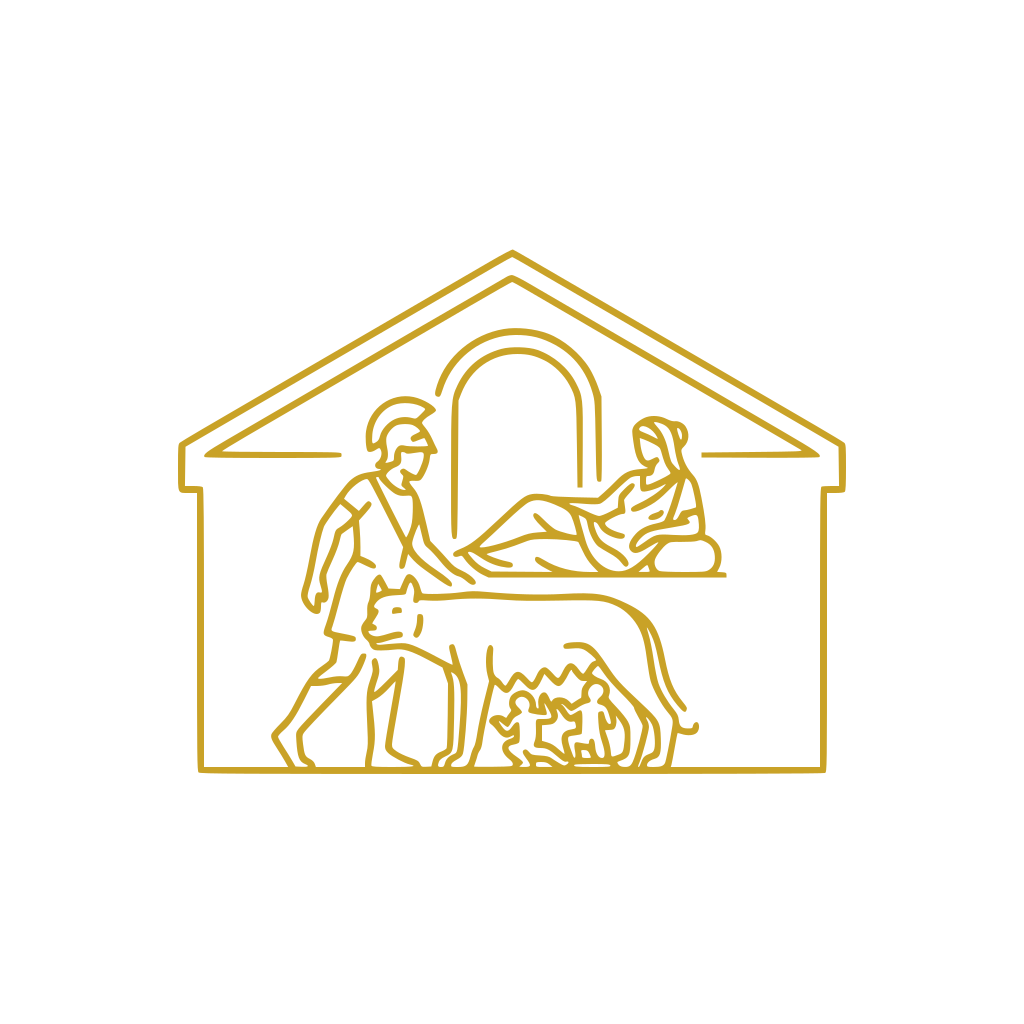
The pedimental sculpture of the Temple of Mars in Clivo depicted Rhea Silvia approached by Mars, as well as the she-wolf nursing Romulus and Remus. This iconic scene connected Mars directly to the founding myth of Rome, reinforcing his role as a divine ancestor and protector of the Roman people.

Hexastyle Design
The Temple of Mars in Circo was a hexastyle peripteral temple, meaning it had a portico with six columns and was surrounded by a colonnade. This architectural style, influenced by both Italic and Hellenistic Greek traditions, symbolized the grandeur and sophistication of Roman temple design. The hexastyle design emphasized the temple's importance as a center of religious and civic life.
Interesting Facts
The Campus Martius ("Field of Mars") was named after the god and served as a military training ground.
The Romans considered Mars second in importance only to Jupiter.
Mars's festivals were primarily held in March (Martius) and October, marking the beginning and end of the military and farming seasons.
The priests of Mars were known as the Salii, dancing warriors who performed war-songs during festivals.
The Temple of Mars in Clivo housed one of the Lapis manalis stones, used in ceremonies to invoke rain.
The area around the Temple of Mars in Clivo was where soldiers assembled before and after wars.
Augustus created the cult of Mars Ultor to commemorate his victory over Caesar's assassins and the return of Roman battle standards.
The planet Mars is named after the Roman god.
The Temple of Mars Ultor became a central point for important state decisions, with the Senate meeting there to discuss war and peace.
Sacrifices were made to Mars Ultor on Imperial holidays, and young men would offer sacrifices there upon assuming the toga virilis.
Common Questions
What was the significance of Mars in ancient Rome?
Mars was the Roman god of war and agriculture, reflecting a combination characteristic of early Rome. He was considered second in importance only to Jupiter and played a crucial role in Roman military and religious life.
Where were the Aedes Martis located?
There were multiple temples of Mars in ancient Rome. Two of the most well-known were the Temple of Mars in Circo (Campus Martius) and the Temple of Mars in Clivo (Via Appia).
When were the temples of Mars dedicated?
The Temple of Mars in Circo was dedicated in 132 BC, while the Temple of Mars in Clivo was dedicated on June 1, 387 BC.
What were some of the symbolic elements associated with Mars?
Mars embodied several symbolic elements, including war and agriculture, the spear and shield, and the wolf. These symbols represented his role as a god of military might and agrarian protection.
What is the status of the Aedes Martis today?
The Aedes Martis no longer exists. However, their historical significance remains palpable, and the sites where they once stood offer a glimpse into ancient Rome's rich past.
Featured Stories
The Founding of the Temple of Mars in Clivo
390 BC
Following the devastating defeat of the Roman army at the Battle of the Allia by the invading Senones, the Roman people turned to their gods for solace and protection. In a moment of collective desperation and hope, a vow was made to construct a grand temple dedicated to Mars, the god of war, if Rome were to be spared further destruction. This vow marked the genesis of the Temple of Mars in Clivo, a testament to the resilience and faith of the Roman people in the face of adversity.
The dedication of the Temple of Mars in Clivo on June 1, 387 BC, by Titus Quinctius, was a momentous occasion for the city. It symbolized not only the fulfillment of a sacred vow but also the renewed hope and determination of the Roman people to rebuild their city and restore their honor. The temple became a focal point for religious ceremonies and military gatherings, solidifying Mars's role as a protector of Rome.
Augustus and the Cult of Mars Ultor
2 BC
In the aftermath of the tumultuous years of civil war that followed the assassination of Julius Caesar, Augustus sought to restore peace and stability to the Roman Republic. To commemorate his victory over Caesar's assassins and the return of Roman battle standards that had been lost in previous conflicts, Augustus established the cult of Mars Ultor, "Mars the Avenger." This cult was intended to symbolize vengeance, justice, and the restoration of Roman honor.
The Temple of Mars Ultor, dedicated by Augustus in the Forum of Augustus, became a central point for important state decisions. The Senate would meet there to discuss matters of war and peace, and sacrifices were made to Mars Ultor on Imperial holidays. Young men would also offer sacrifices there upon assuming the toga virilis, marking their transition into adulthood and their commitment to serving the Roman state.
The Architectural Fusion of the Temple of Mars in Circo
2nd Century BC
The Temple of Mars in Circo, built by Decimus Junius Brutus Callaicus after his successful campaign in Hispania, stood as a remarkable example of architectural fusion. Designed by Hermodorus of Salamis, the temple incorporated both Italic and Hellenistic Greek features, reflecting the growing cultural exchange within the Roman Republic. This blend of styles symbolized Rome's ability to assimilate and adapt diverse influences into its own unique identity.
As a hexastyle peripteral temple, the Temple of Mars in Circo featured a portico with six columns and was surrounded by a colonnade. This design not only showcased the grandeur of Roman architecture but also provided a spacious and accessible space for religious ceremonies and public gatherings. The temple's architectural fusion served as a visual representation of Rome's expanding power and cultural influence.
Timeline
Altar of Mars Established
The Altar of Mars (Ara Martis) was established in the Campus Martius, marking the earliest center for Mars's worship.
MilestoneTemple Vowed to Mars
Following the Roman defeat at the Battle of the Allia by the Senones, a temple was vowed to Mars.
MilestoneTemple of Mars in Clivo Dedicated
The Temple of Mars in Clivo was dedicated by Titus Quinctius on the western side of the Via Appia.
DedicationVia Appia Paved to Temple
The Via Appia was paved to the Temple of Mars in Clivo, and a portico was constructed along the road, known as the Via Tecta.
EventStatue of Mars Erected
A statue of Mars was erected in the Temple of Mars in Clivo by Marcus Claudius Marcellus.
EventTemple of Mars in Circo Built
The Temple of Mars in Circo was built by Decimus Junius Brutus Callaicus after his campaign in Hispania.
MilestoneTemple of Mars in Circo Dedicated
The Temple of Mars in Circo, designed by Hermodorus of Salamis, was dedicated on the Campus Martius.
DedicationTemple of Mars Ultor Dedicated
The Temple of Mars Ultor (Mars the Avenger) was dedicated by Augustus in the Forum of Augustus.
DedicationClosure During Persecution of Pagans
Temples were closed during the persecution of pagans in the late Roman Empire, when Christian Emperors issued edicts prohibiting non-Christian worship.
EventTemple of Mars in Clivo Mentioned
The Temple of Mars in Clivo was mentioned in the Einsiedeln Itinerary as still standing.
EventHistory by Decade
5th Century BC
The 5th century BC marked the early development of Mars's worship in Rome. The establishment of the Altar of Mars (Ara Martis) in the Campus Martius signified the earliest center for the god's veneration. This period laid the foundation for Mars's eventual prominence in Roman religion and military life.
4th Century BC
In 390 BC, following the Roman defeat at the Battle of the Allia, a temple was vowed to Mars, leading to the construction and dedication of the Temple of Mars in Clivo on June 1, 387 BC. This event underscored the growing importance of Mars as a protector of Rome and a symbol of military strength.
2nd Century BC
The 2nd century BC witnessed the construction of the Temple of Mars in Circo by Decimus Junius Brutus Callaicus. Designed by Hermodorus of Salamis, this temple incorporated both Italic and Hellenistic Greek features, reflecting the cultural exchange within the Roman Republic. The temple's dedication in 132 BC further solidified Mars's role in Roman society.
1st Century BC
The 1st century BC saw the rise of Augustus and the establishment of the cult of Mars Ultor. Augustus dedicated the Temple of Mars Ultor in the Forum of Augustus in 2 BC, commemorating his victory over Caesar's assassins and the return of Roman battle standards. This event marked a significant shift in the perception of Mars, from a god of war to a symbol of vengeance and justice.
1st-4th Centuries AD
During the early centuries AD, the temples of Mars continued to play a significant role in Roman religious and military life. However, with the rise of Christianity, the temples faced increasing challenges. By the 4th century AD, during the persecution of pagans in the late Roman Empire, the temples were closed, marking the decline of Mars's worship.
8th Century AD
The Temple of Mars in Clivo was mentioned in the Einsiedeln Itinerary as still standing, indicating that some of the temples may have survived for centuries after the decline of paganism. However, over time, the temples fell into disrepair and were eventually lost to history.
Religious Significance
The Aedes Martis held profound religious significance in ancient Rome, embodying the dual nature of Mars as both the god of war and an agricultural guardian. These temples served as sacred spaces where Romans sought divine favor for military success and agricultural prosperity, reflecting the core values of their society.
The primary purpose of the Aedes Martis was to honor and appease Mars, ensuring his continued protection and support for the Roman people. Through sacrifices, prayers, and other religious ceremonies, Romans sought to maintain a harmonious relationship with the god and secure his blessings for their military endeavors and agricultural pursuits.
Sacred Ordinances
Sacrifices
Animal sacrifices were a common practice in the Aedes Martis, offered to appease Mars and seek his favor. These sacrifices were performed by priests and involved the ritual slaughter of animals, with portions offered to the god and the remainder consumed by the worshippers.
Prayers
Prayers were an integral part of the religious ceremonies conducted in the Aedes Martis. Romans would offer prayers to Mars, expressing their gratitude, seeking his guidance, and imploring him for military victories and agricultural abundance.
Military Significance
The Aedes Martis played a crucial role in Roman military life. Soldiers would gather at the temples before and after battles, seeking Mars's blessing for victory and offering thanks for their safe return. The temples also served as repositories for military standards and trophies, symbolizing Rome's military might.
Agricultural Significance
Mars was not only a god of war but also an agricultural guardian, protecting fields, crops, and livestock. The Aedes Martis served as a center for agricultural rituals, where Romans would offer prayers and sacrifices to ensure a bountiful harvest and the continued prosperity of their farms.
Similar Temples


Sources & Research
Every fact on Temples.org is backed by verified Sources & Research. Each piece of information is rated by source tier and confidence level.
View All Sources (4)
| Field | Source | Tier | Retrieved |
|---|---|---|---|
| About & Historical Background | Nova Roma (opens in a new tab) | A | 2024-01-02 |
| Temple of Mars in Circo | Digital Augustan Rome (opens in a new tab) | A | 2024-01-02 |
| Temple of Mars in Clivo | Digital Augustan Rome (opens in a new tab) | A | 2024-01-02 |
| Historical Timeline | Digital Augustan Rome (opens in a new tab) | A | 2024-01-02 |