Visitor Insights
Visiting Aedes Roma Pietatis
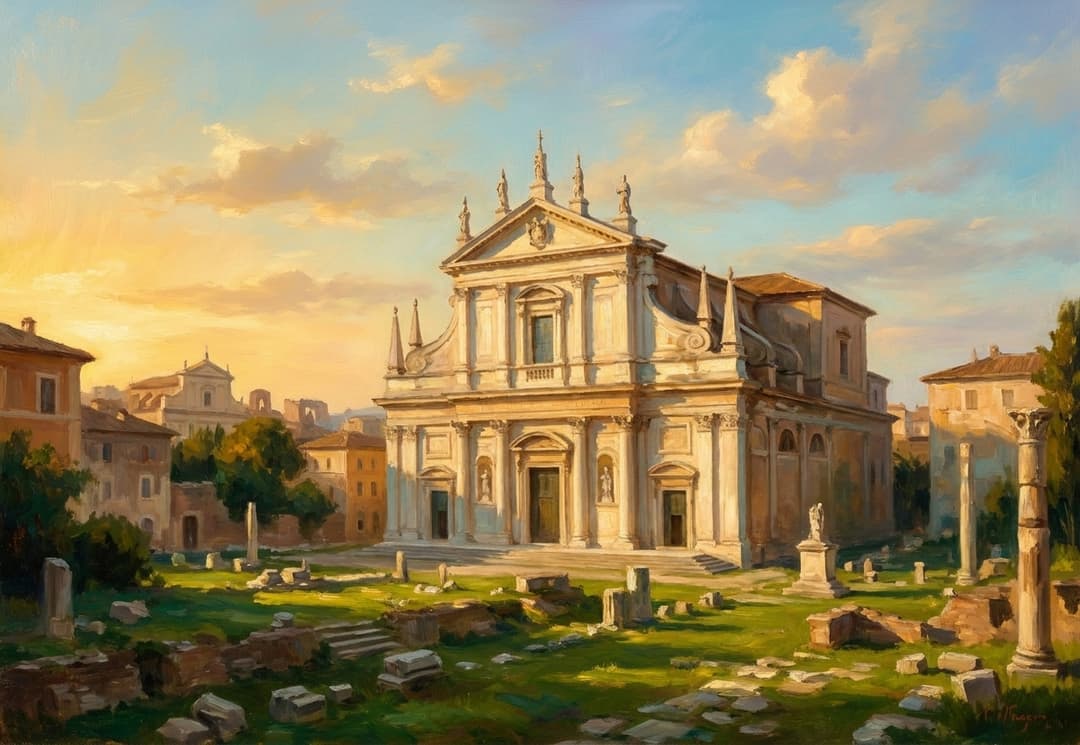
As the Aedes Roma Pietatis no longer exists, there is no physical site to visit. The temple was once located in the Forum Olitorium, now part of the historic center of Rome. Visitors to the area can explore the ruins and imagine the atmosphere of the ancient marketplace where the temple once stood.
Location

Forum Olitorium, Rome, Italy
Hours: N/A
Getting There: N/A
Get DirectionsAbout
The Aedes Pietatis, or Temple of Piety, was a significant religious structure in ancient Rome, dedicated to Pietas, the deified personification of piety. This encompassed a wide range of virtues, including respect for the gods, loyalty to the state, and affection towards family. Erected in 181 BC, the temple stood at the northern end of the Forum Olitorium, a bustling vegetable market near the Carmental Gate and west of the Capitoline Hill.
The temple's construction was vowed by Manius Acilius Glabrio following his victory at the Battle of Thermopylae during the Roman-Seleucid War. The dedication of a temple to Pietas served as a prominent symbol of Roman values, reminding citizens of the importance of fulfilling their duties to the gods, family, and the state.
Unfortunately, the Aedes Pietatis was demolished in 44 BC under the orders of Julius Caesar to make way for the construction of the Theatre of Marcellus. This marked the end of the temple's physical presence in the Roman landscape. While some believe the temple was later rebuilt during the Imperial Period, this remains a topic of scholarly debate. Despite its relatively short lifespan, the Aedes Pietatis left a lasting legacy as a symbol of Roman virtue and religious devotion.
Gallery
Symbolic Elements
The temple's exterior features intricate carvings, each rich with spiritual meaning:

Pietas
Pietas was the Roman goddess who embodied dutifulness, religious observance, and familial affection. She was a vital concept in Roman society, representing an individual's responsibilities towards the gods, family, and state.

Gilded Statue
The temple housed a gilded statue of Manius Acilius Glabrio, the first of its kind in Rome. This statue symbolized the honor and respect given to individuals who demonstrated exceptional piety and service to the state.

Forum Olitorium
The temple's location in the Forum Olitorium, a bustling vegetable market, symbolized the integration of religious life with the everyday activities of Roman citizens. It served as a reminder of the importance of piety in all aspects of life.

Carmental Gate
The temple's proximity to the Carmental Gate, one of the gates in the Servian Wall of Rome, symbolized the protection and security that piety offered to the city and its inhabitants. It represented the connection between religious devotion and civic well-being.

Capitoline Hill
The temple's location west of the Capitoline Hill, one of the seven hills of Rome and the site of the Temple of Jupiter, symbolized the connection between Pietas and the highest levels of Roman religious and political authority.

Palm Branch
In depictions of Pietas, she is often shown holding a palm branch, symbolizing victory, peace, and the triumph of virtue. This emblem reinforces the idea that piety leads to positive outcomes and lasting rewards.

Incense
Another common depiction of Pietas involves her casting incense, representing religious devotion, sacrifice, and the offering of prayers to the gods. This symbolizes the importance of maintaining a strong connection with the divine.

Veiled Woman
Pietas is frequently portrayed as a veiled woman, signifying modesty, reverence, and the sacred nature of her role as the embodiment of piety. The veil represents the respect and humility associated with religious observance.
Interesting Facts
The dedication of the temple followed Manius Acilius Glabrio's victory at the Battle of Thermopylae in 191 BC.
The temple's construction was completed by Glabrio's son after Glabrio faced dishonor during a censorial election.
The Aedes Pietatis was located near the Forum Olitorium, a bustling vegetable market in ancient Rome.
The temple was destroyed in 44 BC to make way for the Theatre of Marcellus, a large and important entertainment venue.
The temple housed the first gilded statue of a citizen in Rome, honoring Manius Acilius Glabrio.
The story of a daughter who sustained her imprisoned father with her milk was later connected to this temple.
The concept of Pietas extended beyond religious observance to encompass loyalty, respect, and affection towards family, friends, and the state.
The Aedes Pietatis may have been associated with the piety of Gaius Flaminius towards his father.
The temple may have been built on or near the site of a former prison or the 'Wetnurse Column' where poor infants were given milk.
The temple was also sometimes associated with the piety of Gaius Flaminius towards his father, who pulled him from the rostra despite the inviolability of the tribunes of the plebs.
Common Questions
What was the Aedes Pietatis?
The Aedes Pietatis, or Temple of Piety, was an ancient Roman temple dedicated to Pietas, the deified personification of piety, encompassing respect, loyalty, and affection, especially towards family and country.
When was the Aedes Pietatis built?
The temple was erected in 181 BC at the northern end of the Forum Olitorium, near the Carmental Gate west of the Capitoline Hill.
Why was the Aedes Pietatis built?
The temple was vowed by Manius Acilius Glabrio after his victory at the Battle of Thermopylae during the Roman-Seleucid War. The dedication of a temple to Pietas served as a reminder of the importance of piety.
When was the Aedes Pietatis destroyed?
The temple was demolished in 44 BC by Julius Caesar to make way for the construction of the Theatre of Marcellus.
What was the significance of Pietas in Roman society?
Pietas was a vital concept in Roman society, representing an individual's responsibilities towards the gods, family, and state. The temple itself served as a symbol of these values, reminding citizens of the importance of piety in maintaining social and political harmony.
Featured Stories
The Vow of Manius Acilius Glabrio
191 BC
Following his triumphant victory at the Battle of Thermopylae in 191 BC, Manius Acilius Glabrio made a vow to construct a temple dedicated to Pietas. This vow was a testament to his deep sense of duty and gratitude towards the gods for their favor in battle. The victory at Thermopylae was a crucial moment in the Roman-Seleucid War, and Glabrio's dedication of the temple was intended to ensure continued divine support for Rome's endeavors.
The decision to dedicate the temple to Pietas reflected the importance of this virtue in Roman society, emphasizing the need for respect, loyalty, and affection towards family, the state, and the gods. Glabrio's act served as an example for all citizens, reminding them of their responsibilities and the rewards of fulfilling them. The temple's construction became a symbol of Roman strength and piety, solidifying Glabrio's legacy.
Source: shs-conferences.org
The Completion by Glabrio's Son
181 BC
The completion and consecration of the Aedes Pietatis in 181 BC was carried out by Manius Acilius Glabrio's son, who was appointed as a duumvir specifically for this purpose. This act of filial piety was particularly significant given that Glabrio himself had faced dishonor during a censorial election. The son's dedication of the temple served as a powerful statement of loyalty and respect towards his father, despite the challenges he had faced.
The completion of the temple by Glabrio's son reinforced the importance of familial bonds and the continuation of virtuous traditions across generations. It demonstrated that even in the face of adversity, the principles of Pietas could inspire acts of devotion and service. The temple became a lasting monument to the Glabrio family's commitment to Roman values.
Source: shs-conferences.org
The Demolition and the Theatre of Marcellus
44 BC
In 44 BC, Julius Caesar made the decision to demolish the Aedes Pietatis in order to make way for the construction of the Theatre of Marcellus. This decision was met with mixed reactions, as it involved the destruction of a temple dedicated to a core Roman virtue. However, Caesar's aim was to provide the city with a grand entertainment venue that would serve the needs of the growing population.
The Theatre of Marcellus became one of the most important entertainment venues in Rome, hosting a wide range of performances and events. While the demolition of the Aedes Pietatis was a loss for some, the construction of the theatre represented a shift in priorities towards providing public entertainment and fostering a sense of community. The story of the temple's destruction serves as a reminder of the ever-changing landscape of ancient Rome and the complex decisions faced by its leaders.
Source: en.wikipedia.org
Timeline
Vow to Build the Temple
Manius Acilius Glabrio vowed to build the temple after his victory at the Battle of Thermopylae during the Roman-Seleucid War.
MilestoneTemple Consecrated
The temple was completed and consecrated by Manius Acilius Glabrio's son, who was appointed as a duumvir for the purpose.
DedicationTemple Damaged by Lightning
A temple "in the Circus Flaminius," possibly the Aedes Pietatis, was struck by lightning and greatly damaged.
EventTemple Demolished
The temple was demolished by Julius Caesar to make way for the construction of the Theatre of Marcellus.
MilestonePossible Rebuilding
It is believed by some that the temple was rebuilt and services continued.
RenovationBattle of Thermopylae
Manius Acilius Glabrio's victory at the Battle of Thermopylae led to his vow to construct the Aedes Pietatis.
EventCompletion by Glabrio's Son
The temple's construction was completed by Glabrio's son after Glabrio faced dishonor during a censorial election.
MilestoneCaesar's Demolition
Julius Caesar ordered the demolition of the Aedes Pietatis to make room for the Theatre of Marcellus.
MilestoneTemple's Location
The Aedes Pietatis was located near the Forum Olitorium, a bustling vegetable market in ancient Rome.
EventGilded Statue
The temple housed the first gilded statue of a citizen in Rome, honoring Manius Acilius Glabrio.
MilestonePietas' Concept
The concept of Pietas extended beyond religious observance to encompass loyalty, respect, and affection towards family, friends, and the state.
EventGaius Flaminius
The Aedes Pietatis may have been associated with the piety of Gaius Flaminius towards his father.
EventTemple's Site
The temple may have been built on or near the site of a former prison or the "Wetnurse Column" where poor infants were given milk.
EventPiety of Gaius Flaminius
The temple was also sometimes associated with the piety of Gaius Flaminius towards his father, who pulled him from the rostra despite the inviolability of the tribunes of the plebs.
EventLightning Strike
A lightning strike caused significant damage to the temple, necessitating repairs and restoration efforts.
RenovationSimilar Temples

Sources & Research
Every fact on Temples.org is backed by verified Sources & Research. Each piece of information is rated by source tier and confidence level.
View All Sources (3)
| Field | Source | Tier | Retrieved |
|---|---|---|---|
| About & Historical Background | shs-conferences.org (opens in a new tab) | A | 2024-01-02 |
| About & Historical Background | University of Chicago (opens in a new tab) | B | 2024-01-02 |
| About & Historical Background | Nova Roma (opens in a new tab) | B | 2024-01-02 |