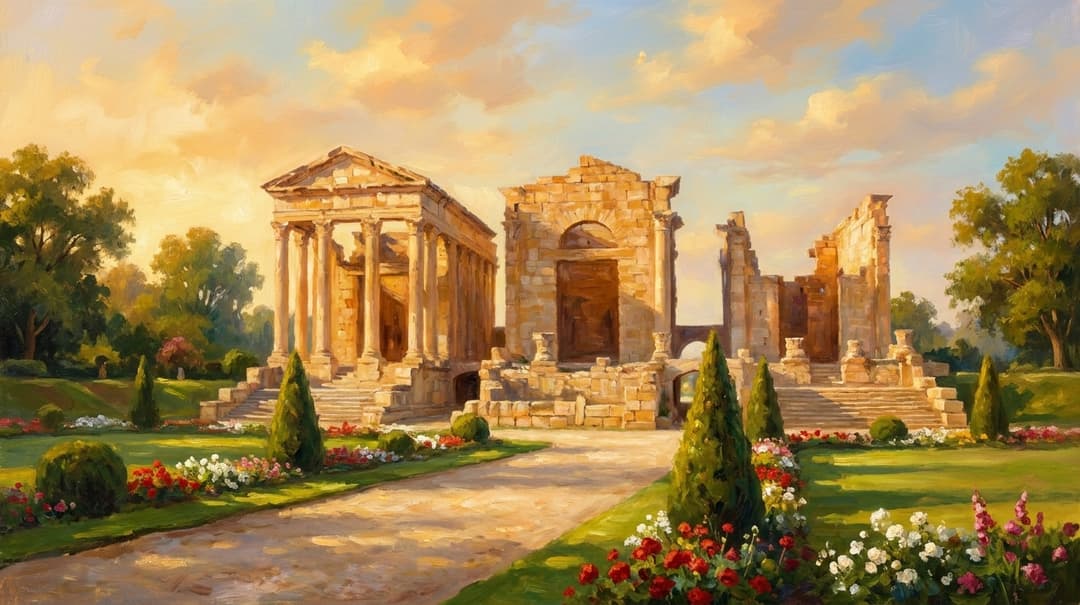
Visitor Insights
Visiting Temple of Jupiter Optimus Maximus
While the Temple of Jupiter no longer stands in its full glory, visitors to Rome can still experience its historical significance by visiting the Capitoline Hill. The Capitoline Museums now occupy the site, offering a glimpse into the temple's past through surviving fragments and archaeological remains. Exploring the grounds of the Palazzo Caffarelli, part of the Capitoline Museums, allows visitors to see portions of the temple's foundations and podium, connecting them to the grandeur of ancient Rome.
Highlights
- Explore the Capitoline Museums to view surviving fragments from the Temple of Jupiter.
- Visit the grounds of Palazzo Caffarelli to see the temple's foundations and podium.
- Learn about the temple's history and significance at the Capitoline Hill.
Things to Know
- The Temple of Jupiter is no longer standing, so visitors will be viewing remains and museum exhibits.
- Check the Capitoline Museums' website for current hours, admission fees, and directions.
Location

Capitoline Hill, Rome, Italy
Hours: Check the Capitoline Museums' website for current hours.
Getting There: The Capitoline Hill is accessible by public transportation and is located in central Rome.
Get DirectionsAbout
The Temple of Jupiter Optimus Maximus, also known as the Temple of Jupiter Capitolinus, was the most important temple in ancient Rome, located on the Capitoline Hill. It was dedicated to the Capitoline Triad: Jupiter, Juno, and Minerva, and served as a center of Roman state religion. The temple's history spans centuries, with multiple reconstructions following devastating fires.
Construction began in the 6th century BC under the Etruscan king Tarquinius Priscus and was completed by Tarquinius Superbus. It was traditionally dedicated on September 13, 509 BC, marking the year the Roman Republic replaced the Roman Kingdom. Throughout its existence, the temple underwent several rebuilds, each reflecting the architectural styles and available resources of the time.
The temple's architectural style evolved from its original Etruscan design to incorporate Greek and Roman influences. It featured a high podium, a hexastyle design with six columns across the front, and three cellae dedicated to Jupiter, Juno, and Minerva. The temple was adorned with terracotta sculptures, including a famous quadriga (four-horse chariot) on the roof. Despite its eventual destruction, the Temple of Jupiter left a lasting impact on Roman architecture and religious practices.
Gallery
Symbolic Elements
The temple's exterior features intricate carvings, each rich with spiritual meaning:

Jupiter
As the chief deity, Jupiter was considered the protector of Rome and the Roman state. He symbolized power, authority, and divine protection, embodying the strength and stability of the Roman Republic and Empire. His presence in the temple signified Rome's connection to the divine realm.

Juno
Juno represented the female aspect of the divine and was associated with marriage, motherhood, and the well-being of women. She symbolized the nurturing and protective qualities of the Roman state, ensuring the prosperity and continuity of Roman families. Her worship was integral to the social fabric of Rome.

Minerva
Minerva embodied wisdom, strategic warfare, and the arts. She symbolized intellect, skill, and the pursuit of knowledge, representing the Roman commitment to innovation and military prowess. Her presence in the temple signified the importance of both intellectual and martial strength in Roman society.

Capitoline Triad
The worship of Jupiter, Juno, and Minerva together represented the core values and beliefs of Roman society. The temple served as a reminder of their spiritual commitments and civic responsibilities, reinforcing the unity and strength of the Roman state. The Capitoline Triad was central to Roman identity.

Quadriga
The quadriga, a four-horse chariot, adorned the roof of the temple and symbolized victory and triumph. It represented the military achievements of Rome and the glory of its emperors, serving as a visual reminder of Roman power and dominance. The quadriga was a prominent symbol of Roman imperial ambition.

High Podium
The high podium, approximately 50m x 60m, supported the temple and elevated it above the surrounding landscape. It symbolized the temple's importance and dominance, visually reinforcing its central role in Roman religious and political life. The podium was a statement of Roman architectural ambition.

Gilded Roof Tiles
The gilded roof tiles, made of bronze and plated with gold, reflected the wealth and opulence of Rome. They symbolized the city's prosperity and its ability to invest in grand religious structures, showcasing the empire's economic strength and cultural sophistication. The gilded tiles were a symbol of Roman affluence.

Cella
The division of the temple's interior into three cellae, dedicated to Jupiter, Juno, and Minerva, reflected the distinct roles and responsibilities of each deity. This separation symbolized the complexity of Roman religious beliefs and the importance of honoring each member of the Capitoline Triad individually. The cellae were central to the temple's religious function.
Interesting Facts
The Temple of Jupiter was the most important temple in ancient Rome.
It was the largest Etruscan-style temple.
The temple influenced Roman temple building for centuries.
It served as a repository for ritual, cultural, and political objects.
The temple was the endpoint for triumphs (victory parades).
It was a meeting place for the Senate.
The statue of Jupiter was painted red, which started the tradition of painting the faces of Roman generals during triumphs.
The Sibylline Oracles (books containing the prophecy of the Sibyls) were kept at the temple.
The temple was destroyed and rebuilt multiple times due to fires.
The temple was used until Emperor Theodosius I closed all non-Christian temples in 392 AD.
Common Questions
What was the Temple of Jupiter Optimus Maximus?
The Temple of Jupiter Optimus Maximus was the most important temple in ancient Rome, located on the Capitoline Hill. It was dedicated to the Capitoline Triad: Jupiter, Juno, and Minerva, and served as a center of Roman state religion. The temple's history spans centuries, with multiple reconstructions following devastating fires.
Where was the Temple of Jupiter located?
The Temple of Jupiter was located on the Capitoline Hill in Rome, Italy. Today, the site is occupied by the Capitoline Museums, where visitors can explore the remains and learn about its history.
When was the Temple of Jupiter built?
Construction began in the 6th century BC under the Etruscan king Tarquinius Priscus and was completed by Tarquinius Superbus. It was traditionally dedicated on September 13, 509 BC, marking the year the Roman Republic replaced the Roman Kingdom.
What deities were worshipped at the Temple of Jupiter?
The Temple of Jupiter was dedicated to the Capitoline Triad: Jupiter, the king of the gods; Juno, his wife and queen; and Minerva, their daughter and goddess of wisdom. These three deities represented the core values and beliefs of Roman society.
What happened to the Temple of Jupiter?
The Temple of Jupiter underwent several rebuilds due to fires and was eventually plundered by Vandals. The remaining ruins were destroyed in the 16th century when Giovanni Pietro Caffarelli built Palazzo Caffarelli on the site. Today, visitors can explore the remains and learn about its history at the Capitoline Museums.
Featured Stories
The Dedication of the Temple
September 13, 509 BC
The dedication of the Temple of Jupiter Optimus Maximus on September 13, 509 BC, marked a pivotal moment in Roman history. This event coincided with the establishment of the Roman Republic, signifying a new era of governance and civic responsibility. The temple's dedication was a grand ceremony, attended by Roman leaders and citizens alike, solidifying its role as the center of Roman state religion.
The rituals performed during the dedication were steeped in tradition, honoring Jupiter, Juno, and Minerva as the protectors of Rome. Sacrifices were made, prayers were offered, and the temple was consecrated as a sacred space for generations to come. The dedication symbolized Rome's commitment to its gods and the values they represented.
The atmosphere was charged with hope and anticipation, as the Roman people looked to the future with their newly established Republic. The Temple of Jupiter stood as a beacon of strength and stability, promising divine favor and protection for the Roman state. The dedication was a testament to the enduring power of faith and the importance of civic unity.
Source: Adapted from Livy, *Ab Urbe Condita*, Book 2.
The Great Fire of 83 BC
83 BC
In 83 BC, a devastating fire swept through the Temple of Jupiter, reducing the wooden structure to ashes. This catastrophic event occurred during the tumultuous civil wars under Sulla, adding to the sense of crisis and uncertainty in Rome. The loss of the temple was deeply felt by the Roman people, who viewed it as a sign of divine displeasure.
The fire consumed not only the temple itself but also many of the sacred artifacts and treasures it housed. The destruction was a blow to Roman morale, as the temple had long been a symbol of the city's strength and resilience. The event prompted immediate efforts to rebuild the temple, reflecting the enduring importance of the site to Roman identity.
The rebuilding process was a testament to Roman determination, with resources and manpower poured into the project. The new temple was constructed with more expensive materials, including marble and gilded roof tiles, symbolizing Rome's commitment to restoring its sacred spaces. The fire served as a reminder of the fragility of human endeavors and the enduring power of faith.
Source: Based on Plutarch, *Life of Sulla*.
The Vandal Sack of 455 AD
455 AD
In 455 AD, Rome fell victim to the Vandals, who plundered the city and desecrated its sacred sites. The Temple of Jupiter was among the targets, with the Vandals stripping away half of the gilded bronze tiles that adorned its roof. This act of sacrilege was a profound shock to the Roman people, who viewed it as a violation of their religious and cultural heritage.
The Vandals' sack of Rome marked a turning point in the city's history, signaling the decline of the Western Roman Empire. The loss of the gilded tiles was not only a material loss but also a symbolic one, representing the erosion of Roman power and prestige. The event left a lasting scar on the Roman psyche, as the city struggled to recover from the devastation.
Despite the Vandals' depredations, the Temple of Jupiter continued to stand as a testament to Rome's enduring spirit. The remaining tiles and the temple's foundations served as a reminder of the city's glorious past and its potential for renewal. The sack of Rome was a dark chapter in the city's history, but it also underscored the resilience of its people and their unwavering commitment to their traditions.
Source: Derived from Procopius, *History of the Vandalic War*.
Timeline
Construction Begins
Construction began under the Etruscan king Tarquinius Priscus.
MilestoneTraditional Dedication
Traditionally dedicated on September 13, marking the year the Roman Republic replaced the Roman Kingdom.
DedicationBronze Quadriga Replaces Terracotta
The terracotta quadriga was replaced with a bronze one.
RenovationDestruction by Fire
The wooden temple was destroyed by fire during the civil wars under Sulla.
RenovationRebuilt and Dedicated
Rebuilt with more expensive materials and dedicated by Quintus Lutatius Catulus Capitolinus.
DedicationNew Cult Statues Completed
The three new cult statues were completed.
EventTemple Burns Down Again
The rebuilt temple burned down on December 19.
RenovationVespasian Rebuilds Temple
Vespasian rebuilt the temple, dedicating it.
DedicationTemple Burns Down Again
The rebuilt temple burned down again.
RenovationDomitian Rebuilds Temple
Domitian rebuilt the temple.
DedicationPublic Funds Eliminated
Emperor Theodosius I eliminated public funds for pagan temples.
EventVandals Plunder Temple
Vandals plundered the temple, stripping away half of the gilded bronze tiles.
EventStatues and Ornaments Removed
Narses removed many of the statues and ornaments.
EventRuins Destroyed
The remaining ruins were destroyed when Giovanni Pietro Caffarelli built Palazzo Caffarelli on the site.
RenovationSimilar Temples

Sources & Research
Every fact on Temples.org is backed by verified Sources & Research. Each piece of information is rated by source tier and confidence level.
View All Sources (4)
| Field | Source | Tier | Retrieved |
|---|---|---|---|
| About & Historical Background | Kiddle (opens in a new tab) | C | 2024-02-29 |
| Historical Timeline & Architectural Description | Ancient Rome Live (opens in a new tab) | C | 2024-02-29 |
| Architectural Description & Interesting Facts | Khan Academy (opens in a new tab) | B | 2024-02-29 |
| Symbolic Elements | Kiddle (opens in a new tab) | C | 2024-02-29 |