Visitor Insights
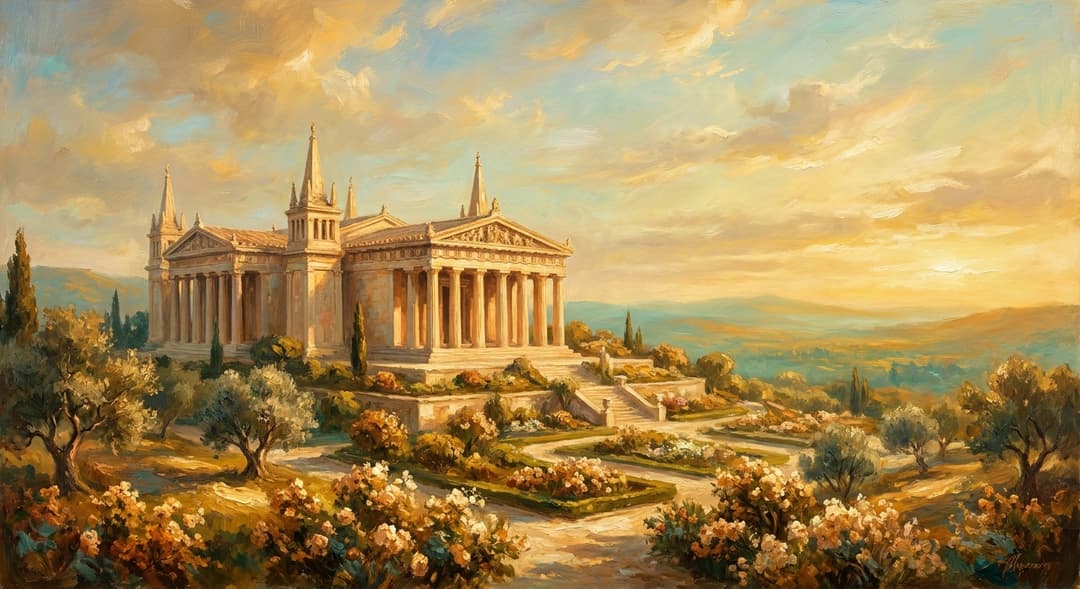
Visiting Aedes of Apollo Pithian Hyperborean
Delphi, located on the southern slopes of Mount Parnassus in Greece, was a major religious center in the ancient Greek world. Visitors can explore the ruins of the Temple of Apollo, where the Pythia delivered her prophecies. The site offers a glimpse into the religious practices and beliefs of ancient Greece, with stunning views of the surrounding landscape.
Location

Delphi, Greece
Get DirectionsAbout
The Aedes of Apollo Pithian Hyperborean stands as a testament to the worship of the Greek god Apollo, specifically connecting him to the oracle at Delphi (Pythian) and the mythical Hyperboreans. The ancient Greeks held a complex pantheon of gods and goddesses in reverence, each with specific roles and responsibilities. They built temples (aedes) to honor these deities and sought their blessings through offerings and rituals.
Apollo was associated with music, poetry, healing, prophecy, and the sun. The oracle at Delphi was a major religious center in the ancient Greek world, where the priestess Pythia delivered prophecies believed to come from Apollo. The Hyperboreans were a mythical people who lived in a paradise of eternal youth and abundance, and were believed to have a special connection to Apollo.
The worship of Apollo at Delphi and the association with the Hyperboreans highlight the complex and multifaceted nature of ancient Greek religion. The site served as a center for prophecy, healing, and artistic inspiration, drawing pilgrims and worshippers from across the ancient world. The myths and legends surrounding Apollo and the Hyperboreans continue to inspire and offer insights into the beliefs and values of ancient Greek society.
Gallery
Symbolic Elements
The temple's exterior features intricate carvings, each rich with spiritual meaning:
Apollo's Lyre
The lyre is a symbol of Apollo's role as the god of music and poetry. It represents harmony, creativity, and the power of artistic expression. The lyre was often depicted in statues and artwork associated with Apollo.
Delphic Oracle
The Delphic Oracle, also known as the Pythia, was the priestess of Apollo at Delphi. She served as a conduit for divine prophecies, offering guidance and wisdom to those who sought her counsel. The Oracle symbolizes the power of prophecy and the connection between the mortal and divine realms.

Laurel Wreath
The laurel wreath is a symbol of victory, honor, and achievement, often associated with Apollo. It represents triumph in athletic competitions, artistic endeavors, and intellectual pursuits. The wreath was commonly awarded to victors in the Pythian Games, held in honor of Apollo at Delphi.

Tripod
The tripod was a sacred object used by the Pythia to deliver her prophecies. It symbolized the connection between the Oracle and Apollo, serving as a platform for divine communication. The tripod was often depicted in artwork and sculptures associated with the Delphic Oracle.
Hyperborean Gifts
The Hyperboreans were known for sending gifts to Delos, the birthplace of Apollo and Artemis. These gifts symbolized the close relationship between the mythical people and the divine realm. The offerings represented acts of devotion, reverence, and gratitude towards the gods.

Temple Columns
The columns of the Temple of Apollo at Delphi represent the architectural grandeur and religious significance of the site. The Doric columns, in particular, symbolize strength, stability, and the enduring nature of the temple. The columns served as a testament to the skill and artistry of the ancient Greek builders.

Serpent
The serpent is a symbol of wisdom, healing, and prophecy, often associated with Apollo. It represents the god's ability to see into the future and his power to cure illnesses. The serpent was also linked to the earth and the underworld, adding to its symbolic complexity.

Sun
The sun is a symbol of Apollo's role as a solar deity. It represents light, reason, and order. The sun is often depicted in artwork and sculptures associated with Apollo.
Interesting Facts
The Hyperboreans were believed to live in a paradise of eternal youth and abundance.
Apollo was believed to spend his winters in Hyperborea.
Offerings from the Hyperboreans were sent to Delos, packed in straw, and passed from tribe to tribe.
Some scholars have identified the Hyperborean temple with Stonehenge.
The Hyperboreans were thought to have advanced medical practices.
The Delphic Oracle only gave prophecies during the warmest months of the year, after Apollo returned from Hyperborea.
The Hyperboreans were associated with the island of Delos, the birthplace of Apollo and Artemis.
Some believed Apollo's mother, Leto, was from Hyperborea.
The Hyperboreans were said to have a language peculiar to them and were friendly towards the Greeks.
The Metapontines said that Aristeas appeared in their country and bade them establish an altar to Apollo and set beside it a statue of Aristeas.
Common Questions
What was the role of the Oracle at Delphi?
The Oracle at Delphi was a priestess who delivered prophecies believed to come from Apollo. She was consulted by individuals and city-states seeking guidance on important decisions.
Who were the Hyperboreans?
The Hyperboreans were a mythical people who lived in a paradise of eternal youth and abundance. They were believed to have a special connection to Apollo and were known for sending gifts to Delos.
What was the significance of the Temple of Apollo at Delphi?
The Temple of Apollo at Delphi was a major religious center in the ancient Greek world. It was dedicated to Apollo and housed the Oracle, making it a place of great importance for prophecy and worship.
Where is Delphi located?
Delphi is located on the southern slopes of Mount Parnassus in Greece.
What is Apollo the god of?
Apollo is the god of music, poetry, healing, prophecy, and the sun.
Featured Stories
The Founding of Delphi
Ancient Times
The story of Delphi begins with the god Apollo, who sought a place to establish his oracle. According to legend, he traveled far and wide before finding the perfect spot on the slopes of Mount Parnassus. There, he slew the serpent Python, who guarded the sacred site, and claimed it as his own.
Apollo then established the Delphic Oracle, a priestess who would deliver prophecies in his name. The Oracle became renowned throughout the ancient world, attracting pilgrims and seekers from distant lands. They came seeking guidance on matters of state, personal dilemmas, and the mysteries of the future.
The founding of Delphi marked the beginning of a sacred tradition that would endure for centuries. The site became a center of religious, political, and cultural significance, shaping the course of ancient Greek history. The legacy of Apollo and the Delphic Oracle continues to inspire.
Source: https://www.britannica.com/place/Delphi
The Hyperboreans' Gifts
Mythical Era
In myth, the Hyperboreans were a people who lived in a land beyond the north wind, a paradise of eternal spring and abundance. They were said to be devoted to Apollo, and their connection to the god was marked by a tradition of sending gifts to his sanctuary on the island of Delos. These gifts, carefully wrapped in straw, were passed from tribe to tribe, a testament to the Hyperboreans' reverence for Apollo.
The gifts from the Hyperboreans were not merely tokens, but symbols of a deeper spiritual connection. They represented the Hyperboreans' desire to honor Apollo and to maintain a harmonious relationship with the divine. The act of sending these gifts was a sacred ritual, a way for the Hyperboreans to express their devotion.
The tradition of the Hyperborean gifts highlights the importance of ritual and symbolism in ancient Greek religion. It also underscores the enduring power of myth to shape beliefs and practices. The story of the Hyperboreans and their gifts continues to resonate, reminding us of the human quest for connection with the divine.
Source: https://www.worldhistory.org/Hyperboreans/
The Oracle's Prophecies
Ancient Times
The Delphic Oracle, also known as the Pythia, was the high priestess of the Temple of Apollo at Delphi. She was revered as a conduit for divine wisdom, delivering prophecies that were believed to come directly from the god. The Oracle's pronouncements were often cryptic and ambiguous, requiring interpretation by priests and advisors.
Throughout the ancient world, leaders and individuals sought the Oracle's guidance on matters of war, politics, and personal affairs. Her prophecies were believed to hold the key to success or failure, and her words were carefully considered before making important decisions. The Oracle's influence extended far beyond the walls of Delphi, shaping the course of ancient Greek history.
The legacy of the Delphic Oracle endures as a testament to the power of prophecy and the human desire to understand the future. Her pronouncements continue to fascinate, offering insights into the beliefs and values of ancient Greek society. The story of the Oracle serves as a reminder of the enduring quest for knowledge and the power of the divine.
Source: https://www.britannica.com/topic/Delphi
Timeline
Hesiod mentions the Hyperboreans
Hesiod, an early Greek poet, makes reference to the mythical Hyperboreans in his writings.
MilestoneTemple of Apollo at Delphi constructed
The Temple of Apollo at Delphi was constructed around 550 BCE, becoming a major center for religious worship and prophecy.
MilestoneHyperboreans connected to Croesus
The Hyperboreans are linked to Croesus, the king of Lydia, in ancient accounts.
EventHerodotus writes of the Hyperboreans
The historian Herodotus documents the Hyperboreans in his writings, contributing to their mythology.
EventApollo spends part of the year in Hyperborea
The poet Pindar notes that Apollo lived part of the year in Hyperborea, highlighting the connection between the god and the mythical land.
EventPurification on Delos
A purification took place on Delos as a response to an oracle. All dead bodies in the area of the sanctuary, save those believed to be those of the Hyperborean maidens, were dug up and transported off the island.
EventCallimachus records myths
Callimachus, a poet and scholar, recorded many obscure myths, including those related to Apollo and the Hyperboreans.
EventConstruction of the Temple of Apollo
The Temple of Apollo at Delphi was constructed, marking a significant development in the site's religious importance.
MilestoneDedication of the Temple
The Temple of Apollo was dedicated, solidifying its role as a central place of worship for Apollo.
DedicationOracle at Delphi
The Oracle at Delphi gains prominence as a source of wisdom and prophecy, attracting visitors from across the ancient world.
EventHeight of Delphic Influence
The Delphic Oracle reaches the height of its influence, playing a significant role in political and religious decisions.
MilestoneDecline of the Oracle
The influence of the Delphic Oracle begins to decline as new philosophical and religious ideas emerge.
EventRoman Influence
The Romans exert increasing influence over Delphi, leading to changes in the site's administration and religious practices.
EventClosure of the Oracle
The Delphic Oracle is officially closed by the Roman Emperor Theodosius I, marking the end of its active role in prophecy.
EventArchaeological Site
Delphi is now an archaeological site, attracting tourists and scholars interested in ancient Greek history and religion.
EventHistory by Decade
8th-7th Century BCE
During this era, the earliest mentions of the Hyperboreans appear in the writings of Hesiod, establishing their place in Greek mythology. The concept of a mythical land beyond the north wind begins to take shape, influencing later accounts and interpretations.
6th Century BCE
The Temple of Apollo at Delphi is constructed around 550 BCE, marking a significant development in the site's religious importance. The Hyperboreans are connected to Croesus, the king of Lydia, further intertwining their mythology with historical figures and events.
5th Century BCE
Herodotus writes of the Hyperboreans, contributing to their mythology and solidifying their place in Greek literature. Pindar notes that Apollo spent part of the year in Hyperborea, highlighting the connection between the god and the mythical land.
426 BC
A purification took place on Delos as a response to an oracle. All dead bodies in the area of the sanctuary, save those believed to be those of the Hyperborean maidens, were dug up and transported off the island.
Hellenistic Times
Callimachus recorded many obscure myths, including those related to Apollo and the Hyperboreans, preserving their stories for future generations.
Present Day
Delphi is now an archaeological site, attracting tourists and scholars interested in ancient Greek history and religion. The myths and legends surrounding Apollo and the Hyperboreans continue to inspire, offering insights into the beliefs and values of ancient Greek society.
Similar Temples
Sources & Research
Every fact on Temples.org is backed by verified Sources & Research. Each piece of information is rated by source tier and confidence level.
View All Sources (5)
| Field | Source | Tier | Retrieved |
|---|---|---|---|
| About & Historical Background | Britannica (opens in a new tab) | B | 2024-01-02 |
| About & Historical Background | World History Encyclopedia (opens in a new tab) | B | 2024-01-02 |
| Historical Timeline | World History Encyclopedia (opens in a new tab) | B | 2024-01-02 |
| Interesting Facts | Substack (opens in a new tab) | C | 2024-01-02 |
| Historical Timeline | ResearchGate (opens in a new tab) | B | 2024-01-02 |