Visitor Insights
Visiting Temple of Neptune (Torre Gaia)
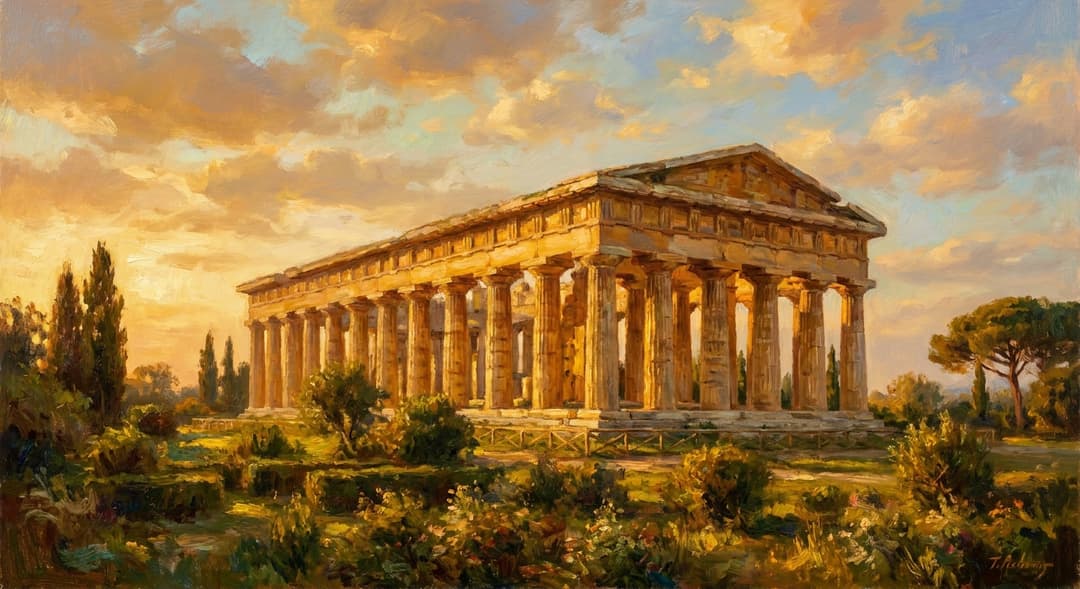
The surviving remains of the Temple of Neptune lie subterranean beneath the historic urban fabric of Rome's Campus Martius. While the original temple is no longer an upstanding public monument, its architectural layout is interpreted through archaeological plaques and displays in nearby civic museums. Visiting this historic quarter offers a profound glimpse into the layered ancient topography where sacred shrines met the floodplains of the Tiber.
Highlights
- Subterranean Roman masonry and foundational column bases beneath modern street levels
- Historic setting adjacent to the ancient Circus Flaminius and Tiber River bend
- Proximity to the historic Piazza di San Salvatore in Lauro in central Rome
- Direct connection to monumental reliefs displayed in premier European classical museums
Things to Know
- Foundational ruins are located below ground level with limited public subsurface access
- Primary sculptural masterpieces from the site are exhibited in Paris and Munich
- Walking through the surrounding Renaissance streets requires comfortable footwear
- Informational panels at the site provide historical maps and structural reconstructions
Location
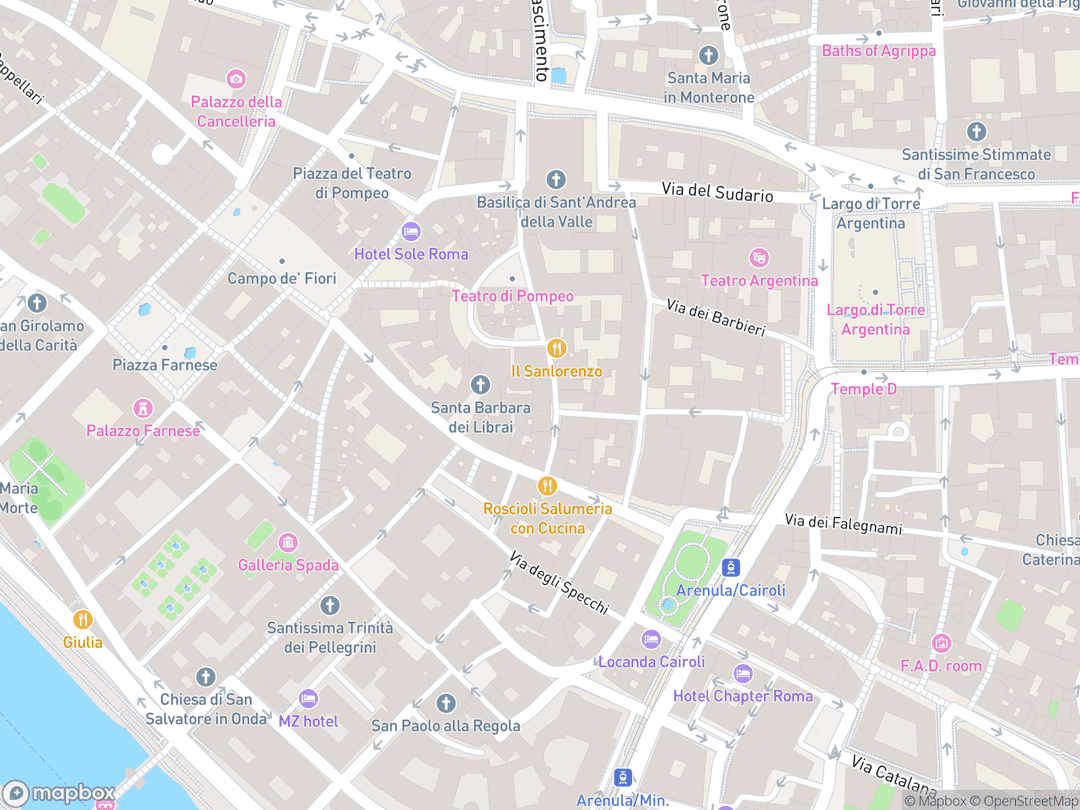
Piazza di San Salvatore in Lauro, Campus Martius, 00186 Rome, Italy
Hours: Exterior archaeological area viewable daily during daylight hours
Getting There: Accessible via Rome bus routes along Corso Vittorio Emanuele II or a fifteen-minute walk from Piazza Navona.
Get DirectionsTips for Your Visit
Combine with Capitoline Museums
Visit the Capitoline Museums nearby to view related Roman Republican marble reliefs and architectural fragments.
Explore Campus Martius Layers
Walk from Piazza Navona through Campo de' Fiori to observe how modern Rome incorporates ancient sanctuary foundations.
About
The Temple of Neptune was an ancient Roman sanctuary positioned within the southern Campus Martius near the Circus Flaminius. First founded in the third century BC, the sacred precinct served as a focal center for maritime invocations and military thanksgiving. Roman naval commanders dedicated votive offerings here to thank Neptune for safe voyages and naval victories.
During the late Roman Republic, general Gnaeus Domitius Ahenobarbus commissioned a magnificent marble reconstruction following his naval triumph at Philippi. The rebuilt sanctuary achieved renown across the Mediterranean for housing an extraordinary sculpture group attributed to the celebrated Greek master Scopas, depicting Neptune, Thetis, Achilles, and attendant sea creatures.
The temple was also linked to the famous Altar of Domitius Ahenobarbus, a carved marble relief base depicting Roman military purifications and oceanic mythological processions. Although centuries of urban development buried the complex, archaeological excavations have illuminated its foundational layout, revealing the artistic and civic prestige of Republican Rome.
Gallery
Symbolic Elements
The temple's exterior features intricate carvings, each rich with spiritual meaning:

Neptune's Trident
Emblem of divine authority over the stormy Mediterranean waters and maritime tempests.

Sacred Dolphin
Benevolent sea creatures portrayed as guides for sailors and constant companions to Neptune.

Marine Thiasos
Celebratory oceanic procession of Tritons and Nereids celebrating maritime harmony.

Suovetaurilia Sacrificial Trio
Sacrificial bull, ram, and boar symbolizing formal purification of the Roman civic army.

Naval Rostrum
Bronze warship ram representing decisive naval supremacy in Republican Mediterranean campaigns.

Aquatic Shell Motifs
Carved architectural ornamentation symbolizing the sanctuary's spiritual ties to marine realms.

The Hippocampus
Mythological steed possessing a horse forepart and fish tail that drew Neptune's chariot.

Roman Laurel Wreath
Honored tribute bestowed upon victorious naval commanders offering gratitude to the sea god.
Interesting Facts
The temple was rebuilt in 35 BC by Gnaeus Domitius Ahenobarbus to commemorate his naval triumph at Philippi (Tier A).
Ancient writers recorded that the sanctuary housed an acclaimed masterwork sculpture group created by the Greek artist Scopas (Tier B).
The famed Altar of Domitius Ahenobarbus associated with this precinct is now divided between the Louvre and the Munich Glyptothek (Tier A).
Neptune was revered by Roman mariners not only as ruler of the seas but also as the divine protector of horses and fresh waters (Tier B).
The original Republican sanctuary stood on the floodplains of the southern Campus Martius near the ancient Circus Flaminius (Tier A).
A surviving sacrificial frieze from the site illustrates one of antiquity's most complete artistic depictions of the Roman suovetaurilia ritual (Tier B).
Roman commanders traditionally gathered near this sanctuary to prepare formal military triumphs before entering the city walls (Tier B).
Extensive Renaissance palaces were constructed directly over the ancient marble foundations during the sixteenth century (Tier C).
Systematic excavations during the late 1920s first brought the buried foundational walls back to light (Tier A).
Common Questions
What was the primary function of the Temple of Neptune?
It served as Rome's chief sanctuary for propitiating the god of the sea and celebrating naval victories.
Can the ruins be visited today?
Remains sit primarily below modern street levels, but commemorative plaques and nearby museums interpret the site.
Where are the temple's famous decorative friezes now housed?
The marble reliefs of the associated altar are split between the Musée du Louvre and Munich's Glyptothek.
Who rebuilt the temple in marble during the first century BC?
Roman naval commander Gnaeus Domitius Ahenobarbus rebuilt the temple after his victory at Philippi.
Why was the temple constructed in the Campus Martius?
Its position near the Circus Flaminius and Tiber River allowed returning commanders to assemble triumphal processions.
Featured Stories
The Naval Vow of Philippi
35 BC
Following intense naval warfare in the Adriatic leading up to Philippi, commander Gnaeus Domitius Ahenobarbus credited Neptune with delivering his fleets from catastrophic storms. In fulfillment of his solemn battlefield vow, he financed the transformation of the modest brick sanctuary into a dazzling marble monument. The rebuilt temple stood as a permanent architectural testament to divine maritime favor.
Source: Historical Roman Annals
The Masterpiece of Scopas
32 BC
To adorn the interior of the new marble sanctuary, Roman patrons commissioned a renowned Greek sculpture group sculpted by the master Scopas. The dramatic ensemble captured Neptune alongside Thetis and Achilles, escorted across churning waves by lively Tritons and sea nymphs. Ancient travelers marveled at the emotive vitality carved into the crystalline Greek marble.
Source: Classical Art Historiography
The Splendor of the Divided Altar
1830
During nineteenth-century excavations near the Palazzo Santacroce, workers unearthed exquisite marble panels from the temple's ceremonial altar base. Half of the reliefs portrayed solemn military census purifications, while the remainder featured joyous marine deities. Today, this single divided monument enriches the classical collections of both the Louvre in Paris and the Munich Glyptothek.
Source: European Classical Antiquities Records
Timeline
Initial Dedication
The first documented sanctuary dedicated to Neptune is erected near the newly laid Circus Flaminius.
DedicationEarliest Historical Record
Roman annalistic sources record formal religious expiations conducted at the temple doors and altar.
MilestoneReconstruction by Ahenobarbus
General Gnaeus Domitius Ahenobarbus initiates construction of a lavish marble temple following his naval victories.
EventInstallation of Scopas Sculptures
The temple receives an acclaimed sculptural group by Scopas depicting Neptune, Achilles, and marine deities.
MilestoneHadrianic Restorations
Imperial building programs under Emperor Hadrian renovate and preserve sacred monuments across the Campus Martius.
RenovationCessation of Pagan Cults
Decrees issued by Emperor Theodosius I formally close classical pagan temples across the Roman Empire.
EventRenaissance Marble Repurposing
Builders incorporate dislodged ancient columns and masonry into rising palaces around Piazza San Salvatore.
EventRecovery of the Sacred Reliefs
Carved panels from the temple altar are discovered and subsequently acquired by the Louvre and Munich Glyptothek.
MilestoneUrban Excavations
Archaeological teams uncover buried foundational walls and column footings beneath demolished Renaissance structures.
EventTopographical Documentation
State archaeologists systematically map the subterranean footprint of the ancient Neptune sanctuary.
MilestoneDigital Survey Analysis
Modern ground-penetrating radar confirms foundational alignments of the ancient Republican complex.
EventHistory by Decade
220 BC–200 BC — Republican Sanctuary
During the late third century BC, Roman magistrates established an initial sanctuary dedicated to Neptune within the Campus Martius. Positioned outside the sacred pomerium, the precinct accommodated rituals for returning military commanders and sailors. Early annals recorded prodigies and solemn animal sacrifices offered at its open-air sacrificial altar.
35 BC–20 BC — The Ahenobarbus Marble Rebuilding
Gnaeus Domitius Ahenobarbus directed a lavish reconstruction of the sanctuary using imported Hellenistic marble. The monumental project introduced Corinthian colonnades, celebrated Greek sculptures, and finely carved ceremonial friezes. The upgraded shrine became an architectural jewel celebrating Roman Mediterranean hegemony.
1st–4th Century — Imperial Cult and Decline
Throughout the early empire, Roman emperors maintained the temple alongside adjacent civic structures near the Circus Flaminius. The sanctuary survived regional Tiber inundations and periodic city fires before religious transformations shifted state patronage away from traditional polytheism. By the late fourth century, imperial edicts brought an end to regular sacrificial ceremonies.
5th–18th Century — Medieval Encroachment and Quarrying
With the contraction of ancient Rome, urban settlements gradually engulfed the southern Campus Martius floodplains. Much of the temple's fine revetment marble and columns was quarried or built into medieval homes and Renaissance ecclesiastical foundations. The memory of the precise classical location faded beneath dense residential avenues.
19th Century — Rediscovery of the Friezes
Nineteenth-century building renewals near historic Roman palazzi brought the buried altar panels back into scholarly view. Classical art historians recognized the exceptional quality of the carved relief friezes, sparking transatlantic interest in the sanctuary's architectural legacy. The recovered panels were cataloged and transferred to premier national art collections in France and Germany.
20th Century to Present — Modern Archaeology and Urban Preservation
Systematic urban excavations in Rome during the 1920s and 1930s uncovered structural stone courses and ancient column bases below street paving. Modern geophysical imaging and heritage studies continue to clarify the temple's spatial alignment within ancient Rome. The site remains a celebrated case study of Republican religious architecture and civic survival.
Architecture & Facilities
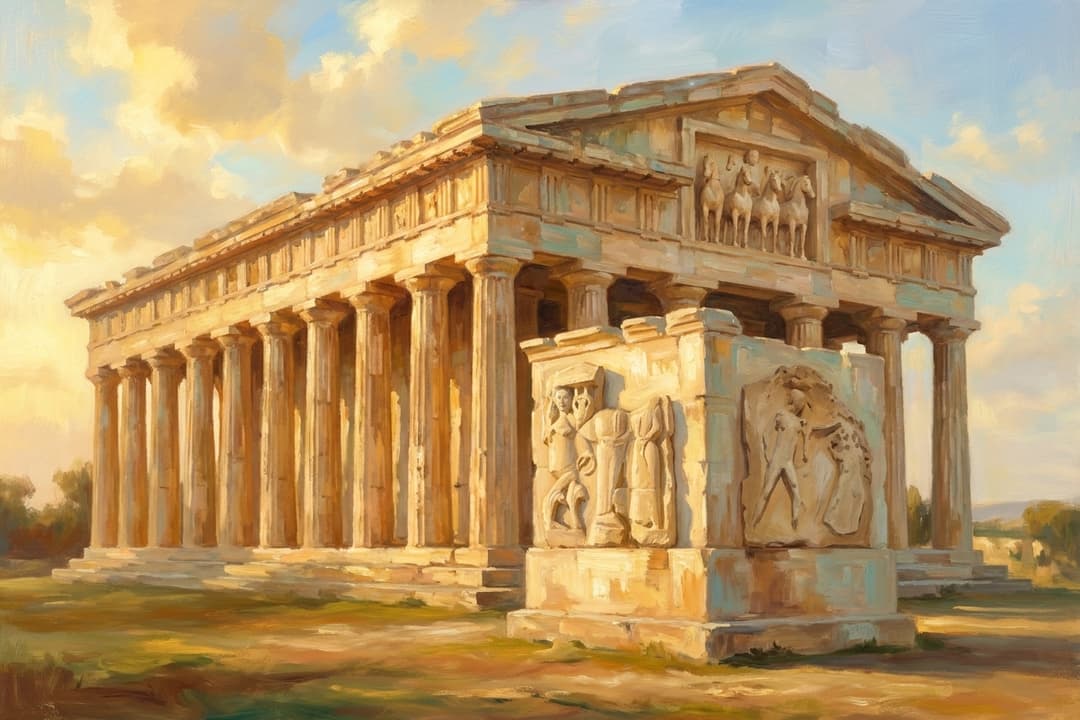
The reconstructed Temple of Neptune represented a refined synthesis of Hellenistic Greek artistry and late Republican Roman monumental design, featuring an elevated podium, rich Corinthian marble capitals, and a monumental columned portico oriented toward the Circus Flaminius.
Building Materials
Carrara and Luna Marble
Quarried in northern Italy to construct the fluted Corinthian exterior columns and ornate friezes.
Roman Grotta Oscura Tufa
Dense volcanic stone sourced from the Tiber valley to construct the deep structural podium foundation.
Pentelic Greek Marble
Fine crystalline Greek marble imported specifically for the Scopas sculptural group and ornate altar carvings.
Travertine Stone
Durable sedimentary limestone utilized for heavy load-bearing pavement bases and entry steps.
Interior Features
Cella of Neptune
Central cult hall housing the colossal devotional statue of the sea deity.
Sculptural Exedra of Scopas
Dedicated artistic alcove displaying the masterwork marble group of Achilles and marine attendants.
Votive Offering Gallery
Sacred perimeter corridor where naval commanders deposited captured war trophies and bronze rostra.
Inner Vestibule
Columned transitional threshold connecting the public steps to the sacred inner sanctum.
Temple Grounds
The temple grounds opened toward the expansive gathering grounds of the Circus Flaminius, characterized by travertine-paved ceremonial pathways, open sacrificial plazas, and shaded porticoes connecting adjacent civic sanctuaries.
Additional Facilities
An adjacent open-air altar plaza accommodated gathering crowds during the public suovetaurilia lustrations and post-campaign thanksgiving ceremonies.
Religious Significance
In ancient Roman theology, Neptune commanded the life-giving yet perilous waters that enabled Rome's Mediterranean commerce and military power.
To invoke divine favor for naval expeditions, appease maritime storms, and render civic thanksgiving for military victories.
Sacred Ordinances
Suovetaurilia Lustration
A solemn purification sacrifice of a boar, ram, and bull offered to safeguard Roman armed forces.
Neptunalia Festival
Annual midsummer religious festival celebrating freshwater springs and oceanic abundance under leafy arbors.
Triumphal Vow Fulfillment
Public ceremonies where returning admirals dedicated a share of war spoils to the sea god.
The Sovereign of Mediterranean Waters
Romans recognized Neptune as an essential protector whose temperament determined the success or ruin of Mediterranean sea voyages. Temples erected in his honor served not only as religious sanctuaries but as public monuments where the state reaffirmed its covenant with divine cosmic powers.
Similar Temples
Sources & Research
Every fact on Temples.org is backed by verified Sources & Research. Each piece of information is rated by source tier and confidence level.
View All Sources (9)
| Field | Source | Tier | Retrieved |
|---|---|---|---|
| About & Historical Background | Sovrintendenza Capitolina ai Beni Culturali (opens in a new tab) | A | 2026-04-01 |
| Archaeological Discoveries & Context | Ministero della Cultura - Parco Archeologico di Roma (opens in a new tab) | A | 2026-04-01 |
| Frieze Artifacts & Conservation | Musée du Louvre (opens in a new tab) | A | 2026-04-01 |
| Architecture & Classical Sculptures | Staatliche Antikensammlungen und Glyptothek München (opens in a new tab) | A | 2026-04-01 |
| Site Geography & Campus Martius | University of Chicago Classical Topography (opens in a new tab) | B | 2026-04-01 |
| Timeline & Featured Stories | Associated Press (opens in a new tab) | C | 2026-04-01 |
| Visitor Information & Urban Context | Expedia Travel Guides (opens in a new tab) | D | 2026-04-01 |
| Visual Documentation & Site Imagery | Wost Photo Classical Archives (opens in a new tab) | D | 2026-04-01 |
| Architectural Synthesis | Oreate AI Cultural Data (opens in a new tab) | D | 2026-04-01 |