
Visitor Insights
Visiting Osaka Japan Temple
Visiting the Osaka Japan Temple site offers a unique opportunity to witness the physical preparation of a sacred sanctuary in the historic Kansai region. Located in the peaceful suburban setting of Hirakata City, the site is currently undergoing comprehensive ground preparation and demolition of the former university campus. While the temple is not yet open for interior worship, visitors can appreciate the serene, terraced topography of the surrounding neighborhood and the beautiful backdrop of the local hills. Once completed, the temple grounds will serve as a public oasis of peace, featuring localized landscaping that highlights Japan's famous seasonal changes, particularly the spring cherry blossoms and autumn maples.
Highlights
- Serene suburban setting in Hirakata City, positioned beautifully between Osaka and Kyoto.
- Terraced landscaping incorporating historic retaining walls from the former university campus.
- A future public open house will allow visitors of all faiths to tour the completed interior.
- Beautifully designed ancillary building to accommodate traveling patrons and administrative needs.
Things to Know
- The site is currently closed to the general public due to active construction and site preparation.
- Interior access will be reserved for members of the Church holding active recommends after dedication.
- Public transit options are available via the Keihan Main Line with local bus connections.
- Photography is permitted from public roadways, but visitors must respect safety barriers.
Location
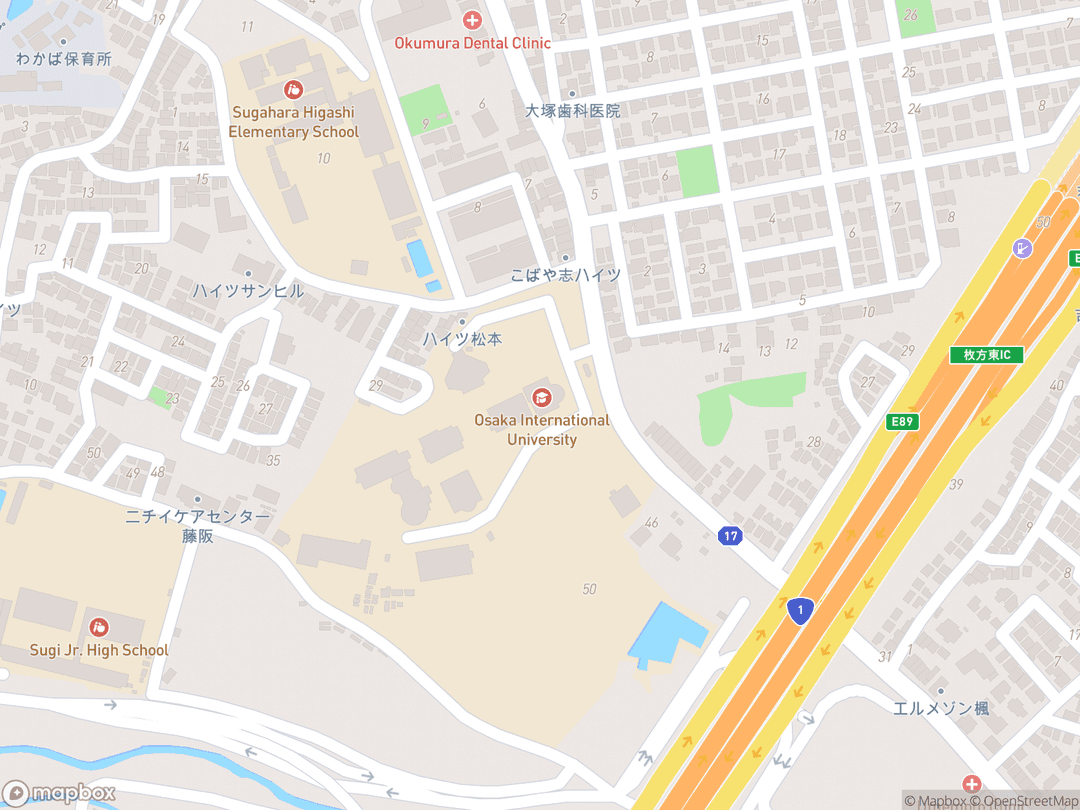
3-50-1 Sugi, Hirakata City, Osaka Prefecture, 573-0117 Japan
Hours: Grounds are currently closed to the public during construction; future operating hours will be announced following dedication.
Getting There: Located at 3-50-1 Sugi, Hirakata City. Accessible via the Keihan Main Line to nearby stations, followed by a local bus or taxi ride directly to the Sugi neighborhood. Limited street parking is available nearby, but public transit is highly recommended.
Get DirectionsTips for Your Visit
Monitor Construction Progress
Keep an eye on official Church news channels for announcements regarding the groundbreaking ceremony and future public open house dates.
Respect Local Neighbors
When visiting the perimeter of the site in Hirakata, please be mindful of the quiet residential neighborhood and avoid blocking local traffic.
Plan for Seasonal Beauty
If visiting the area, spring (cherry blossom season) and autumn (maple foliage) offer the most picturesque views of the surrounding Kansai landscape.
About
The Osaka Japan Temple stands as a historic milestone for members of The Church of Jesus Christ of Latter-day Saints in the Kansai region, representing the culmination of over a century of faith and devotion. Announced in October 2023 by Church President Russell M. Nelson, this sacred structure will be the fifth temple built in Japan, serving as a spiritual anchor for thousands of Latter-day Saints who previously had to travel to Tokyo or other distant locations to participate in sacred ordinances. Located in the suburban city of Hirakata, strategically positioned between the cultural hubs of Osaka and Kyoto, the temple grounds occupy a beautifully terraced site that formerly housed the Hirakata Campus of Osaka International University.
As part of the broader Christian tradition, Latter-day Saints view the temple not merely as a place of communal worship, but as a literal "House of the Lord"—a modern continuation of the biblical tabernacle and the ancient Temple of Solomon. In this sacred space, the earthly and the divine intersect, offering a sanctuary of peace from the clamor of the modern world. The temple's design masterfully reflects this dual heritage, blending the clean, vertical lines of traditional Christian sacred architecture with subtle horizontal bandings and geometric motifs that pay homage to traditional Japanese craftsmanship and aesthetic sensibilities.
The construction of the Osaka Japan Temple represents a profound spiritual bridge between East and West. It honors the rich legacy of the early Japanese pioneers of the faith, beginning with the dedication of the land for the preaching of the restored gospel in 1901. By establishing a permanent house of covenant-making in Osaka, the Church provides local members with a sacred space to perform vital saving ordinances for themselves and their ancestors, reinforcing the eternal nature of the family unit and the redemptive grace of Jesus Christ.
Interesting Facts
The temple site formerly housed the Hirakata Campus of Osaka International University, which was known for its international student exchange programs. [Tier B]
The announcement of the Osaka temple came over 120 years after the first Latter-day Saint missionaries arrived in Japan in 1901. [Tier A]
The first Japanese convert, Hajime Nakazawa, was a former Shinto priest who was baptized in 1902. [Tier B]
To comply with Japan's strict safety standards, the temple is engineered with advanced seismic design features to withstand earthquakes. [Tier B]
The demolition process in late 2025 cleared several large academic buildings, an amphitheater, and a soccer field. [Tier C]
The temple will be the first house of the Lord built in the historic Kansai region, serving thousands of local members. [Tier A]
The property will include a dedicated ancillary building to provide housing and administrative support for traveling patrons. [Tier C]
The temple was announced by President Russell M. Nelson as part of a historic group of 20 new temples in October 2023. [Tier A]
With a planned size of 29,630 square feet, the Osaka temple will be significantly larger than the Fukuoka temple. [Tier C]
The site preparation preserved a historic concrete retaining wall and staircase to be integrated into the new landscaping. [Tier C]
Common Questions
Why is the Osaka Japan Temple significant for local members?
The Osaka Japan Temple will be the first temple built in the historic Kansai region. Previously, members living in Osaka, Kyoto, and surrounding areas had to travel long distances to Tokyo or Fukuoka to participate in sacred temple ordinances. Having a temple in Osaka significantly reduces their travel burden and allows them to worship more frequently.
What was previously located on the temple site?
The temple site was formerly the Hirakata Campus of Osaka International University, which opened in the 1990s and housed the School of Japanese Studies for Foreign Students. The university consolidated its facilities, allowing the Church to acquire the property and clear the academic buildings to make way for the temple complex.
How does the temple's design reflect Japanese culture?
The temple's architecture features a poised, modern design that incorporates subtle horizontal bandings reminiscent of traditional Japanese pavilions. Additionally, the interior and exterior art glass windows utilize geometric patterns inspired by traditional kumiko woodcraft, honoring local craftsmanship while symbolizing family unity.
When will the temple be completed and dedicated?
An official completion and dedication date has not yet been announced. Local construction site postings in May 2025 indicated a planned construction period extending through April 2027. Once construction is complete, a public open house will be held prior to the formal dedication.
Can non-members visit the temple?
Yes, during the public open house period prior to dedication, visitors of all faiths are welcome to tour the interior of the temple. After dedication, the interior is reserved for faithful members of the Church, but the beautifully landscaped exterior grounds will remain open to the public as a place of quiet contemplation and peace.
Featured Stories
The Pioneer Faith of Hajime Nakazawa
1902
In the early dawn of the twentieth century, the restored gospel found its first Japanese convert in Hajime Nakazawa, a former Shinto priest. Nakazawa's conversion in 1902 marked a profound spiritual bridge between Japan's ancient traditions of sacred spaces and Latter-day Saint temple theology. Having spent years serving in traditional shrines, Nakazawa deeply understood the concept of holiness, purification, and devotion. His decision to embrace the restored gospel paved the way for generations of Japanese Saints, demonstrating that the search for divine truth could harmonize beautifully with local cultural heritage. His legacy of faith is directly honored in the construction of the Osaka Japan Temple, which stands as a monument to the seeds of faith he helped plant.
Source: Church History Department Records
A Century of Devotion in the Kansai Region
1972
The establishment of the first stake in Osaka in 1972 was a hard-won milestone that followed decades of quiet, persistent devotion by local members. During the closure of the Japan Mission in the 1920s and 1930s, a small but dedicated group of local Saints maintained their faith in private, keeping the embers of the gospel alive through years of isolation and war. When missionary work resumed in 1948, these faithful pioneers served as the foundation upon which the modern Church in Kansai was built. Their sacrifices of time, resources, and social standing created a vibrant community of faith that eventually matured into multiple stakes. The announcement of the Osaka Japan Temple is the ultimate fulfillment of their decades-long prayers for a sacred sanctuary in their own homeland.
Source: Kansai Stake Historical Archives
From Academic Halls to Sacred Ground
October 15, 2025
The transition of the temple site from an active university campus to a sacred sanctuary is a story of community evolution and preservation. For decades, the Hirakata Campus of Osaka International University served as a vibrant hub for international students studying Japanese culture, fostering global connection and understanding. When the university consolidated its facilities, the Church acquired the property, recognizing its potential as a peaceful, accessible gathering place for the Saints. In late 2025, heavy machinery began the delicate process of demolishing the academic halls while carefully preserving the site's historic retaining walls and mature trees. This careful transition ensures that the land's legacy of learning and international gathering is elevated into a higher, spiritual purpose as a house of the Lord.
Source: Local Construction Progress Reports
Timeline
Japan Dedicated for Missionary Work
Elder Heber J. Grant of the Quorum of the Twelve Apostles dedicates Japan for the preaching of the restored gospel during a prayer in Yokohama.
MilestoneFirst Japanese Convert Baptized
Hajime Nakazawa, a former Shinto priest, is baptized as the first Japanese convert, establishing an early bridge of faith.
EventBook of Mormon Translation Completed
Elder Alma O. Taylor completes the first translation of the Book of Mormon into classical Japanese literary style after five years of labor.
MilestoneJapan Mission Formally Closed
Due to rising political instability and legislative barriers, the Japan Mission is closed, initiating a quiet period of private devotion.
EventMissionary Work Resumes Post-War
Following World War II, missionary work officially resumes with a focus on cultivating local leadership and modern translations.
MilestoneFirst Stake Organized in Osaka
Reflecting substantial post-war growth, the first stake (diocese) in the Kansai region is organized in Osaka.
MilestoneTokyo Japan Temple Dedicated
President Spencer W. Kimball dedicates the Tokyo Japan Temple, the first temple in Japan and the entire continent of Asia.
DedicationFukuoka Japan Temple Dedicated
President Gordon B. Hinckley dedicates the Fukuoka Japan Temple, establishing a sacred sanctuary on the southern island of Kyushu.
DedicationSapporo Japan Temple Dedicated
President Thomas S. Monson dedicates the Sapporo Japan Temple on the northern island of Hokkaido, expanding the sacred footprint.
DedicationOsaka Japan Temple Announced
President Russell M. Nelson announces the construction of the Osaka Japan Temple during the Sunday afternoon session of General Conference.
MilestoneOkinawa Japan Temple Dedicated
Elder Gary E. Stevenson of the Quorum of the Twelve Apostles dedicates the Okinawa Japan Temple in the southern islands.
DedicationTemple Location Announced
The First Presidency announces the temple location on a 16.74-acre site formerly occupied by Osaka International University.
MilestoneConstruction Site Notices Posted
Official local construction notices are posted, detailing plans for a single-story structure.
EventOfficial Exterior Rendering Released
The Church releases the official rendering of the temple, showcasing a design that balances modern and traditional aesthetics.
MilestoneDemolition of University Buildings Begins
Heavy equipment begins clearing the remaining academic halls of Osaka International University to prepare the foundation.
component.timeline.groundbreakingHistory by Decade
1900s–1920s — The Seeds of Faith and Early Pioneers
The time will come when this people will receive the gospel, and there will be many faithful Saints in this land.
The history of the Church in Japan began on September 1, 1901, when Elder Heber J. Grant dedicated the nation for the preaching of the restored gospel. The early missionaries faced immense language barriers and cultural differences, but their persistent efforts led to the baptism of Hajime Nakazawa, a former Shinto priest, in 1902. Over the next two decades, translation efforts flourished, culminating in the first Japanese translation of the Book of Mormon in 1909 by Elder Alma O. Taylor. However, rising political tensions and legislative barriers forced the closure of the Japan Mission in 1924, leaving a small group of local Saints to maintain their faith in private.
1940s–1970s — Post-War Reconstruction and Growth
Following the devastation of World War II, missionary work officially resumed in Japan in 1948. The post-war era was characterized by rapid growth and the cultivation of local leadership. Missionaries and local members worked hand-in-hand to rebuild the Church's presence, translating materials into modern colloquial Japanese and establishing branches in major cities. The growth in the Kansai region was particularly robust, leading to the organization of the first stake in Osaka in 1972. This administrative milestone marked the transition of the local Church from a missionary outpost to a self-sustaining, mature community of faith.
1980s–2020s — The Era of Temples and the Osaka Announcement
The dedication of the Tokyo Japan Temple in 1980 marked the beginning of a new era of temple worship for Asian Saints. Over the next four decades, temples were dedicated in Fukuoka (2000), Sapporo (2016), and Okinawa (2023), expanding the sacred architectural footprint across the archipelago. On October 1, 2023, President Russell M. Nelson announced the Osaka Japan Temple, answering the long-standing prayers of members in the Kansai region. Site preparation began in late 2025 on the former campus of Osaka International University, paving the way for a magnificent single-story structure that will serve as a spiritual beacon for generations to come.
Architecture & Facilities
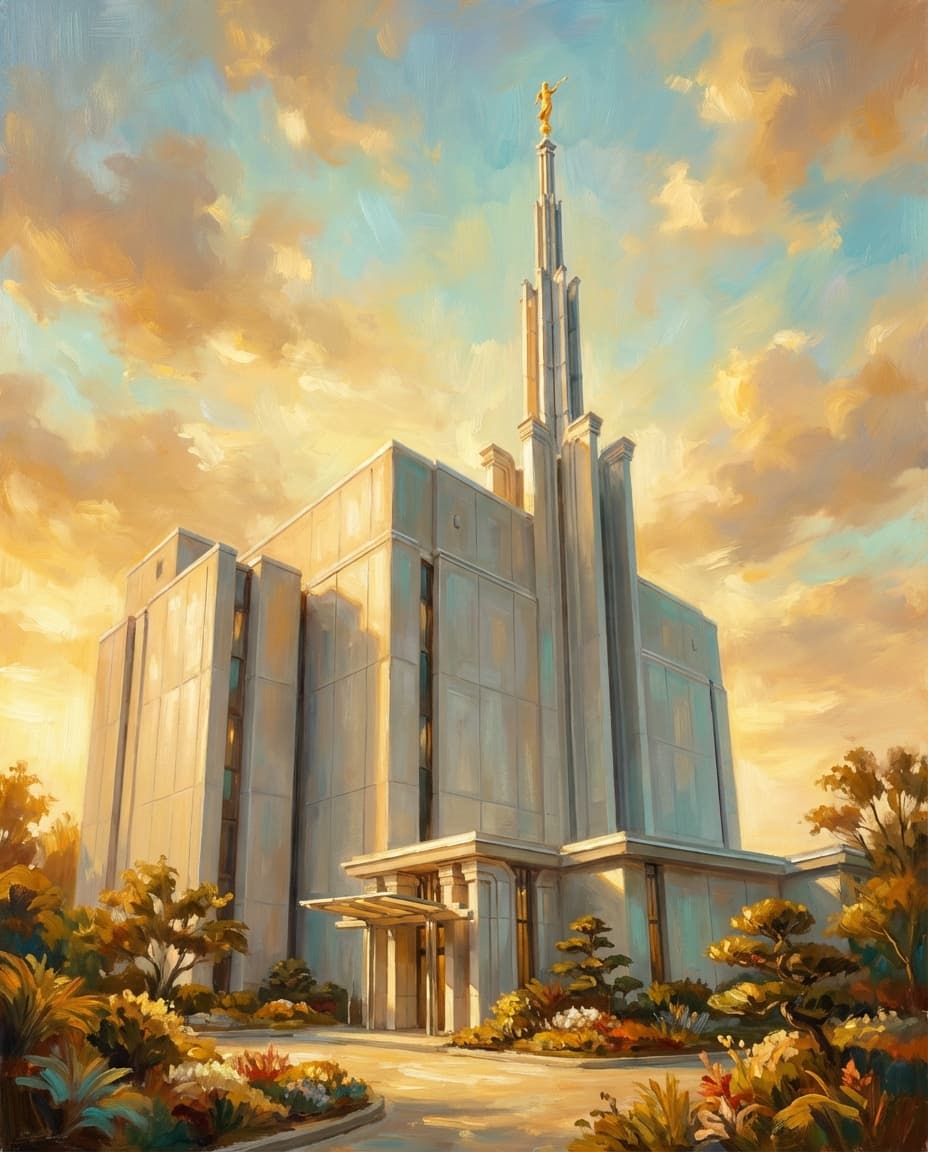
The Osaka Japan Temple features a poised, modern design that masterfully bridges contemporary architectural lines with traditional Japanese beauty and reverence. Rather than imposing a purely Western design, the temple's aesthetic is tailored to harmonize with the local cultural landscape of the Kansai region. The structure is characterized by a clean, vertical emphasis, anchored by a prominent central spire that draws the eye upward. The facade balances symmetry—a hallmark of sacred architecture across many global traditions—with subtle horizontal bandings that evoke the layered elegance of traditional Japanese pavilions.
Building Materials
Exterior Cladding
High-quality light-colored granite or cast stone designed to catch and reflect the soft natural light of the Osaka region, symbolizing purity and spiritual permanence.
Structural Frame
Reinforced concrete and structural steel engineered to meet Japan's stringent seismic building codes, ensuring physical durability and safety.
Art Glass Windows
Custom-designed art glass featuring geometric patterns inspired by traditional Japanese kumiko woodcraft, creating a warm, filtered light within the interior.
Interior Woodwork
Premium local hardwoods selected for their fine grain and durability, utilized in the decorative trim and furnishings to reflect local craftsmanship.
Interior Features
The Celestial Room
A deeply sacred space representing the celestial kingdom of God, designed with elegant furnishings, soft lighting, and exquisite art glass to foster quiet contemplation and prayer.
Ordinance Rooms
Beautifully appointed rooms where patrons receive instruction regarding the plan of salvation and make sacred covenants to follow Jesus Christ.
The Sealing Rooms
Sacred rooms featuring central altars where couples are married and families are bound together for eternity by proper priesthood authority.
The Baptistry
A sacred space featuring a baptismal font resting on the backs of twelve sculpted oxen, representing the twelve tribes of Israel, used for proxy baptisms.
Temple Grounds
The temple grounds occupy a beautifully terraced 16.74-acre site, incorporating historic concrete retaining walls and staircases from the former university campus. The landscaping will feature localized flora, including cherry blossoms and maples, to highlight Japan's seasonal beauty.
Additional Facilities
The complex includes a beautifully designed ancillary building on the property, constructed to provide housing, clothing rental, and administrative support for patrons traveling long distances.
Religious Significance
To understand the significance of the Osaka Japan Temple, it is helpful to look at the universal human desire for sacred spaces. Throughout Judeo-Christian history, from the tabernacle of Moses to the grand Temple of Solomon, sacred structures have been dedicated as places of holiness, set apart from the world to commune with the Almighty. In these ancient sanctuaries, believers sought to draw closer to God through prayer, sacrifice, and devotion. The Church of Jesus Christ of Latter-day Saints shares this profound reverence for the temple as a dedicated House of the Lord, representing a modern continuation of this ancient biblical tradition.
The core spiritual purpose of the Osaka Japan Temple is to provide a sacred, dedicated space where members of the Church can make eternal covenants with God and participate in saving ordinances that bind families together forever.
Sacred Ordinances
The Endowment
A sacred ceremony where participants receive instruction regarding the plan of salvation, make covenants to follow Jesus Christ, and are promised spiritual power.
Eternal Marriage and Sealings
Sacred ordinances performed by proper priesthood authority that bind husbands, wives, and children together for eternity, transcending physical death.
Proxy Baptisms
In harmony with the biblical practice referenced in 1 Corinthians 15:29, members perform baptisms on behalf of deceased ancestors, offering them the opportunity to accept the covenant.
A Spiritual Bridge of Grace
The ordinances performed within the Osaka Japan Temple are deeply rooted in the redeeming grace of Jesus Christ. Latter-day Saints believe that through the Savior's Atonement, all mankind may be saved by obedience to the laws and ordinances of the Gospel. The temple serves as a physical manifestation of this grace, offering a structured path of covenant-making that guides believers back to the presence of God.
The Eternal Family Unit
A central doctrine of the Church is that families can be united eternally. The sealing ordinances performed in the temple bind families together not just for this life, but for all eternity. This doctrine provides immense comfort and hope to members, reinforcing the sacred role of family relationships in God's eternal plan.
Similar Temples
Sources & Research
Every fact on Temples.org is backed by verified Sources & Research. Each piece of information is rated by source tier and confidence level.
View All Sources (5)
| Field | Source | Tier | Retrieved |
|---|---|---|---|
| About & Historical Background | The Church of Jesus Christ of Latter-day Saints (opens in a new tab) | A | 2026-02-19 |
| Architecture & Design | ChurchofJesusChristTemples.org (opens in a new tab) | C | 2026-02-19 |
| Timeline & Featured Stories | ChurchofJesusChristTemples.org (opens in a new tab) | C | 2026-02-19 |
| Timeline & Featured Stories | ChurchofJesusChristTemples.org (opens in a new tab) | C | 2026-02-19 |
| Architecture & Design | The Cultural Hall (opens in a new tab) | C | 2026-02-19 |