Visitor Insights
Visiting Ciudad Juárez Mexico Temple
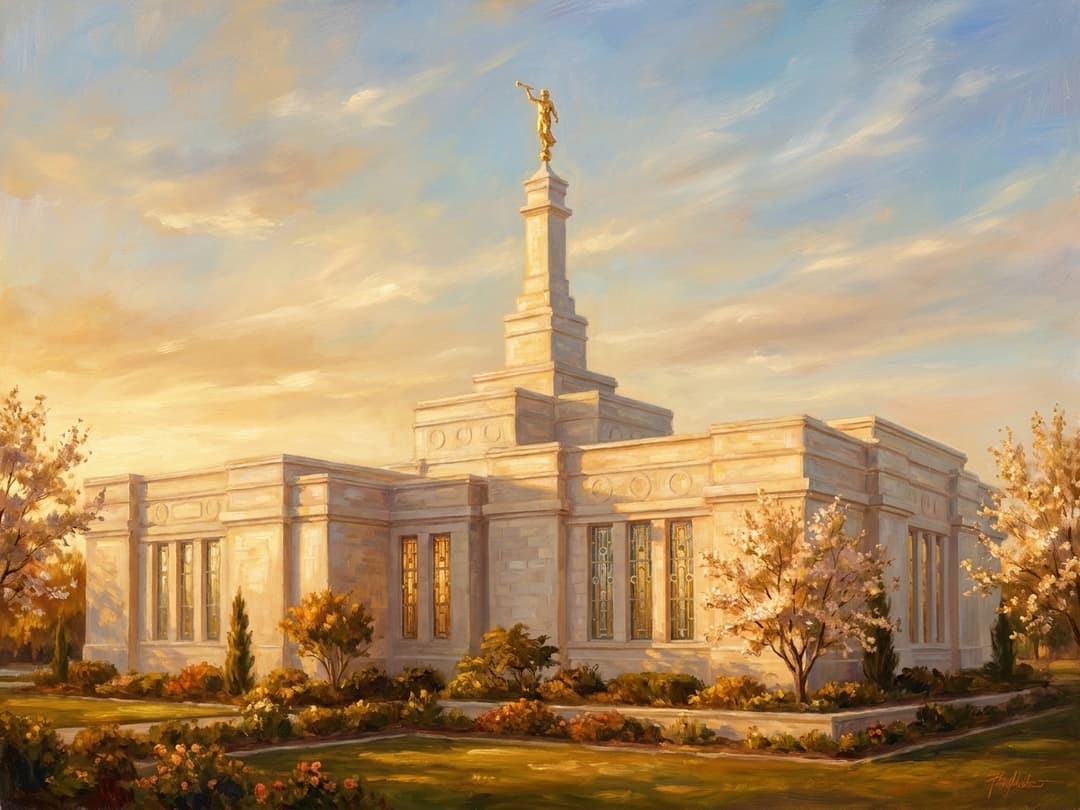
The Ciudad Juárez Mexico Temple offers a serene, park-like escape from the bustling border city environment. Visitors are greeted by beautifully manicured lawns, palm trees, and local desert flora that frame the brilliant white Blanco Guardiano marble exterior. The atmosphere is one of profound quiet and reverence, making it an ideal spot for personal reflection, prayer, and photography. While the interior is reserved for members holding active temple recommends, the public is warmly invited to walk the pathways and enjoy the peaceful grounds.
Highlights
- Stunning Blanco Guardiano white marble exterior quarried locally in Torreón.
- Beautifully landscaped 1.63-acre grounds featuring palm trees and desert flora.
- A peaceful, quiet atmosphere serving as a spiritual oasis in the city.
- Spectacular views of the single spire and Angel Moroni statue against the desert sky.
Things to Know
- Interior access is restricted to faithful members of the Church with a valid recommend.
- No public visitors' center or patron housing is available on the immediate grounds.
- A Church distribution center is located nearby for literature and clothing purchases.
- Photography is permitted on the outdoor grounds but strictly prohibited inside the temple.
Location
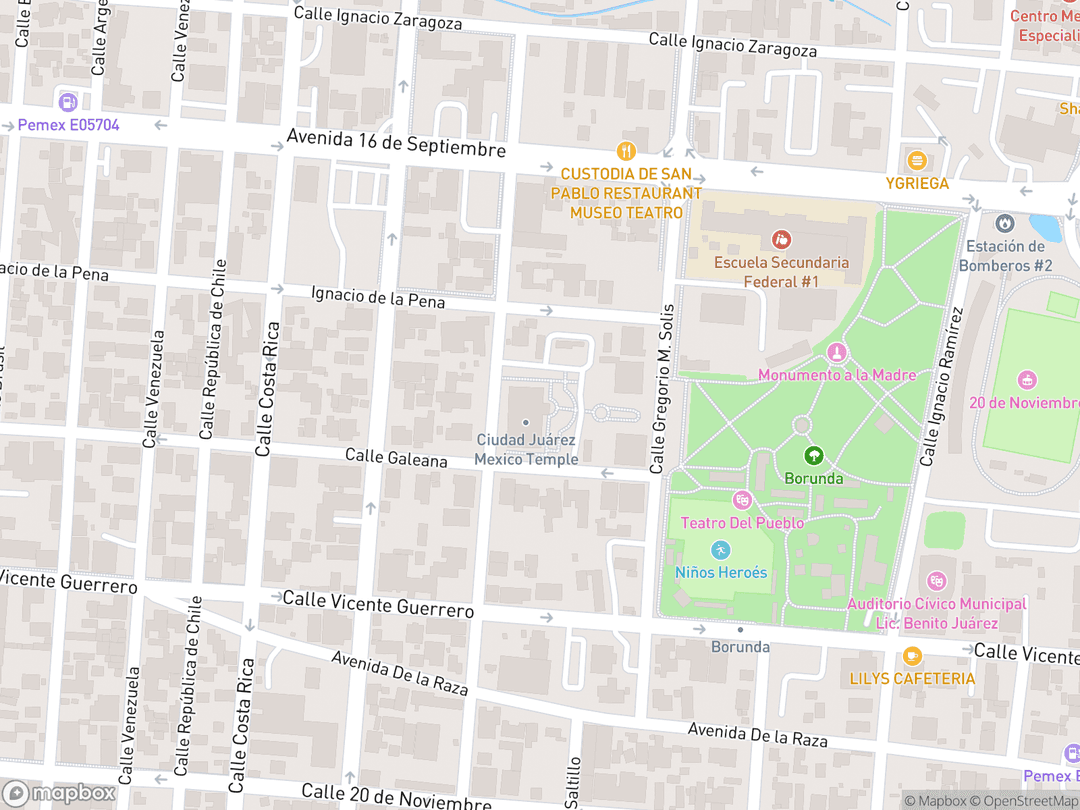
Calle Paraguay #290, Esquina José Borunda, Colonia Partido Romero, 32177 Ciudad Juárez, Chihuahua, Mexico
Hours: Grounds are open daily from sunrise to sunset. Temple services operate Tuesday through Saturday.
Getting There: Located in the Colonia Partido Romero neighborhood, easily accessible by car or taxi from the Paso del Norte international border crossing (approximately 2 miles south).
Get DirectionsTips for Your Visit
Golden Hour Photography
Visit during the late afternoon 'golden hour' when the setting sun reflects off the white marble, making the entire building glow with a warm radiance.
Respectful Attire
While the grounds are public, visitors are encouraged to dress modestly and maintain a quiet, respectful demeanor to preserve the sacred atmosphere.
Combine with Distribution Center
If you need scriptures or temple materials, coordinate your visit with the nearby Church distribution center on Avenida G. M. Solis.
About
In the grand tapestry of Judeo-Christian history, the concept of a dedicated sanctuary—a physical space set apart from the world to commune with the Divine—stretches back to the biblical Tabernacle of Moses and the majestic Temple of Solomon. Across Abrahamic traditions, these sacred structures have long been revered as "thin places" where heaven and earth meet. Within this broader theological context, modern temples of The Church of Jesus Christ of Latter-day Saints are not standard houses of worship or chapels, but literal houses of the Lord, dedicated to the performance of saving ordinances that bind families for eternity.
The Ciudad Juárez Mexico Temple, operating as the 71st temple of the Church worldwide, stands as a profound monument to this enduring tradition of sacred space. Located just two miles south of the United States–Mexico border, it serves a unique, binational community of Latter-day Saints. It stands as a physical testament to the Christian doctrine of the eternal nature of the soul and the unifying power of Christ’s grace across national boundaries, bringing together saints from northern Chihuahua and West Texas.
Constructed during an era of rapid temple building championed by President Gordon B. Hinckley, the temple represents a shift toward placing sacred ordinances directly within reach of local congregations. Prior to its dedication, members in the region faced long, arduous journeys to Arizona or Mexico City. Today, the temple stands as an oasis of spiritual security, particularly noted for its role as an "island of calm" during periods of intense regional adversity, proving that the peace of Christ transcends worldly tribulation.
Gallery
Symbolic Elements
The temple's exterior features intricate carvings, each rich with spiritual meaning:

The Single Spire
Rising 71 feet into the air, the central spire acts as a vertical axis pointing toward heaven. It symbolizes humanity's upward reach toward the Divine and serves as a constant reminder to lift one's thoughts above worldly cares.
The Angel Moroni
The gold-leafed statue atop the spire depicts the ancient prophet Moroni holding a trumpet. This represents the active proclamation of the restored gospel of Jesus Christ to all nations, fulfilling biblical prophecy.

Circular Motifs
Stained-glass windows and exterior marble carvings feature circular patterns overlaid on rectangular shapes. In classical Christian art, the square represents the earth, while the circle represents eternity, symbolizing the temple as a meeting place of heaven and earth.

Twelve Baptismal Oxen
The baptismal font is supported by twelve sculpted stone oxen, drawing from the Old Testament design of Solomon's Temple. They represent the twelve tribes of Israel, symbolizing that Christ's saving grace is offered to the entire human family.

Blanco Guardiano Marble
The brilliant white marble exterior, quarried locally in Torreón, represents purity, holiness, and light. Sourcing the stone from Mexico physically anchors the sacred structure to the geology of the homeland.

Celestial Room Light
An abundance of natural light reflecting off crystal chandeliers and white furnishings in the Celestial Room symbolizes the light of Christ. It represents entering into the perfect light and glory of the presence of God.

Facing Mirrors
The sealing rooms feature large, parallel mirrors that reflect images back and forth into infinity. This visual effect symbolizes the eternal nature of the family unit and covenants made under priesthood authority.
Interesting Facts
It serves a highly unique, international temple district spanning northern Chihuahua, Mexico, and Far West Texas, USA.
The temple was dedicated on the exact same weekend as the Tampico Mexico Temple and the Nashville Tennessee Temple, a first in Church history.
Ground was broken on January 9, 1999, the exact same day as the Villahermosa Mexico Temple, located over 1,000 miles away.
President Gordon B. Hinckley dedicated only the first session before departing for Sonora, leaving President Thomas S. Monson to dedicate the remaining five.
The brilliant Blanco Guardiano white marble cladding the exterior was sourced locally from quarries in Torreón, Coahuila.
It was the 71st operating temple of the Church worldwide and only the third completed in the nation of Mexico.
Unlike many smaller temples of its era, it features a two-stage progressive instruction layout to symbolize spiritual progression.
During intense regional cartel violence from 2008 to 2012, the temple grounds remained entirely untouched, serving as an 'island of calm'.
The site is exactly 1.63 acres, situated in the historic Colonia Partido Romero neighborhood of Ciudad Juárez.
The baptismal font rests on the backs of twelve stone oxen, representing the twelve tribes of Israel in accordance with biblical tradition.
Common Questions
Can anyone visit the Ciudad Juárez Mexico Temple?
Yes, the beautifully landscaped exterior grounds are open to the general public of all faiths. However, entrance to the interior of the temple is reserved for faithful members of the Church who hold a current temple recommend.
What is the significance of the Angel Moroni statue on the spire?
The gold-leafed statue represents Moroni, an ancient American prophet. The trumpet he holds symbolizes the preaching of the restored gospel of Jesus Christ to all nations, fulfilling the New Testament prophecy in Revelation 14:6.
Why was a temple built so close to the US-Mexico border?
The temple was positioned to serve a unique, binational community of Latter-day Saints. It brings together members from northern Chihuahua and West Texas, acting as a spiritual bridge and a symbol of unity through Christ's grace.
What materials were used in the construction of the temple?
The exterior is clad in premium Blanco Guardiano white marble, which was quarried and processed locally in Torreón, Coahuila, Mexico. The interior features high-quality wood, crystal chandeliers, and custom stained-glass windows.
How does this temple differ from a regular meetinghouse?
Latter-day Saint meetinghouses (chapels) are used for weekly Sunday worship services, youth activities, and community events, and are open to everyone. Temples are sacred spaces set apart for special ordinances, such as eternal marriages and baptisms for ancestors, and require a high standard of personal worthiness to enter.
Featured Stories
A Presidential Hand-Off
February 26, 2000
The dedication of the Ciudad Juárez Mexico Temple was marked by an unusual and historic presidential hand-off. Church President Gordon B. Hinckley, facing a grueling international travel schedule to dedicate multiple temples, arrived to offer the dedicatory prayer during the very first session. Immediately following the session, President Hinckley had to depart for Hermosillo, Sonora, to prepare for another dedication. He formally handed the keys of the remaining five sessions to his First Counselor, President Thomas S. Monson. President Monson presided over and offered the dedicatory prayers for the rest of the weekend, a rare occurrence that highlighted the rapid pace of temple building at the turn of the century.
Source: The Church News
An Island of Calm Amidst Adversity
2008–2012
During the late 2000s and early 2010s, Ciudad Juárez experienced a tragic escalation of cartel-related violence, making it one of the most dangerous cities in the world. Amidst this intense regional turmoil, the temple stood entirely untouched, earning a reputation among local Latter-day Saints as a literal 'island of calm.' Members from both sides of the international border, including El Paso, Texas, continued to obtain passports and cross into Mexico to attend services. Entering the temple grounds offered a palpable, physical sense of safety and spiritual sanctuary. This period solidified the temple's role not just as an ordinance house, but as a vital refuge of peace and divine protection for the community.
Source: KSL News
A Shared Groundbreaking Across Mexico
January 9, 1999
The groundbreaking of the Ciudad Juárez Temple was a celebration of unity that stretched across the entire nation of Mexico. On January 9, 1999, local members gathered in Chihuahua to turn the earth for their new sacred sanctuary, presided over by Elder Eran A. Call. Unbeknownst to many, on that exact same day, another groundbreaking ceremony was taking place over 1,000 miles away for the Villahermosa Mexico Temple in southeastern Mexico. This simultaneous commencement of construction symbolized the rapid, nationwide expansion of temples in Mexico. It brought immense joy to the local saints, who saw it as a fulfillment of prophecy that houses of the Lord would be established directly among the people.
Source: The Church News
Timeline
First Chapel Constructed
The first official Latter-day Saint chapel is constructed in Ciudad Juárez, establishing a permanent physical presence.
MilestoneBenito Juárez School Established
The Benito Juárez school is built adjacent to the chapel, becoming a cornerstone for local education and community outreach.
EventFirst Stake Organized
The growth of local membership culminates in the organization of the first stake in Ciudad Juárez.
MilestoneTemple Announcement
The First Presidency of the Church officially announces plans to construct a temple in Ciudad Juárez.
MilestoneGroundbreaking Ceremony
Elder Eran A. Call presides over the groundbreaking ceremony, attended by approximately 1,700 members from both sides of the border.
component.timeline.groundbreakingPublic Open House Begins
The temple opens its doors to the general public for a week-long open house, attracting over 25,000 visitors.
EventPublic Open House Concludes
The public open house ends, preparing the sacred structure for formal dedication.
EventTemple Dedication
President Gordon B. Hinckley dedicates the temple during the first session, with President Thomas S. Monson dedicating the remaining five sessions.
DedicationFirst Sacred Ordinances
The temple begins regular operations, administering sacred ordinances for living patrons and ancestors.
MilestoneAdversity and Sanctuary
As regional cartel violence escalates, the temple becomes widely recognized by local members as an 'island of calm' and safety.
EventPandemic Closure
The temple temporarily closes all operations in response to the global COVID-19 pandemic to protect patrons and staff.
EventPhase 2 Reopening
The temple officially enters Phase 2 of reopening, allowing limited living ordinances to resume under strict safety protocols.
RenovationFull Operations Resume
The temple returns to full operational capacity, welcoming patrons back for all sacred ordinances.
MilestoneEl Paso Temple Announced
The Church announces plans for a temple in nearby El Paso, Texas, which will eventually share the regional patronage.
EventQuarter-Century Anniversary
The Ciudad Juárez Mexico Temple marks 25 years of continuous sacred service to the binational border community.
MilestoneHistory by Decade
1950s–1970s — Foundations of Faith
The roots of the Latter-day Saint faith in the state of Chihuahua run deep, beginning with the establishment of pioneer colonies in the late nineteenth century. In Ciudad Juárez, the local footprint of the Church grew steadily throughout the mid-twentieth century. The first official chapel in the city was constructed in 1956, followed closely by the establishment of the Benito Juárez school in 1960. This school, built adjacent to the chapel, became a cornerstone for local education and community outreach. By November 13, 1976, the growth of the local membership culminated in the organization of the first stake in Ciudad Juárez, laying the spiritual foundation necessary to support a sacred temple.
1990s — Announcement and Groundbreaking
On May 7, 1998, the First Presidency of the Church officially announced plans to construct a temple in Ciudad Juárez. This temple was a key component of a historic initiative championed by Church President Gordon B. Hinckley to construct smaller temples, bringing sacred ordinances directly to the people. On January 9, 1999, local and regional Church leaders gathered for the official groundbreaking ceremony. Elder Eran A. Call of the Seventy, who was serving as the president of the Mexico North Area, presided over the event, which was attended by approximately 1,700 members from both sides of the international border.
2000s — Dedication and Early Service
Following just over a year of rapid construction, the completed temple opened to the public for an open house from February 12 to February 19, 2000, drawing more than 25,000 visitors. On February 26, 2000, President Gordon B. Hinckley dedicated the temple during the first session before departing for Sonora, leaving President Thomas S. Monson to preside over the remaining five sessions. In the dedicatory prayer, the building was formally consecrated as a 'house of peace, a house of prayer, and a house of sacred covenants.' The temple quickly became a beloved spiritual home for saints in northern Chihuahua and West Texas.
2010s — Sanctuary Amidst Adversity
The late 2000s and early 2010s brought severe challenges to the border region, as Ciudad Juárez experienced a tragic escalation of cartel-related violence. During this turbulent era, the temple took on an even more profound significance for local Latter-day Saints, who widely referred to it as an 'island of calm' in a troubled city. Despite the real dangers of travel, members from El Paso, Texas, and surrounding American communities continued to cross the international border to attend. Entering the temple grounds offered a palpable sense of safety and spiritual sanctuary, reinforcing their faith in Christ's promise of peace.
2020s — Modern Operations and Future Outlook
Like temples worldwide, the Ciudad Juárez Temple faced temporary operational disruptions in the early 2020s due to the global COVID-19 pandemic. The temple closed in March 2020 but gradually resumed operations, officially entering Phase 2 of reopening on March 1, 2021. In October 2024, the Church announced plans to construct a temple in El Paso, Texas. While this future temple will eventually absorb the patronage of the Texas stakes, the Ciudad Juárez Mexico Temple remains a beloved, historic anchor for the stakes of northern Chihuahua, continuing its mission as a house of quiet devotion.
Architecture & Facilities
The Ciudad Juárez Mexico Temple features a Classic Modern, single-spire design. This architectural style is characterized by clean, symmetrical lines, a simplified geometric profile, and a functional single-story layout. It represents the highly efficient, elegant temple templates developed by the Church in the late 1990s to facilitate rapid construction without sacrificing sacred aesthetic standards. The design seamlessly blends modern structural engineering with classical religious motifs, creating a timeless monument of faith.
Building Materials
Exterior Cladding
Clad in premium Blanco Guardiano white marble, quarried and processed locally in Torreón, Coahuila, Mexico, providing a brilliant, light-reflective surface.
Stained Glass
Tall, narrow stained-glass windows featuring geometric patterns and circular motifs that allow soft, colored sunlight to filter into the sacred interior spaces.
Interior Woodwork
High-quality, light-colored hardwoods used for trim and furniture, creating a warm, inviting, and highly reverent atmosphere throughout the rooms.
Stone Font Support
The baptismal font is supported by twelve sculpted stone oxen, representing the twelve tribes of Israel, crafted with meticulous attention to detail.
Interior Features
The Baptistry
Features a large font resting upon the backs of twelve sculpted stone oxen, symbolizing the twelve tribes of Israel and ancient biblical traditions.
Instruction Rooms
Two instruction rooms arranged for a two-stage progressive presentation of the endowment, physically symbolizing a believer's spiritual progression.
Sealing Rooms
Two sealing rooms featuring central, upholstered altars and facing mirrors that reflect images into infinity, symbolizing eternal family units.
The Celestial Room
A high-ceilinged room with refined crystal chandeliers, soft cream and gold furnishings, designed for silent prayer, scripture reading, and deep meditation.
Temple Grounds
The temple is situated on a beautifully manicured 1.63-acre site in the Colonia Partido Romero neighborhood. The grounds feature lush green lawns, neatly trimmed hedges, palm trees, and local desert-adapted flora, creating a striking contrast with the surrounding urban environment.
Additional Facilities
An arrival center with changing areas is located on-site to accommodate patrons traveling from distant stakes. A Church distribution center is located nearby on Avenida G. M. Solis.
Religious Significance
In harmony with ancient Judeo-Christian theology, the Ciudad Juárez Mexico Temple is a literal House of the Lord—a sacred sanctuary set apart from the world. It represents a modern continuation of the biblical temple tradition, where covenants are established between God and humanity. Within the broader context of Abrahamic faiths, the temple serves as a physical manifestation of the desire to draw closer to the Divine, offering a sacred space where heaven and earth meet.
To administer sacred ordinances and covenants that bind families together for eternity, providing a pathway for spiritual progression and communion with God.
Sacred Ordinances
The Endowment
A sacred presentation of instructions and covenants regarding the plan of salvation, the creation of the world, and the mission of Jesus Christ.
Eternal Marriage (Sealing)
An ordinance performed in sealing rooms where couples and families are united for eternity, transcending the boundaries of physical death.
Baptism for the Dead
A vicarious ordinance performed in the baptistry, allowing living proxies to be baptized on behalf of deceased ancestors who did not receive the ordinance in life.
A Covenant-Making Sanctuary
The temple is a place of solemn promise. Patrons enter to make personal covenants of obedience, sacrifice, and consecration, promising to align their lives with the teachings of Jesus Christ. These covenants are essential steps in returning to the presence of God.
The Eternal Family Unit
Central to Latter-day Saint theology is the belief that family relationships can endure beyond the grave. The sealing ordinance performed within the temple's sacred walls binds husbands, wives, and children together for eternity, offering comfort and hope to believers.
Similar Temples
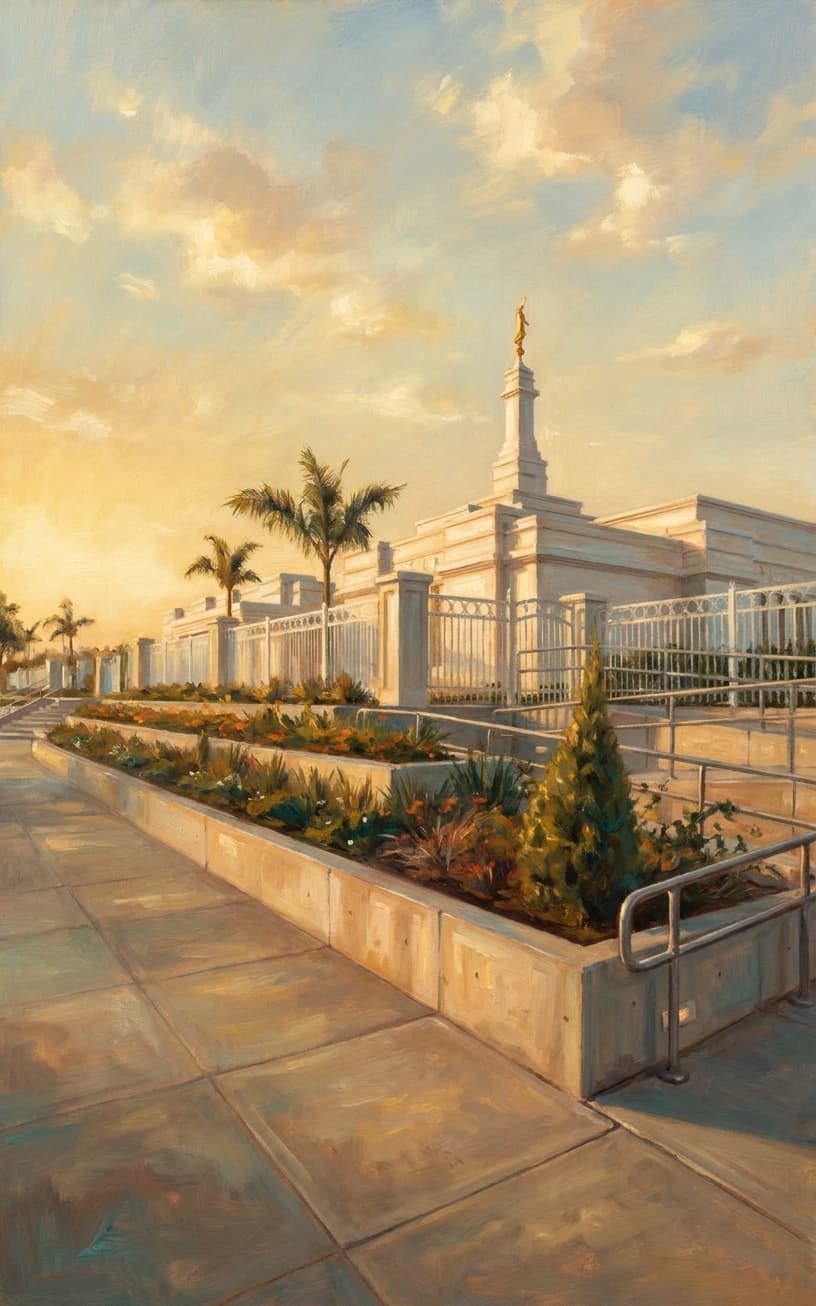

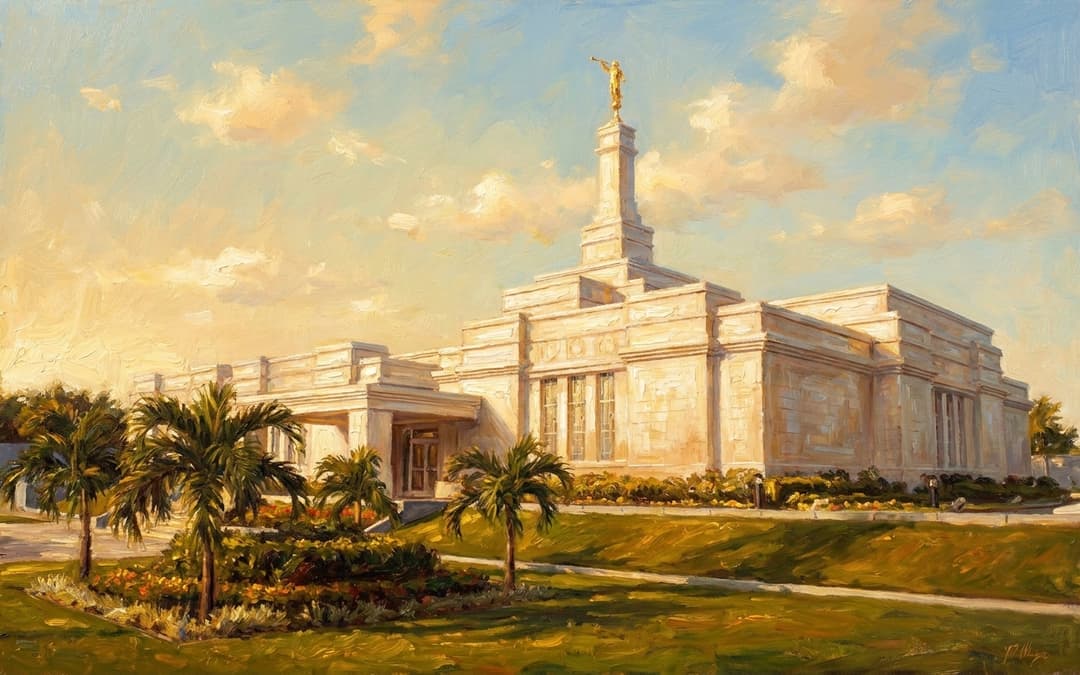
Sources & Research
Every fact on Temples.org is backed by verified Sources & Research. Each piece of information is rated by source tier and confidence level.
View All Sources (8)
| Field | Source | Tier | Retrieved |
|---|---|---|---|
| About & Historical Background | The Church of Jesus Christ of Latter-day Saints (opens in a new tab) | A | 2026-02-18 |
| Timeline & Dedication | The Church News (opens in a new tab) | B | 2026-02-18 |
| Architectural Details & Specifications | Temples of The Church of Jesus Christ of Latter-day Saints (opens in a new tab) | C | 2026-02-18 |
| Adversity & Regional Impact | KSL Broadcasting (opens in a new tab) | B | 2026-02-18 |
| Symbolism & Stained Glass | Photogent Temple Photography (opens in a new tab) | C | 2026-02-18 |
| Geographic Coordinates & Elevation | Wikidata (opens in a new tab) | B | 2026-02-18 |
| Modern Operations & Pandemic Reopening | The Church of Jesus Christ of Latter-day Saints Newsroom (opens in a new tab) | A | 2026-02-18 |
| Pioneer History in Chihuahua | Church History Department (opens in a new tab) | A | 2026-02-18 |