Visitor Insights
Visiting Villahermosa Mexico Temple
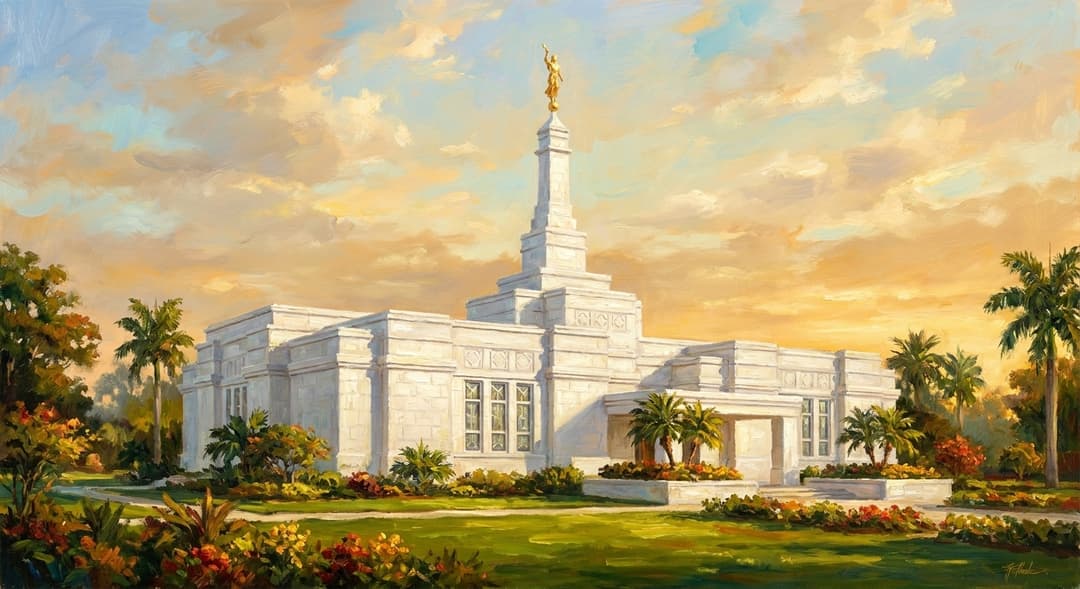
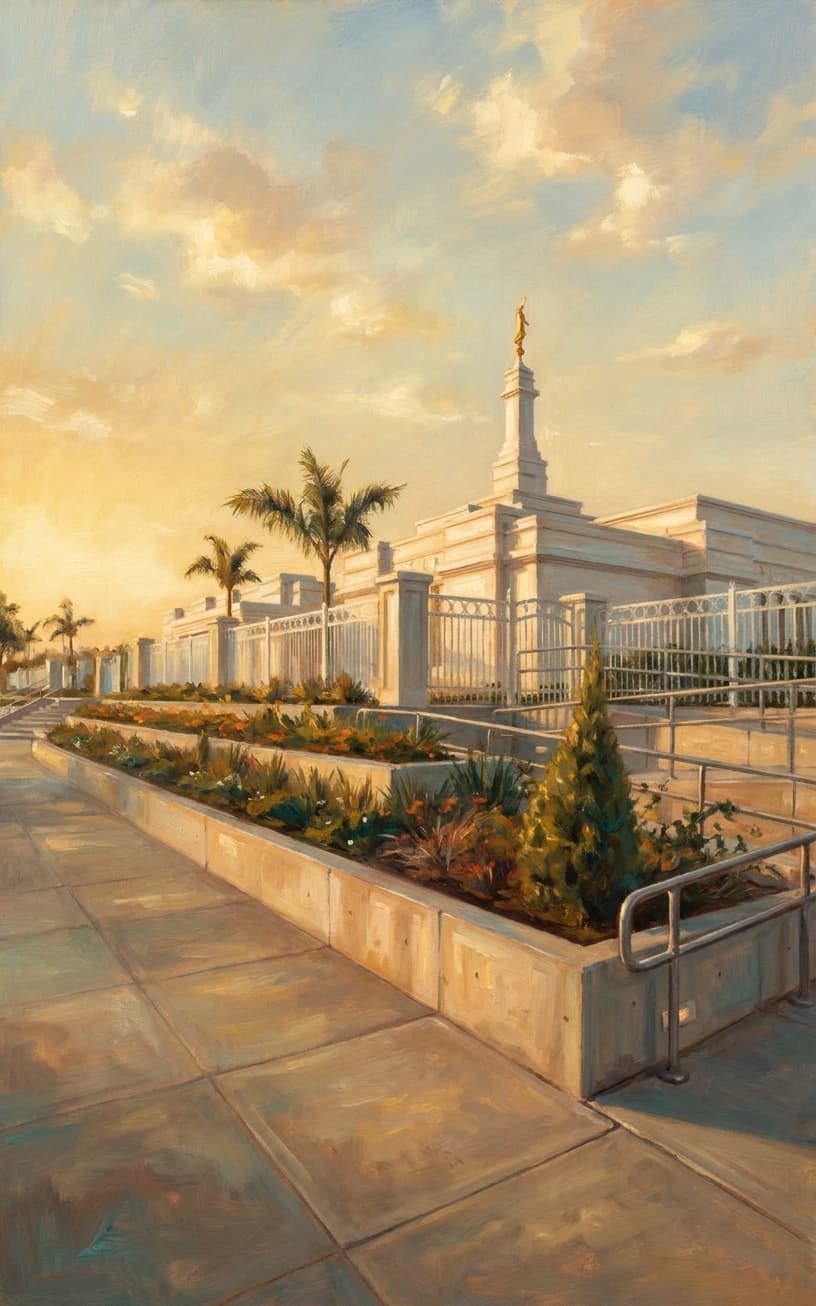
The Villahermosa Mexico Temple features peaceful tropical gardens and elegant modern architecture. While interior access is reserved for Church members holding a valid temple recommend, visitors are welcome to stroll the landscaped grounds and enjoy the quiet surroundings.
Highlights
- Brilliant white Blanco Guardiano marble facade quarried in Coahuila, Mexico.
- Lush tropical landscaping featuring a landmark native Ceiba tree.
- Elevated property offering views of the exterior architecture and gold-leafed spire.
Things to Know
- Interior ordinance areas require a valid temple recommend for admission.
- Tropical climate in Tabasco brings high humidity; mornings offer the most comfortable visits.
- Modest dress is requested when walking the temple grounds.
Location
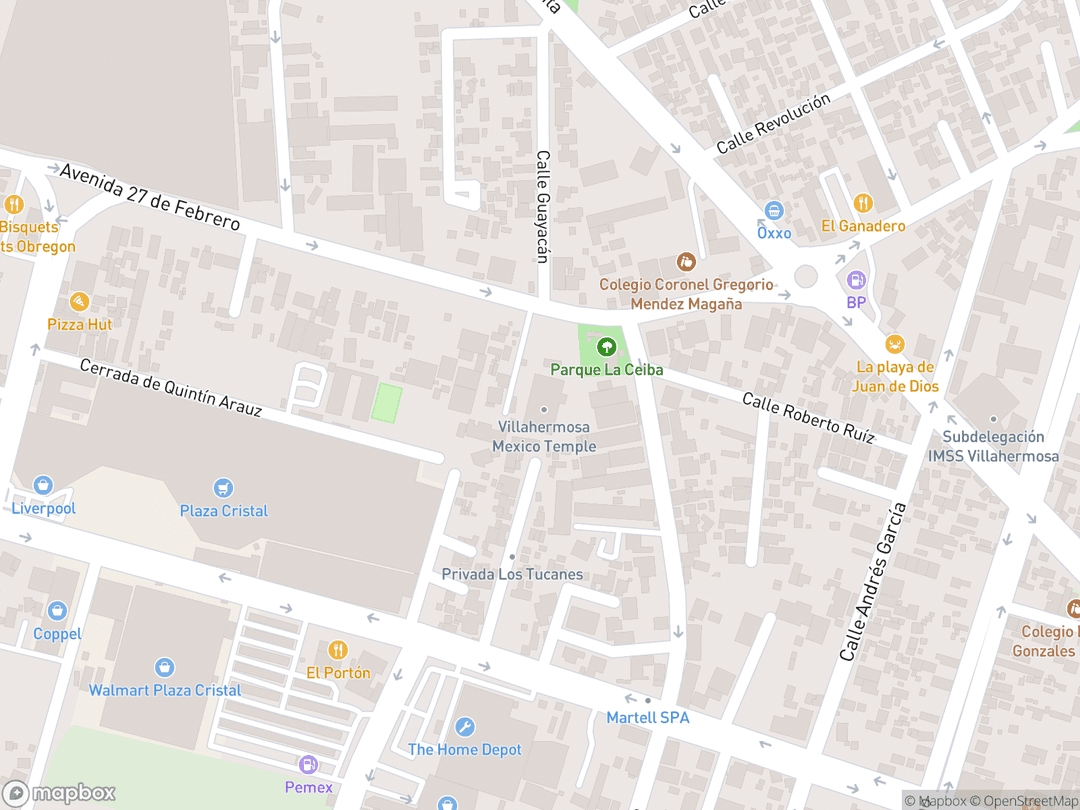
Avenida 27 de Febrero #1717, Colonia Atasta de Serra, 86100 Villahermosa, Tabasco, Mexico
Hours: Grounds are open to the public daily during daylight hours.
Getting There: Located on Avenida 27 de Febrero in Colonia Atasta de Serra, accessible via city bus lines or taxi, approximately 25 minutes from Carlos Rovirosa Pérez International Airport.
Get DirectionsTips for Your Visit
Best Time to Visit
Visit early in the morning during the dry season between November and April for pleasant weather and photo opportunities.
Grounds Etiquette
Keep voices low and respect the peaceful atmosphere maintained throughout the temple property.
About
The Villahermosa Mexico Temple stands as a sacred sanctuary of holiness in the capital of Tabasco. As part of the broader Christian tradition, Latter-day Saints view the temple as a holy place devoted to Jesus Christ, where worshipers draw closer to God through sacred covenants, prayer, and reflection.
Announced in 1998 by President Gordon B. Hinckley, the temple was built on the site of a landmark 1972 local stake center. It serves thousands of Latter-day Saints across Tabasco and northern Chiapas, bringing sacred ordinances closer to local members who previously traveled great distances.
Dedicated on May 21, 2000, by President Thomas S. Monson, the temple features classic modern architecture faced in brilliant white Mexican marble. It continues to stand as a resilient spiritual anchor and physical sanctuary in southeastern Mexico.
Gallery
Symbolic Elements
The temple's exterior features intricate carvings, each rich with spiritual meaning:

Angel Moroni Statue
Symbolizes the restored gospel herald flying through heaven to every nation.

Twelve Oxen Font
Represents the twelve ancient tribes of Israel supporting the sacred baptismal waters.

Blanco Guardiano Marble
White Mexican stone reflecting divine purity and spiritual cleansing through Christ.

Holiness to the Lord Inscription
Sacred motto declaring the building as a consecrated House of the Lord.

Native Ceiba Tree
A local landmark tree symbolizing deep spiritual roots anchored in Jesus Christ.

Geometric Art Glass Windows
Filters natural light while preserving interior privacy and reverent atmosphere.

Two-Stage Instruction Rooms
Designed for progressive instruction representing the path back to God's presence.
Interesting Facts
Built directly on the site of a demolished 1972 meetinghouse that served local Saints for decades. (Tier A)
Groundbreaking occurred on the exact same day as the Ciudad Juárez Mexico Temple over 1,200 miles away. (Tier A)
Dedicated on the same weekend as temples in Tampico and Nashville—the first triple-dedication weekend in Church history. (Tier A)
Exterior clad in native Mexican Blanco Guardiano white marble from Coahuila. (Tier B)
Latter-day Saint roots in Tabasco began when pioneer Samuel Oteo Pérez converted in 1956. (Tier B)
The temple sits near historic Mesoamerican heritage sites including La Venta and Comalcalco. (Tier B)
Features a 7-foot fiberglass Angel Moroni statue coated in 22-karat gold leaf. (Tier A)
Remained unharmed on elevated ground during the severe 2007 Tabasco regional floods. (Tier B)
Common Questions
Can non-members visit the Villahermosa Mexico Temple?
Visitors are welcome to explore the exterior grounds, though interior entry is reserved for Church members holding a recommend.
What materials were used on the exterior facade?
The exterior is clad in polished Blanco Guardiano white marble quarried near Torreón, Coahuila.
Who dedicated the Villahermosa temple?
President Thomas S. Monson dedicated the temple on May 21, 2000.
How large is the temple complex?
The temple encompasses 10,700 square feet on a 1.36-acre property.
Featured Stories
The Faith of Samuel Oteo Pérez
1956
In 1956, Samuel Oteo Pérez learned about Latter-day Saint teachings while working temporarily in the United States. Following his baptism in Mexico City, he returned home to Tabasco and enthusiastically shared his new faith with family and neighbors. His early pioneer efforts established the foundation that eventually led to a temple in Villahermosa.
Source: Church News & Regional Pioneer Records
Sacrifice of a Local Landmark
1999
To make room for the house of the Lord, local members willingly approved the demolition of their beloved 1972 stake center on Avenida 27 de Febrero. Many who helped build the original meetinghouse decades earlier watched with joy as the sacred temple arose on the exact same site.
Source: Church Architectural & Engineering Records
A Historic Triple Dedication
May 21, 2000
When President Thomas S. Monson dedicated the Villahermosa Mexico Temple, it marked a historic milestone for the Church. Dedicated on the same weekend as temples in Tampico, Mexico, and Nashville, Tennessee, it was the first time three temples were dedicated on a single weekend.
Source: Official Dedicatory Proceedings
Timeline
First Local Convert
Samuel Oteo Pérez returns to Tabasco after learning of the Church and begins sharing his faith locally.
MilestoneFirst Missionaries Arrive
Full-time Latter-day Saint missionaries arrive in Villahermosa and establish the first local branch.
MilestoneStake Center Constructed
A major local meetinghouse is built on Avenida 27 de Febrero to serve growing congregations.
MilestoneTemple Announced
President Gordon B. Hinckley announces the construction of a temple in Villahermosa.
MilestoneGroundbreaking Ceremony
Elder Richard E. Turley Sr. presides over the groundbreaking and site dedication.
component.timeline.groundbreakingPublic Open House Begins
Over 10,000 community members tour the completed temple interior during the open house.
EventTemple Dedicated
President Thomas S. Monson formally dedicates the Villahermosa Mexico Temple.
DedicationRefuge During Regional Floods
Elevated ground keeps the temple safe during historic Tabasco flooding, serving as a beacon of hope.
EventHistory by Decade
1950s–1960s — Pioneer Foundations in Tabasco
The seed planted in Tabasco has grown into a fruitful branch of the Lord's vineyard.
Latter-day Saint history in Tabasco began in 1956 through the efforts of Samuel Oteo Pérez. Following his baptism, missionaries arrived in 1957 to form the first branch. Early members made long pilgrimages to Mesa, Arizona, and later Mexico City, to attend the temple.
1970s–1980s — Consolidating Growth
In 1972, a major stake center was constructed on Avenida 27 de Febrero, anchoring the Church in Villahermosa. The 1983 dedication of the Mexico City Temple reduced member travel time from days to a 14-hour journey across Tehuantepec.
1990s — Announcement and Demolition
President Gordon B. Hinckley announced the Villahermosa temple in October 1998. To clear the site, the 1972 stake center was demolished, and Elder Richard E. Turley Sr. broke ground on January 9, 1999.
2000s — Dedication and Sanctuary
President Thomas S. Monson dedicated the temple on May 21, 2000. During the 2007 Tabasco floods, the temple's high elevation protected it, leaving it standing as a symbol of peace and refuge.
2010s–Present — Spiritual Anchor
The Villahermosa temple continues to serve thousands of Latter-day Saints across southeastern Mexico, providing a sacred space for personal devotion, family sealing covenants, and spiritual growth.
Architecture & Facilities
The Villahermosa Mexico Temple represents classic modern single-spire smaller temple architecture designed by Alvaro Inigo and Church A&E Services, featuring clean symmetrical geometry, durable tropical finishing, and high exterior stone walls tailored for tropical Tabasco.
Building Materials
Exterior Cladding
Polished Blanco Guardiano white marble quarried in Torreón, Coahuila, Mexico.
Spire Finial
A 7-foot fiberglass statue of Angel Moroni gilded in 22-karat gold leaf.
Art Glass Windows
Custom geometric art glass panels permitting soft interior lighting.
Interior Flooring
High-grade carpet and natural marble flooring throughout public spaces.
Interior Features
Baptistry
Features a font supported by twelve sculptured oxen symbolizing Israel's twelve tribes.
Instruction Rooms
Two progressive instruction rooms designed for teaching the plan of salvation.
Celestial Room
A serene room representing heavenly life in the presence of God.
Sealing Rooms
Two intimate sealing rooms equipped with sacred altars for marriage ceremonies.
Temple Grounds
The 1.36-acre grounds feature manicured lawns, tropical flowering plants, and a landmark native Ceiba tree.
Additional Facilities
An on-site arrival center and Latter-day Saint Distribution Services store serve visiting patrons.
Religious Significance
Rooted in biblical traditions of sacred worship, Latter-day Saint temples are revered as holy places built unto the Lord. Like ancient tabernacles and temples, the Villahermosa Mexico Temple stands as a dedicated place of prayer, reverence, and communion with God.
To provide a holy sanctuary where sacred gospel ordinances and covenants center patrons on Jesus Christ and eternal family bonds.
Sacred Ordinances
Baptism for the Dead
Proxy baptisms performed on behalf of deceased ancestors, expanding Christ's saving grace.
Temple Endowment
Sacred instruction and covenants detailing God's divine plan of salvation for His children.
Eternal Marriage
Sealing ordinances binding husband, wife, and children together for eternity.
Holiness to the Lord
The inscription on the temple facade reflects ancient biblical reverence, designating the temple as a place separated from worldly concerns.
Centering on Christ
Every ceremony, covenant, and symbol inside the temple directs patrons toward the Atonement and teachings of Jesus Christ.
Similar Temples

Sources & Research
Every fact on Temples.org is backed by verified Sources & Research. Each piece of information is rated by source tier and confidence level.
View All Sources (7)
| Field | Source | Tier | Retrieved |
|---|---|---|---|
| About & Historical Background | The Church of Jesus Christ of Latter-day Saints (opens in a new tab) | A | 2026-02-18 |
| Architecture & Specifications | The Church of Jesus Christ of Latter-day Saints (opens in a new tab) | A | 2026-02-18 |
| Dedication & Open House | Church History Department (opens in a new tab) | A | 2026-02-18 |
| Regional Temple Overview | LDS Temples Aggregator (opens in a new tab) | C | 2026-02-18 |
| Symbolism & Doctrine | The Church of Jesus Christ of Latter-day Saints (opens in a new tab) | A | 2026-02-18 |
| Mexican Temple History | LDS Living (opens in a new tab) | B | 2026-02-18 |
| Cultural Heritage Connections | Mormon History Association (opens in a new tab) | B | 2026-02-18 |