Visitor Insights
Visiting Bulguksa Temple
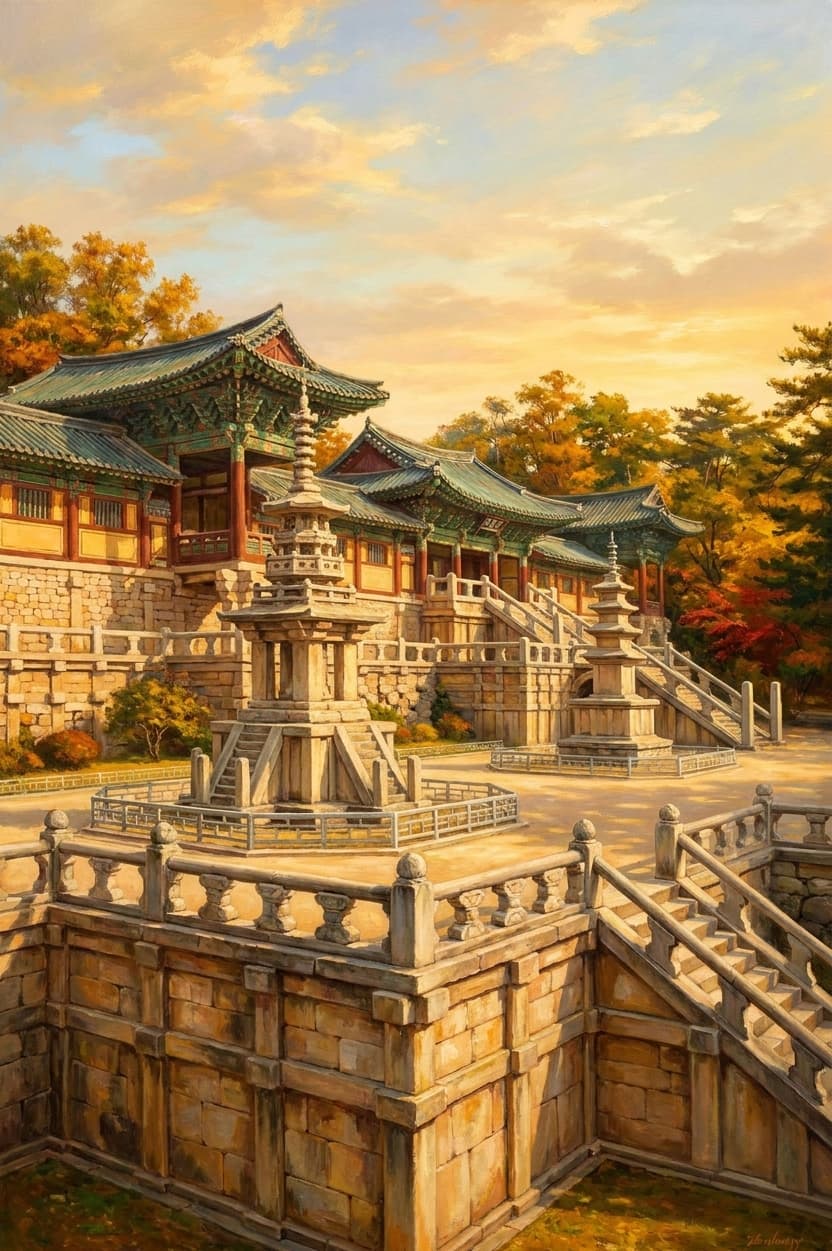
Visiting Bulguksa Temple offers an immersive encounter with 8th-century Silla spirituality and monumental granite architecture. Visitors ascend past lotus-engraved stairways into tranquil monastery courtyards surrounded by pine-forested slopes.
Highlights
- Marvel at the contrasting mathematical geometry of Dabotap and Seokgatap pagodas.
- Ascend towards the Jahamun Gate along the historic Cheongungyo and Baegungyo cloud bridges.
- Discover the Gilt-Bronze Vairocana and Amitabha Buddha statues inside the inner sanctuaries.
- Spot the hidden golden pig carved behind the Geukrakjeon nameplate for good luck.
Things to Know
- Admission is free, but parking fees apply at the lower and upper mountain lots.
- Walking on the historic granite stairways is restricted to preserve the fragile stonework.
- Early morning visits before 10:00 AM provide optimal photographic lighting and peaceful contemplation.
Location
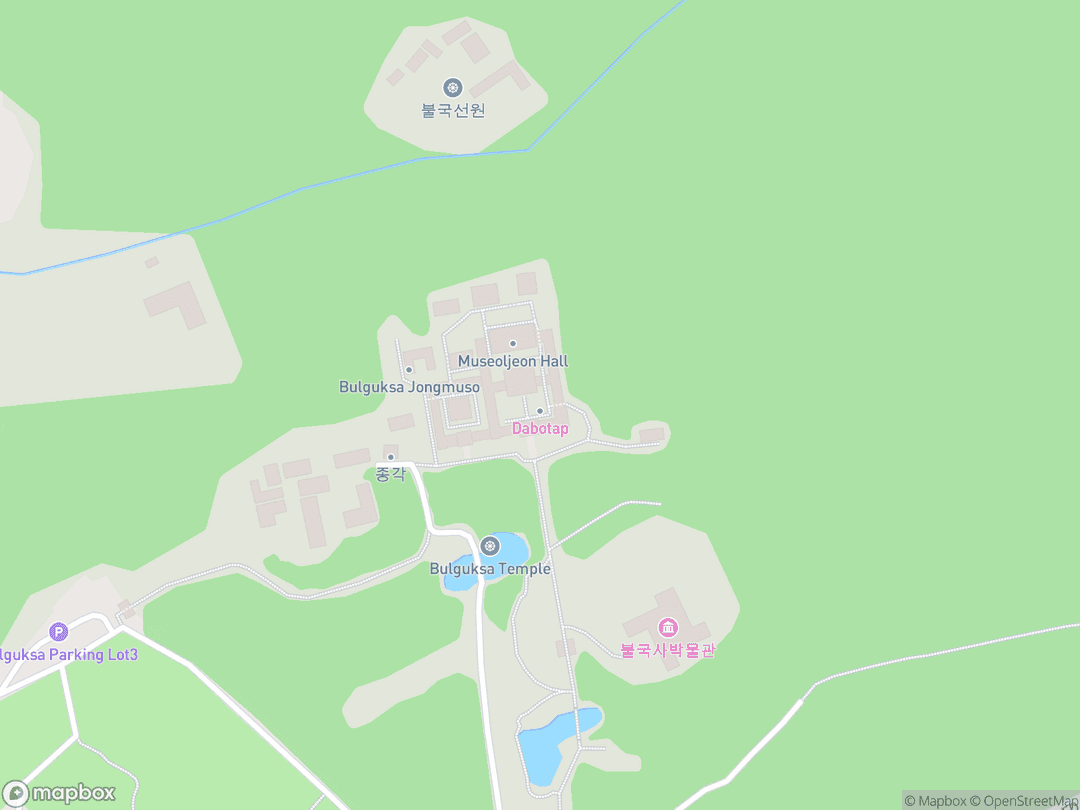
385 Bulguk-ro, Jinhyeon-dong, Gyeongju-si, Gyeongsangbuk-do, South Korea
Hours: 09:00 - 18:00 (March-Sept); 09:00 - 17:30 (Oct-Feb)
Getting There: Take Bus No. 10 or 11 from Gyeongju Bus Terminal or Singyeongju KTX Station directly to the Bulguksa main entrance stop.
Get DirectionsTips for Your Visit
Combine with Seokguram Grotto
Take Local Bus No. 12 from the Bulguksa stop up Mount Toham to visit Seokguram Grotto in the same trip.
Spring Blossom Viewing
Visit in mid-April when cherry blossom trees line the approach roads and surround the entrance park.
About
Bulguksa Temple, situated on the slopes of Mount Toham in Gyeongju, South Korea, is a masterwork of East Asian Buddhist architecture. Founded during the Golden Age of the Unified Silla Kingdom under Chief Minister Kim Dae-seong in 751 CE, the temple complex was designed as an earthly realization of the ideal Buddhist cosmos, translating sacred Pure Land doctrines into physical granite and timber structures.
As the head temple of the 11th District of the Jogye Order of Korean Buddhism, Bulguksa embodies a deep Dharmic synthesis of Mahayana traditions, particularly Hwaeom (Avatamsaka) and Seon (Zen) teachings. Its elevated granite terraces, delicate cloud bridges, and dual central pagodas guide devotees through physical and spiritual stages from the secular world to supreme enlightenment.
Inscribed as a UNESCO World Heritage Site in 1995 alongside the nearby Seokguram Grotto, Bulguksa houses seven South Korean National Treasures. Beyond its historical resilience through fires, invasions, and extensive restorations, it remains an active working monastery and a premier pilgrimage site for Buddhist practitioners worldwide.
Gallery
Symbolic Elements
The temple's exterior features intricate carvings, each rich with spiritual meaning:

Cheongungyo and Baegungyo Cloud Bridges
The 33 steps represent the 33 heavens of Buddhist cosmology leading from human desire to spiritual purity.

Yeonhwagyo and Chilbogyo Bridges
Lotus petals carved into each stone step symbolize the delicate path into Amitabha's Pure Land courtyard.
Dabotap Pagoda
An intricate octagonal pagoda representing Prabhutaratna, the Buddha of the Past who witnesses eternal truth.

Seokgatap Pagoda
A three-story square pagoda embodying Sakyamuni Buddha and the serene beauty of unadorned enlightenment.

Jahamun Gate
Named Gate of the Violet Sunset to honor the purple aura of supreme wisdom radiating from Sakyamuni Buddha.

Hidden Golden Pig of Geukrakjeon
A carved wooden pig hidden behind the hall nameplate, symbolizing the transformation of greed into spiritual prosperity.
Gilt Bronze Vairocana Buddha Statue
An 8th-century statue displaying the Wisdom Fist mudra, symbolizing the essential oneness of mind and reality.
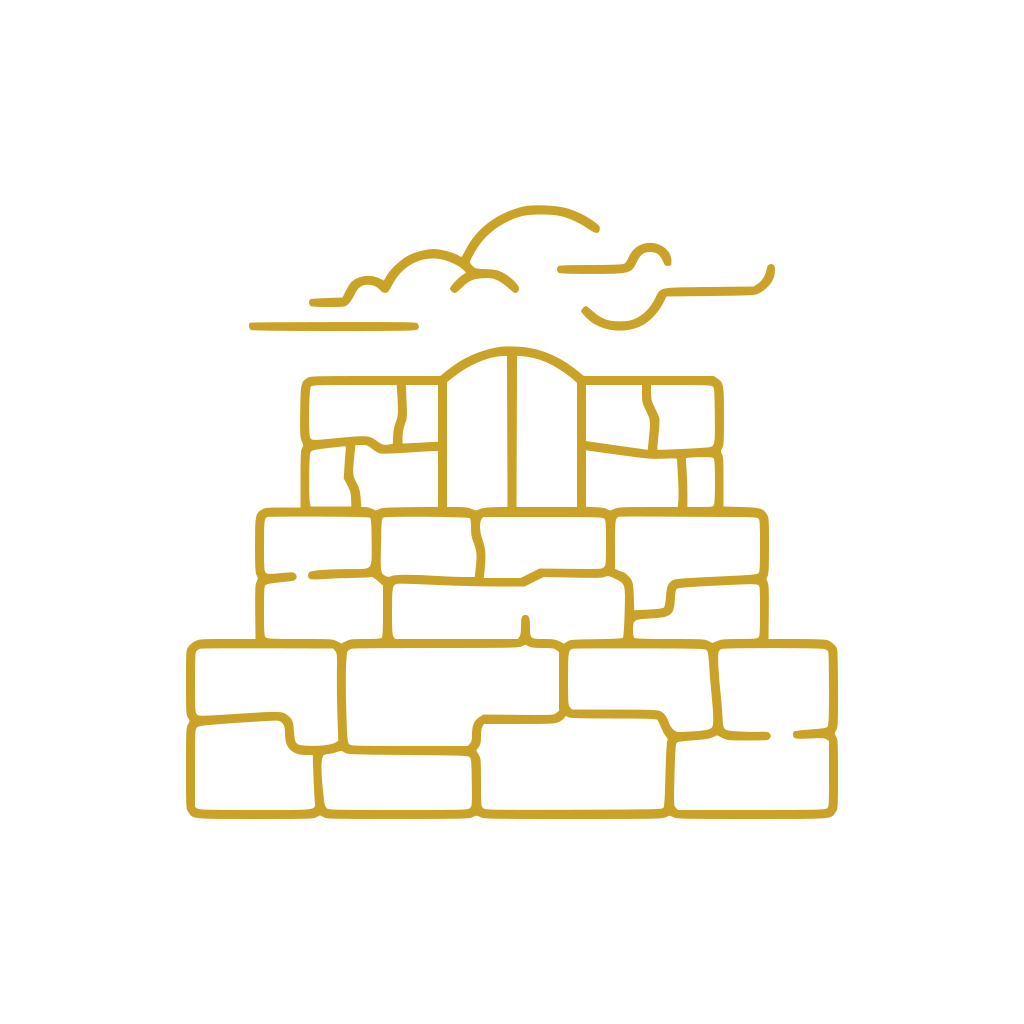
Interlocking Granite Retaining Walls
Tiered stone masonry representing the terrestrial boundary separating secular existence from the sacred realm.
Interesting Facts
The Great Dharani Sutra discovered inside Seokgatap in 1966 predates Gutenberg's printing press by nearly 700 years. (Tier A)
Legend says Chief Minister Kim Dae-seong built Bulguksa for his current parents and Seokguram Grotto for his past-life parents. (Tier B)
The granite retaining walls use mortarless interlocking grooves called Groda-maci to absorb earthquake shocks. (Tier B)
Three of the four carved stone lions guarding Dabotap Pagoda were stolen during the Japanese colonial period. (Tier A)
A secret carved wooden pig hidden behind the Geukrakjeon nameplate was discovered by a camera visitor in 2007. (Tier B)
Ancient dragon-head stone spouts beneath the bridges channeled rainwater into an artificial lotus pond below. (Tier B)
Bulguksa breaks traditional East Asian mirror symmetry by placing the complex Dabotap beside the simple Seokgatap. (Tier B)
The Goryeo-era Sarira Stupa was illegally taken to Tokyo in 1905 before being repatriated in 1933. (Tier A)
Common Questions
What is the spiritual meaning of Bulguksa?
Bulguksa translates to 'Temple of the Buddha Land,' representing the physical manifestation of the Pure Land on Earth.
How many National Treasures are located at Bulguksa?
Bulguksa officially houses seven designated South Korean National Treasures, including its stone pagodas, bridges, and bronze statues.
Can visitors walk up the famous stone cloud bridges?
Foot traffic on the historic bridges is prohibited to preserve the fragile 8th-century granite stonework.
How old is the woodblock scroll found inside Seokgatap?
The Great Dharani Sutra scroll dates prior to 751 CE, making it the oldest surviving woodblock-printed document in the world.
Featured Stories
The Vision of Kim Dae-seong
751
According to the 13th-century chronicle Samguk Yusa, Chief Minister Kim Dae-seong was inspired by a profound vision of filial piety and cosmic rebirth. He initiated the construction of Bulguksa to express gratitude toward his living parents in the royal court, while simultaneously carving Seokguram Grotto for the impoverished parents who raised him in a previous life. This dual dedication transformed Mount Toham into a monumental sanctuary connecting ancestral devotion with universal Dharmic salvation.
Source: Samguk Yusa (Memorabilia of the Three Kingdoms)
The Unbroken Scroll of Seokgatap
1966
In 1966, after tomb robbers attempted to breach Seokgatap with explosives, archaeologists undertook an emergency restoration of the three-story pagoda. Deep inside the second-tier stone chamber, they uncovered a sealed bronze reliquary containing silk wrappings and the Great Dharani Sutra scroll printed on mulberry paper. Created prior to 751 CE, this fragile text survived over twelve centuries in pristine condition, establishing Korea's ancient mastery of woodblock printing.
Source: South Korean Cultural Heritage Administration Historical Record
The Rising Ashes of Imjin War
1593
When invading forces destroyed Bulguksa's timber superstructures in 1593, the majestic wooden halls were reduced to ash, leaving only the granite foundations and dual pagodas standing above the burned ruins. Driven by enduring faith, generations of Korean monks and royal patrons launched nearly forty separate rebuilding campaigns over two centuries. Their continuous devotion culminated in the 1970s presidential restoration, which resurrected the complete Silla master plan from historical archaeological footprints.
Source: Gyeongju Historical Research Center
Timeline
Initial Shrine Establishment
King Beopheung orders a modest shrine named Hwaeom Bulguksa built on Mount Toham.
MilestoneMonumental Construction Begins
Chief Minister Kim Dae-seong initiates state-sponsored construction of the grand complex.
component.timeline.groundbreakingTemple Completion
The Silla Royal Court completes the temple complex following Kim Dae-seong's passing.
DedicationImjin War Destruction
Japanese troops burn all timber structures, leaving only the granite terraces and pagodas.
EventJoseon Dynasty Rebuilding
Restoration projects begin under King Seonjo to rebuild the central worship halls.
RenovationDaeungjeon Reconstruction
The main hall of Sakyamuni Buddha is fully reconstructed in traditional Joseon style.
RenovationSarira Stupa Returned
The illegally looted Goryeo-era Sarira Stupa is returned to Bulguksa after diplomatic protests.
EventDiscovery of World's Oldest Sutra
Restorers discover the Great Dharani Sutra woodblock print inside Seokgatap Pagoda.
MilestoneNational Restoration Completed
President Park Chung-hee's committee completes faithful reconstruction of missing timber halls.
RenovationUNESCO World Heritage Designation
UNESCO officially inscribes Bulguksa Temple and Seokguram Grotto on the World Heritage List.
MilestoneHistory by Decade
520s–740s — Early Foundations
King Beopheung formally sanctioned Buddhism across Silla in 528 CE, establishing a small shrine on Mount Toham known as Hwaeom Bulguksa. Over the next two centuries, as Silla unified the Korean Peninsula, Mount Toham became a sacred geographic guardian protecting the eastern royal capital of Seorabeol.
750s–770s — Silla Golden Age Construction
In 751 CE, Chief Minister Kim Dae-seong initiated the monumental state project rebuilding Bulguksa as an earthly Pure Land. Following Dae-seong's death in 774 CE, the Silla Royal Court under King Hyegong completed the complex, creating a masterpiece of granite stonework and timber architecture.
1590s–1760s — Imjin War Destruction & Joseon Revival
Japanese invaders burned all wooden structures at Bulguksa in 1593 during the Imjin War, leaving only stone terraces, stairways, and pagodas intact. Rebuilding efforts commenced in 1604, leading to the gradual reconstruction of key worship halls, including Daeungjeon in 1765.
1910s–1960s — Colonial Loss & Archaeological Revelation
During Japanese colonial rule, stone relics and sculptures were looted, though local scholars resisted further removals. In 1966, repair work on Seokgatap Pagoda revealed the Great Dharani Sutra woodblock scroll, thrilling the global academic community.
1970s–1990s — Presidential Restoration & UNESCO Status
From 1969 to 1973, President Park Chung-hee sponsored a massive restoration effort reconstructing destroyed timber halls atop Silla foundations. In December 1995, UNESCO officially inscribed Bulguksa Temple and Seokguram Grotto as World Heritage Sites.
Architecture & Facilities
Bulguksa exemplifies Unified Silla architectural design, seamlessly integrating rigid granite structural engineering with the natural contours of Mount Toham. Designed around a dual-axis Pure Land master plan, the complex utilizes multi-tiered granite terraces, stone cloud stairways, and double-bracket timber pavilions to represent the multi-layered Buddhist universe.
Building Materials
Foundation Terraces & Monuments
Fine-grained Korean white granodiorite hand-carved into interlocking seismic joints.
Superstructures & Framing
Korean red pine post-and-beam framing constructed with intricate double-bracket roof supports.
Decorative Finishes
Traditional five-color Dancheong mineral pigments painted over timber surfaces with ceramic roof tiles.
Statuary Metallurgy
Cast gilt-bronze alloy finished with gold leaf used for central Buddha icons.
Interior Features
Daeungjeon (Hall of Great Enlightenment)
Houses the central Sakyamuni Buddha statue framed by detailed wooden eaves and lotus altars.
Geukrakjeon (Hall of Supreme Bliss)
Contains the Gilt-Bronze Seated Amitabha Buddha statue under painted ceiling dragons.
Birojeon (Vairocana Hall)
Enshrines the 8th-century Gilt-Bronze Vairocana Buddha displaying the Wisdom Fist mudra.
Gwaneumjeon (Avalokiteshvara Hall)
A high-standing shrine dedicated to the Bodhisattva of Compassion overlooking the complex.
Temple Grounds
The temple grounds ascend Mount Toham via forested stone walkways, terraced retaining walls, and restored lotus pond drainage channels.
Additional Facilities
Includes a cultural exhibition hall, souvenir shop, parking plazas, visitor restrooms, and a mountain trail connecting directly to Seokguram Grotto.
Religious Significance
Bulguksa represents the theological core of Korean Mahayana Buddhism, particularly the Hwaeom (Avatamsaka) worldview which sees all phenomena as interconnected reflections of the universal Buddha nature. The spatial plan translates abstract Dharmic cosmology into a physical pilgrimage journey, allowing devotees to physically ascend through distinct spiritual realms.
To serve as a living realization of the Pure Land on Earth, guiding practitioners from worldly suffering to supreme spiritual liberation through prayer, meditation, and ritual devotion.
Sacred Ordinances
Yebul (Daily Chanting Service)
Regular monastic chanting and drum rituals performed at dawn and dusk to express devotion and radiate peaceful energy.
Seon Meditation (Zen Practice)
Silent seated meditation practiced by Jogye Order monastics to cultivate inner clarity and direct insight into Buddha nature.
Pure Land Rebirth Prayer
Devotional bowings and recitations before Amitabha Buddha in Geukrakjeon seeking rebirth in the western realm of bliss.
Dharmic Integration across Buddhist Traditions
Bulguksa reflects the broader Dharmic paradigm shared across Indian, East Asian, and Himalayan traditions, where physical temples act as cosmic diagrams (mandalas). By unifying Sakyamuni (historical teachings), Amitabha (Pure Land faith), and Vairocana (cosmic reality) into unified courtyards, Bulguksa harmonizes diverse Mahayana doctrines into a cohesive spatial experience.
Similar Temples
Sources & Research
Every fact on Temples.org is backed by verified Sources & Research. Each piece of information is rated by source tier and confidence level.
View All Sources (8)
| Field | Source | Tier | Retrieved |
|---|---|---|---|
| About & Historical Background | Bulguksa Management Office (opens in a new tab) | A | 2026-02-18 |
| Architecture & Pure Land Design | South Korean Cultural Heritage Administration (opens in a new tab) | A | 2026-02-18 |
| UNESCO & Relics History | UNESCO World Heritage Centre (opens in a new tab) | B | 2026-02-18 |
| Timeline & Featured Stories | Encyclopaedia Britannica (opens in a new tab) | B | 2026-02-18 |
| Visitor Insights & Travel | Korea Tourism Organization (opens in a new tab) | A | 2026-02-18 |
| National Treasures & Sutra Discovery | National Museum of Korea (opens in a new tab) | A | 2026-02-18 |
| Buddhist Doctrine & Jogye Lineage | Jogye Order of Korean Buddhism (opens in a new tab) | A | 2026-02-18 |
| Historical Archaeology & Gyeongju Heritage | Gyeongju City Government Cultural Heritage Division (opens in a new tab) | B | 2026-02-18 |