Visitor Insights
Visiting Jogyesa Temple
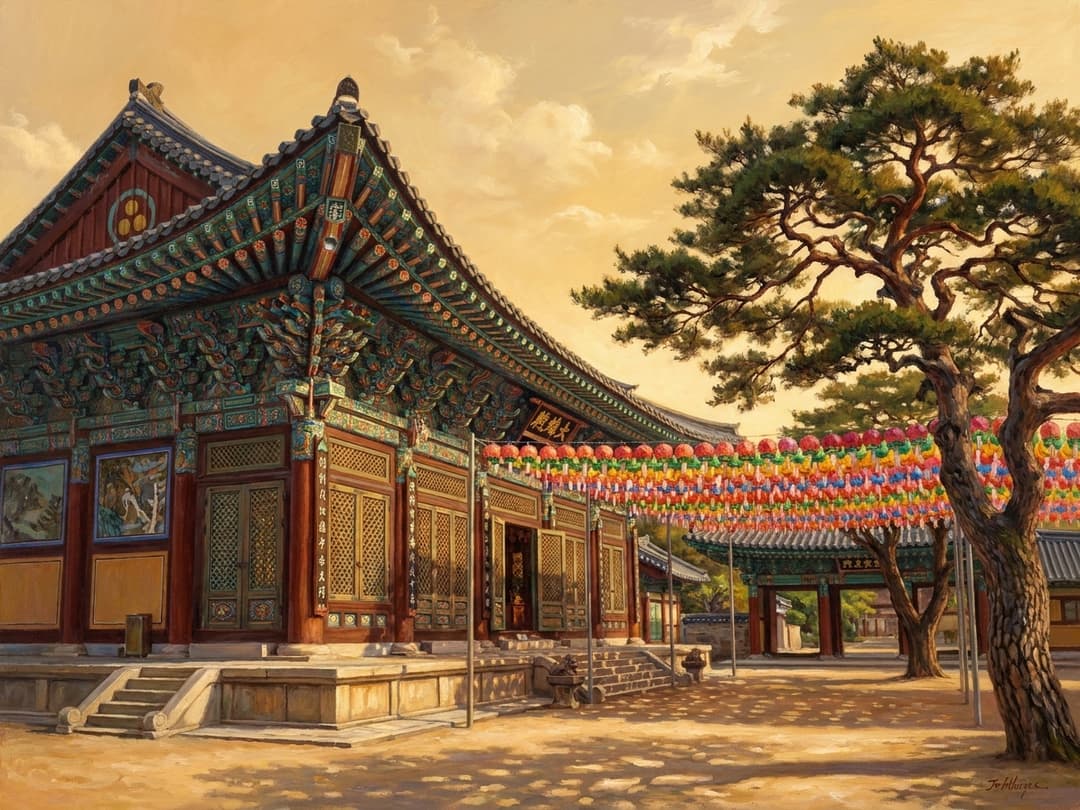
Jogyesa Temple offers an welcoming sanctuary in the center of Seoul, welcoming people of all backgrounds 24 hours a day. Visitors can experience peaceful chanting services, view historic architecture, and participate in cultural programs throughout the year.
Highlights
- Daeungjeon Main Hall housing three colossal gilded Buddha statues
- Eight-sided ten-story granite stupa containing genuine Buddha relics
- 500-year-old Lacebark Pine designated as South Korea Natural Monument No. 9
- Brahma Bell Pavilion featuring the Four Temple Sound Instruments
Things to Know
- Main Dharma hall remains active for worshipers; soft voices and modest dress are requested
- Photography is allowed on temple grounds but should be discreet inside prayer halls
- Special floral and lantern displays fill the courtyard during spring and autumn festivals
Location
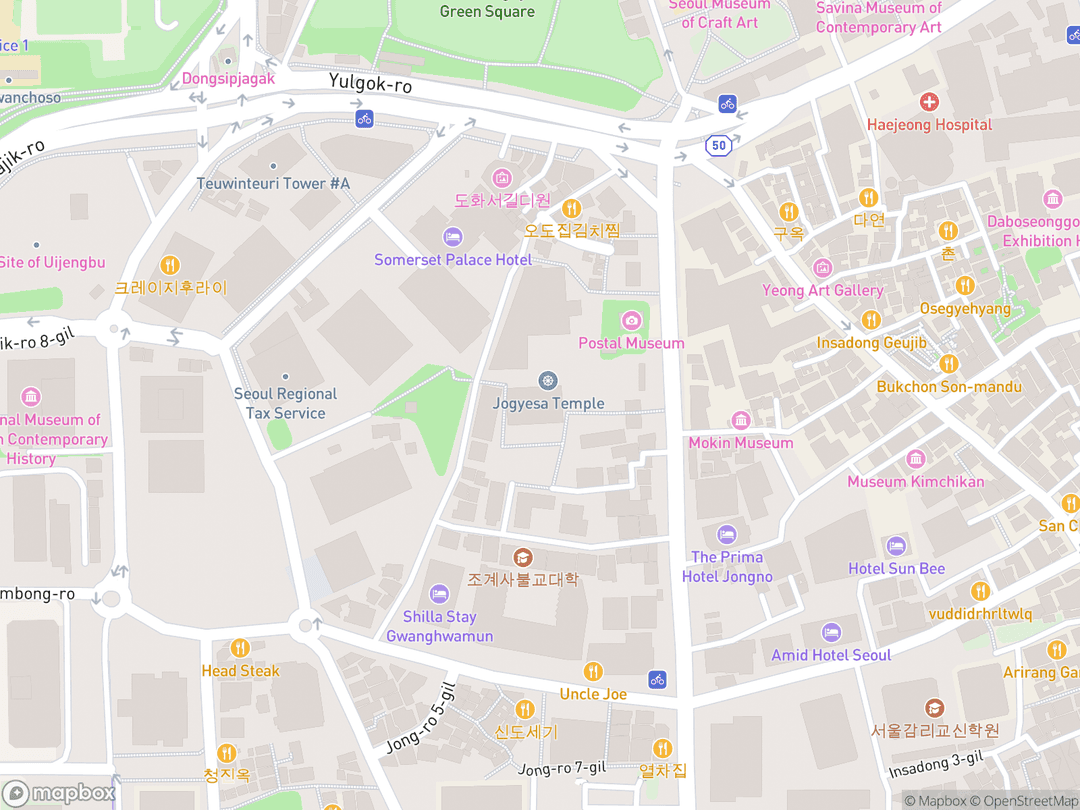
55 Ujeongguk-ro, Jongno-gu, Seoul 03144, South Korea
Hours: Temple grounds open 24/7; Daeungjeon Main Hall open roughly 4:00 AM to 9:00 PM daily
Getting There: Located near Line 1 Jonggak Station (Exit 2) or Line 3 Anguk Station (Exit 6) in Jongno-gu
Get DirectionsTips for Your Visit
Attend Morning or Evening Chanting
Listen to monks strike the Brahma Bell and Dharma Drum before dawn at 4:00 AM and evening around 6:00 PM.
Explore the Cultural History Hall
Visit the Museum of Korean Buddhism located directly across the courtyard for historical artifacts.
Visit During Seasonal Festivals
Experience the glowing lotus lantern canopy in May or the chrysanthemum sculpture display in October.
About
Jogyesa Temple stands as the principal headquarters of the Jogye Order of Korean Buddhism, representing the majority tradition of monastic Seon practice in South Korea. Located in the vibrant Jongno district of Seoul, the temple serves as an accessible sanctuary where ancient spiritual discipline meets modern urban life.
Established in 1910 under the name Gakhwangsa, the temple was built inside Seoul's historic city gates to restore Buddhist identity following centuries of suppression during the Joseon Dynasty. Reconstructed at its current site in 1938 as Taegosa, it was renamed Jogyesa in 1954 to reflect its spiritual lineage tracing back to Mount Caoxi, the mountain sanctuary of the Sixth Seon Patriarch Huineng.
As a central hub within the broader Dharmic theological tradition, Jogyesa connects practitioners to universal principles of karma, mindfulness, and the realization of innate Buddha-nature. The temple complex harmonizes historic wooden architecture with living monastic traditions, hosting international visitors and annual cultural celebrations.
Gallery
Symbolic Elements
The temple's exterior features intricate carvings, each rich with spiritual meaning:

Iljumun (One Pillar Gate)
Four aligned entrance pillars symbolize leaving behind worldly dualities to enter unified non-dual mind.
Daeungjeon (Hall of the Great Hero)
The main hall honors Buddha as the Great Hero who conquered internal afflictions of greed, hatred, and delusion.

Octagonal Ten-Story Stupa
An eight-sided base represents the Noble Eightfold Path while ten stone tiers signify the Ten Paramitas.
Brahma Bell and Sound Instruments
Four ritual sound instruments in the bell pavilion awaken sentient beings across terrestrial, aerial, hell, and aquatic realms.

Dancheong Decorative Pigments
Traditional five-color mineral painting represents cosmic harmony and the transformation of human delusions into wisdom.
Lacebark Pine Natural Monument
A 500-year-old white pine stands as a living symbol of historical diplomatic exchange and spiritual resilience.
Lotus Lantern Canopy
Thousands of brightly colored courtyard lanterns symbolize the light of transcendent wisdom dispelling spiritual ignorance.
Carved Floral Lattice Doors
Hand-carved pine lattice doors depicting lotus and peony blossoms illustrate spiritual purity emerging untainted from worldly mud.
Interesting Facts
The structural timbers of the main hall were transferred from a dismantled religious hall in Jeongeup in 1937. (Tier A)
Large interior support pillars were carved from ancient pine trees harvested on Mount Baekdu. (Tier A)
The sacred Buddha relic enshrined in the stone stupa was gifted from Sri Lanka via Thailand in 1913. (Tier A)
Jogyesa was the first Buddhist temple constructed inside Seoul's historic city gates after a 300-year ban. (Tier A)
The temple was renamed Jogyesa in 1954 to eliminate colonial influences and restore monastic celibacy. (Tier A)
A 500-year-old White Pine brought from China by Joseon envoys thrives in the main courtyard. (Tier A)
Unlike remote mountain monasteries, Jogyesa operates in downtown Seoul and keeps its gates open 24 hours a day. (Tier A)
The ten-story stone stupa was erected in 2009 to replace an earlier pagoda built during the colonial period. (Tier A)
Inside the granite stupa are sealed 14,000 miniature Buddha statues and a 1660 woodblock Lotus Sutra. (Tier A)
The temple serves as the supreme administrative headquarters for over eighty percent of South Korea's Buddhist population. (Tier A)
Common Questions
Is Jogyesa Temple free to visit?
Yes, admission to the temple grounds, main hall, and courtyard is free for all visitors.
What is the best time of year to visit Jogyesa?
Spring during the Lotus Lantern Festival in May and autumn during the Chrysanthemum Festival in October offer stunning courtyard displays.
Can non-Buddhists enter the main hall?
Yes, visitors of all faiths are welcome to enter quietly, remove shoes, and observe ceremonies respectfully.
What tradition of Buddhism does Jogyesa belong to?
Jogyesa belongs to the Seon (Zen) tradition of Mahayana Buddhism under the Jogye Order.
Featured Stories
The Sacred Relic Journey from Sri Lanka
1913
In 1913, Sri Lankan monk Venerable Dharmapala received a genuine bodily relic of Shakyamuni Buddha from the Royal Family of Thailand. Recognizing the efforts to restore Korean monastic Buddhism, he traveled to Seoul and presented the sacred relic to Gakhwangsa Temple in 1914. Today, this relic remains enshrined inside the courtyard's granite stupa, connecting Korean practitioners directly to early Buddhist heritage.
Source: Jogyesa Temple Cultural Archives
Harvesting Mount Baekdu Timber
1937
During the construction of Taegosa Main Hall in 1937, master carpenters sought timbers worthy of a national head temple. Pine logs were selected from the sacred slopes of Mount Baekdu on the northern border and transported across the country. These massive timber pillars continue to anchor the structural framing of Daeungjeon today.
Source: Jogye Order Administrative Records
Restoring Identity through Purification
1954
Following years of foreign colonial influence, Korean monastics initiated the Buddhist Purification Movement in 1954 to re-establish celibate Seon monastic rule. As part of this spiritual reform, the central temple was renamed Jogyesa, honoring Mount Caoxi and solidifying its role as the administrative heart of traditional Korean Buddhism.
Source: Korean Buddhist History Documentation
Timeline
Monastic City Restrictions Lifted
The Joseon Dynasty lifted the centuries-long ban prohibiting Buddhist monastics from entering the capital city.
MilestoneFounding of Gakhwangsa Temple
Korean monks established Gakhwangsa inside Seoul as a modern center for Buddhist restoration.
MilestoneEnshrinement of Sacred Relic
A genuine bodily relic of Buddha gifted from Sri Lanka was formally enshrined at the temple.
EventDedication of Taegosa Main Hall
The reconstructed main hall was dedicated at the Gyeonji-dong site using timber from Mount Baekdu.
DedicationFormation of Jogye Order Administrative Center
The temple was formally established as the central headquarters for unified Korean Buddhism.
MilestoneRenamed to Jogyesa Temple
The temple adopted the name Jogyesa during the Purification Movement to honor Seon Patriarch Huineng.
MilestoneCultural Property Designation
Daeungjeon Main Hall was officially designated Seoul Tangible Cultural Property No. 127.
EventOpening of Culture and History Hall
The Korean Buddhist Culture and History Hall opened on site to house administrative offices and museum exhibits.
RenovationErection of Iljumun Gate
The grand One Pillar Gate was constructed at the entrance along with new interior Buddha statues.
RenovationDedication of Ten-Story Stone Stupa
An octagonal granite stupa was completed to house the sacred Buddha relic and micro-statues.
DedicationUNESCO Inscription of Lantern Festival
The Yeondeunghoe Lotus Lantern Festival centered at Jogyesa was inscribed on the UNESCO Intangible Cultural Heritage list.
MilestoneHistory by Decade
1910s — Urban Buddhist Restoration
In 1910, Korean monastics established Gakhwangsa Temple within Seoul's historic gates to establish a central refuge for practice following centuries of Joseon Dynasty restrictions. In 1914, the temple enshrined a genuine Buddha relic received from Sri Lanka, anchoring its position as an urban spiritual hub.
1930s — Construction at Gyeonji-dong
In 1937, leaders acquired the current site in Jongno to erect a centralized headquarters for Korean Buddhism. Carpenters adapted salvaged timbers from Jeongeup and pine logs from Mount Baekdu to complete the grand main hall, dedicating the complex as Taegosa in October 1938.
1950s — Purification Movement and Renaming
In 1954, Korean monastics launched the Purification Movement to restore traditional celibate monastic discipline. The temple was renamed Jogyesa to signify its spiritual lineage connecting to Mount Caoxi and the Sixth Seon Patriarch.
2000s — Modern Upgrades and Stupa Dedication
The turn of the century brought significant cultural property designations and infrastructure expansions. In 2006, the entrance Iljumun gate was erected, followed in 2009 by the completion of an octagonal ten-story granite stupa housing the sacred relics.
2020s — UNESCO World Heritage Recognition
In December 2020, the Yeondeunghoe Lotus Lantern Festival, centered annually at Jogyesa, was formally inscribed on the UNESCO Representative List of the Intangible Cultural Heritage of Humanity, solidifying the temple's global cultural impact.
Architecture & Facilities
Jogyesa displays monumental traditional Korean wooden architecture blending Late Joseon palace styles with early twentieth-century civic structural techniques. Its primary hall features a paljak hip-and-gable roof adorned with vibrant multi-cluster dapo brackets and brilliant dancheong decorative mineral painting.
Building Materials
Mount Baekdu Pine
Massive structural columns were crafted from ancient pine timber harvested along the northern Korean border.
Recycled Bocheongyo Joinery
Framing timber was salvaged from the disassembled Ten-Iljeon Hall in Jeongeup and reassembled in 1937.
Korean Grey Granite
Fine-grained local granite forms the elevated hall podium and the octagonal ten-story relic stupa.
Dancheong Mineral Pigments
Traditional five-color mineral paints protect the wooden elements while displaying intricate Buddhist decorative patterns.
Interior Features
Daeungjeon Central Altar
Houses three massive gilded statues of Shakyamuni Buddha, Amitabha Buddha, and Bhaisajyaguru Medicine Buddha.
Vaulted Caisson Ceiling
An ornate sunken wooden ceiling decorated with carved dragons and cranes soaring toward heavenly realms.
Floral Lattice Doors
Twelve double-folding front doors decorated with hand-carved lattice patterns of lotuses, peonies, and chrysanthemums.
Dharma Meeting Space
A vast open interior wooden floor designed to accommodate hundreds of practitioners during daily chanting and meditation.
Temple Grounds
The urban temple courtyard features an eight-sided stone stupa, a two-story bell pavilion, two ancient protected trees, and an overhead matrix for seasonal lotus lantern displays.
Additional Facilities
The temple grounds encompass the Korean Buddhist Culture and History Hall, housing administrative offices of the Jogye Order, an international Templestay information center, and the Museum of Korean Buddhism.
Religious Significance
As part of the broad Dharmic family of traditions, Buddhism at Jogyesa emphasizes mindfulness, ethical discipline, and the realization of liberation from the cycle of samsara. In Korean Seon Buddhism, physical temple structures serve as educational spaces and visual pointers to help practitioners recognize their inherent Buddha-nature.
To serve as the supreme administrative headquarters and urban practice sanctuary for the Jogye Order, guiding monastics and lay practitioners toward spiritual awakening.
Sacred Ordinances
Yebul (Daily Chanting Ceremonies)
Regular morning and evening monastic chanting services conducted with percussion instruments to harmonize mind and body.
Chamseon (Seon Meditation Practice)
Silent seated contemplation focused on self-inquiry and realizing non-dual awareness.
Sutra Chanting and Recitation
Group chanting of fundamental scriptures such as the Heart Sutra and Lotus Sutra to cultivate wisdom.
Dharma Talks and Preaching
Expositions of Buddhist teachings delivered by senior monastics to guide moral conduct and meditation practice.
The Concept of Non-Dual Awareness
Entering through the Iljumun gate symbolizes stepping beyond worldly dualities of gain and loss, good and bad, encouraging practitioners to realize 'One Mind' in daily life.
Veneration of Buddha Relics
Enshrining bodily relics of Shakyamuni Buddha provides practitioners with a tangible focal point for generating faith, gratitude, and spiritual merit.
Similar Temples
Sources & Research
Every fact on Temples.org is backed by verified Sources & Research. Each piece of information is rated by source tier and confidence level.
View All Sources (8)
| Field | Source | Tier | Retrieved |
|---|---|---|---|
| About & Historical Background | Jogye Order of Korean Buddhism (opens in a new tab) | A | 2026-02-15 |
| About & Historical Background | Jogyesa Temple Official Site (opens in a new tab) | A | 2026-02-15 |
| Architecture & Grounds | Cultural Heritage Administration of Korea (opens in a new tab) | A | 2026-02-15 |
| Visitor Insights & Cultural Heritage | Seoul Metropolitan Government (opens in a new tab) | A | 2026-02-15 |
| UNESCO World Heritage & Festivals | UNESCO Intangible Cultural Heritage (opens in a new tab) | B | 2026-02-15 |
| Visitor Insights & Cultural Heritage | Korea Tourism Organization (opens in a new tab) | C | 2026-02-15 |
| Administrative Headquarters & Lineage | Yonhap News Agency Archives (opens in a new tab) | B | 2026-02-15 |
| Religious Significance & Symbolism | Dongguk University Institute of Buddhist Culture (opens in a new tab) | B | 2026-02-15 |