Visitor Insights
Visiting Haedong Yonggungsa Temple
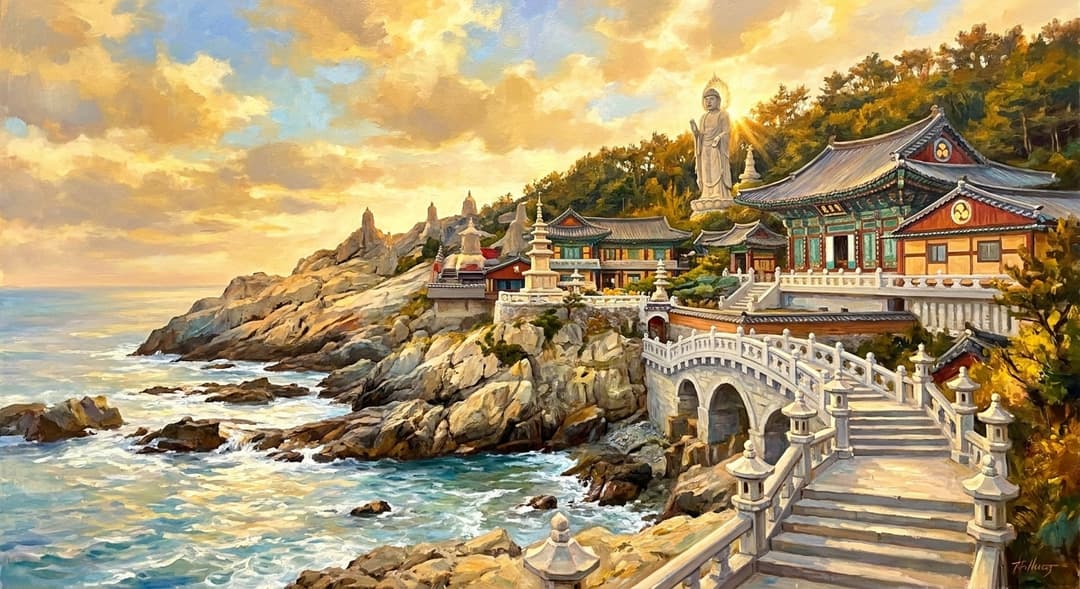
Haedong Yonggungsa offers a breathtaking pilgrimage where visitors walk down pine-forested cliffs to a wave-swept granite coast. As a rare coastal Buddhist sanctuary, it merges ocean views with traditional Seon monastic atmosphere.
Highlights
- Panoramic views of the East Sea from the main temple courtyard and Daeungjeon.
- Standing before the 10-meter white granite Haesu Gwaneum Daebul statue facing the open ocean.
- Crossing the Yongjin-gyo stone arch bridge and tossing coins into lotus wishing vessels.
- Passing through the gauntlet of 12 armor-clad Zodiac guardian statues along the entry path.
Things to Know
- The 108 granite steps down to the coastal rocks can be steep and slick during wet conditions.
- Extremely high visitor volumes occur during sunrise, New Year's morning, and Buddha's Birthday.
Location
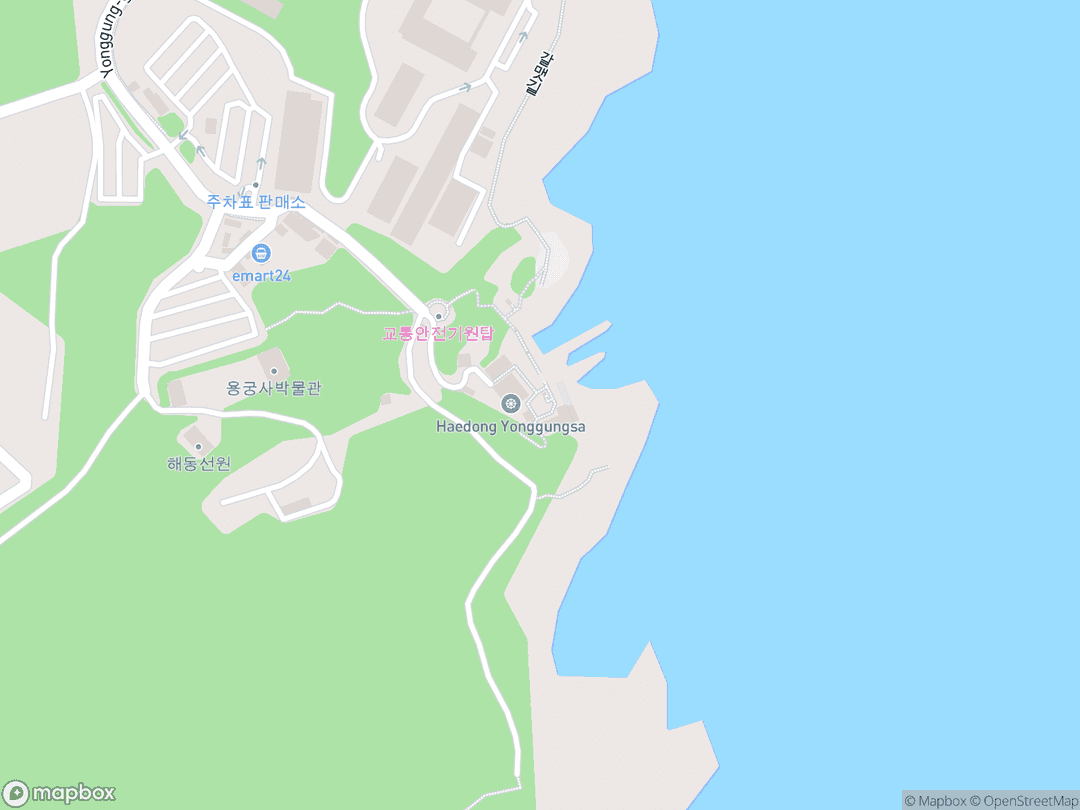
86 Yonggung-gil, Gijang-eup, Gijang-gun, Busan, South Korea
Hours: Daily from 04:00 to 19:00 year-round.
Getting There: Take Busan Metro Line 2 to Haeundae Station (Exit 7), then catch Bus 181 or 1001 to the temple stop followed by a 10-minute walk.
Get DirectionsTips for Your Visit
Arrive for Sunrise
Visit before dawn to witness the morning sun rising over the East Sea alongside chanting monks.
Watch Your Step
Wear comfortable walking shoes with good traction for the steep stone steps and damp rock surfaces.
Mind the Crowds
Explore early in the morning on weekdays to avoid heavy tour group congestion.
About
Haedong Yonggungsa Temple is one of South Korea's most unique and celebrated Buddhist sanctuaries, perched dramatically along the jagged granite cliffs of Busan's eastern coastline. Founded in 1376 by Monk Naong Hyegeun during the Goryeo Dynasty, the sanctuary was originally named Bomun Temple to evoke the boundless mercy of Avalokiteśvara. Destroyed during the Imjin War in the late 16th century, the site lay in ruins for over three hundred years before being revived in the 20th century.
Set within the broader Dharmic tradition and Mahayana Buddhism, the temple embodies the vow of universal compassion and spiritual protection. Unlike the vast majority of Korean Buddhist monasteries nestled deep within mountain forests, Haedong Yonggungsa directly faces the open waters of the East Sea. Pilgrims descend through a canyon of pine trees via 108 stone steps and cross an arched stone bridge to reach the ocean-swept prayer halls.
Renamed in 1974 following a vision of the Goddess of Mercy riding a white dragon over the sea waves, Haedong Yonggungsa blends Seon monastic devotion with maritime folk traditions. Home to the grand white granite statue of Haesu Gwaneum Daebul and a candlelit subterranean cave chapel, the complex serves as an active place of worship and an international spiritual landmark.
Gallery
Symbolic Elements
The temple's exterior features intricate carvings, each rich with spiritual meaning:
Haesu Gwaneum Daebul
A 10-meter single-stone white granite statue of Avalokiteśvara carved standing over the East Sea to protect seafarers and grant merciful aid.
Sea Dragon Guardians
Intricate dragon carvings adorned across temple eaves and rock faces that represent the ocean deities protecting the Buddhist Dharma.
108 Longevity Steps
A stone staircase descending through a canyon whose 108 steps symbolize shedding the 108 earthly illusions before reaching the holy realm.
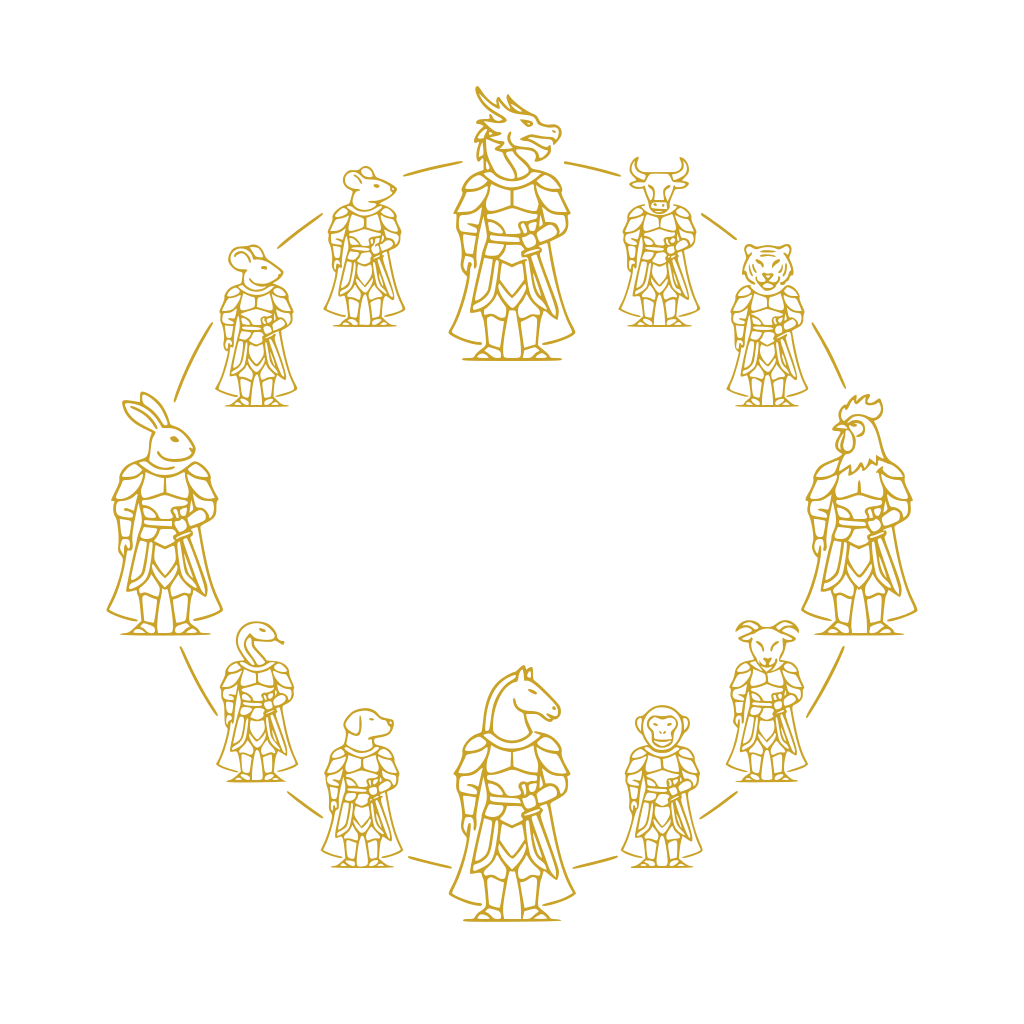
12 Zodiac Guardians
Life-sized stone statues of animal-headed human warriors lining the path to ward off evil spirits based on cosmic cardinal directions.
Yongjin-gyo Bridge
An arched stone bridge spanning a sea inlet that serves as a ritual threshold between mundane existence and spiritual enlightenment.
Gulbeop Cave Sanctum
A natural sea cave chapel situated beneath the main hall that enshrines an altar to Maitreya illuminated by candlelight.
Yongwangdang Shrine
A dedicated ocean spirit shrine honoring Yongwang, illustrating the syncretic union of Korean shamanic nature veneration and Buddhist practice.
Four Lions Stone Pagoda
A three-story granite pagoda resting on four sculpted lions that symbolize mastering human emotions through spiritual wisdom.
Interesting Facts
Over 90 percent of historic Korean Buddhist monasteries are situated deep in mountain forests, making this cliffside complex exceptionally rare. (Tier A)
The temple's prominent motto guarantees that at least one wish will be answered through sincere prayer at the coastal shrine. (Tier B)
A modern granite statue of a Buddhist monk holding a vehicle steering wheel stands near the entry to pray for traffic safety. (Tier B)
Visitors frequently rub the darkened belly and nose of the laughing Maitreya statue in hopes of conceiving a son. (Tier C)
The subterranean Gulbeop Sanctum is housed entirely within a natural sea cave beneath the primary prayer hall. (Tier A)
The site was known as Bomunsa for nearly six hundred years before being renamed Haedong Yonggungsa in 1974 after a dragon vision. (Tier A)
Walking up and down the 108 canyon steps is locally believed to grant longevity by cleansing earthly defilements. (Tier B)
The entry path is guarded by twelve armor-clad stone statues representing the animals of the East Asian Zodiac. (Tier A)
During Buddha's Birthday, thousands of colorful paper lotus lanterns illuminate the entire cliff face and stone bridge network. (Tier A)
The rhythmic wooden block chanting from the main hall is acoustically designed to harmonize with crashing ocean waves below. (Tier B)
Common Questions
Why is Haedong Yonggungsa Temple famous?
It is celebrated as one of Korea's very few major Buddhist temples located along a scenic ocean cliffside.
How much is admission to Haedong Yonggungsa Temple?
Entrance to the temple grounds and shrine areas is free for all visitors.
What are the operating hours of the temple?
The grounds are open daily year-round from 04:00 to 19:00.
How do I reach the temple using public transit from Haeundae?
Take Bus 181 or 1001 from Haeundae Station Exit 7 directly to the Haedong Yonggungsa bus stop.
What is the best time of day to visit?
Early morning at sunrise offers tranquil views and stunning sunlight over the East Sea.
Featured Stories
A Sacred Dream in a Time of Drought
1376
During a severe 14th-century drought that devastated Goryeo crops, Royal Preceptor Monk Naong Hyegeun received a divine dream vision from a sea deity. The vision instructed him to construct a sanctuary on Mount Bongnae facing the ocean to alleviate the nation's suffering. Upon building Bomun Temple, rains returned to the land, initiating centuries of coastal pilgrimage.
Source: Korean Buddhist Heritage Records
Rebirth from the Ashes of War
1930
After being completely burned to the ground during the 1592 Imjin War, the sacred site lay in ruins for over three centuries. Monk Ungang from Tongdosa Temple recognized the spiritual memory of the rocky shoreline and labored to clear the overgrown coastal debris. His dedication re-established monastic life on the cliffside, paving the way for the sanctuary's modern expansion.
Source: Jogye Order Historical Annals
The Vision of the White Dragon
1974
While engaged in a rigorous 100-day meditation retreat at the cliffside sanctuary, Head Monk Jeong-am witnessed a miraculous vision of Avalokiteśvara ascending to heaven on a white dragon. Inspired by this spiritual manifestation, he renamed the temple Haedong Yonggungsa and initiated the construction of the present main hall complex. This transformation firmly elevated the site into one of Korea's premier ocean temples.
Source: Haedong Yonggungsa Temple Chronicles
Timeline
Founding of Bomun Temple
Monk Naong Hyegeun builds Bomun Temple on Mount Bongnae after receiving a dream vision during a drought.
MilestoneDestruction in the Imjin War
Japanese invasion forces burn Bomun Temple to the ground, leaving the site ruined for over three centuries.
EventRestoration by Monk Ungang
Monk Ungang of Tongdosa Temple clears coastal debris and rebuilds a modest wooden shrine along the rocks.
RenovationRenaming to Haedong Yonggungsa
Monk Jeong-am renames the sanctuary following a vision of Avalokiteśvara riding a white sea dragon.
MilestoneCompletion of Daeungjeon Main Hall
Craftsmen complete the new wooden main sanctuary hall with traditional colorful Dancheong painting.
DedicationInstallation of Seawater Buddha Statue
The ten-meter white granite Haesu Gwaneum Daebul statue is consecrated on the seaside promontory.
DedicationConstruction of Yongjin-gyo Bridge
Workers complete the stone arch bridge spanning the sea inlet to provide safe pilgrim access.
RenovationErection of 12 Zodiac Guardian Statues
Life-sized stone statues representing the twelve Zodiac animals are installed along the entry approach.
MilestoneCompletion of Visitor Infrastructure
Enhanced viewing platforms, protective railings, and subterranean lighting are installed for safety.
RenovationContinued International Pilgrimage
The temple serves millions of global pilgrims as one of Busan's most celebrated spiritual landmarks.
EventHistory by Decade
1370s — Foundational Dream Vision
In 1376, Monk Naong Hyegeun established Bomun Temple on the Gijang coastline after receiving a dream revelation during a catastrophic drought. The site was dedicated to Avalokiteśvara to invoke celestial compassion for the populace.
1590s — Destruction in the Imjin War
During the Japanese invasions led by Toyotomi Hideyoshi, the entire wooden monastery was destroyed by fire. The ocean sanctuary lay dormant as stone ruins along the cliffside for over three hundred years.
1930s — Resurgence under Monk Ungang
Monk Ungang of Tongdosa Temple led a revival effort to restore monastic prayer to the abandoned cliffside. He constructed a modest wooden shrine and quarters, bringing monks back to the sacred waters.
1970s — Modern Renaming and Expansion
In 1974, Monk Jeong-am renamed the site Haedong Yonggungsa after seeing a vision of the Goddess of Mercy on a white dragon. He oversaw the construction of the primary Daeungjeon sanctuary hall.
1990s — Installation of the Coastal Buddha
In 1990, craftsmen completed the massive white granite statue of Haesu Gwaneum Daebul overlooking the sea. The monument cemented the temple's reputation as a vital sanctuary for maritime prayers.
2000s–Present — Global Cultural Sanctuary
Infrastructure enhancements brought the installation of the 12 Zodiac guardians, the Yongjin-gyo arch bridge, and illuminated lantern pathways. Today, the temple welcomes millions of global visitors and pilgrims annually.
Architecture & Facilities
Haedong Yonggungsa displays classical Korean Buddhist monastic architecture integrated into a cliffside littoral setting, featuring multi-bracketed Dancheong timber halls with sweeping curved tile roofs built upon natural coastal granite ledges.
Building Materials
Indigenous Granite
Korean cliffside granite forms all retaining walls, multi-story pagodas, staircases, bridge arches, and free-standing statues.
Pine Framing
Heavy timber posts and beams are decorated in traditional colorful Dancheong painting to preserve the wood against sea air.
Giwa Tiles
Dark-glazed ceramic roof tiles are laid in sweeping curved eaves designed to shed heavy maritime winds and rain.
Bronze and Gold Leaf
Gilded bronze and gold paint adorn the interior temple altars, statues, and ceremonial bell installations.
Interior Features
Daeungjeon Main Hall
Houses Sakyamuni Buddha flanked by Bodhisattvas beneath an ornate wooden canopy surrounded by colorful ceiling lanterns.
Gulbeop Sanctum
A subterranean natural rock sea-cave chapel featuring a candlelit stone altar dedicated to Maitreya.
Yongwangdang Shrine Hall
A compact shrine dedicated to the Dragon King of the sea adorned with vibrant folk murals of ocean spirits.
Bodhisattva Hall
A dedicated sanctuary space containing smaller statues and prayer altars overlooking the ocean waves below.
Temple Grounds
The coastal grounds feature stone wishing ponds, pine forest pathways, cliffside viewing platforms, lantern lines, and linear coastal bridges.
Additional Facilities
Facilities include a visitor reception area, souvenir shops, tea houses, rest areas, public restrooms, and parking near the outer entrance.
Religious Significance
As part of the Dharmic tradition and Mahayana Buddhism, Haedong Yonggungsa emphasizes universal compassion and the Bodhisattva ideal. Rooted in Korean Seon Buddhism, it connects spiritual liberation with nature veneration along the edge of the sea.
The sanctuary serves as a dedicated pilgrimage ground for invoking Avalokiteśvara (Gwaneum), offering prayers for peace, safety, maritime protection, and spiritual awakening.
Sacred Ordinances
Gwaneum Yebae (Goddess Veneration)
Pilgrims offer prostrations, candles, and incense before the seawater statue to seek compassionate assistance and spiritual healing.
Moktak Chanting
Monks recite sacred sutras accompanied by rhythmic wooden block percussion that blends with the sound of ocean waves.
Zodiac Prayer Rituals
Visitors leave offerings at their corresponding birth-year Zodiac guardian statue to pray for protection against negative influences.
The Bodhisattva Vow and Maritime Compassion
In Mahayana scripture, Avalokiteśvara vows to assist all beings who call upon her name in times of distress. Placing her grand statue overlooking the open ocean signifies that her compassionate light extends across all waters and human suffering.
Syncretism of Seon and Nature Spirits
The inclusion of Yongwang (the Ocean Dragon King) and the 12 Zodiac guardians showcases Korea's harmonious blending of formal Buddhist philosophy with indigenous nature reverence and cosmic protection principles.
Similar Temples
Sources & Research
Every fact on Temples.org is backed by verified Sources & Research. Each piece of information is rated by source tier and confidence level.
View All Sources (8)
| Field | Source | Tier | Retrieved |
|---|---|---|---|
| About & Historical Background | Haedong Yonggungsa Temple Official Site (opens in a new tab) | A | 2026-02-18 |
| About & Historical Background | Korean Buddhism Information Center (opens in a new tab) | A | 2026-02-18 |
| Architecture & Symbolic Elements | Cultural Heritage Administration of Korea (opens in a new tab) | B | 2026-02-18 |
| Visitor Insights & Travel | Korea Tourism Organization (opens in a new tab) | A | 2026-02-18 |
| Visitor Insights & Travel | Busan Metropolitan City (opens in a new tab) | A | 2026-02-18 |
| Architecture & Symbolic Elements | Jogye Order of Korean Buddhism (opens in a new tab) | B | 2026-02-18 |
| Timeline & Featured Stories | Korean Culture and Information Service (opens in a new tab) | B | 2026-02-18 |
| About & Historical Background | Gijang-gun County Office (opens in a new tab) | B | 2026-02-18 |